Frontiers in Phylogenetics Spring Symposium and Workshop:
Sequence Alignment and Tree Estimation
May 20-22, 2012
Smithsonian National Museum of Natural History
Washington, DC

The symposium (funded by the Smithsonian Institution) will take place on Sunday, May 20, and will feature talks on new methods for multiple sequence alignment and phylogeny estimation by Michael Braun (Smithsonian Institution, USA), Kazutaka Katoh (AIST, Japan), Jim Leebens-Mack (Univ Georgia), Ari Loytynoja (Helsinki, Finland), Ben Redelings (Duke, USA), Daron Standley (Osaka, Japan), Tandy Warnow (Texas, USA), and Derrick Zwickl (Univ Arizona). The symposium will be followed by two one-day workshops, which will be funded by the National Science Foundation through NSF grant DEB 0733029 for Large-Scale Simultaneous Multiple Alignment and Phylogeny Estimation. Registration is required for both the symposium and the workshops, and attendance is limited due to space constraints. The workshop will provide training in new methods for multiple sequence alignment and phylogeny estimation, including personal assistance in analyzing datasets using the SATé software (see this page). To apply for the workshop, please download the application here. For more information, please send an email to Tandy Warnow. See this PDF for information on hotels and local travel within DC. To register for the Symposium, please contact Sarah Kingston at "kingstons 'at' si.edu".


RECOMB Satellite Conference on Open Problems in Algorithmic Biology
St. Petersburg, Russia
August 27-29, 2012

Phylogenomics and Population Genomics: Models, Algorithms, and Analytical Tools
Pacific Symposium on Biocomputing
January 3-7, 2013
Call for Papers

This session is co-organized by Noah Rosenberg (Stanford), Luay Nakhleh (Rice), and Tandy Warnow (UT-Austin), reflecting the research activity in our joint NSF grant (DBI-1062335) on Novel Methodologies for Genome-scale Analysis of Multi-locus Data.


Office hours Spring 2012: Tuesdays (starting Jan 24) 3:00-5, or by appointment.

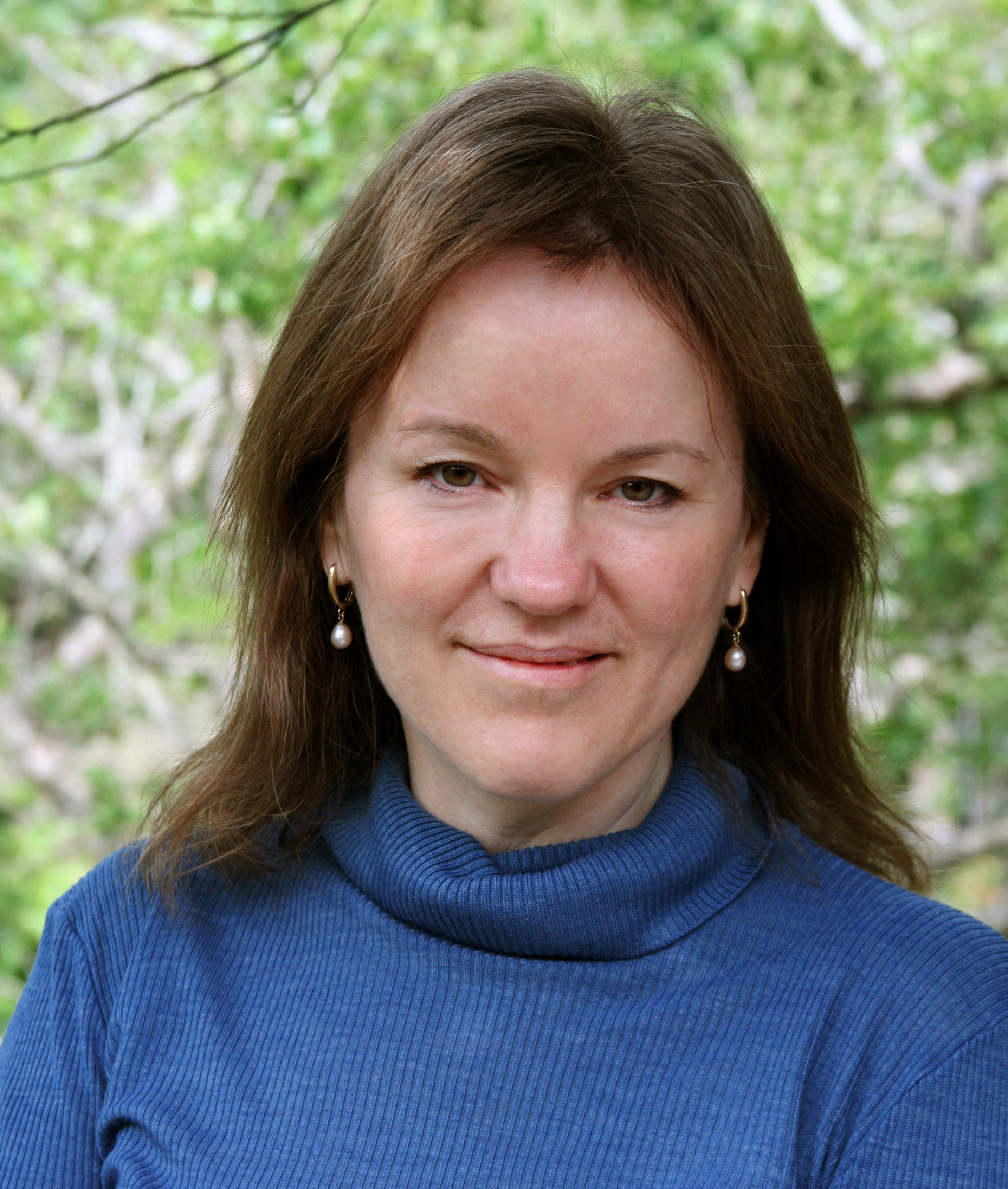
My research focuses on the development of mathematical models and algorithms for estimating evolutionary history in Biology and Historical Linguistics. The main objective is to develop methods that produce much more accurate estimations of evolutionary history than can be obtained using existing tools. Our group is distinguished from many other groups in computational biology due to our focus on ultra-large datasets, with up to 500,000 sequences. We use real data and perform simulations to evaluate the performance of methods that we develop. This research area inolves mathematics, probability, statistics, computer science, and intensive collaborations with domain specialists. My current research is funded by the National Science Foundation (DEB 0733029 and DBI-1062335) and by the John P. Simon Guggenheim Foundation.

Software: SATé co-estimates trees and alignments, quickly and accurately. The public distribution is available through Mark Holder's group in Kansas. See this page for more about SATé. The DACTAL software estimates trees without needing to estimate a multiple sequence alignment, and produces trees of comparable accuracy to SATé, but in a fraction of the time. See our paper about DACTAL. SEPP performs phylogenetic placement of short reads into an existing phylogeny, using an estimated alignment; it can also be used to estimate alignments and phylogenies from datasets that contain some fragmentary sequences. We are currently extending SEPP to work on taxon identification of metagenomic reads. See this paper for more about SEPP.

Click here for Google Scholar Citations (i10-index 87, and h-index 39).

The CIPRES Project is finally over, but the CIPRES Portal is still available through the TeraGrid. For an abridged version of our final report, see this.

"Plus de détails, plus de détails, disait-il à son fils, il n'y a d'originalité et de vérité que dans les détails..." -- Stendhal, Lucien Leuwen (a quote much loved by my stepfather, Martin J. Klein, and an essential guide for all scholarship).

Collaborations

My students and I are actively working on developing new methods for estimating alignments and trees (both gene trees and species trees), as well as for taxon identification of metagenomic data. We are currently working with three international research projects, two involved with estimating the Avian phylogeny, and also the Thousand Transcriptome Project (1KP), using our methods to estimate alignments and trees on individual genes, and to estimate species trees from these multi-marker datasets. We welcome collaborations with biologists who have data that are difficult to analyze, either because the datasets are too large for current methods, or because current methods fail to have sufficiently high accuracy.

Spring 2012 Courses

  • 394C: Algorithms for Computational Biology. The course topic is algorithm design in computational molecular biology. This year we will focus our study on genome assembly, multiple sequence alignment, phylogeny (evolutionary history) reconstruction, and metagenomics. These problems are individually enormously computationally intensive - computational approaches generally involve attempts to solve NP-hard optimization problems. Algorithmic development, firmly grounded in mathematical theory, is needed by the biological research community. The goal of the course is to enable the students to do high quality research (both mathematical and algorithmic) for these problems. If you are an undergraduate and interested in taking the course, please see me.

  • 336: Analysis of Programs. This is a required course for CS majors. I will draw examples from computational biology to illustrate the ideas in the course. Opportunities for research in algorithm development are possible; see me if you are interested.

    
    Affiliations
    
    Funding
    
    For prospective students
    
    Current and former students and postdocs
    
    Personal
    
    SATé software
     
    Computational Historical Linguistics


    Lab Website
    
    Downloadable papers
    
    Complete vita and publication list
    
    Brief vita
    
    Tutorials
    
    Software
    
    Contact


    News