
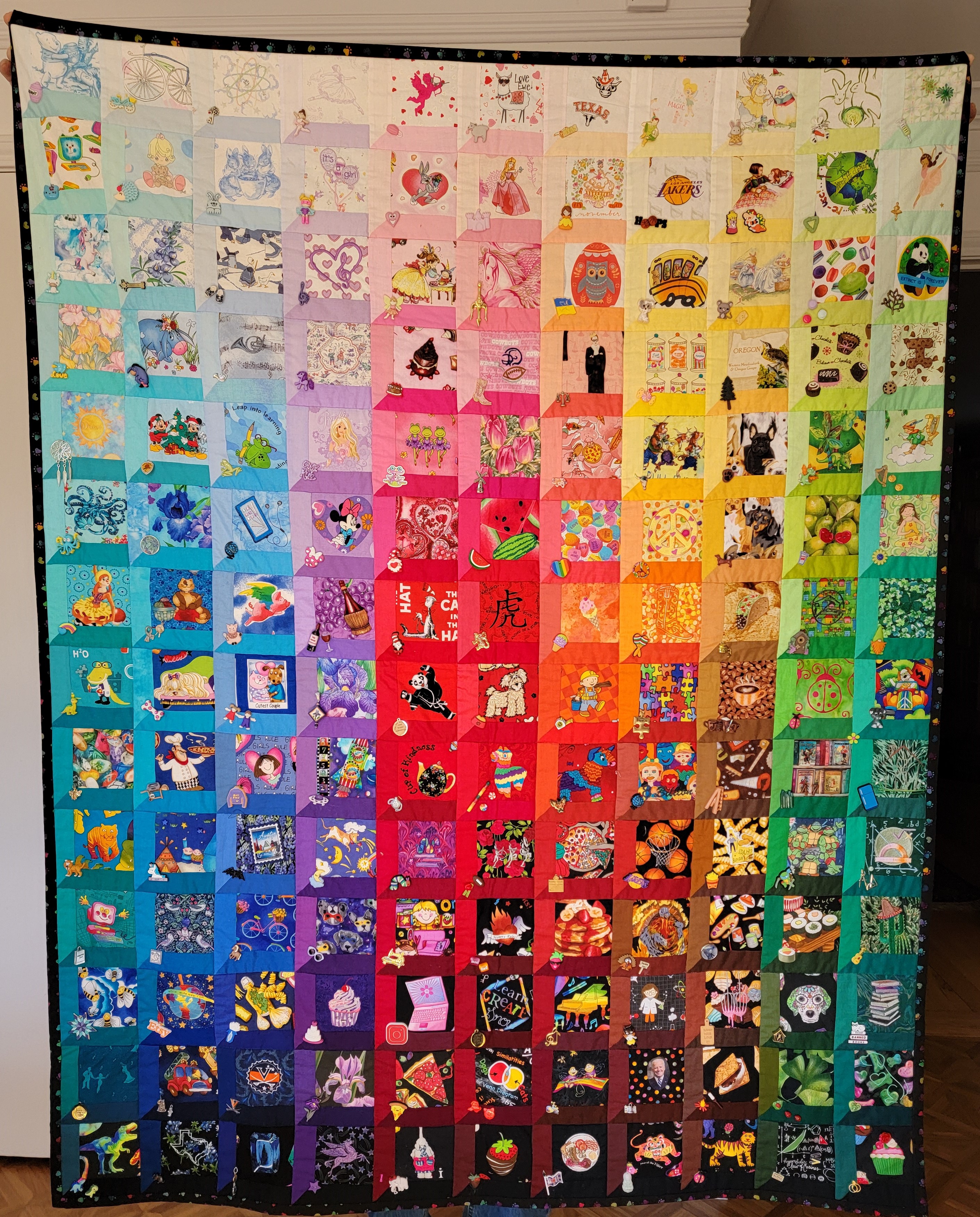
 For the last few years, I've been (I want to say "hard at work" but that would be an extreme exaggeration) making baby quilts for friends. Here's the one that I've just finished. It's for my friends Mike and Roberta's first grandchild.
The idea in this design is that each “window” has a picture of something that is significant for the family. Or maybe it's just a cute kid thing. This child's name is Iris. Zoom in on the full size picture. Can you find all the irises in the quilt?
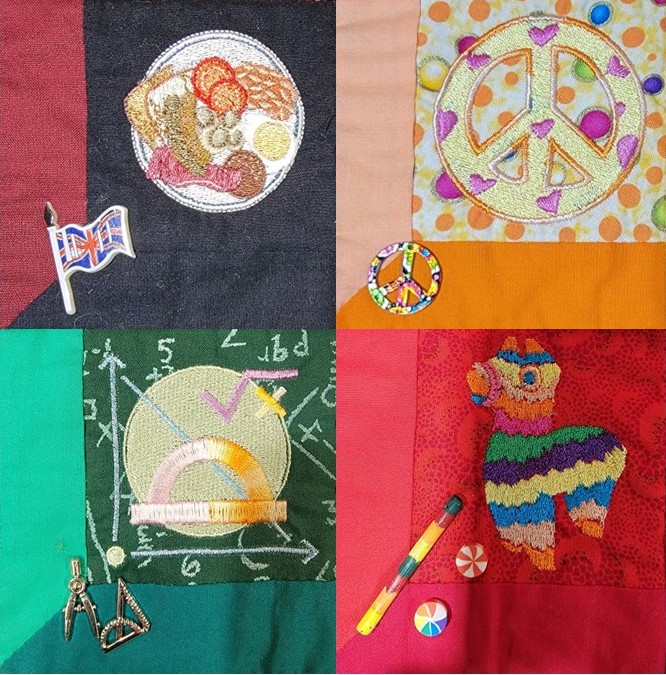
I can't always find the perfect fabrics. No problem. My embroidery robot to the rescue. Here are a few of my favorites in this quilt. I love the “full English breakfast”, in honor of Iris's other grandmother.
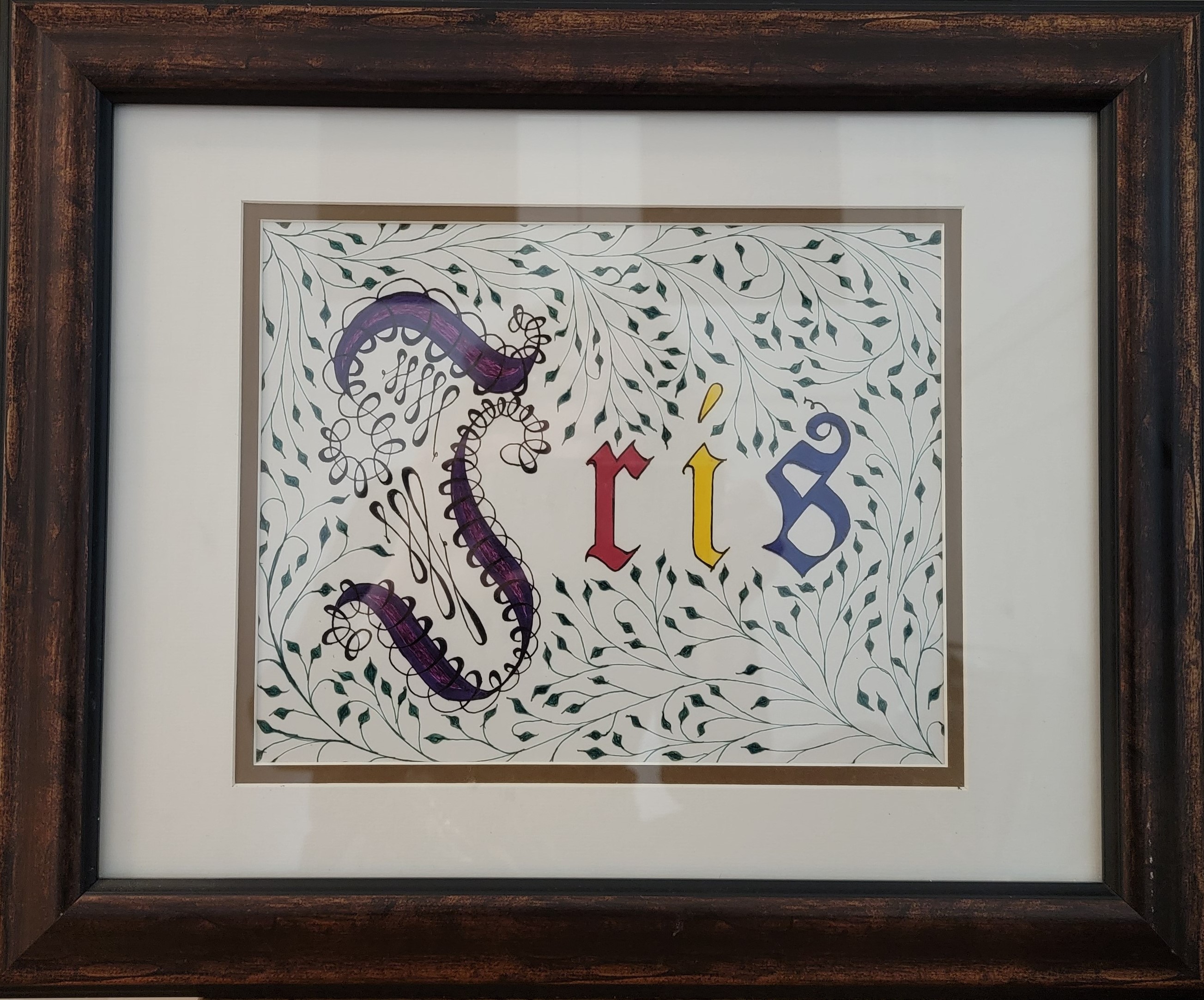
Alan has been creating frakturs. In Germany, they are made for important events, such as weddings and births. Here's the one he made for Iris.
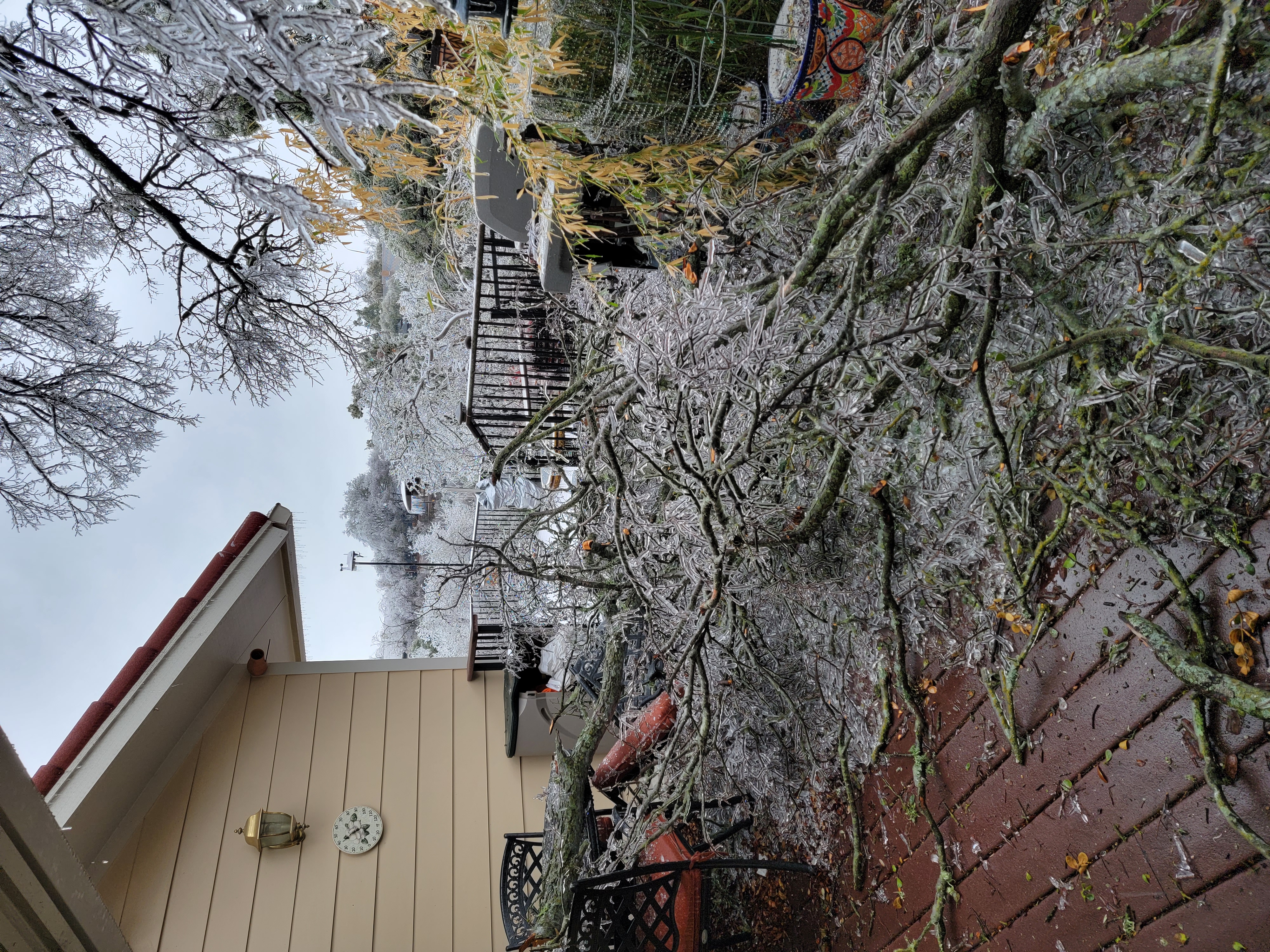
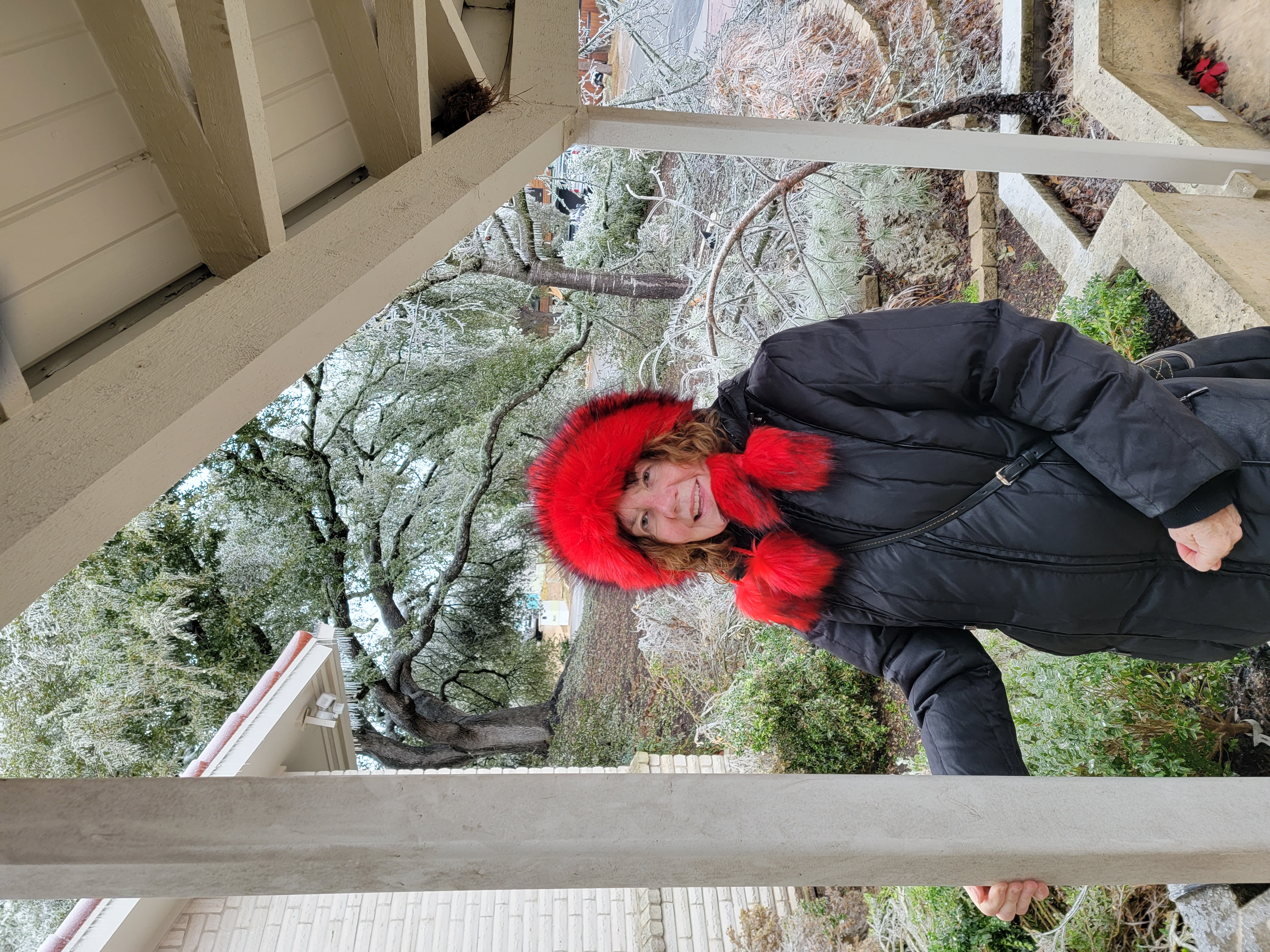
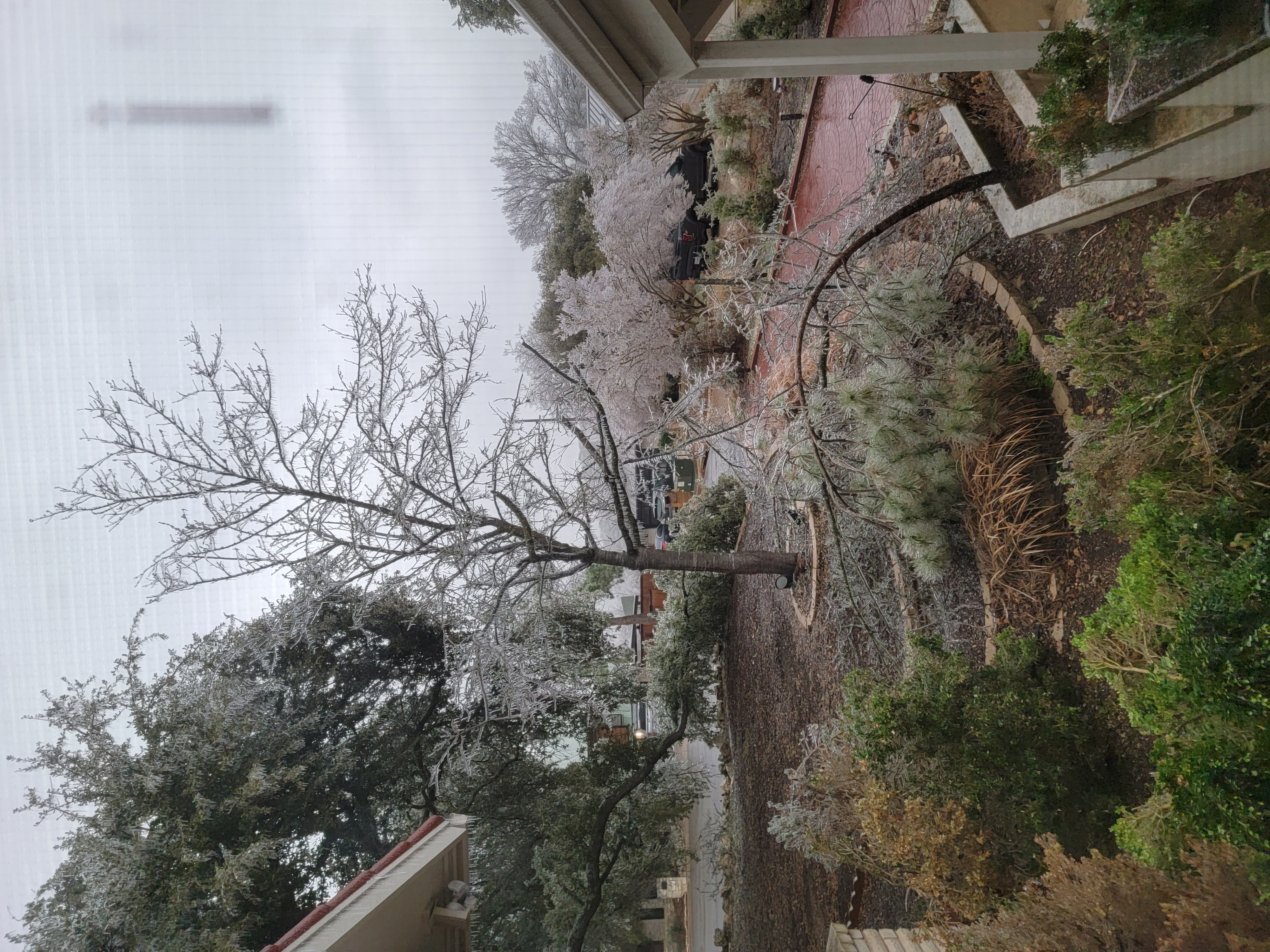
 I know: Those of you who aren't Texans don't get why this is news. But the deal is that Texas really cannot cope. Power goes out. The roads are impassible.
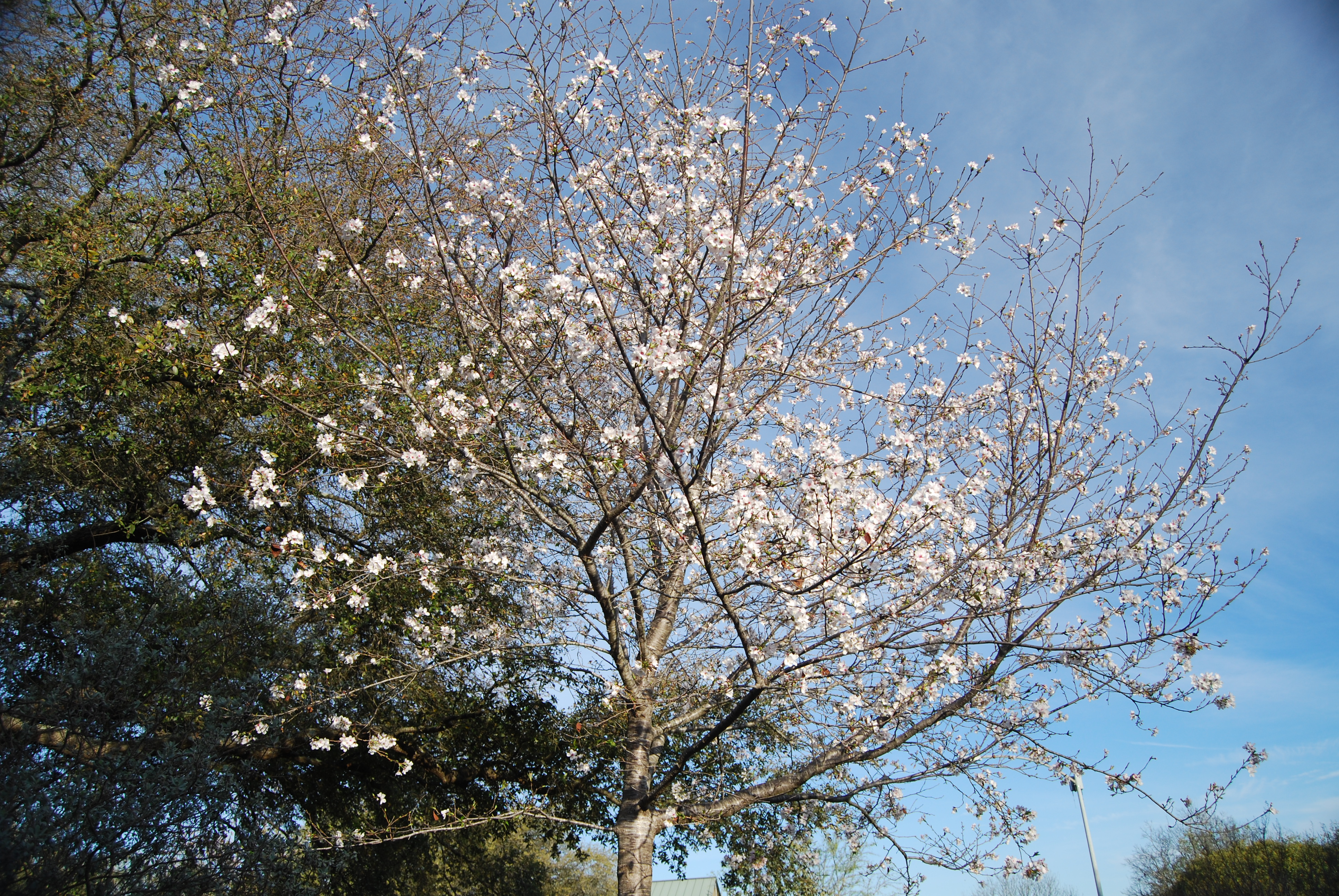
The saddest part is that we have lost a lot of trees. About 40 years ago, Alan gave me, for Valentine's Day, a Japanese cherry tree, descended from one at the Tidal Basin in DC. See it in bloom in 2014. It didn't make it through this year's storm.

 There's the Allendale 4th of July parade. True, it's sort of the same thing every year. But covid certainly did a good job of reminding us how wonderful it is to be able to do our regular things. (The parade was cancelled for two years.) If you click on the thumbnail, you can listen to the group's performance at the post-parade gathering, at which they only had to compete with one or two local politicians. (Alan is troubled by the quality of the sound in this recording. They played the most challenging piece they had ever done but the acoustics don't do it justice.)
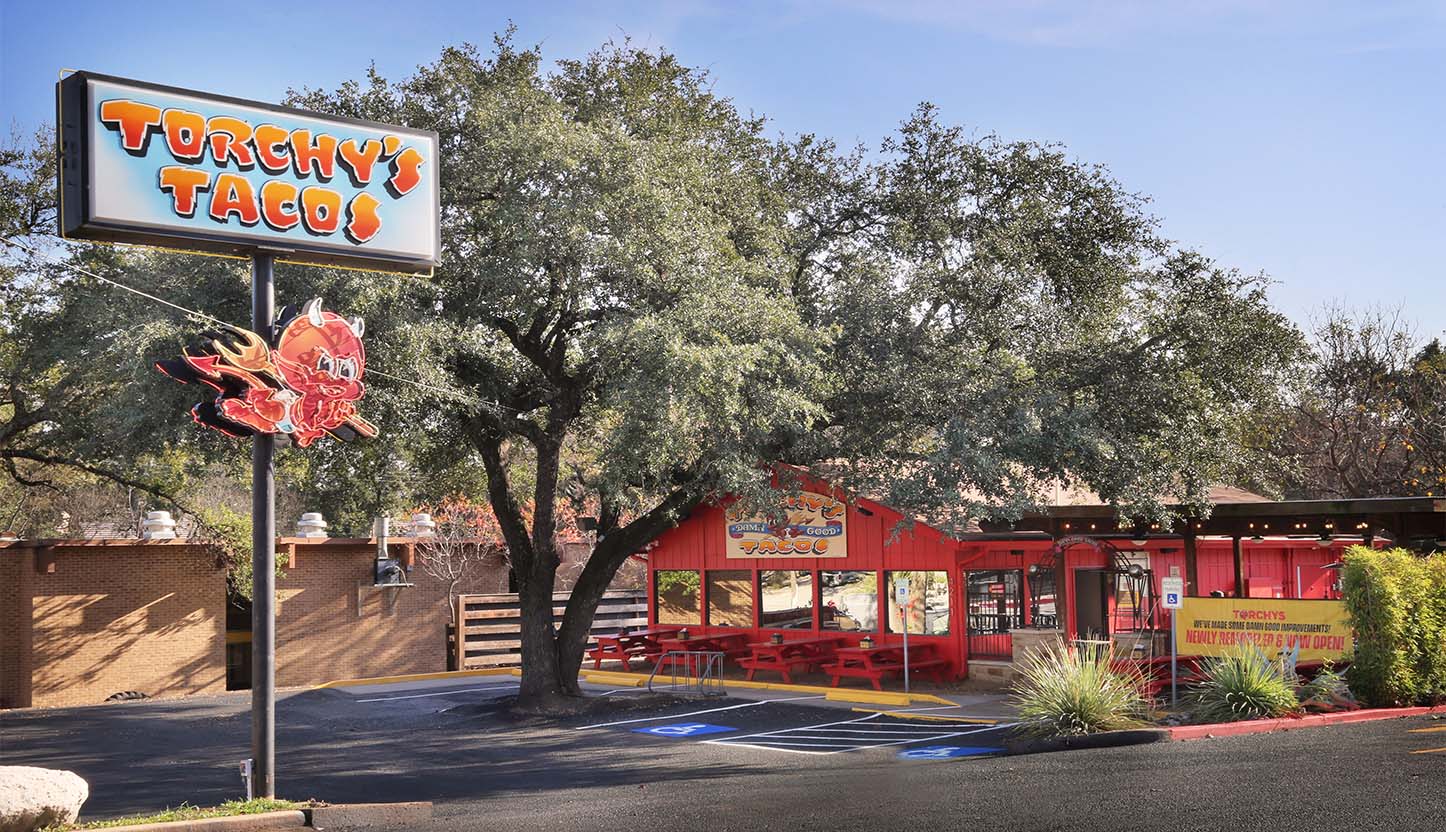
And then there's Torchy's. Perhaps you wonder what a Torchy's Gold Card is. It means free queso and chips every day for a year. We and our friends like it a lot.
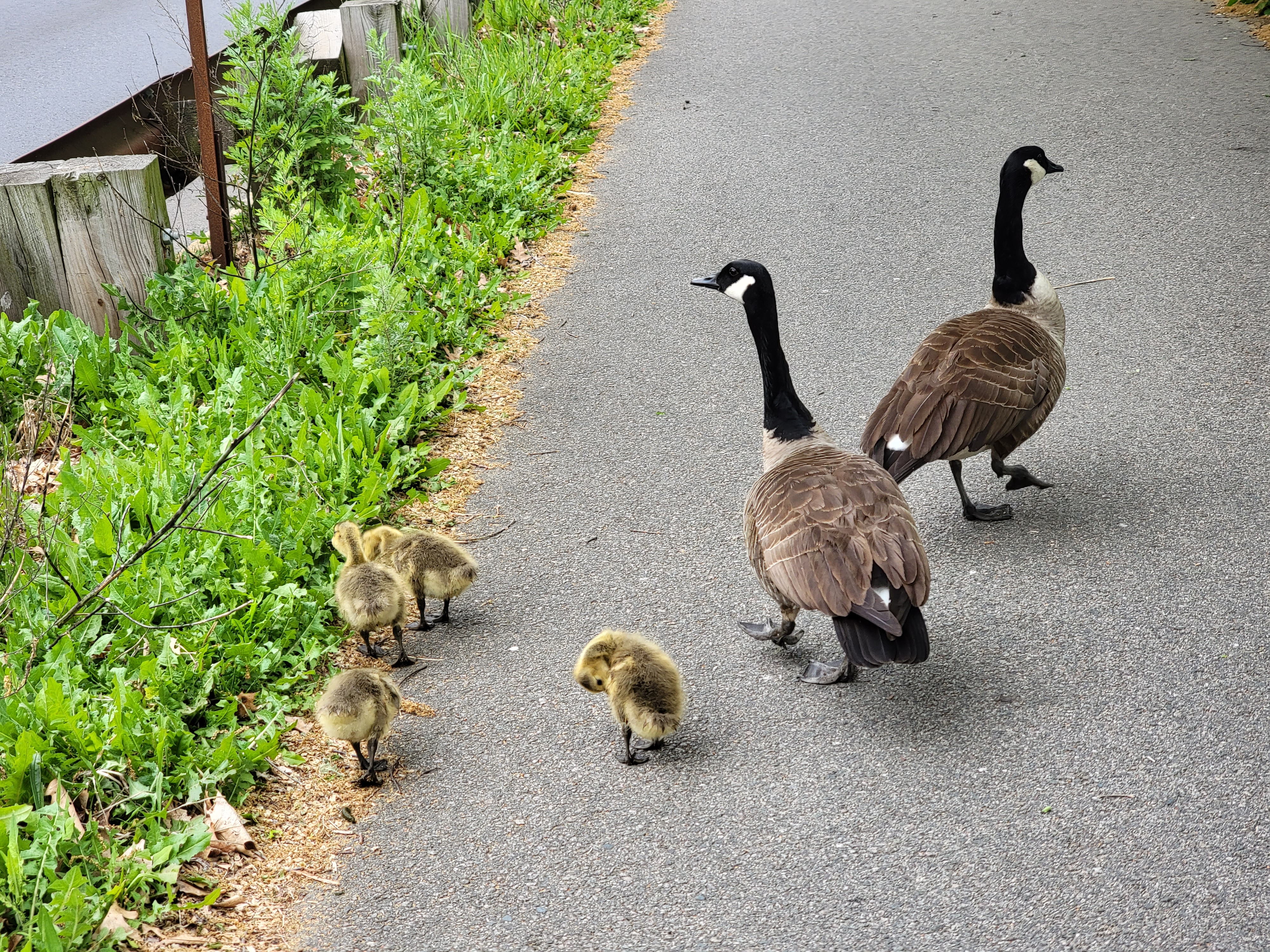
 Geese mate for life. And they are very devoted parents. This family was living by the Charles River, just a few blocks from our house. Do not attempt to get near the goslings.
You know you're in Boston when the sushi stand at the mall has Red Sox rolls.
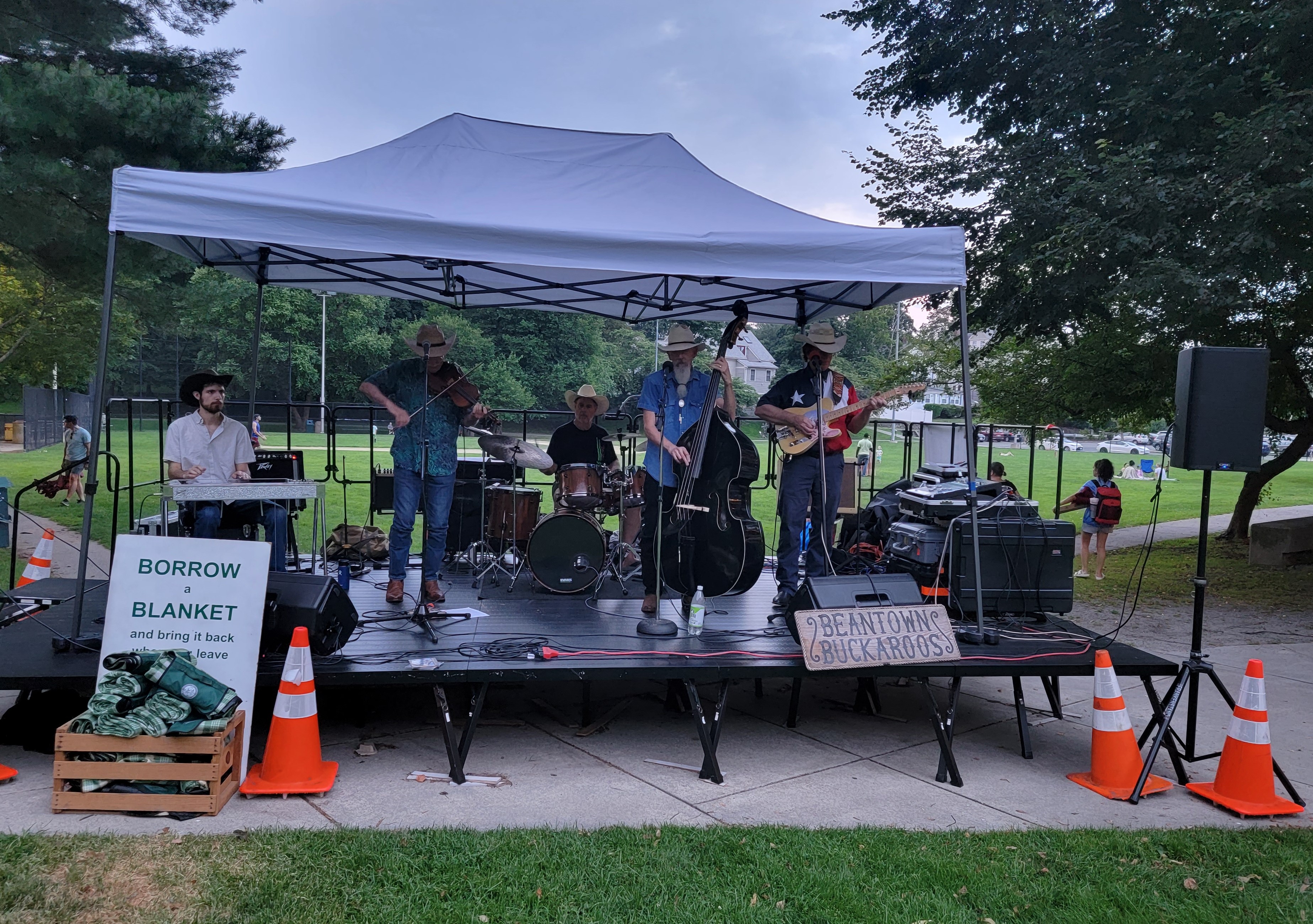
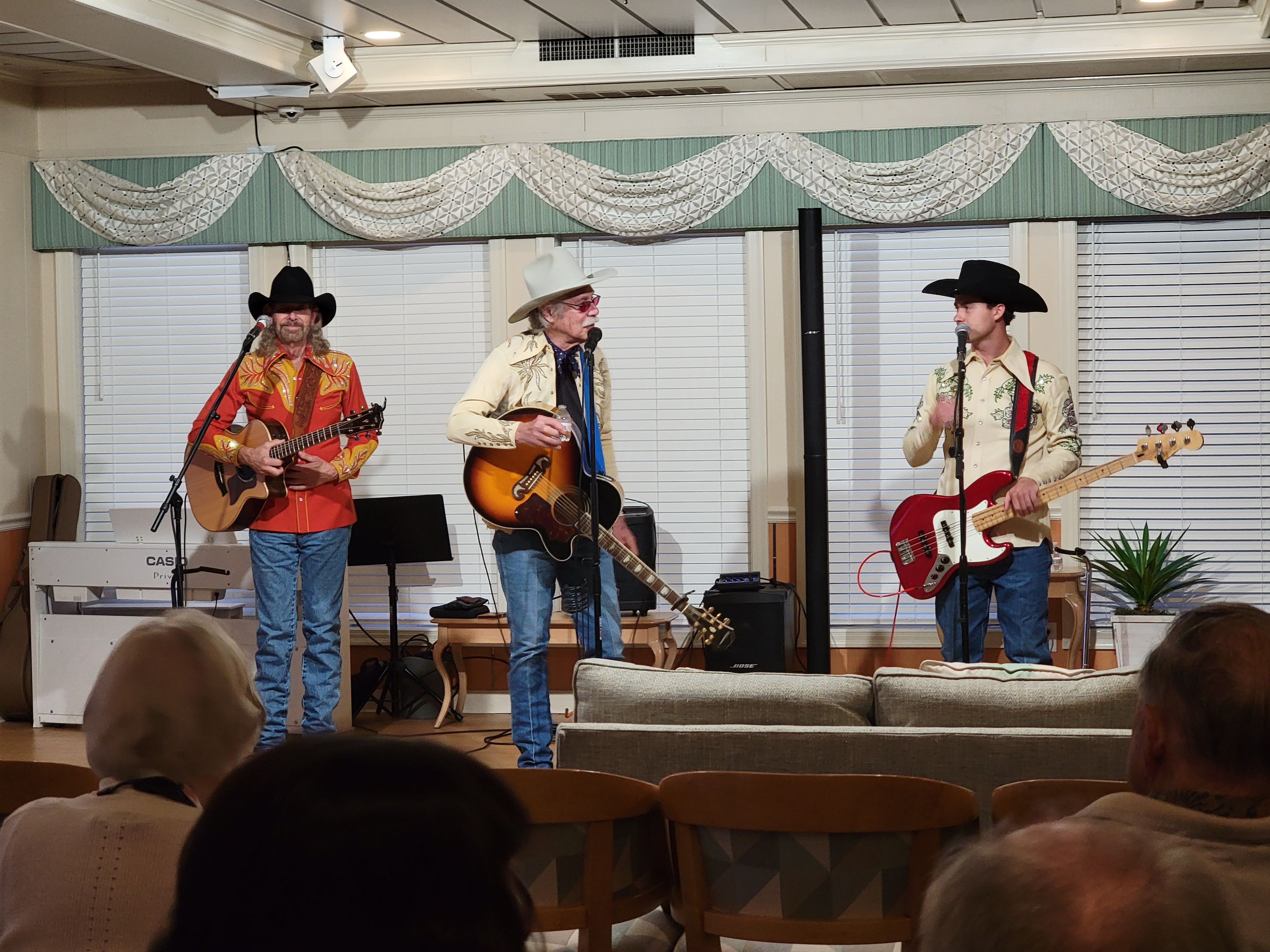
We actually live in Watertown, one town west of Boston. It's still a real "town", with a town center and summer band concerts in the park. The Beantown Buckaroos almost made us feel back at home in Texas.
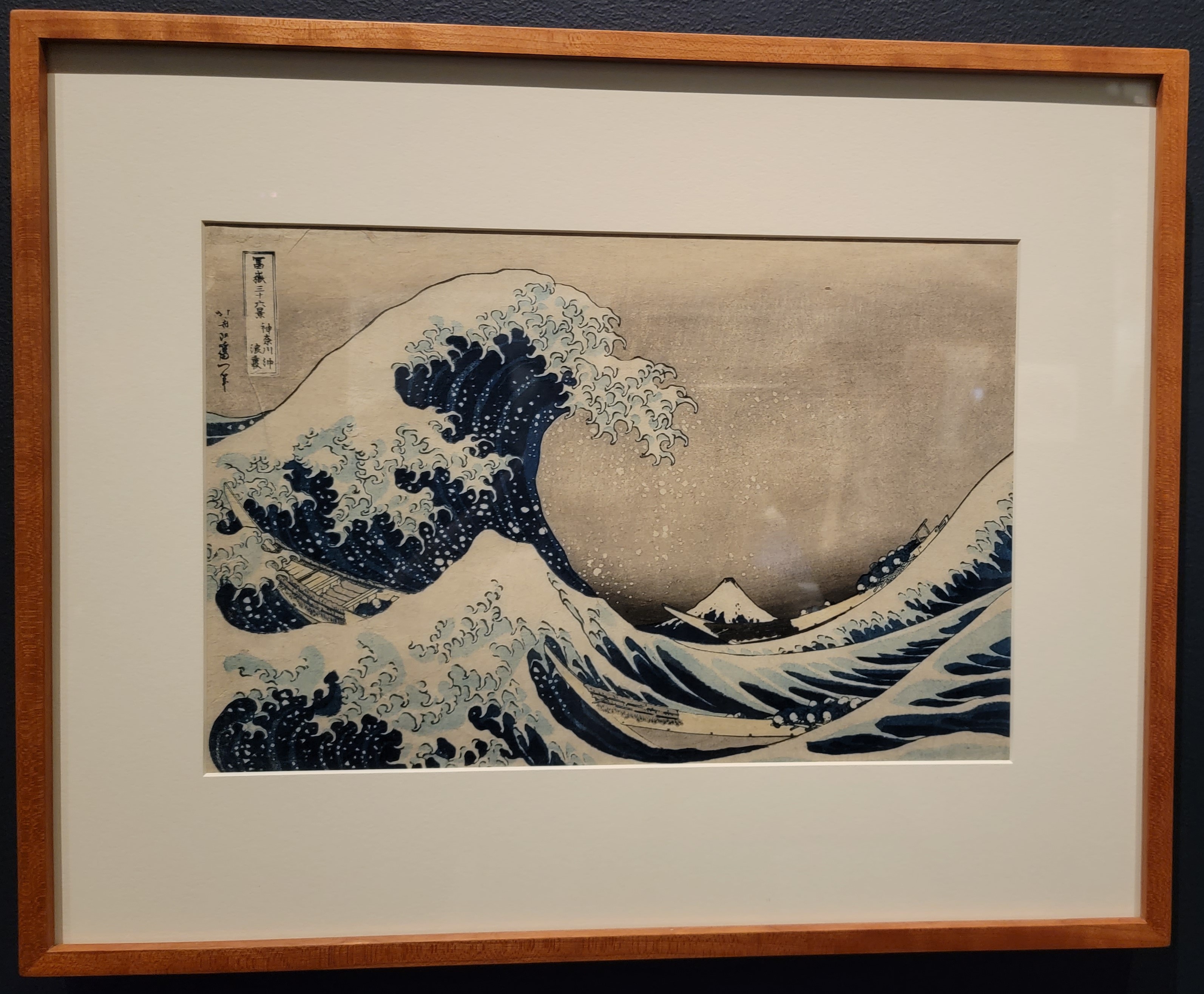
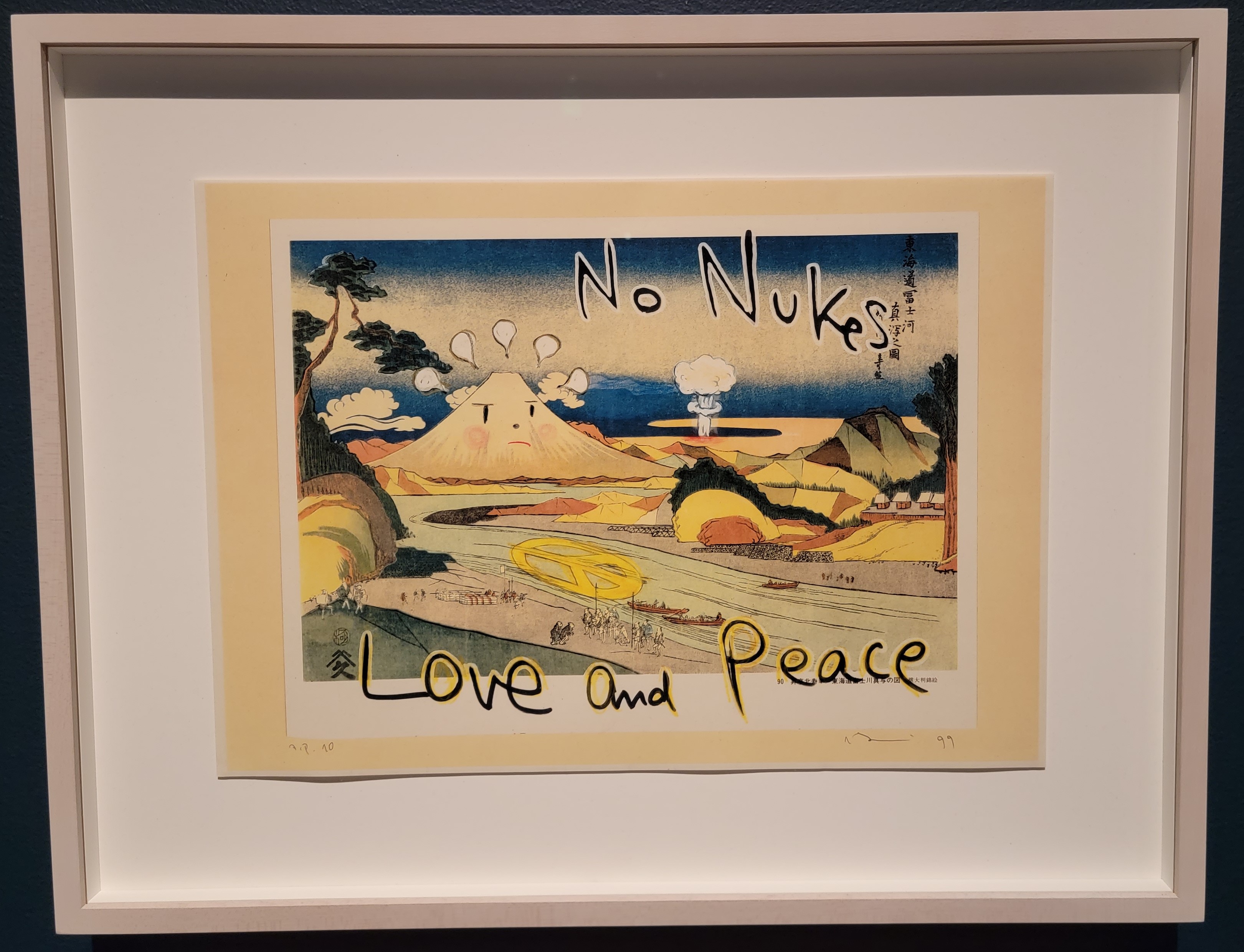
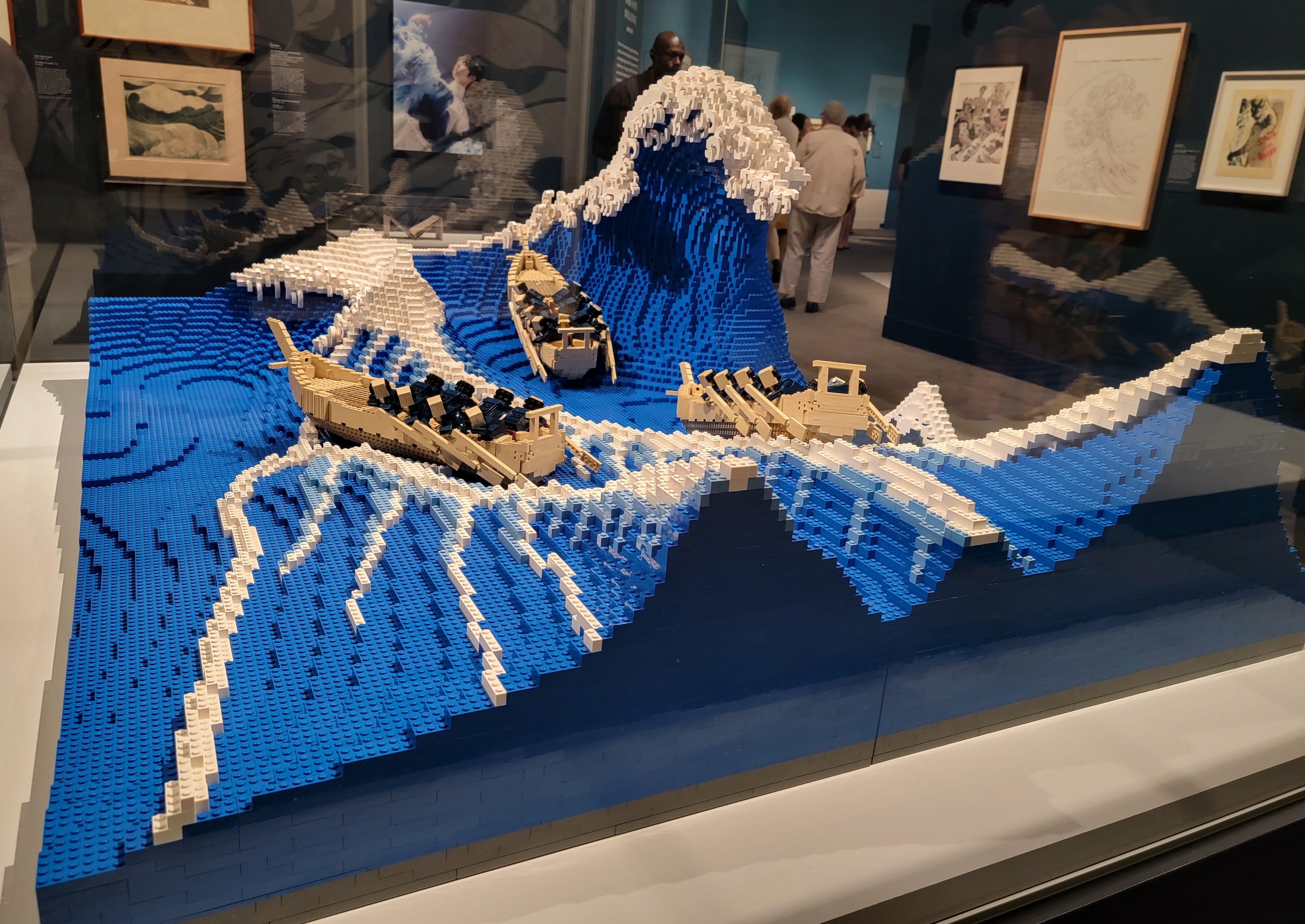 We joined the Boston Museum of Fine Arts (the MFA). They had two amazing exhibits while we were there.
The first was Hokusai: Inspiration and Influence. Of course, they had The Wave. And several modern works inspired by Hokusai and his contemporaries. I think my favorite piece, probably because of its novelty, was the Wave-inspired Lego installation. Look closely at the people in the background to get a sense of the scale of this thing.
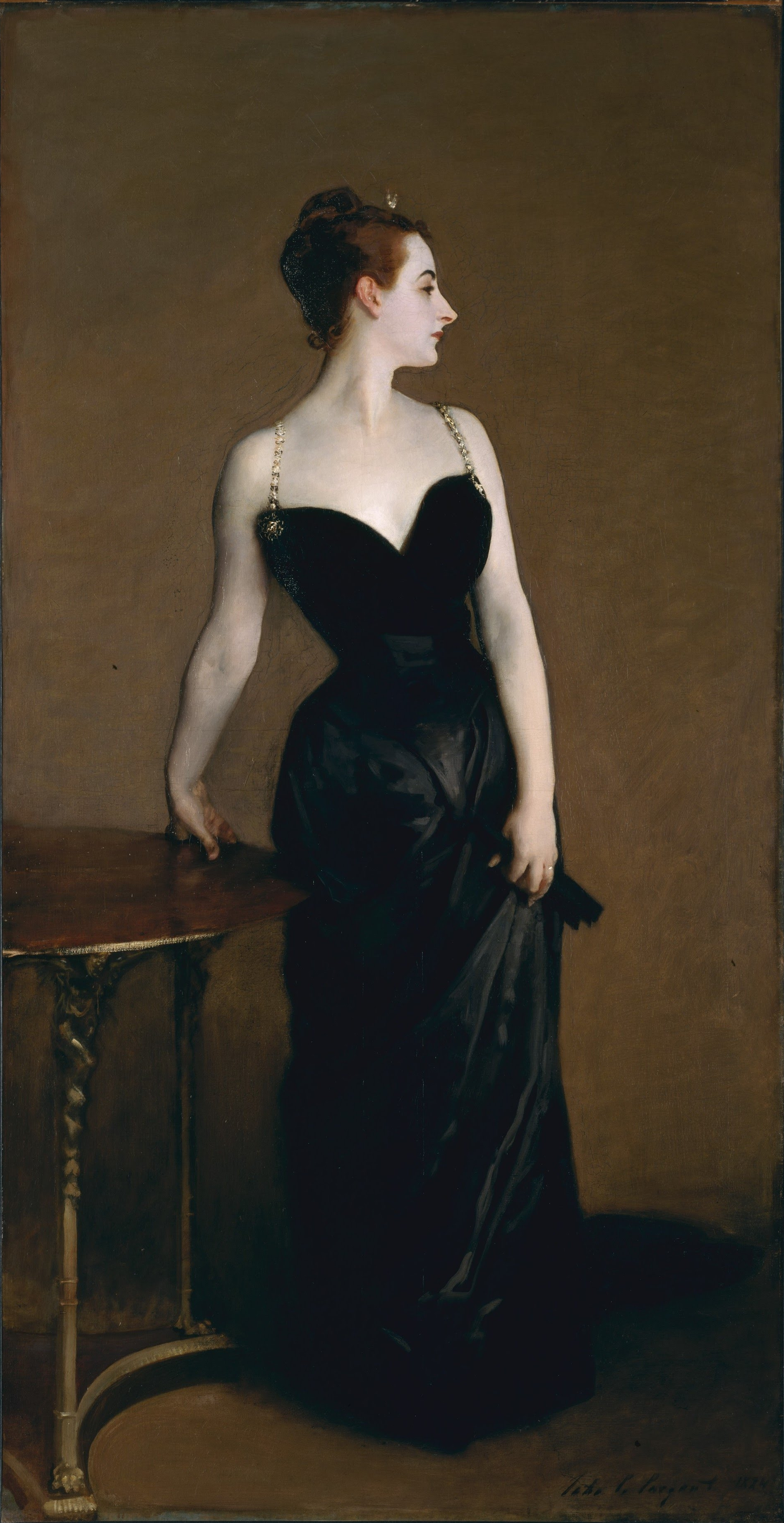
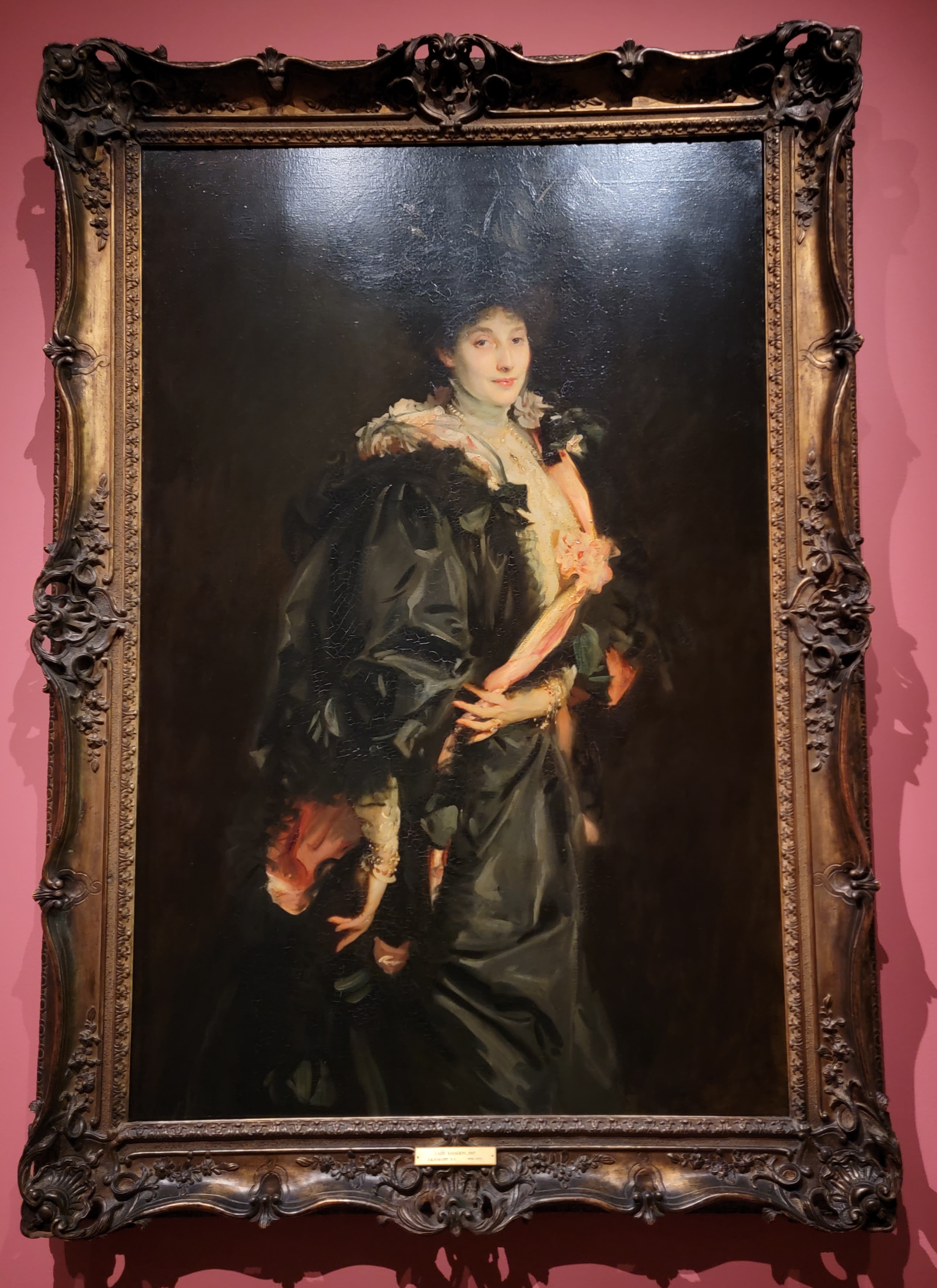
 We stayed in Boston just long enough to get to see
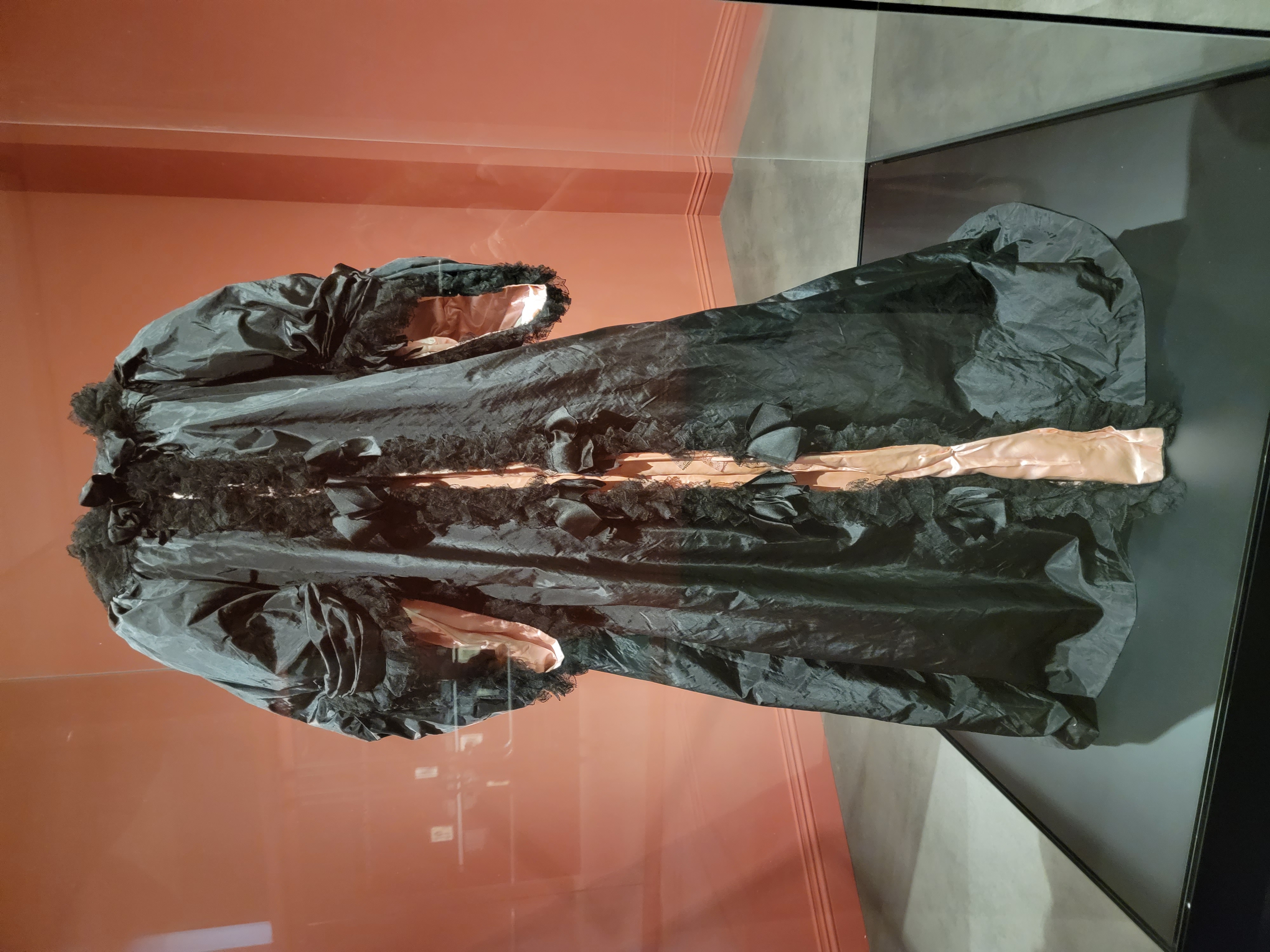
Fashioned by Sargent. It explored the complex relationship between John Singer Sargent, the (mostly) women whose portraits he painted, and the clothes they wore (often chosen by him). Of course, they had Madame X. Hard to believe that this painting caused
a scandal in Paris in 1884.
We stayed in Boston just long enough to get to see
Fashioned by Sargent. It explored the complex relationship between John Singer Sargent, the (mostly) women whose portraits he painted, and the clothes they wore (often chosen by him). Of course, they had Madame X. Hard to believe that this painting caused
a scandal in Paris in 1884.
There were also several portraits accompanied by the actual garments that were worn. Gosh I wish I'd lived back when one could wear such beautiful clothes and not look weird in a sea of torn jeans.
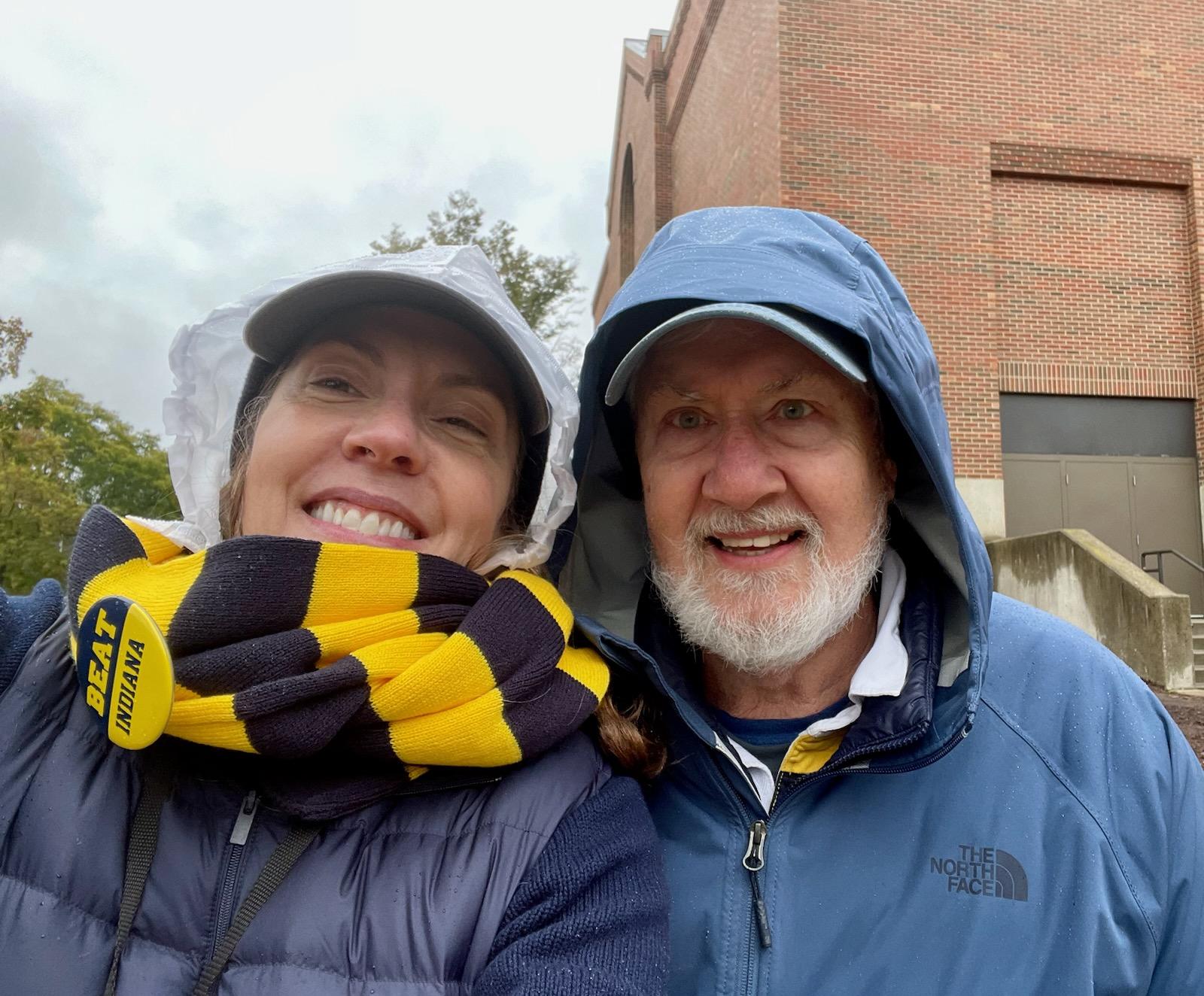
 Byerly and Alan at our annual pilgrimage to Ann Arbor. They are happy. Indiana 7. Michigan 52. Amazingly, I too could have been happy that weekend if I'd been paying attention. Brown beat Princeton. Okay, only barely. 27 to 28 in overtime. But I'll take it.
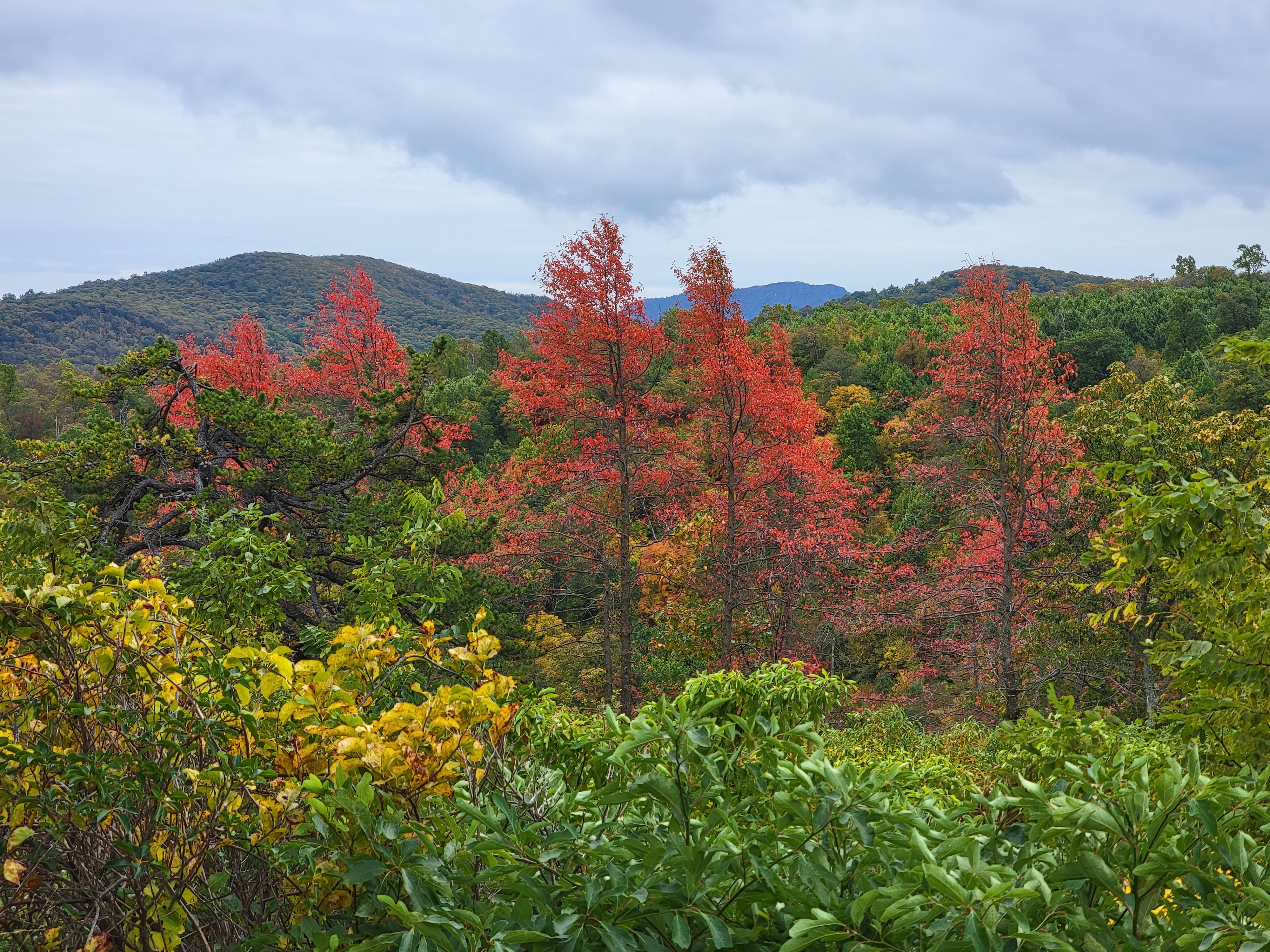
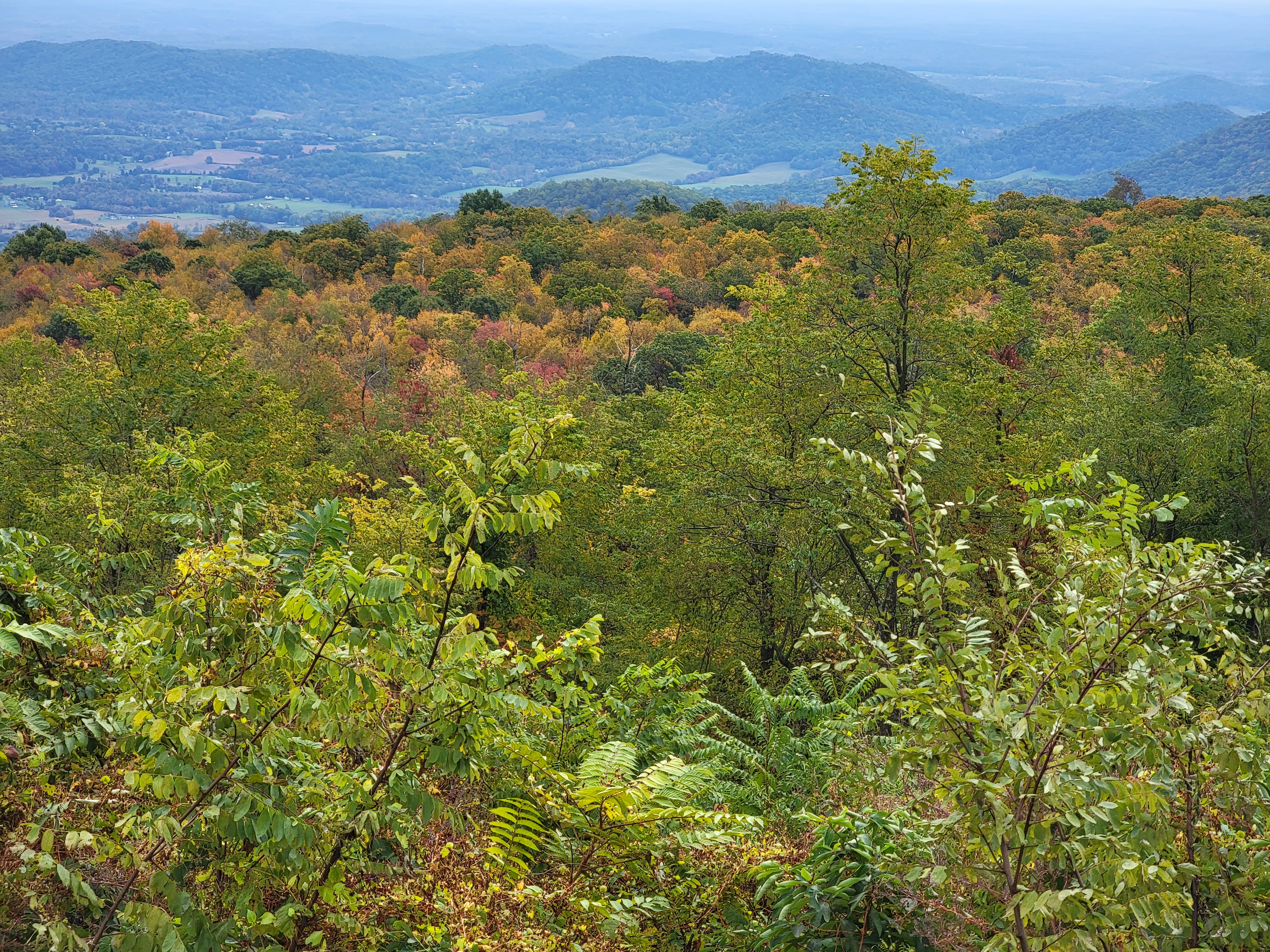
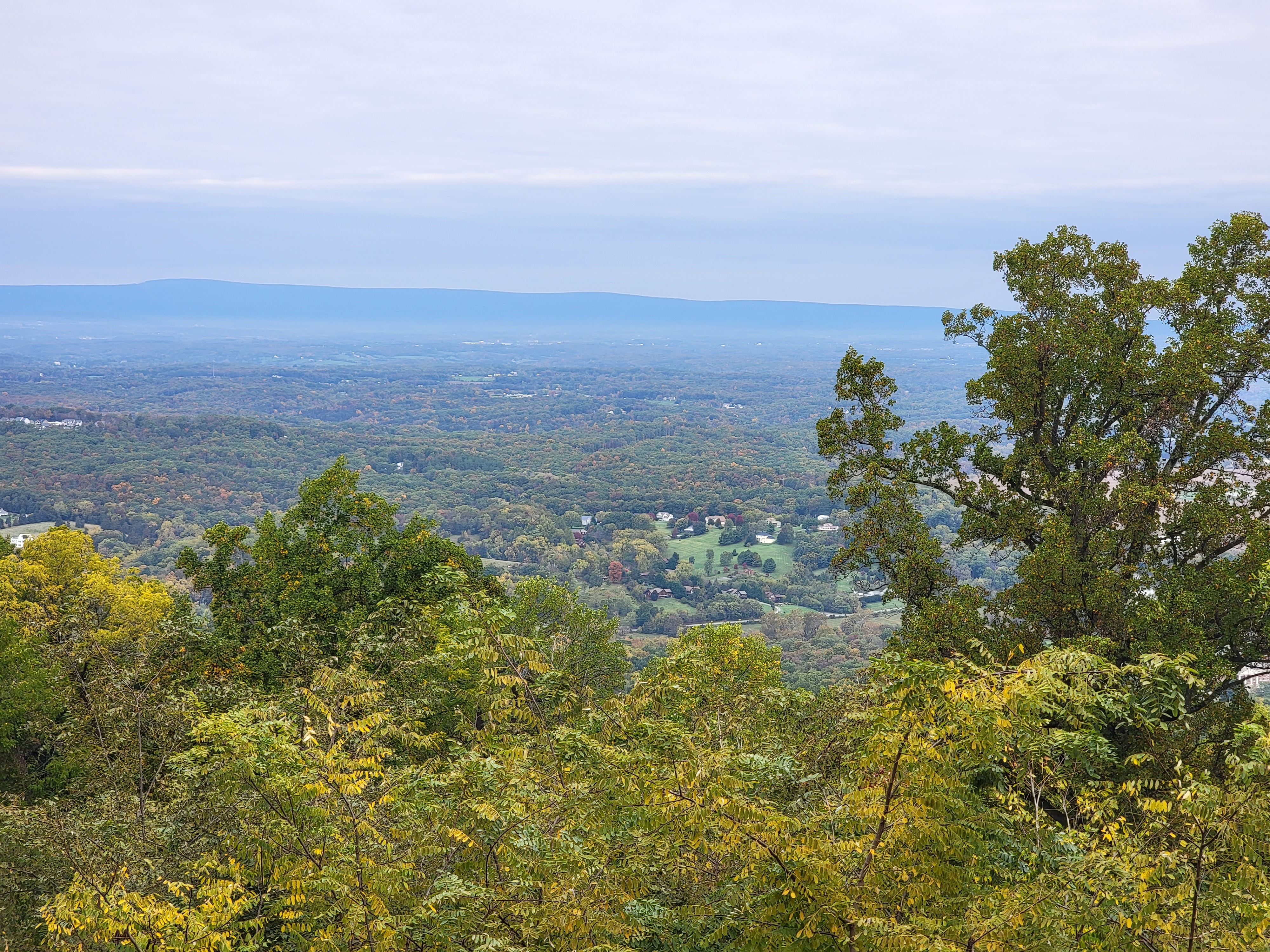
It was mid October by the time we headed back to Texas. We drove through a chunk of the Shenandoah Valley in Virginia on Skyline Drive. It is slow. But worth it. Simply stunning.

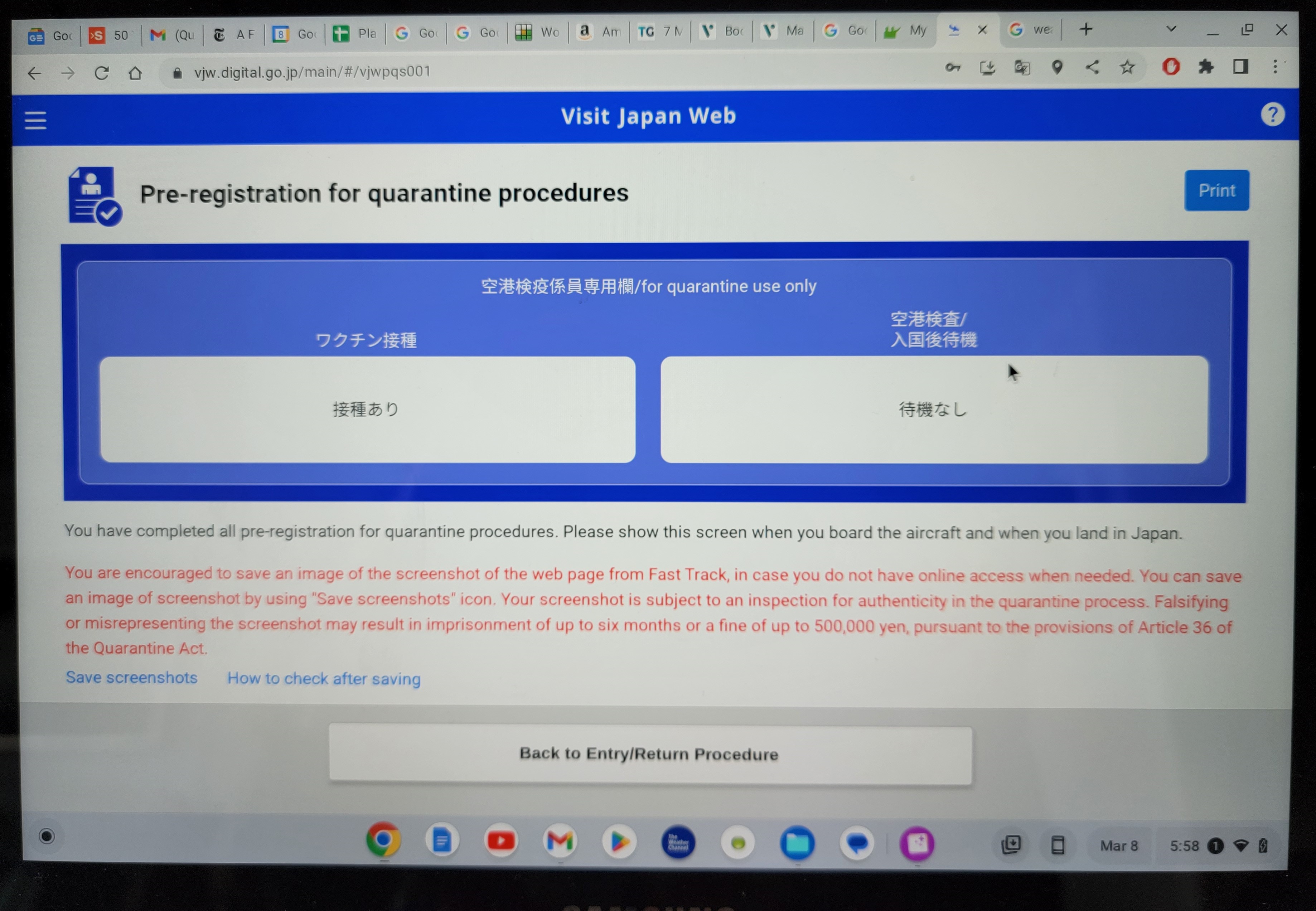
 Finally -- we were able to take our twice cancelled Pacific trip. The shadow of covid lingered. Itineraries changed at the last minute. At least every other evening, we were online, filling out arrival forms for yet another country, uploading vaccination cards, and promising not to be sick. But we got to go.
We started with a pair of back-to-back Oceania cruises, first from Singapore to Taipei, then from Taipei to Tokyo. The juncture of the two was supposed to have been Hong Kong. I'd packed my shopping shoes. But this was early March. China had suddenly ended their "zero covid" policy in December. By January, they were overwhelmed with covid. They could have reinstated lockdown at any time. Oceania decided that was too risky. So we skipped both Hong Kong and Shanghai and had more time in Japan.
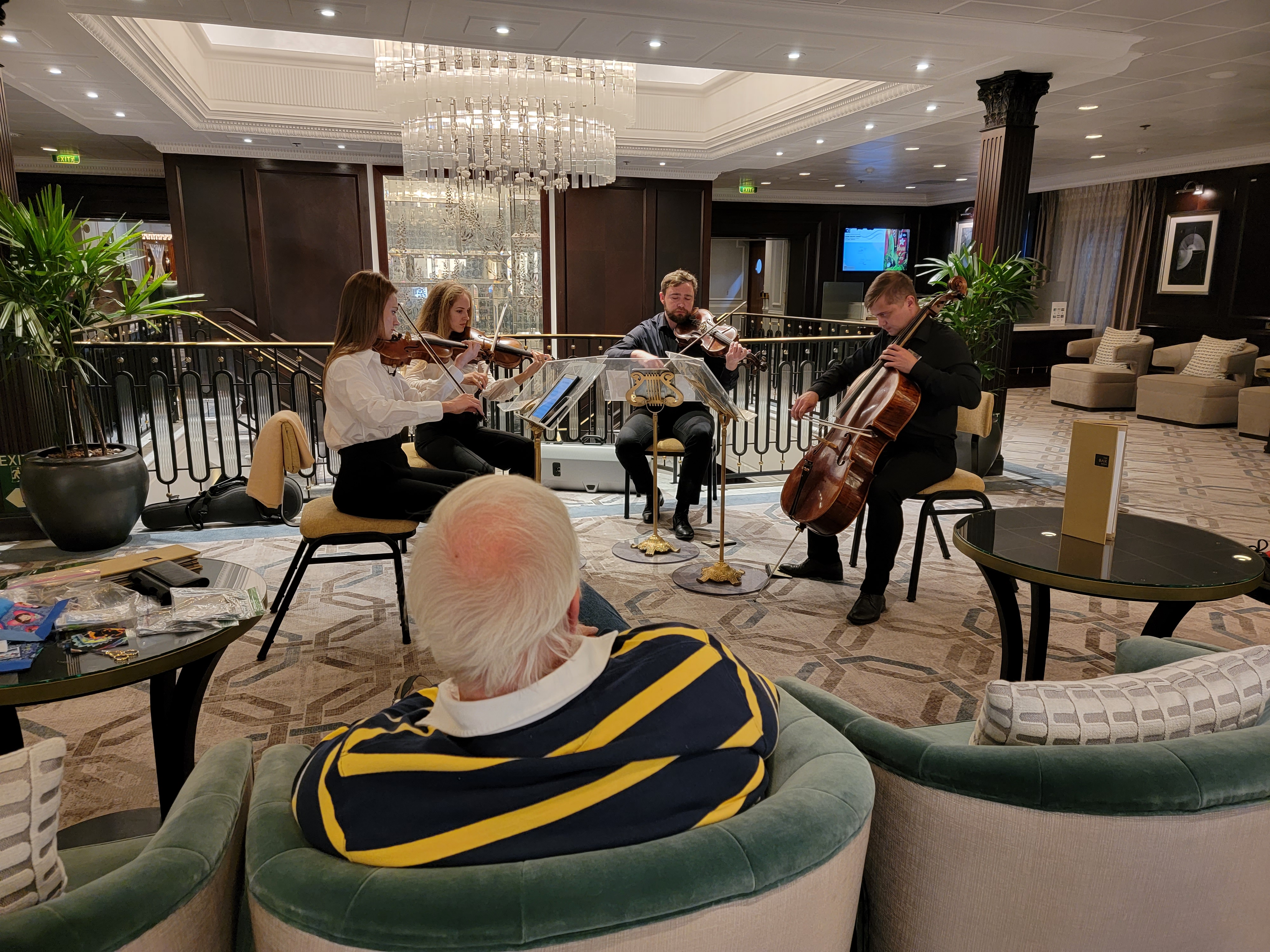
One of the many great things about Oceania cruises: the string quartet plays several times each day.
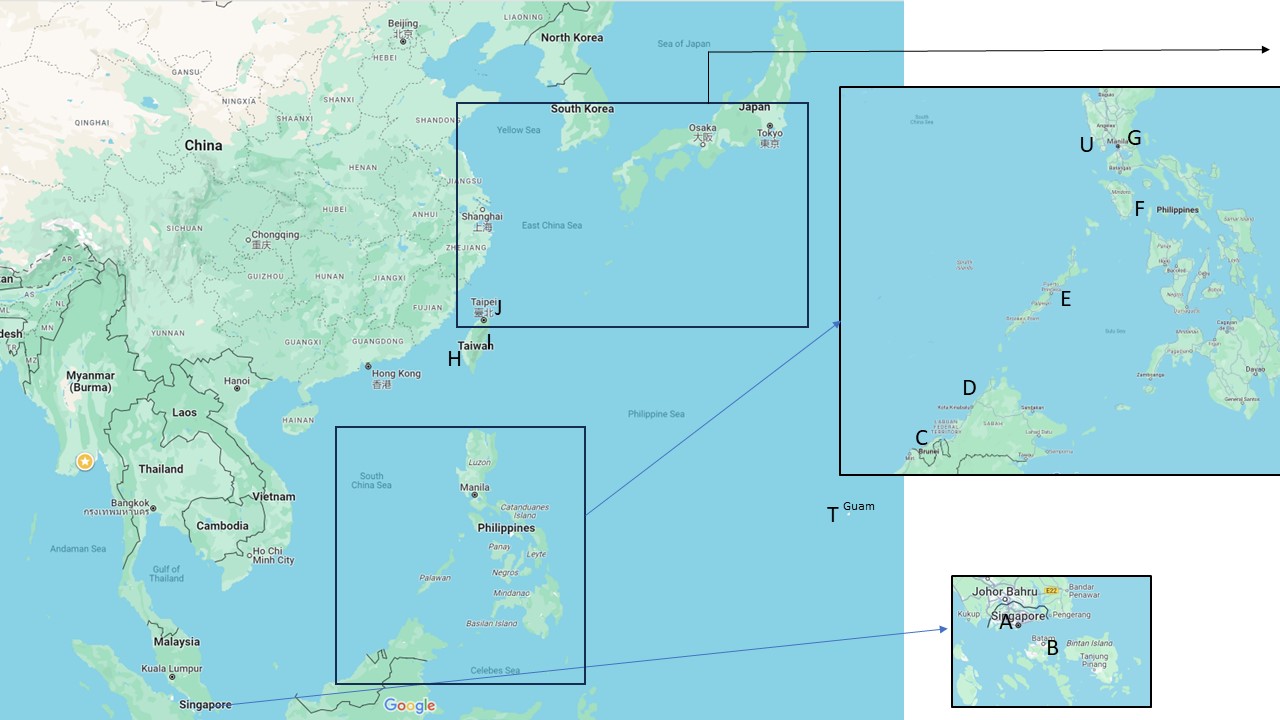
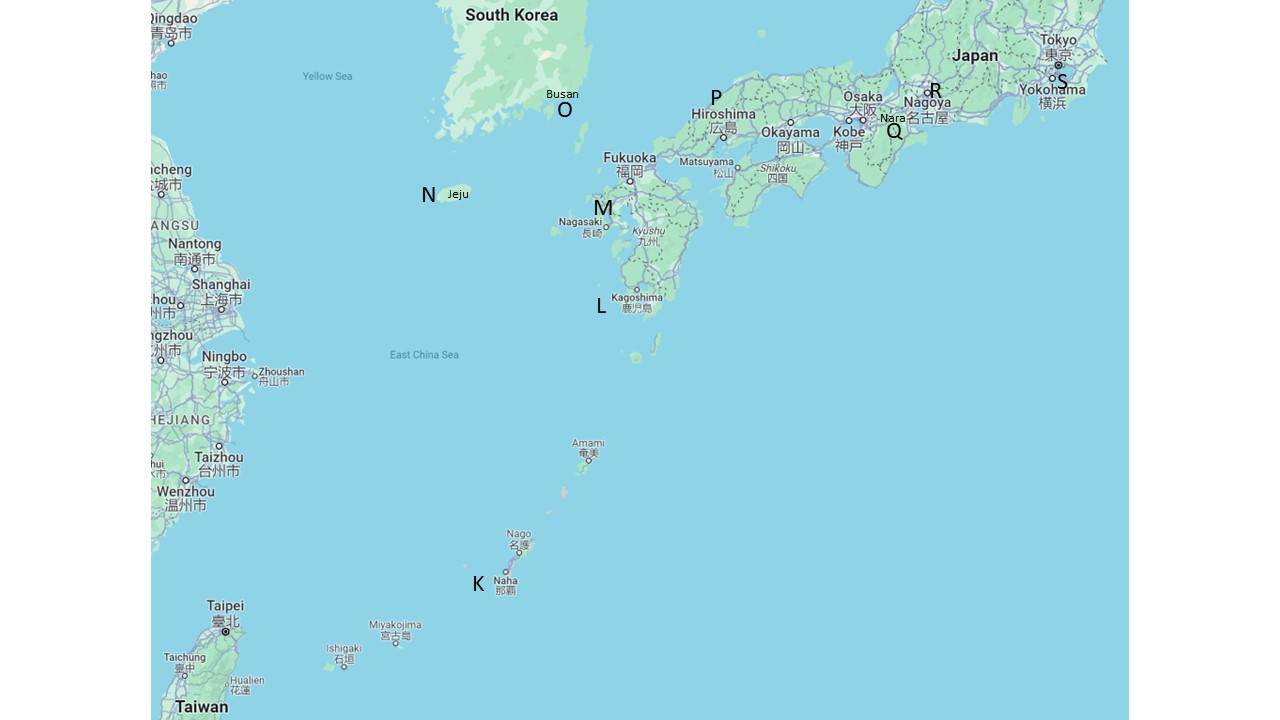 Here's the key to the maps, which include our visits to Guam and Subic Bay after the cruise:
| A: Singapore | K: Naha, Japan |
| B: Batam, Indonesia | L: Kagoshiima, Japan |
| C: Brunei | M: Sasebo, Japan |
| D: Kota Kinabalu, Malaysia | N: Jeju Island, South Korea |
| E: Puerto Princesa, Philippines | O: Busan, South Korea |
| F: Boracay Island, Philippines | P: Hiroshima, Japan |
| G: Manila, Philippines | Q: Nara, Japan |
| H: Kaoshiung, Taiwan | R: Nagoya, Japan |
| I: Hualien, Taiwan | S: Yokohama, Japan |
| J: Taipei, Taiwan | T: Guam |
| U: Subic Bay, Philippines |
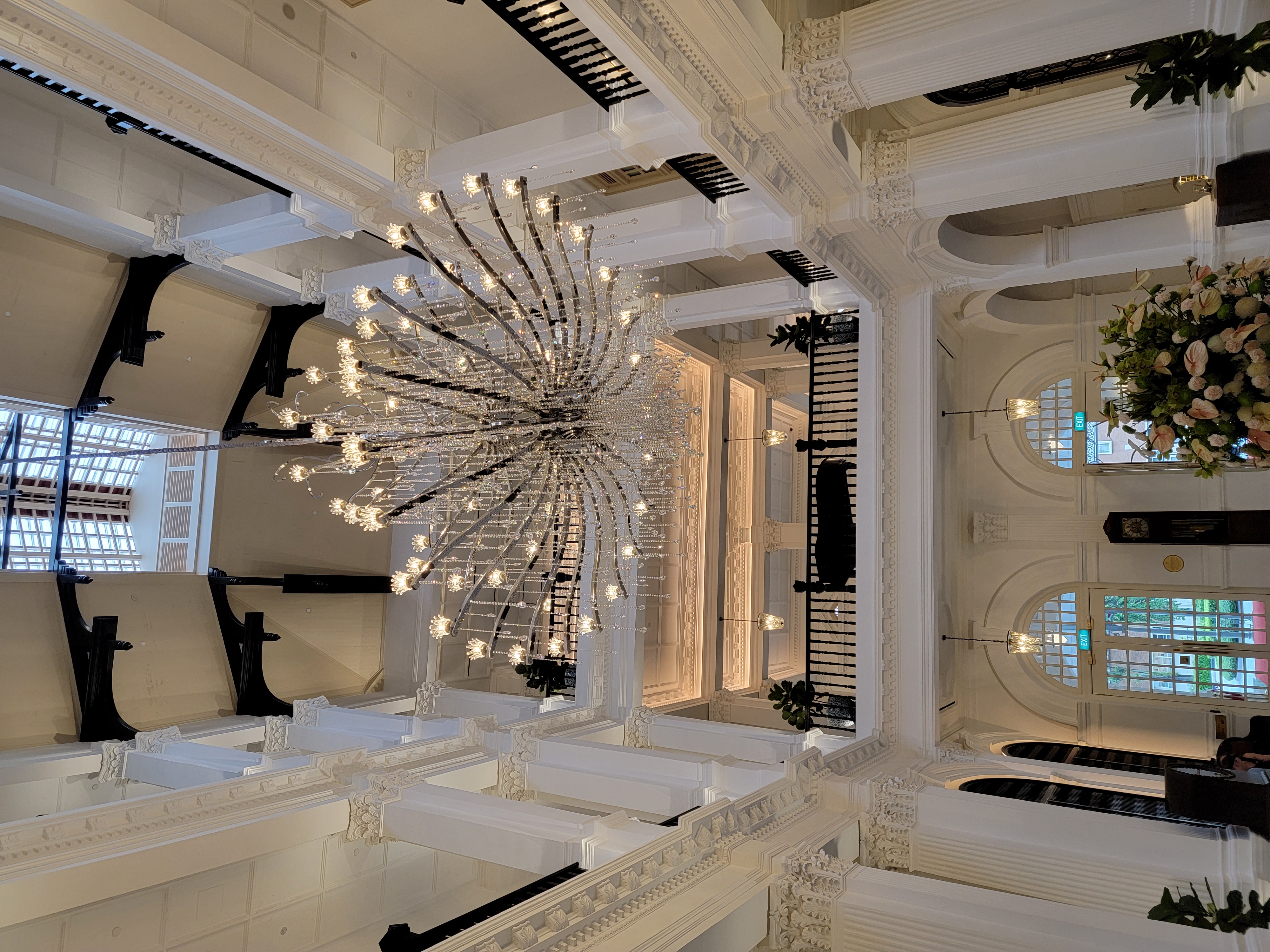
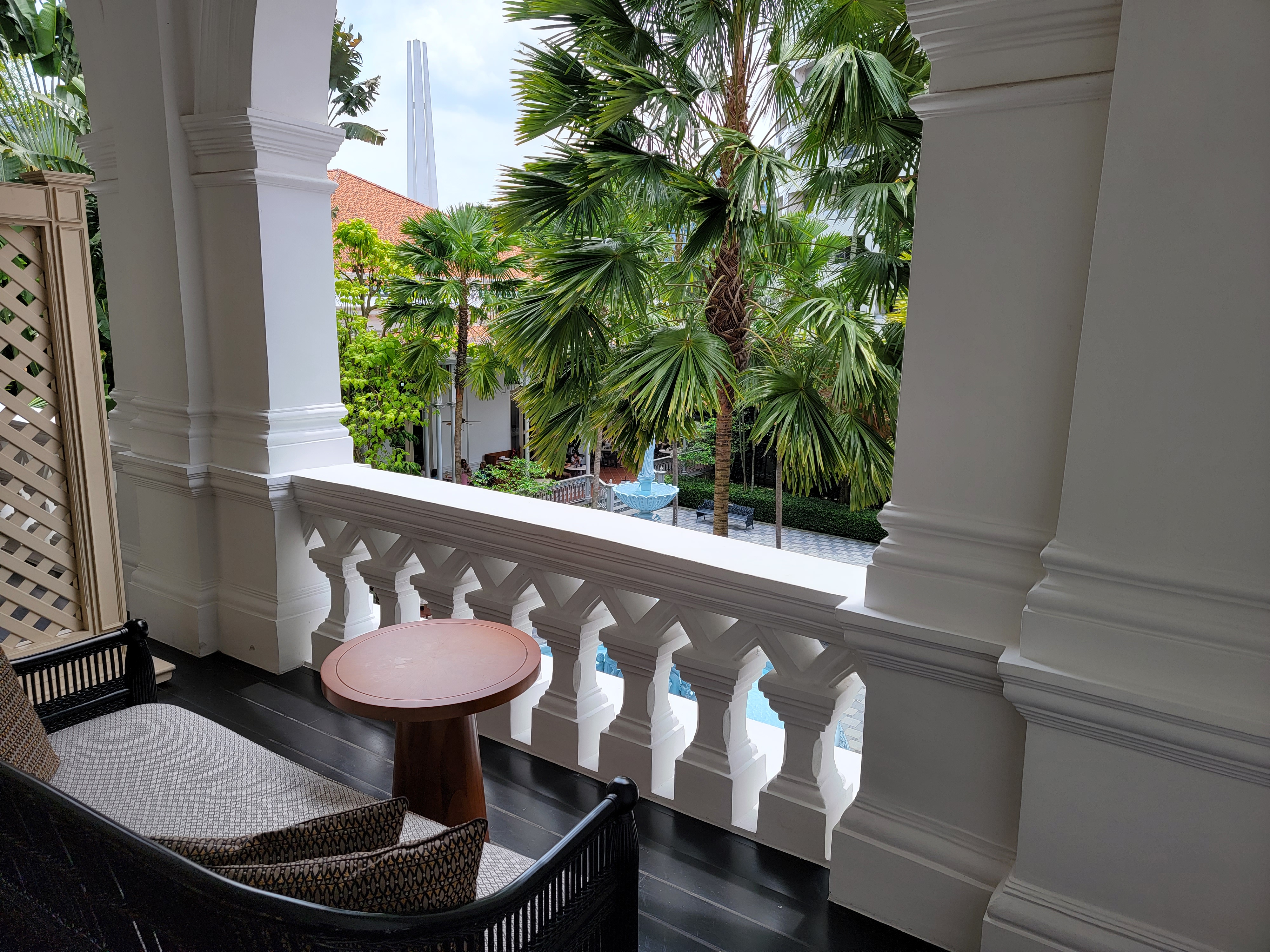
 At the risk of being an apologist for British colonialism (which I'm clearly not), I have to say that the
hotel that bears the name of
Sir Thomas Stamford Raffles, the founder of modern Singapore, is a spectacular place. There was rain our last two days in Singapore; we sat on our balcony and watched it.
At the risk of being an apologist for British colonialism (which I'm clearly not), I have to say that the
hotel that bears the name of
Sir Thomas Stamford Raffles, the founder of modern Singapore, is a spectacular place. There was rain our last two days in Singapore; we sat on our balcony and watched it.
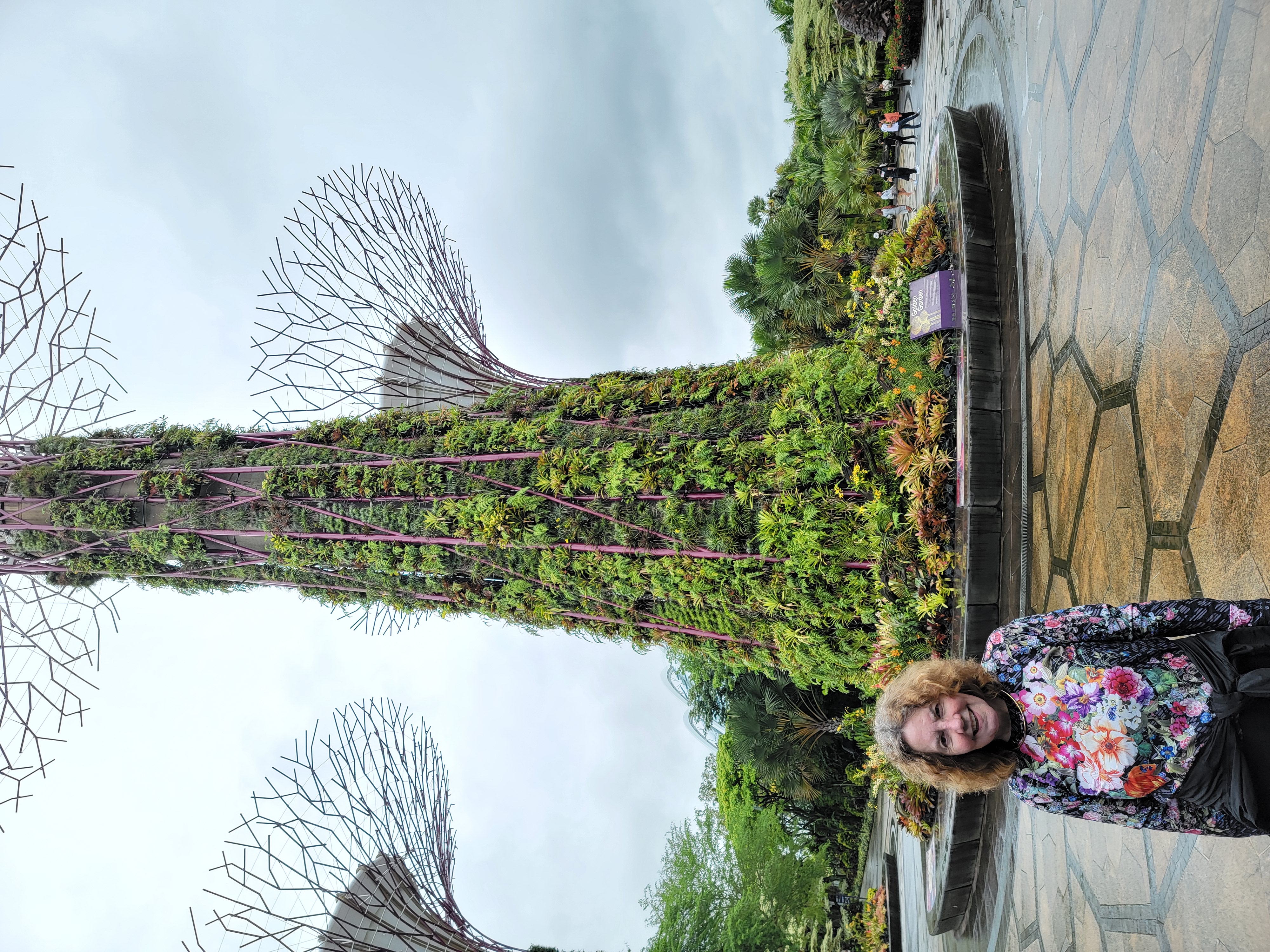
I have to include a picture of the iconic image of Singapore: Gardens by the Bay, a 250 acre park in the middle of the city, in the third mostly densely populated country in the world (after Macau and Monaco).
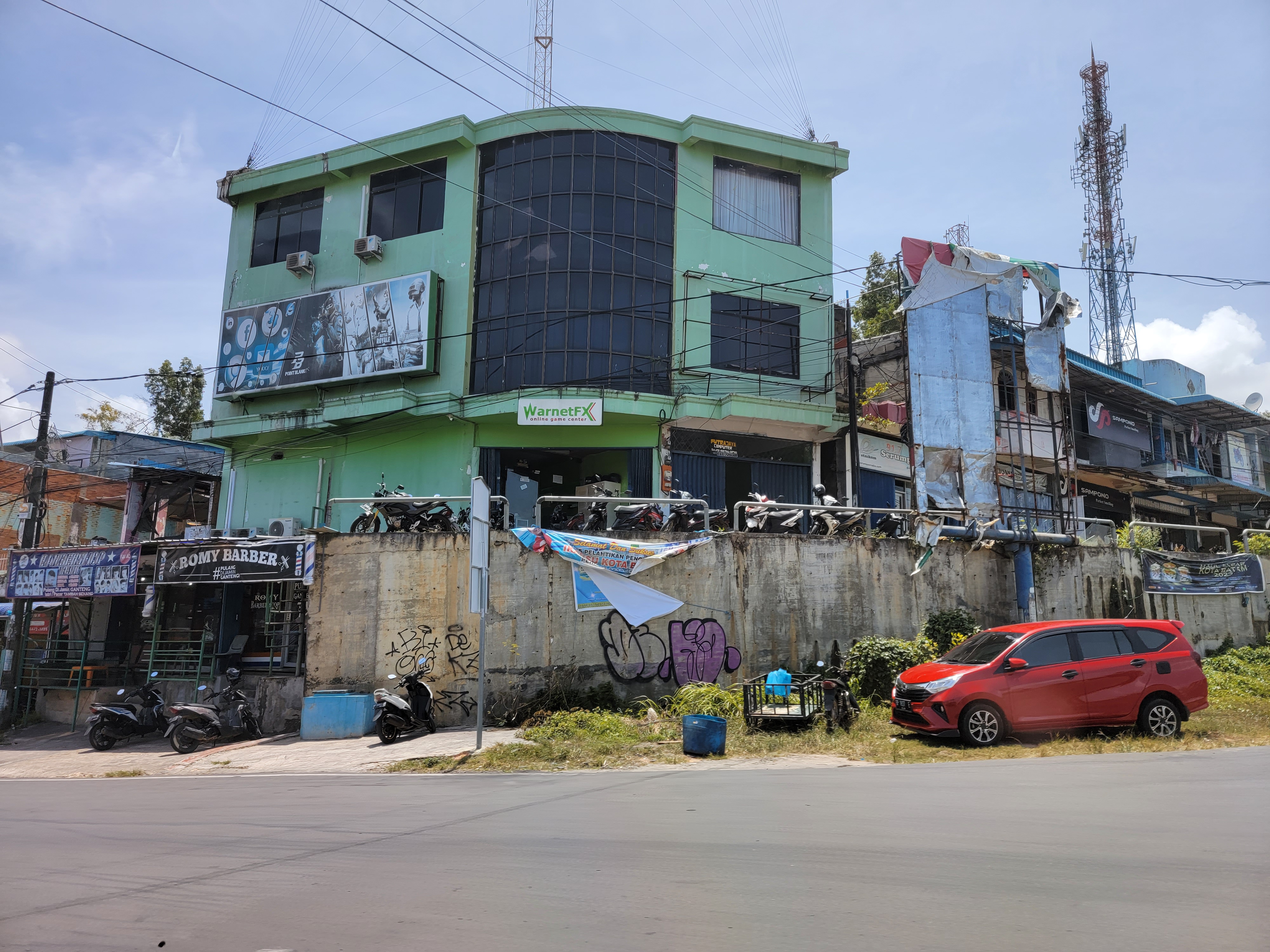
One day, we took a ferry (about 20 miles) from Singapore to Batam, an island of Indonesia. We hired a taxi just to drive us around for a few hours. Wow what a difference those 20 miles (and an international boundary) make. If we rank the countries of the world by GDP per capita, Singapore is number 7. Indonesia is 115. (For comparison, the US is 9.)
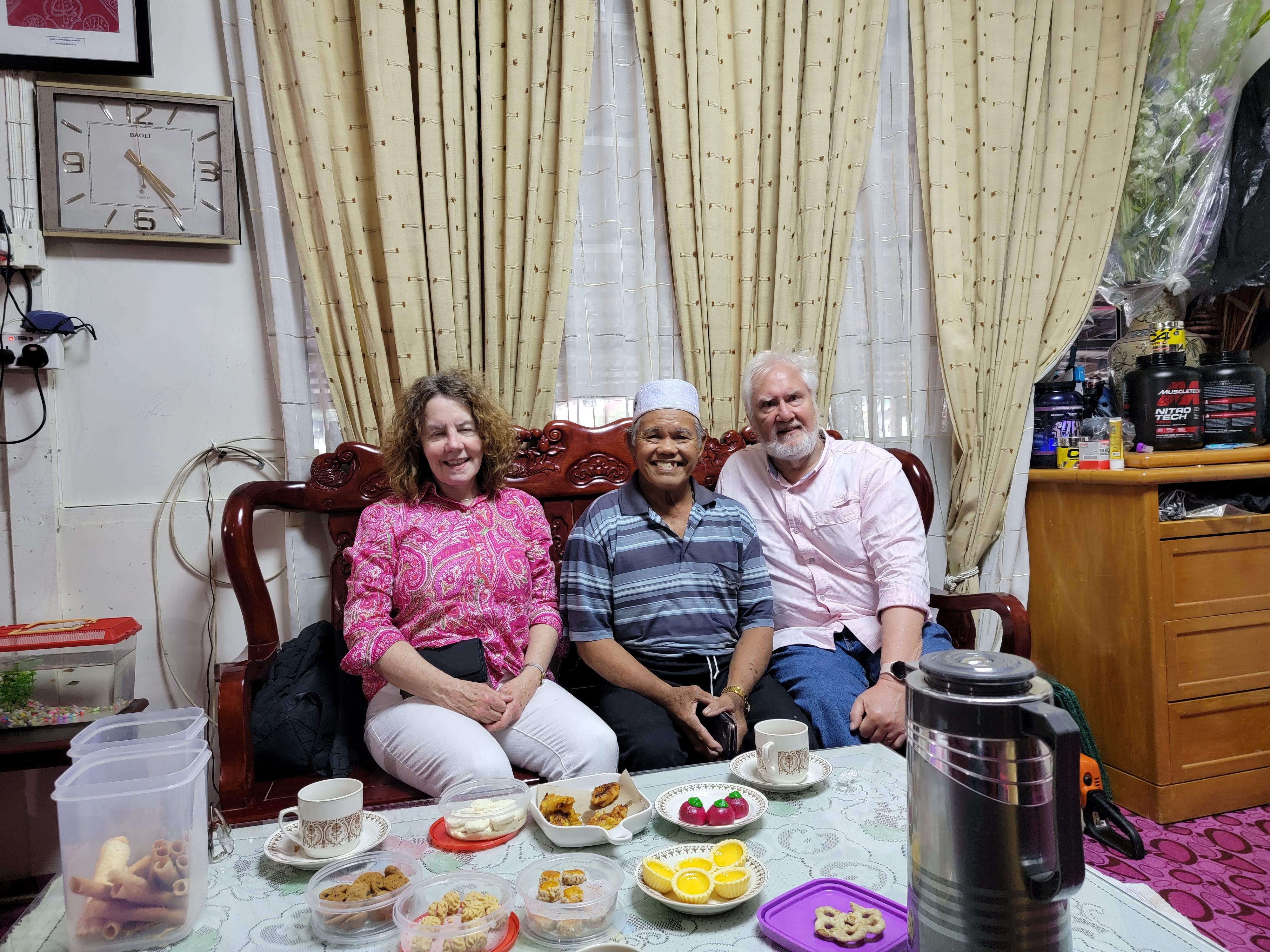
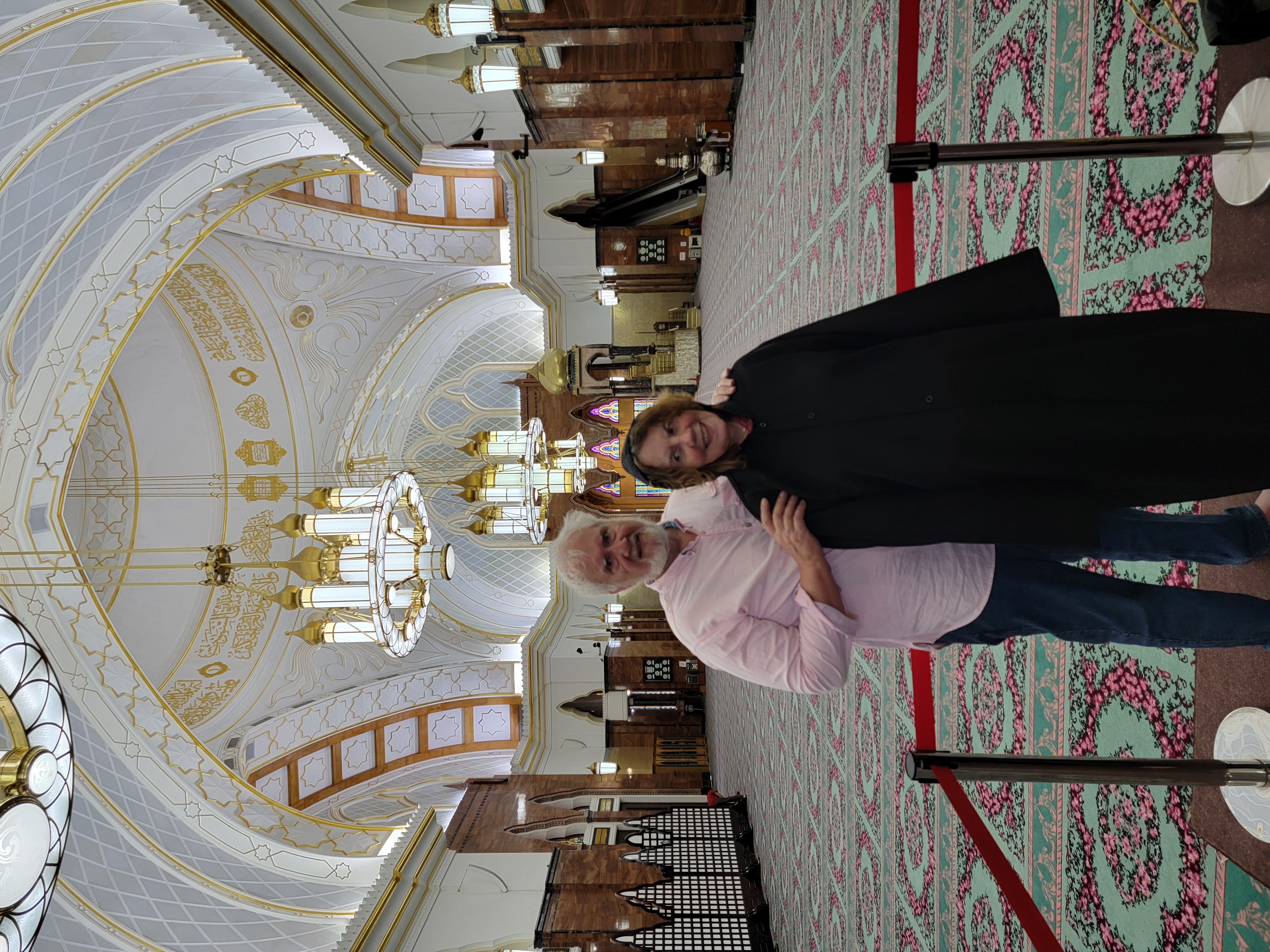 Brunei is a tiny country on the north shore of the island of Borneo. It is very rich. Oil and gas. The Sultan of Brunei is an absolute monarch. We were told that he owns over 7,000 cars (many of them very fancy).
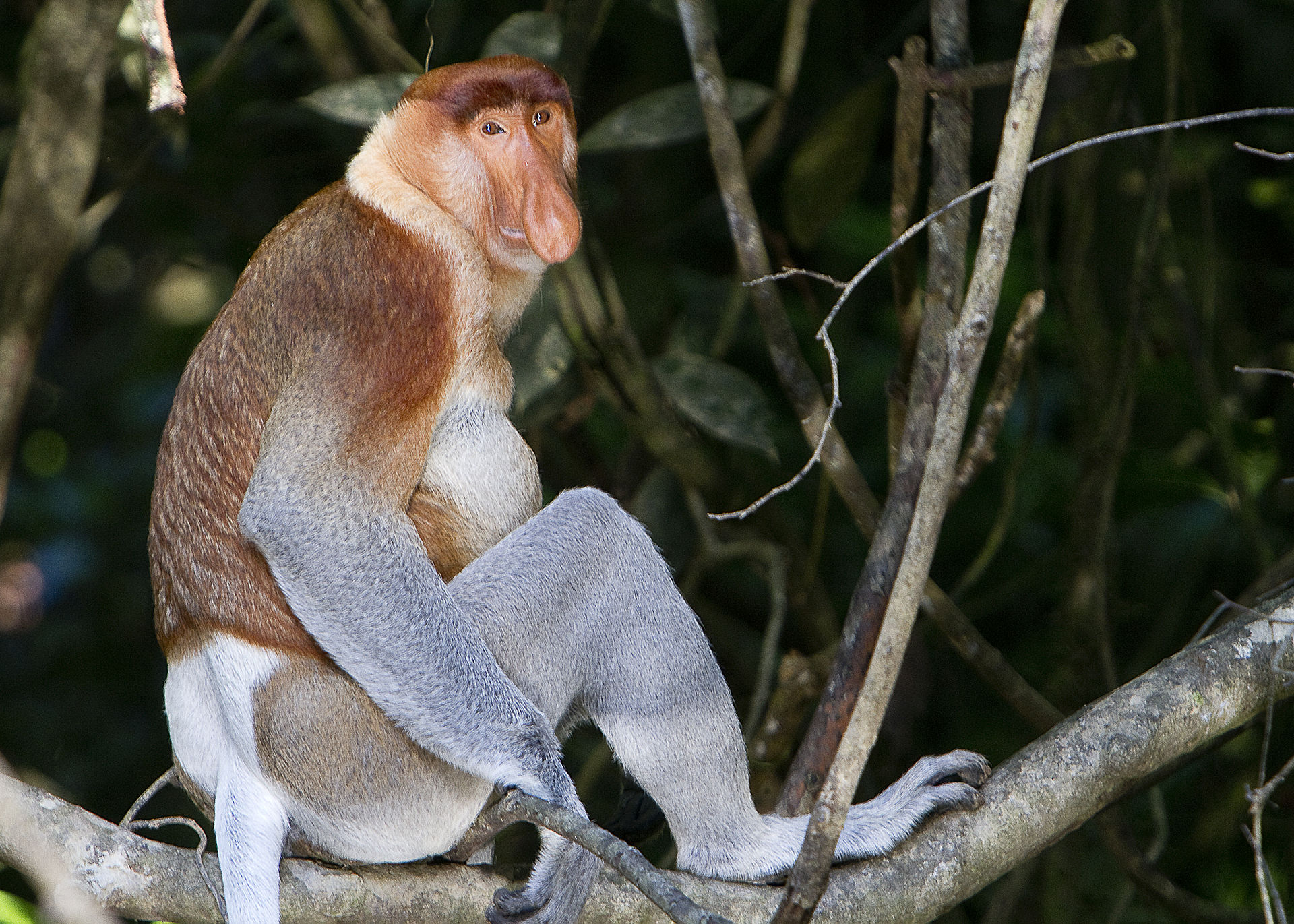
We took more ordinary transportation - a small boat up a small river. We had a nice time eating lunch with the boat driver and his dad (the latter of whom we didn't have any language in common with -- but that was okay). We also met a very funny looking monkey.
Brunei is a Muslim country. (For example, no public displays of Christmas are allowed, although Christians may celebrate in private.) You don't want to be gay there.
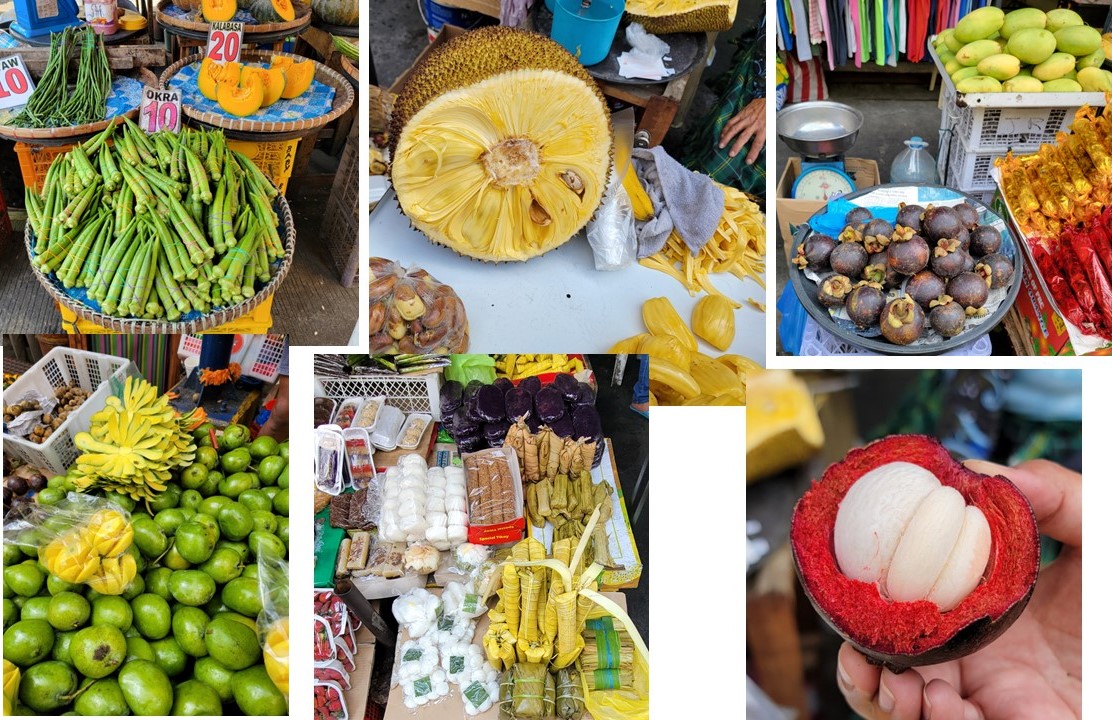
 Manila's Chinatown (called
Binondo there) claims to be the oldest Chinatown in the world. (We have to assume that cities in China itself don't count.) There are about 20,500 people there. And, I believe, substantially more than that fruits and vegetables in the market.
Manila's Chinatown (called
Binondo there) claims to be the oldest Chinatown in the world. (We have to assume that cities in China itself don't count.) There are about 20,500 people there. And, I believe, substantially more than that fruits and vegetables in the market.
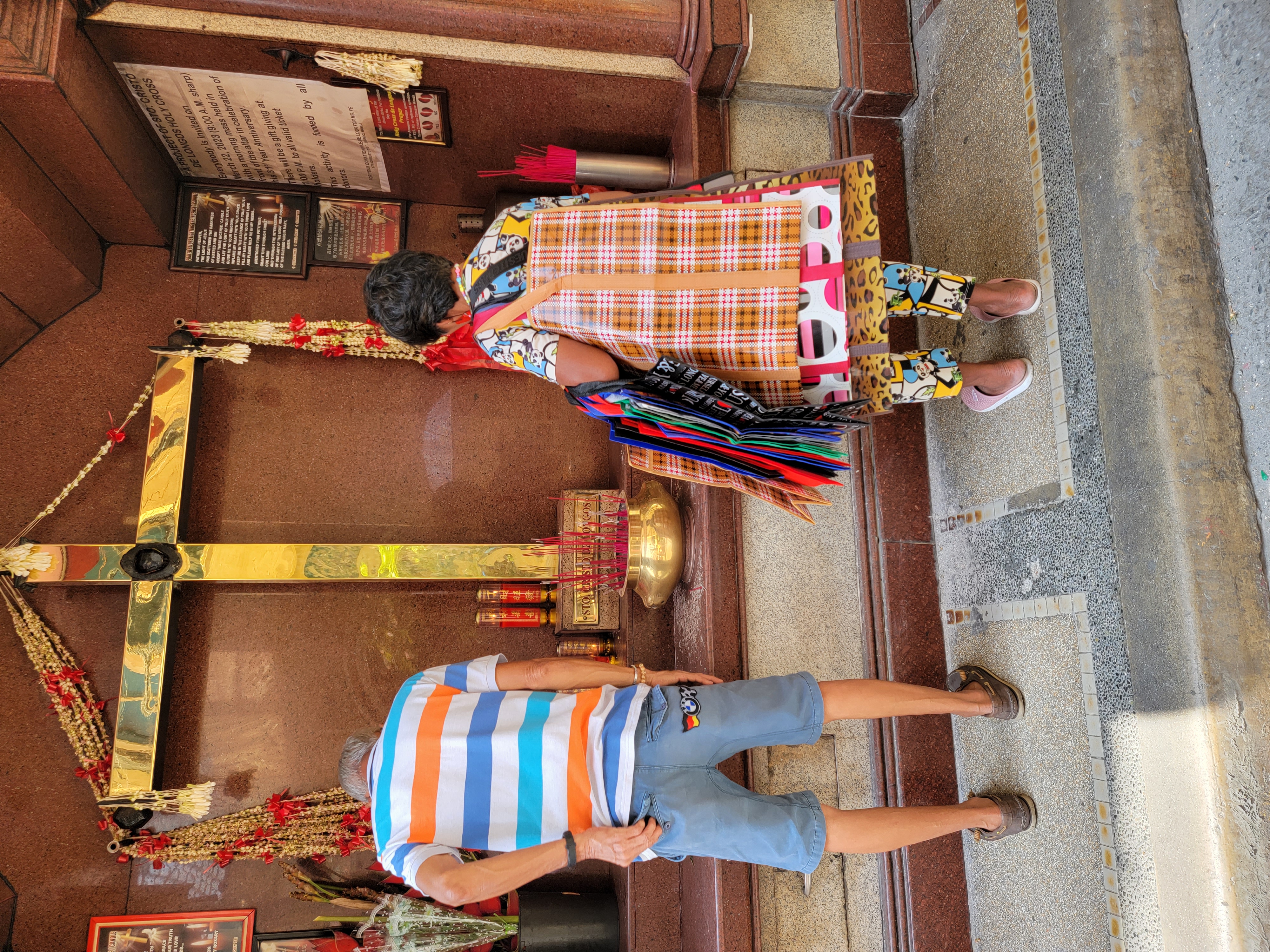
One of the churches we saw is an interesting mixture of Catholicism and traditional Chinese religion.
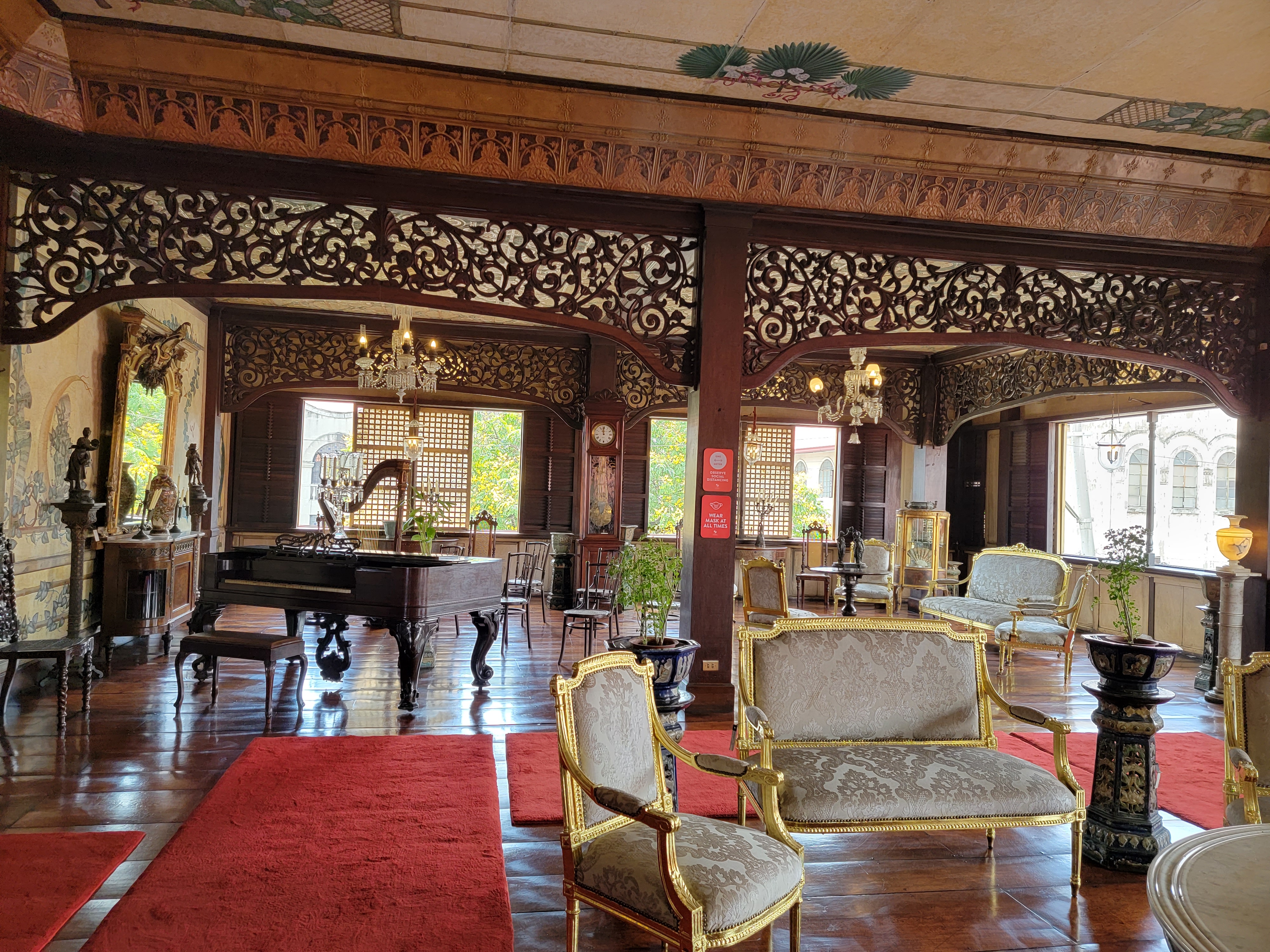
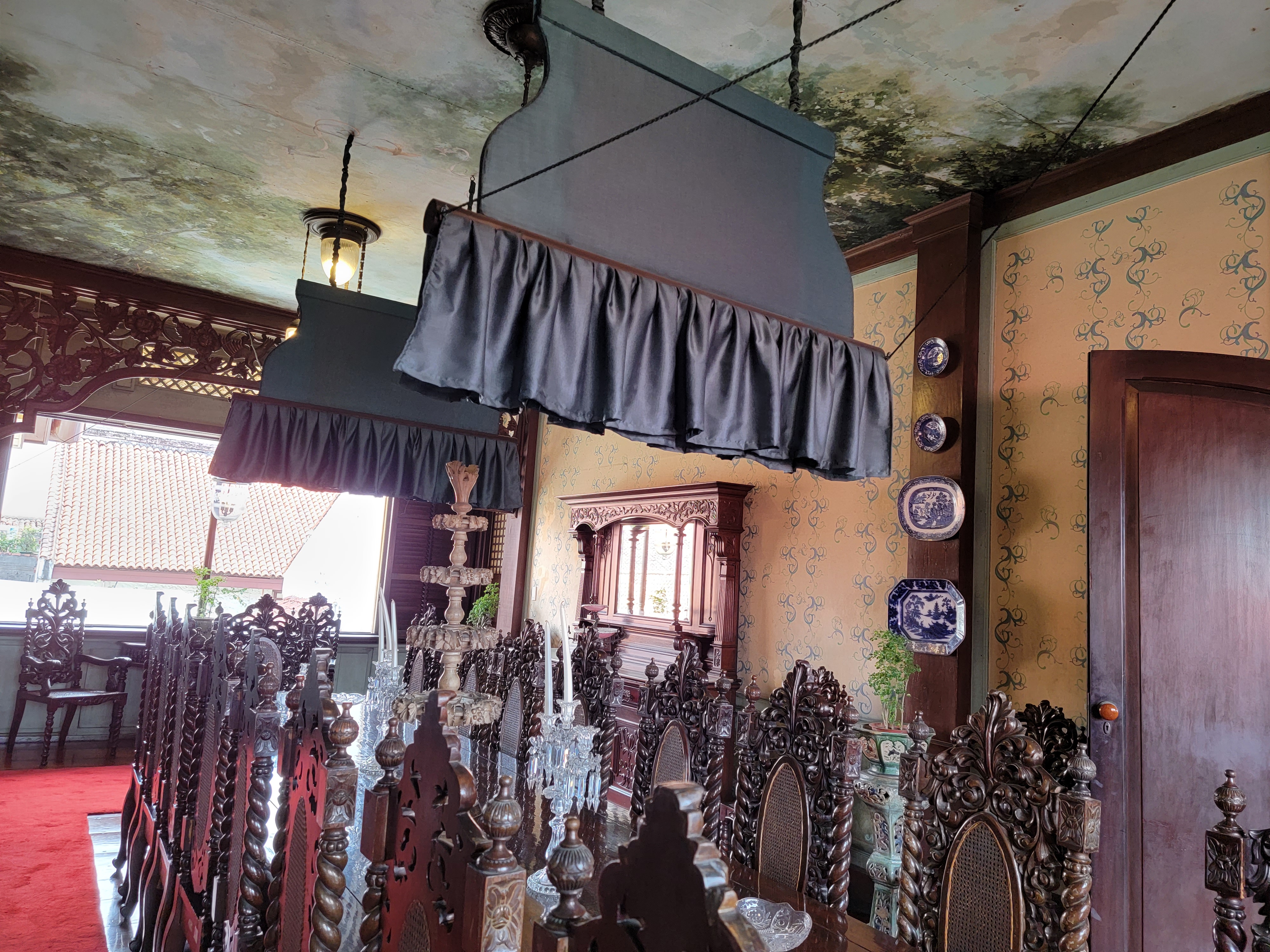 Imelda Marcos created Casa Manila in the 1980s. It's a copy of an 1850s Spanish colonial house. You will be shocked to see that it is way over the top. The black fabric things over the table in the dining room are fans. They were pulled back and forth by servants standing off to the side. It is hot and humid there. I get it.
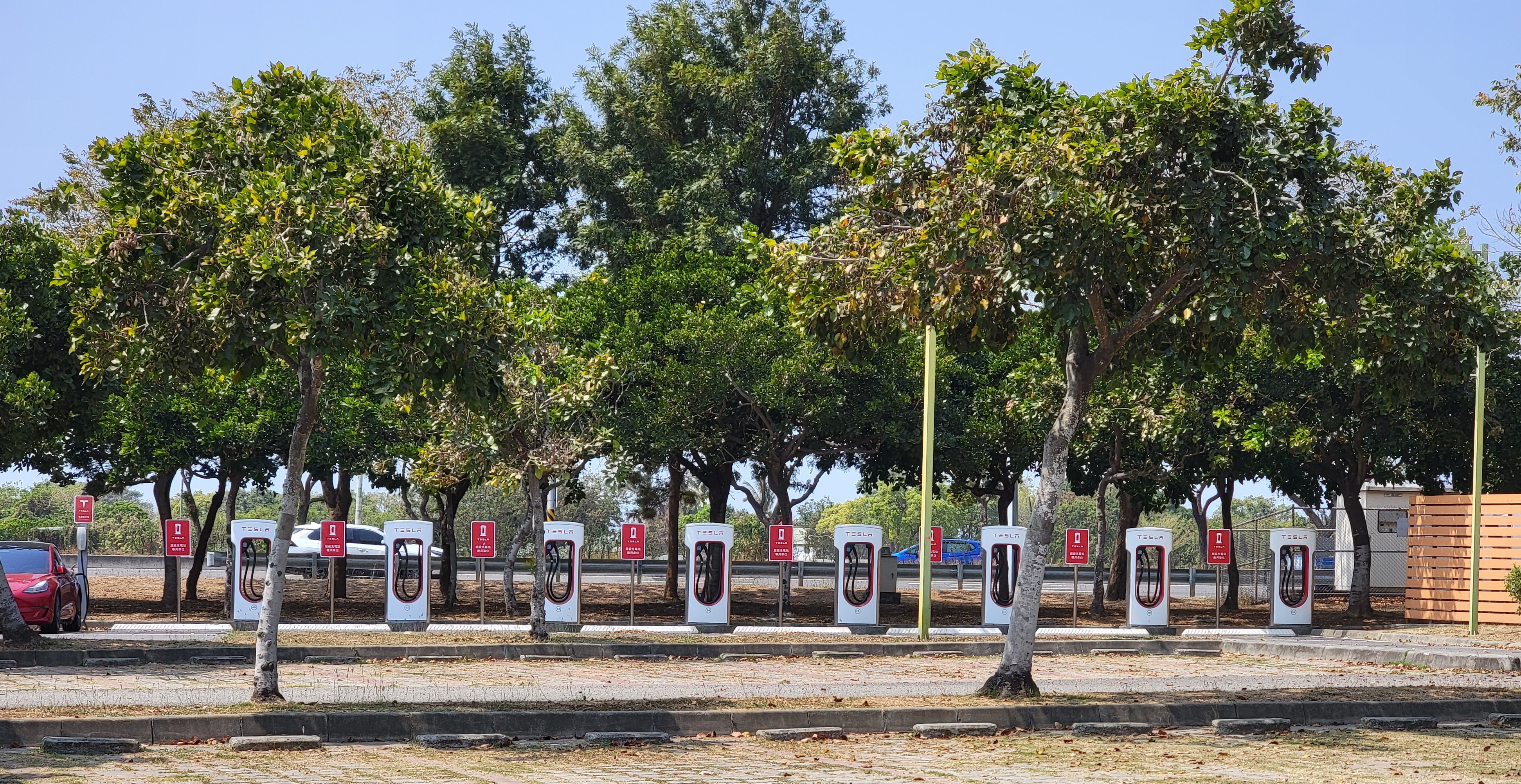 We were thrilled to see these in Tainan, our first stop in Taiwan.
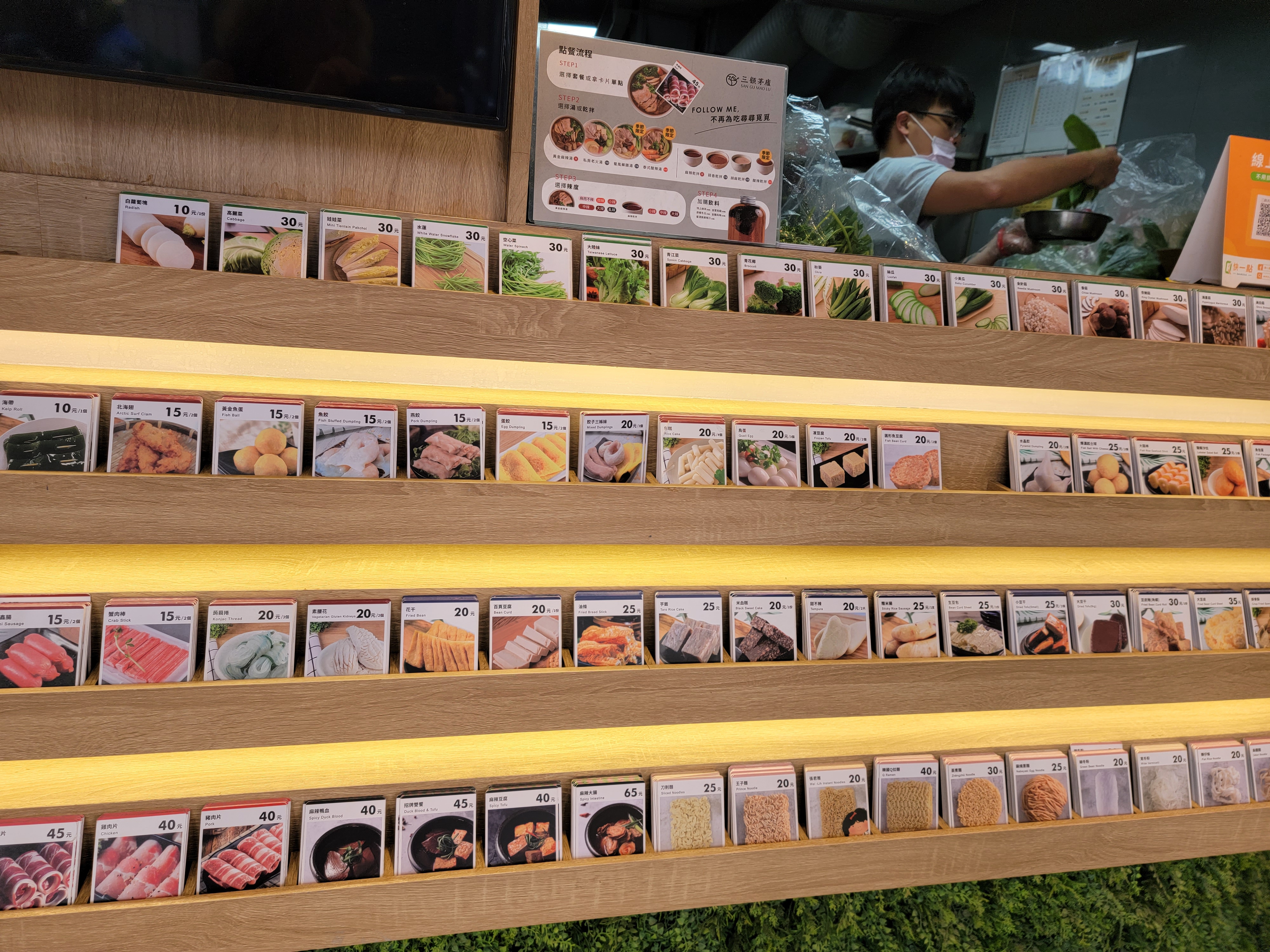
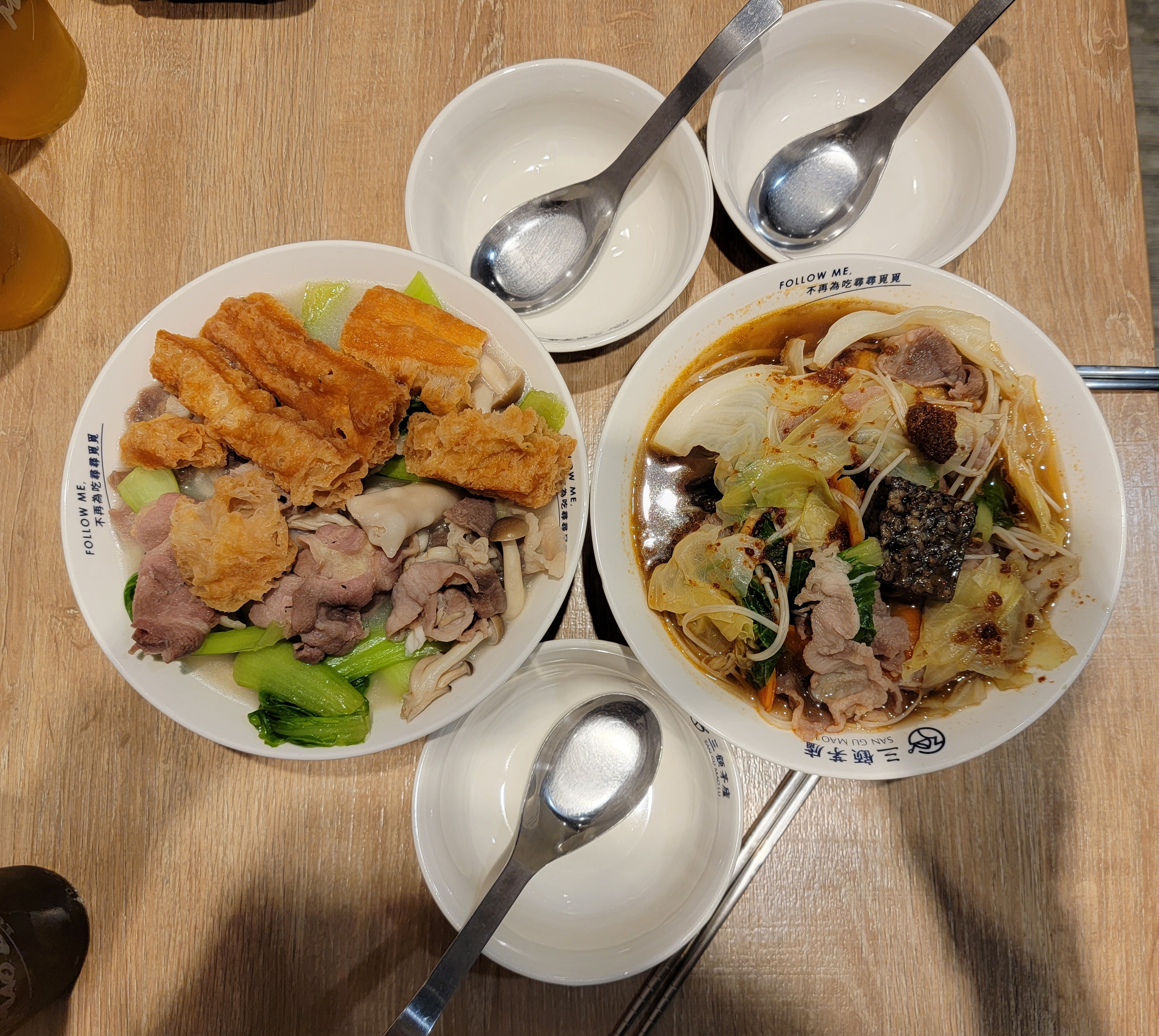
 Two days later, we had two interesting food experiences in Taipei. We went to lunch at a hot pot restaurant. At the front, before you even go in, there's a rack. From a distance, it looks like it's got seed packets. But, no. It has cards with pictures of the foods you can get for your hot pot. You choose the ones you want. Then you pay. Then you go inside and sit down. We chose lots of things.
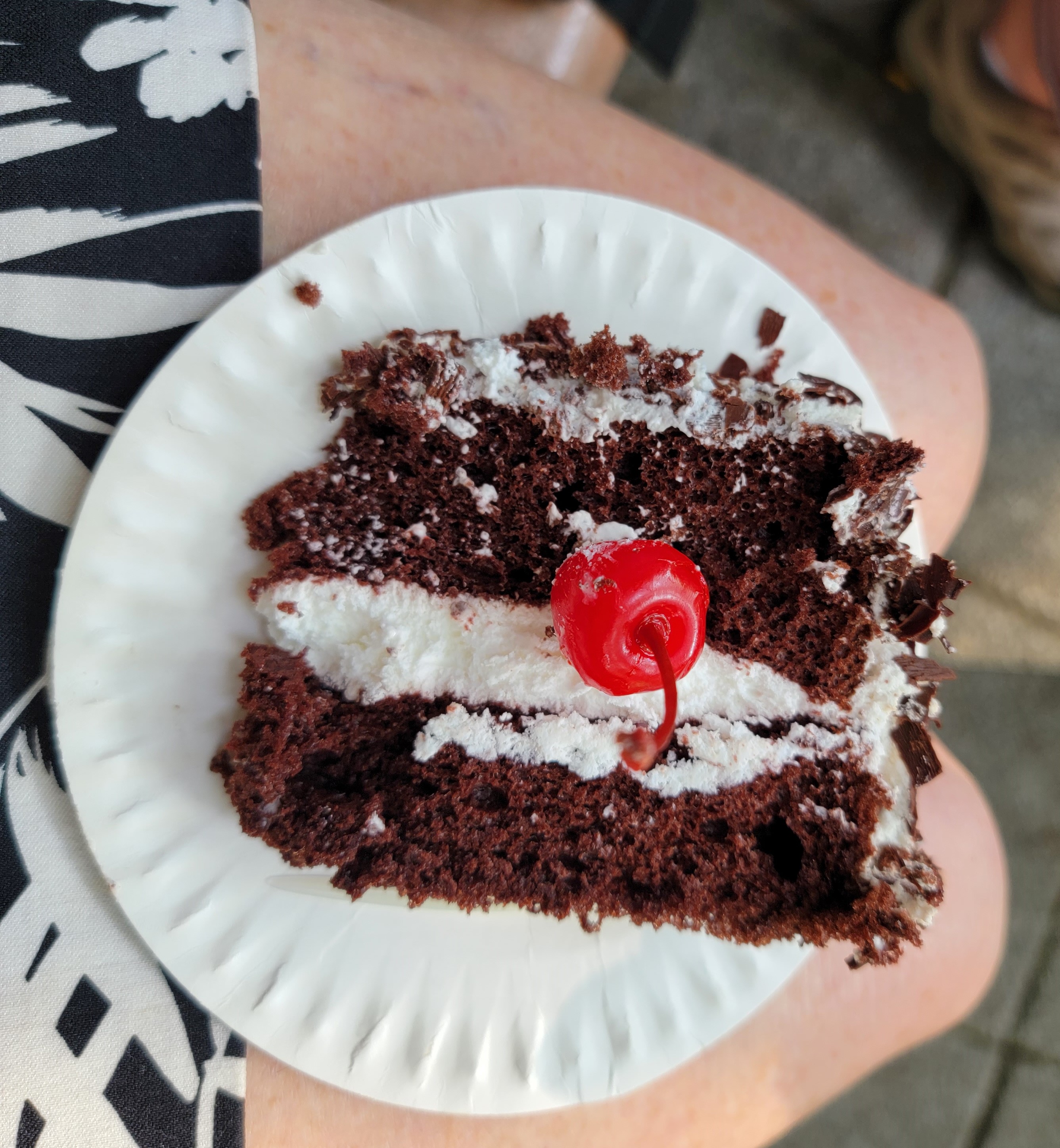
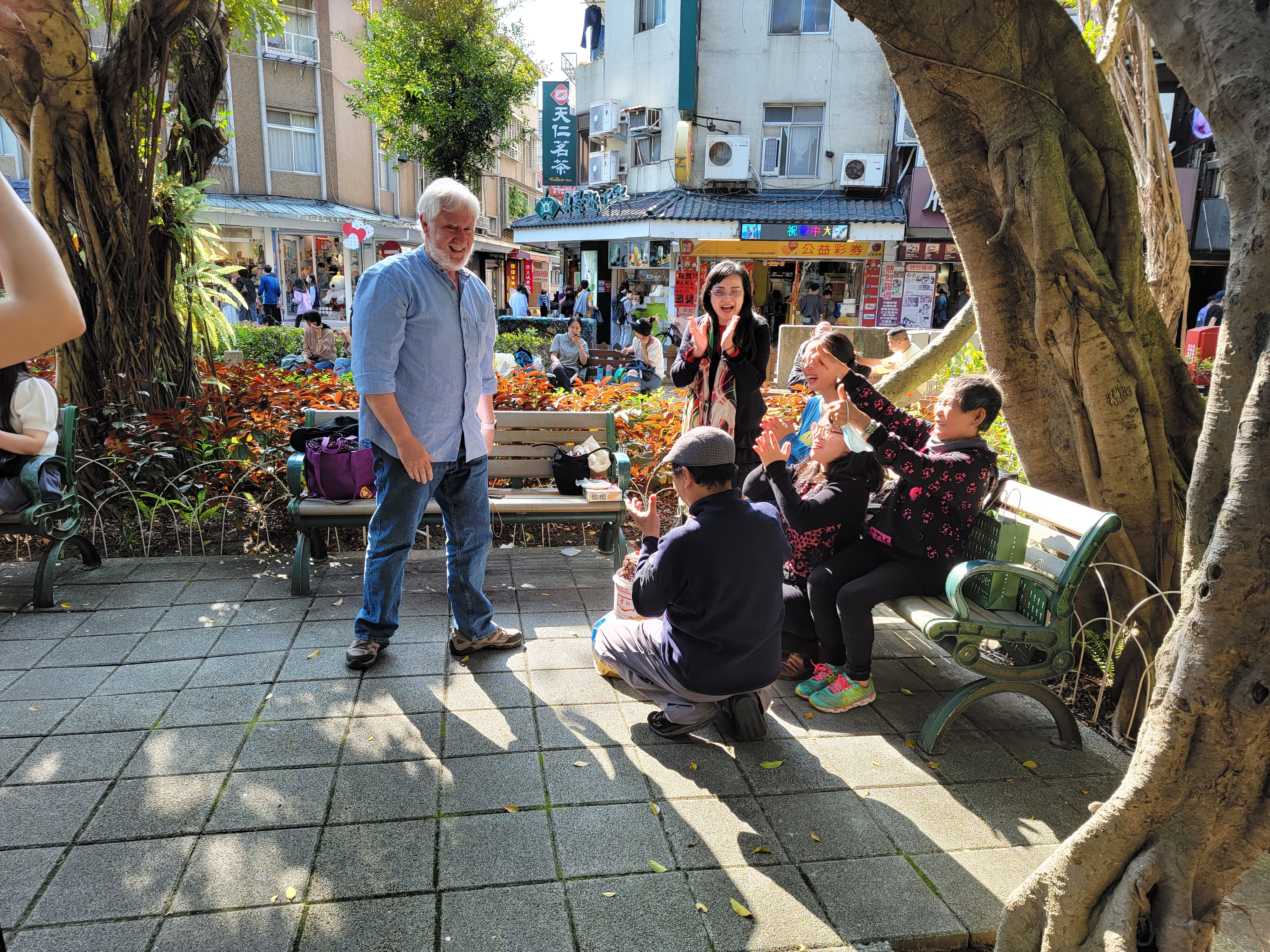
Later in the afternoon, we sat down just to rest in a lovely small park. We had sort of smiled a bit at the family on the next set of benches -- Mom, Dad, and three twenty-something daughters. The next thing we knew, they were beckoning us over. They were celebrating a gender reveal for one of the girls and the birthday of another one. They gave us cake -- Black Forest. I guess some things are popular everywhere. Alan joined in singing Happy Birthday.
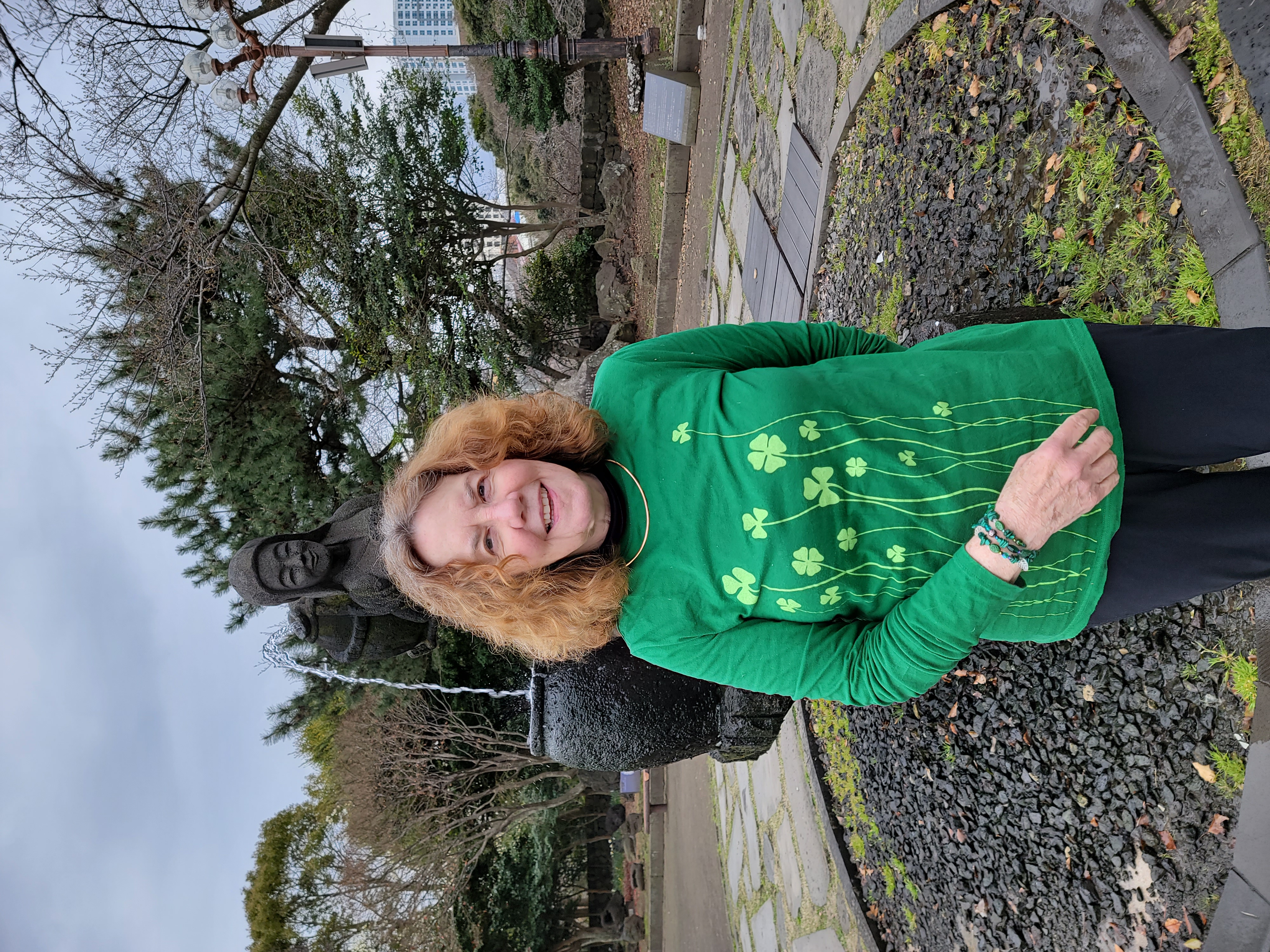
 St. Patrick's Day in (South) Korea. First time there (the Seoul airport doesn't count).
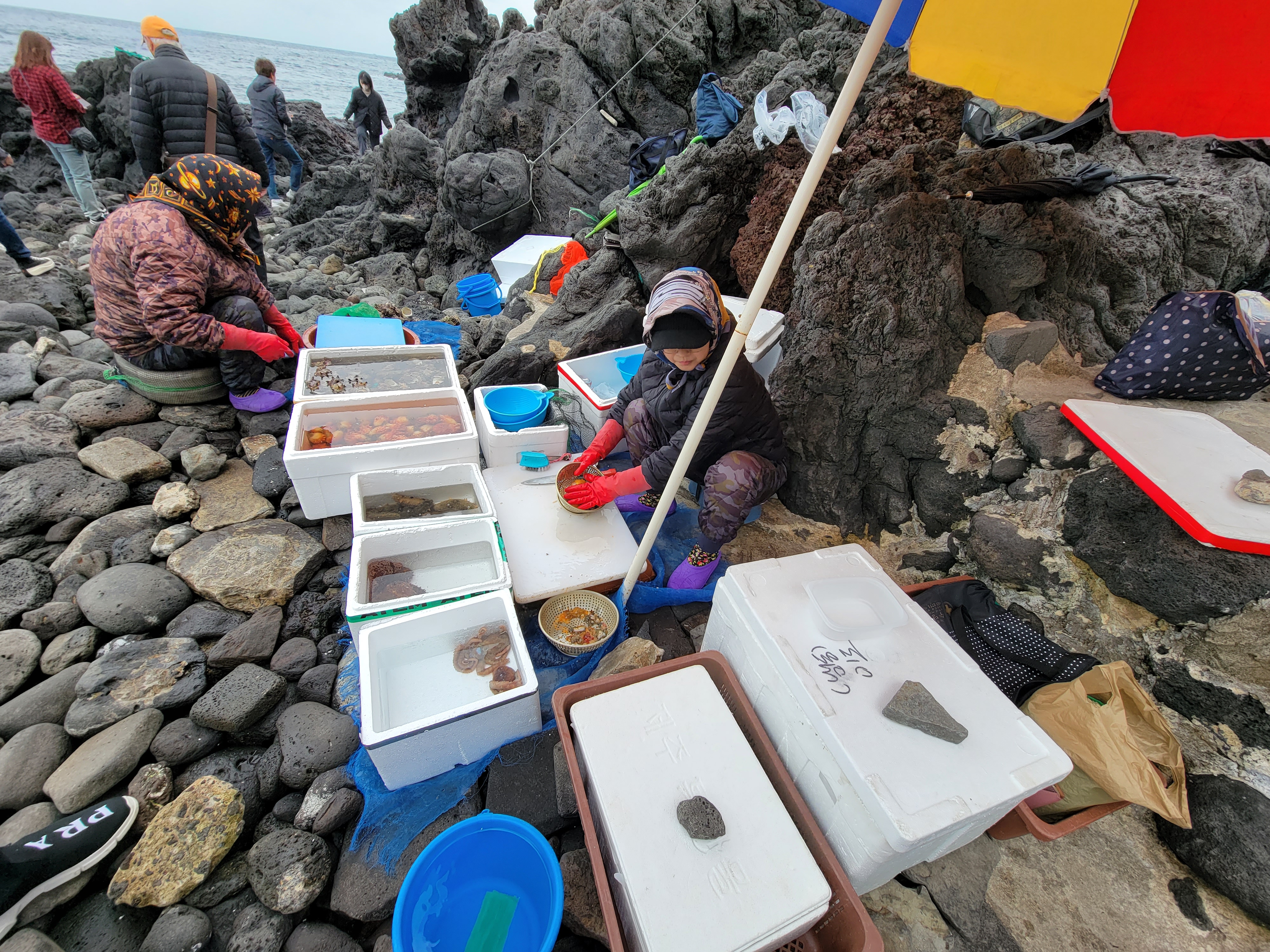
The most amazing thing - the women divers of Jeju Island. These women, some of them 80 years old, dive up to 10m deep to collect shellfish. Then they set out their catch on the rocks and sell it. They've been doing it since sometime in the 17th century. Today, they do use wetsuits. But no scuba gear. They simply hold their breath.
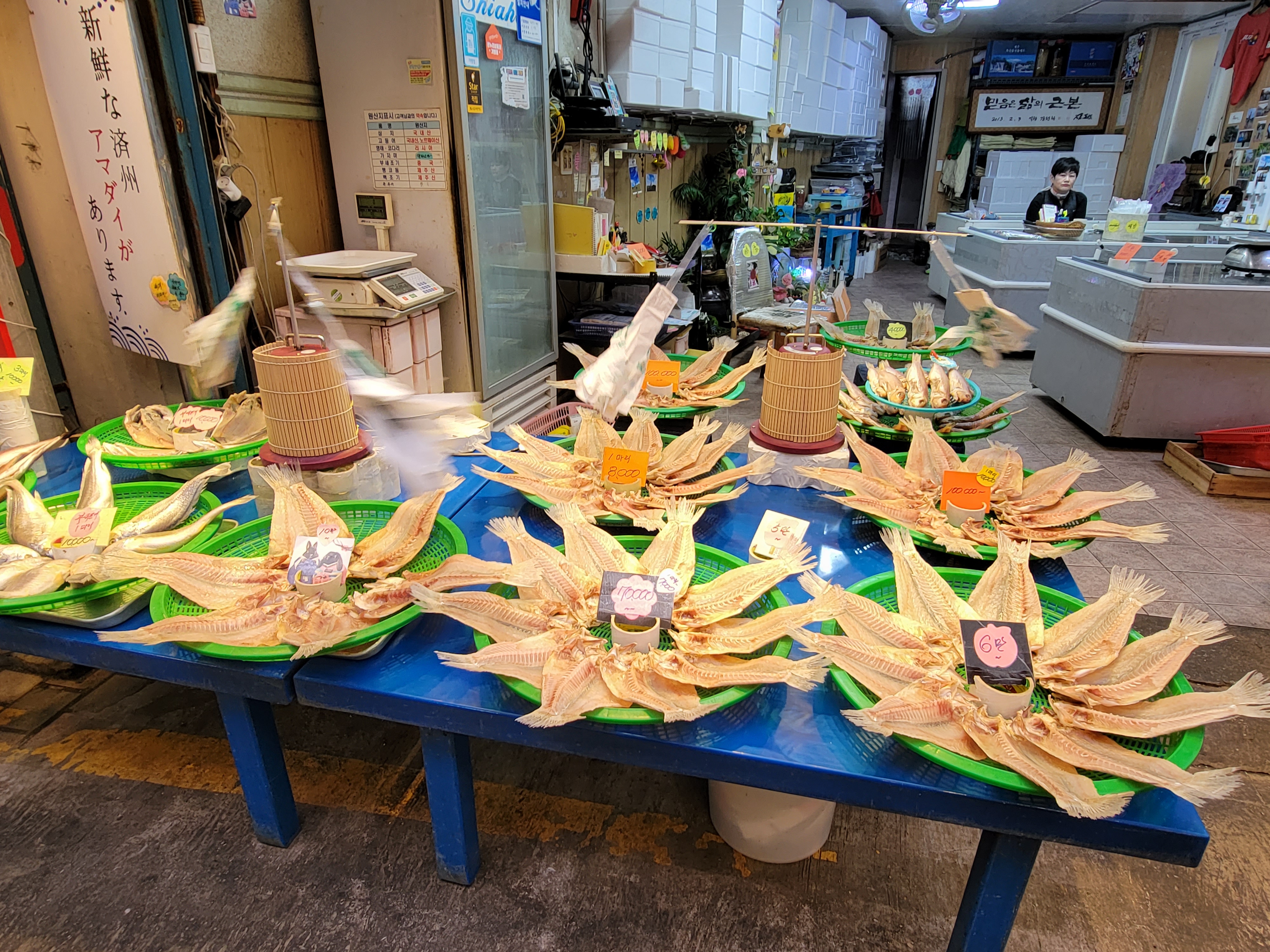
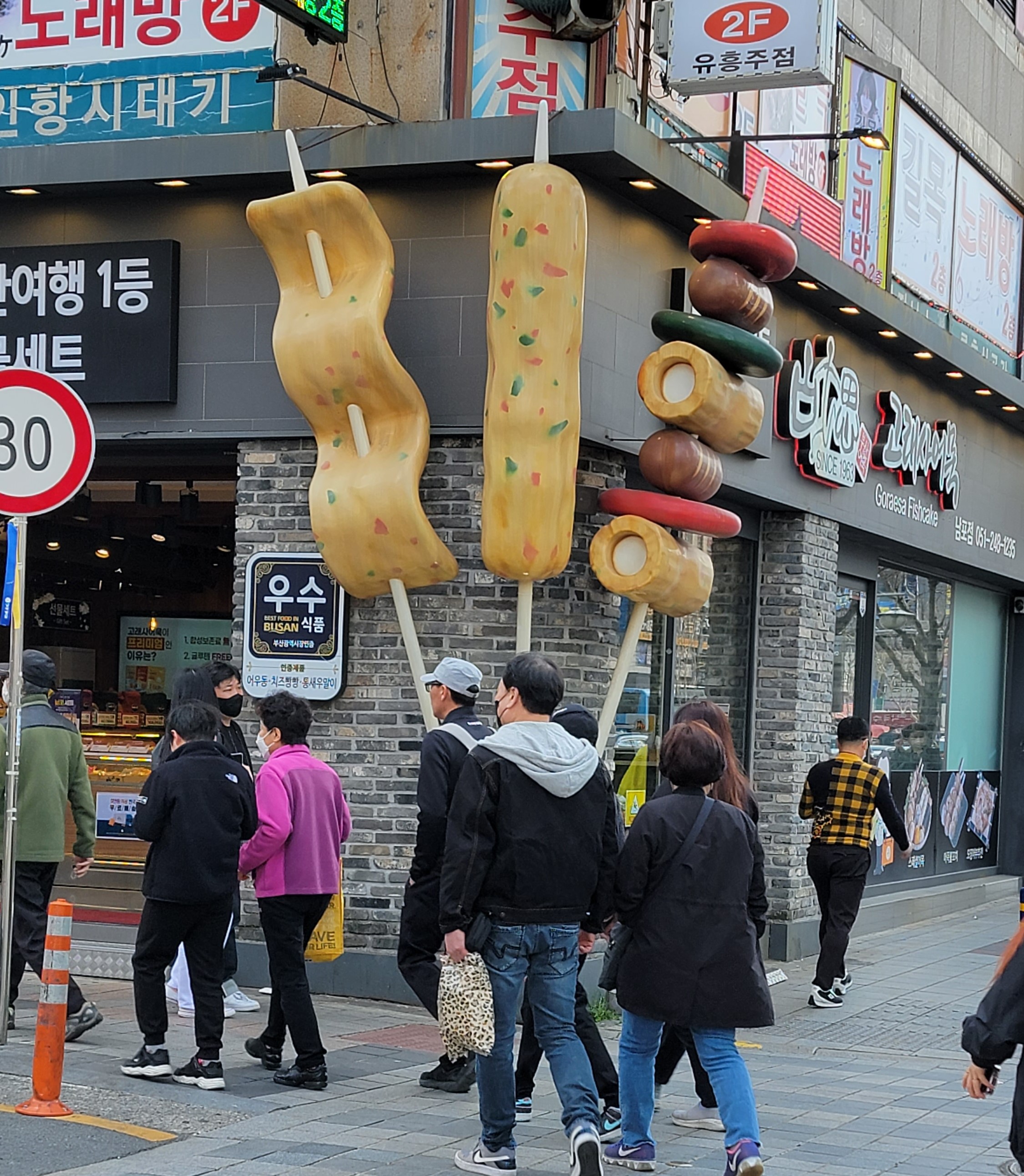
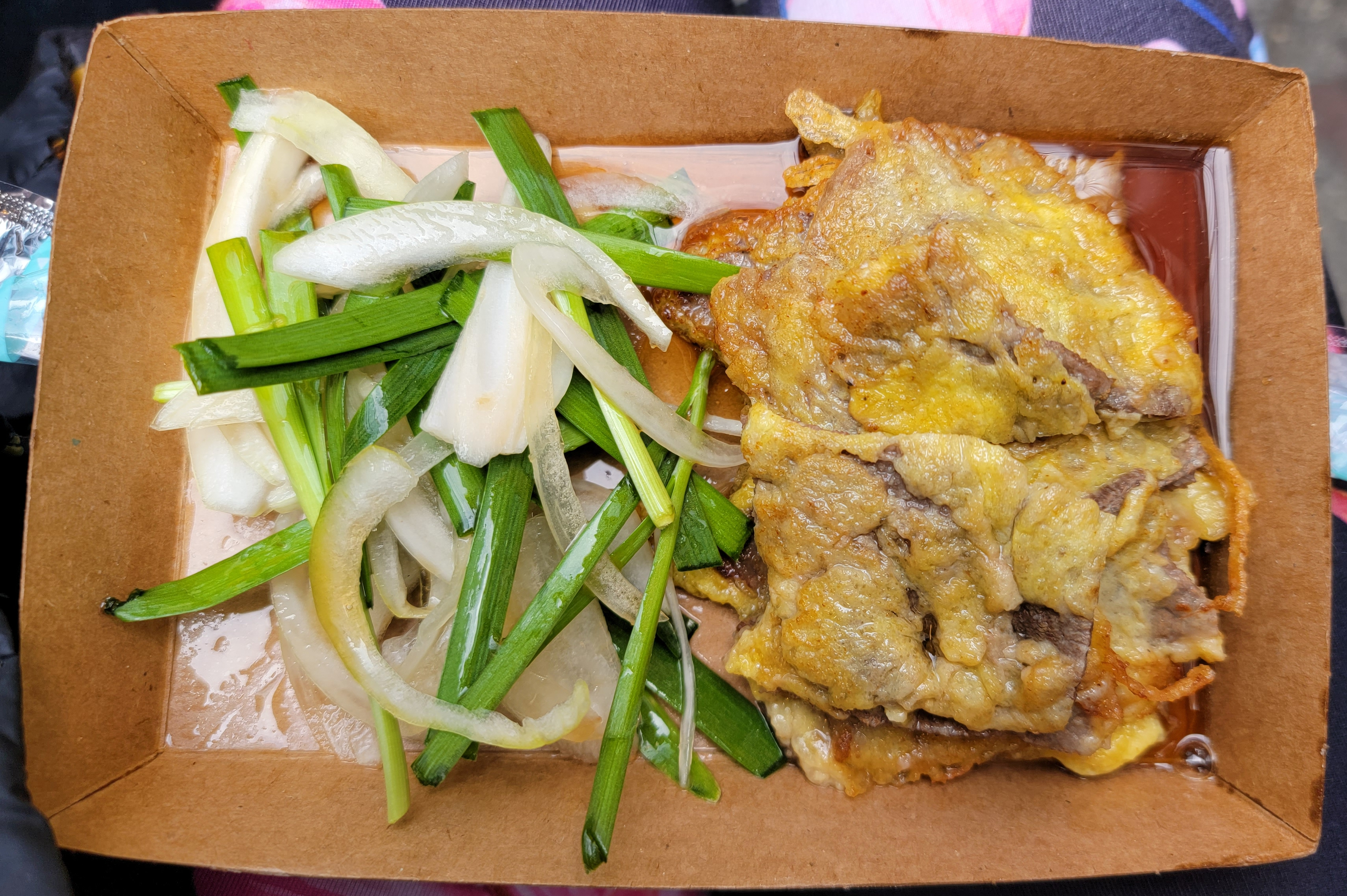 I think that Korea sometimes gets a bad rap on the food front. I admit that we did not go in search of kimchi. And there were cool looking things (like dried fish) that we didn't try. But they had great street food and cool signs advertising it.
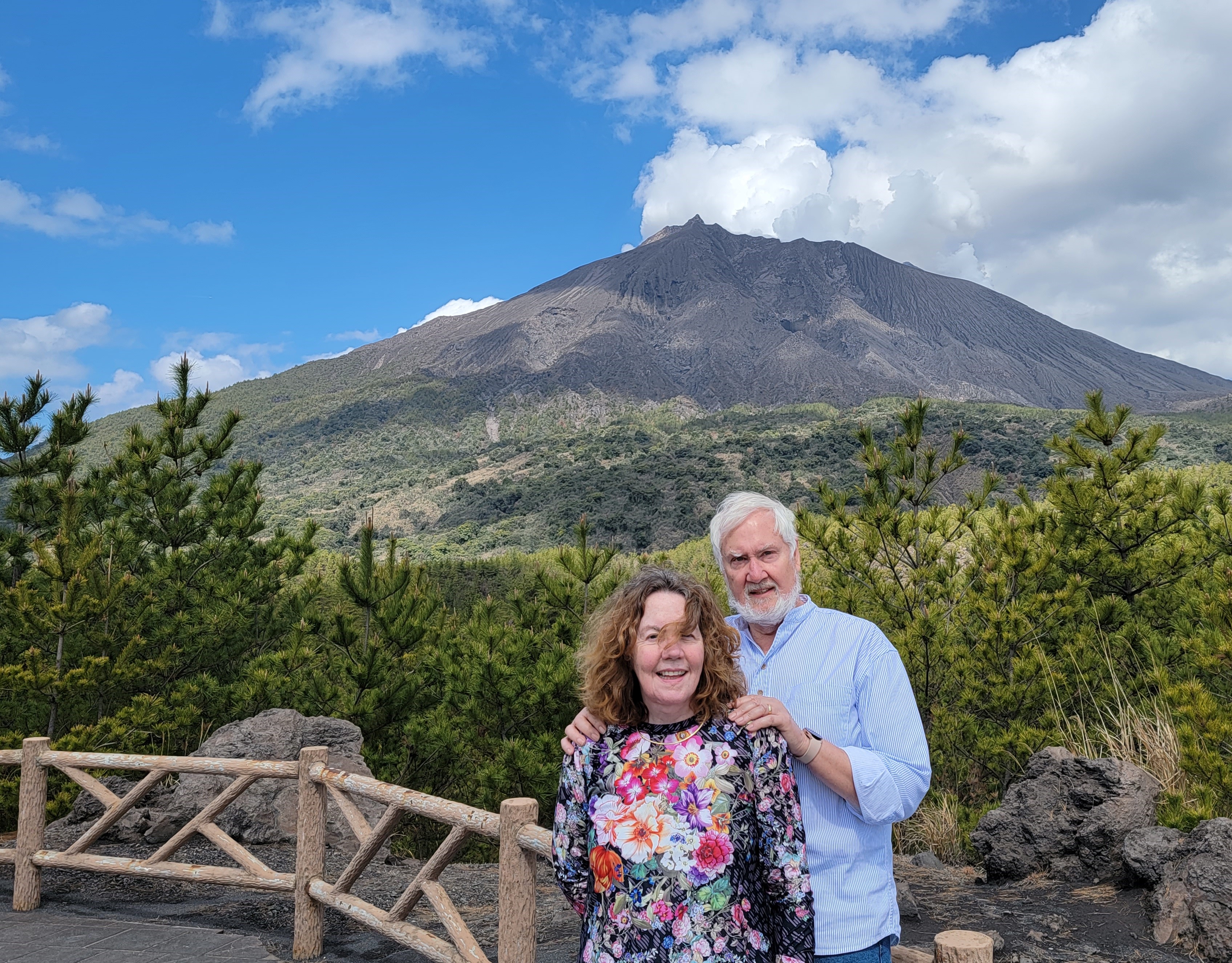 Japan has, of course, its most famous volcano. But it has others too (the whole "ring of fire" thing). This one is Sakurajima (literally cherry blossom island). It refused to perform for us (having, I guess, gotten a message to that effect from the one we visited in Iceland).
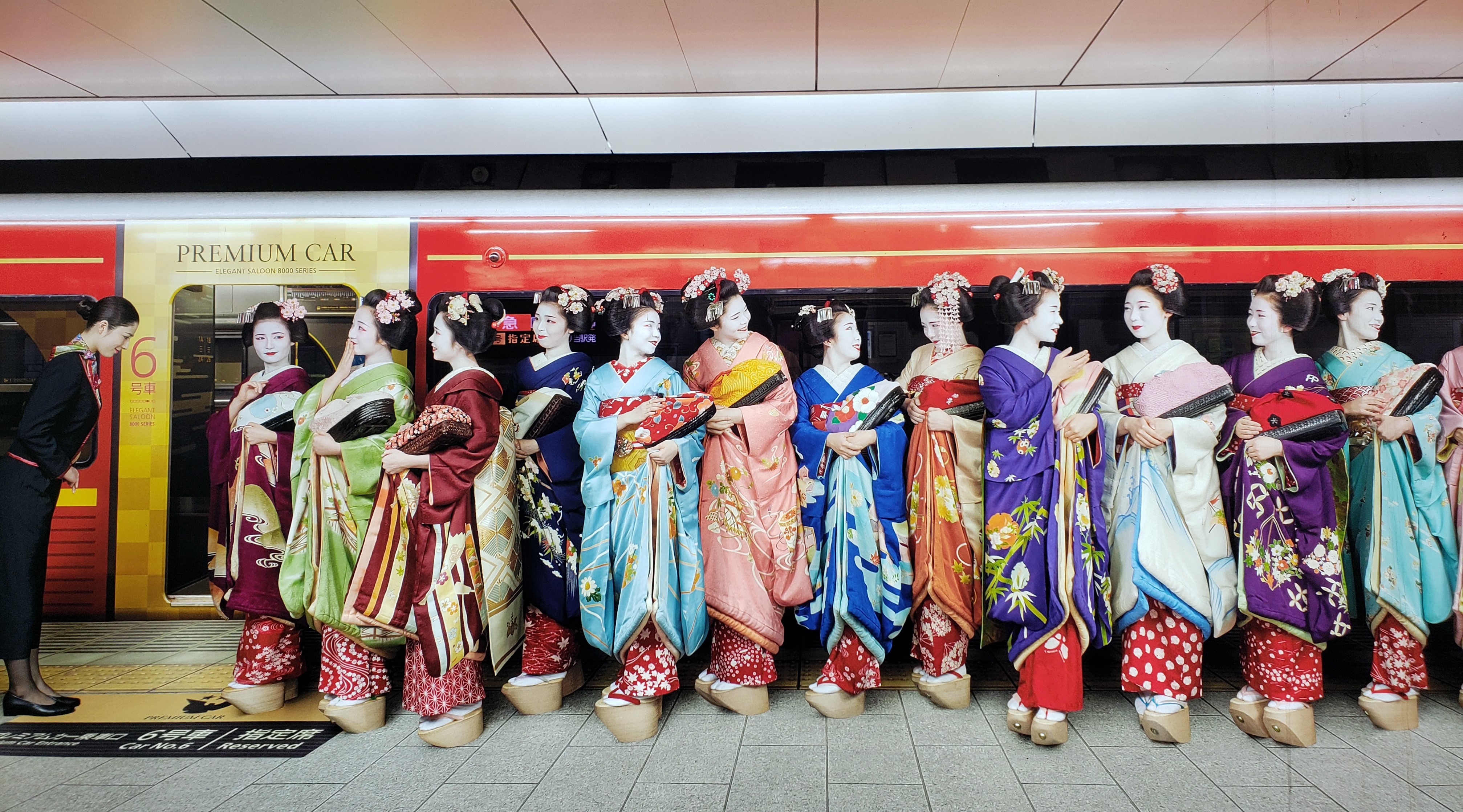
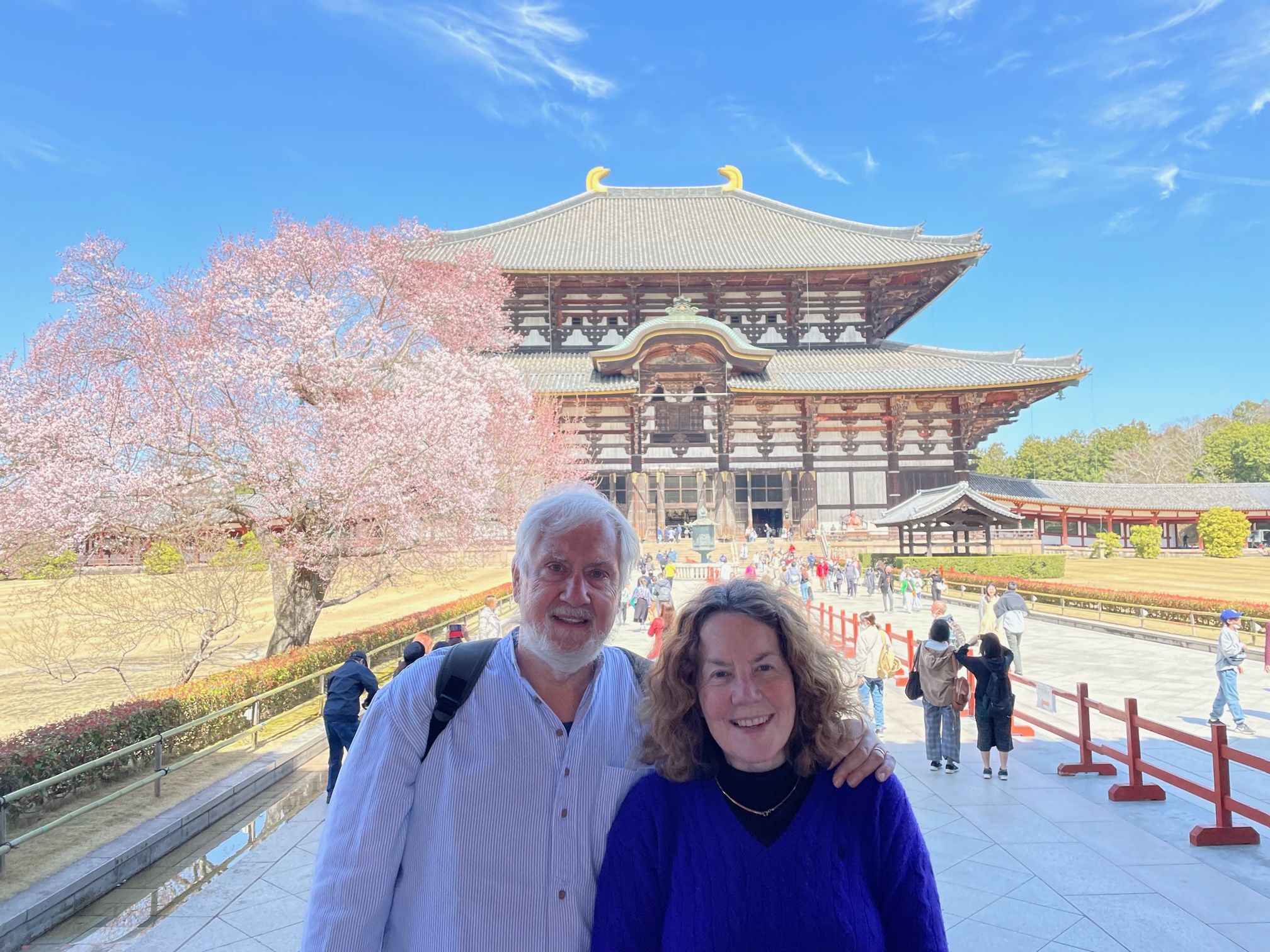
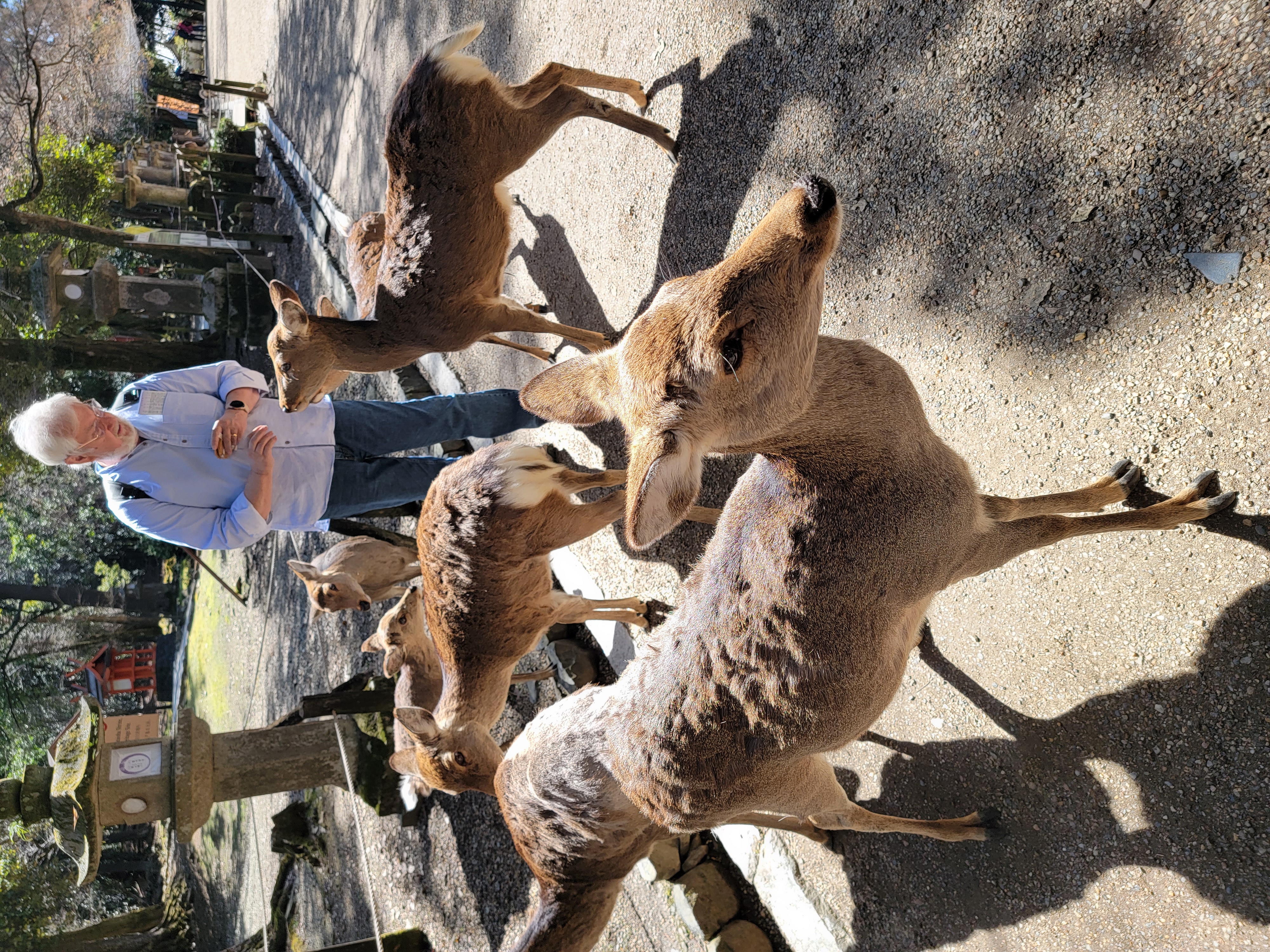 We took a train from Kobe to Nara.
The park there is home to deer who are messengers of the gods. You'd better not mess with them. You can, however, feed them special crackers.
They also have stunning shinto shrines and Buddhist temples. This is the Todai-ji temple.
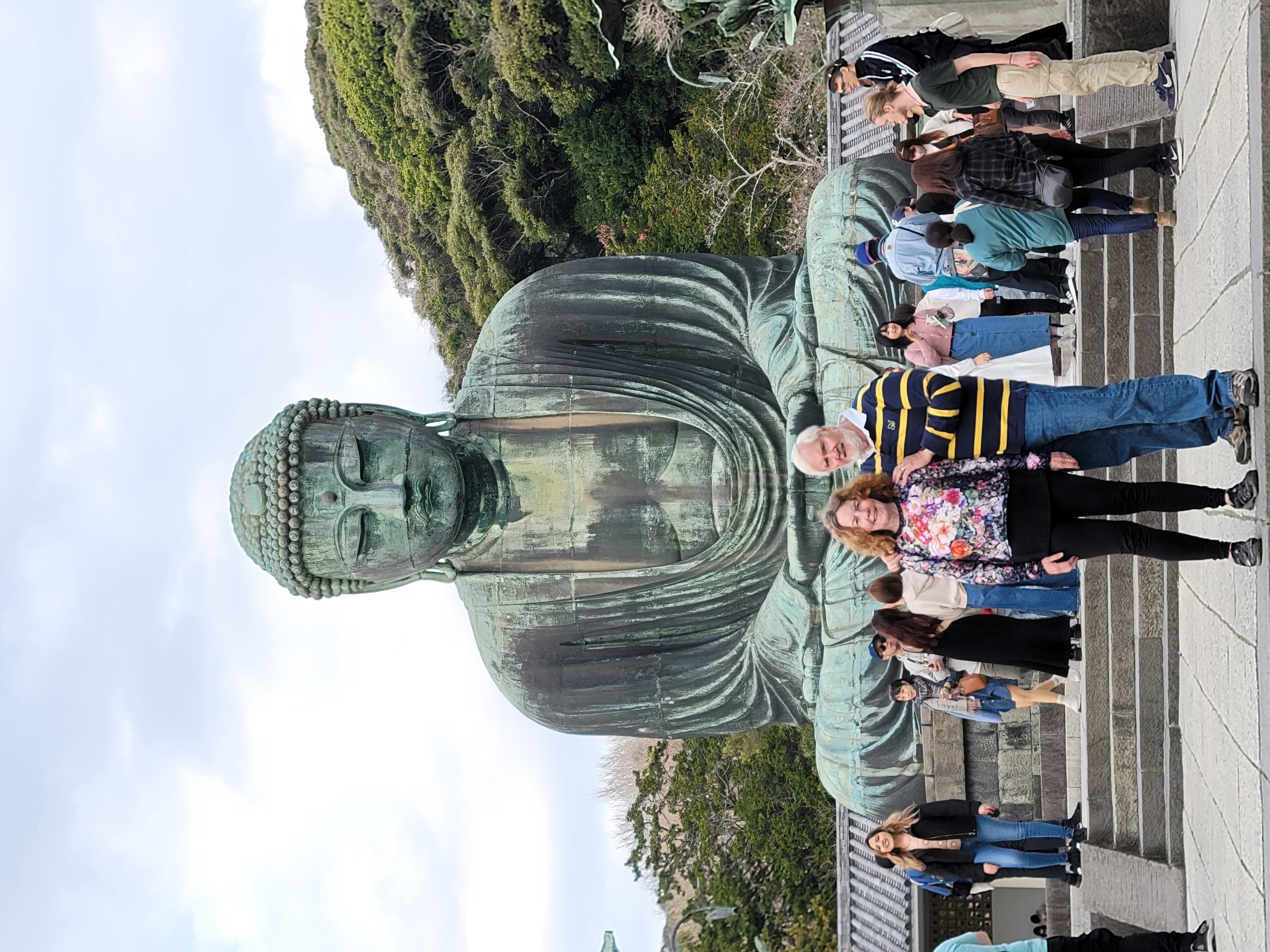 On our last day in Japan, in Kamakura (a few miles southwest of Yokohama), we realized how small we were compared to Buddha.
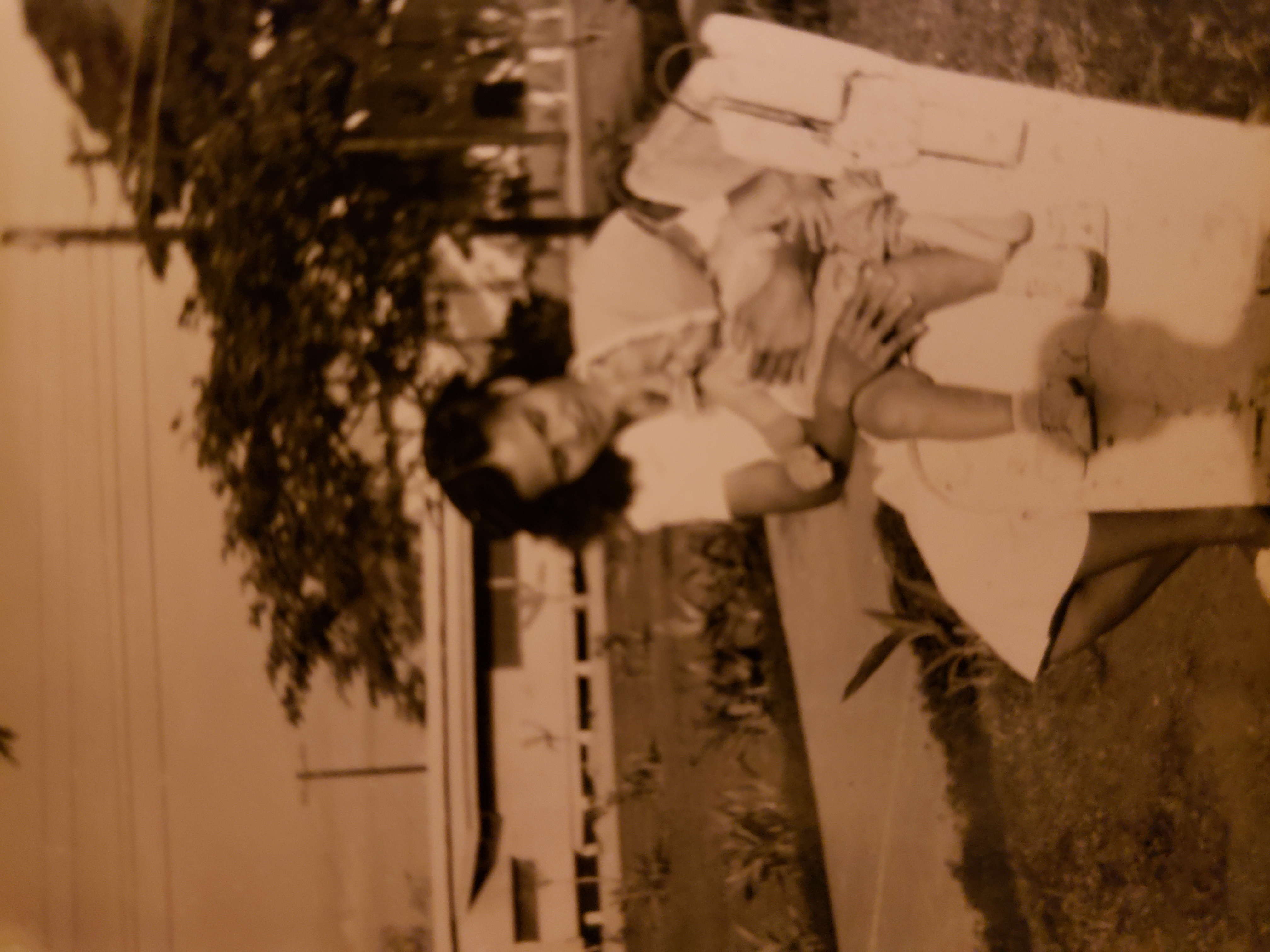
 Alan's family moved (a lot).
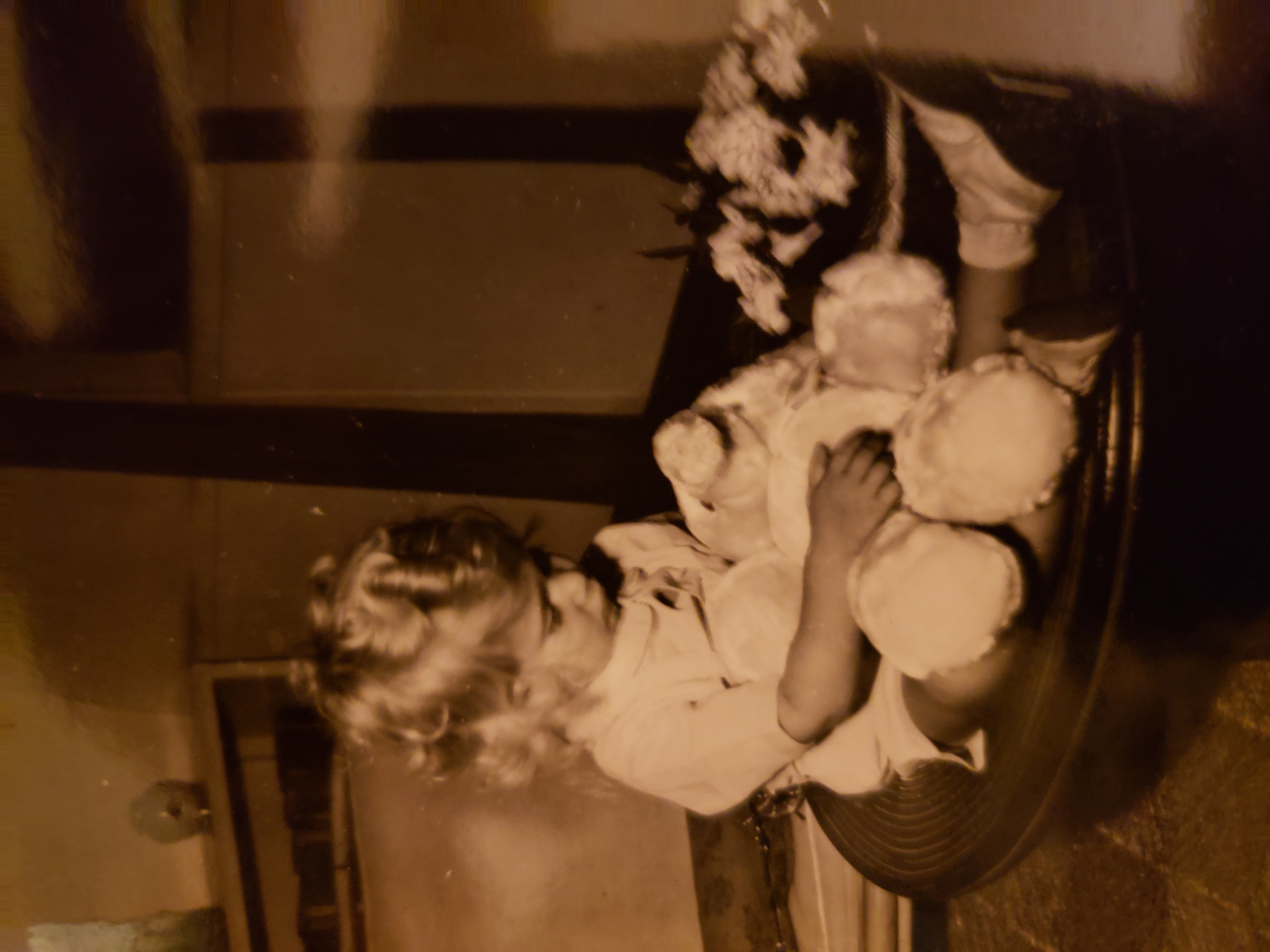
Alan lived on the US Naval Base Subic Bay, in The Philippines, for about 18 months, starting when he was six months old in 1947. Here he is with his Philippina ama. And with his bear. Wasn't he cute back then?
It was a life-long dream to return. He finally managed to do it, 74 years later. But the US Navy left after the 1991 Mt. Pinatubo eruption. Subic Bay is now a "freeport zone".
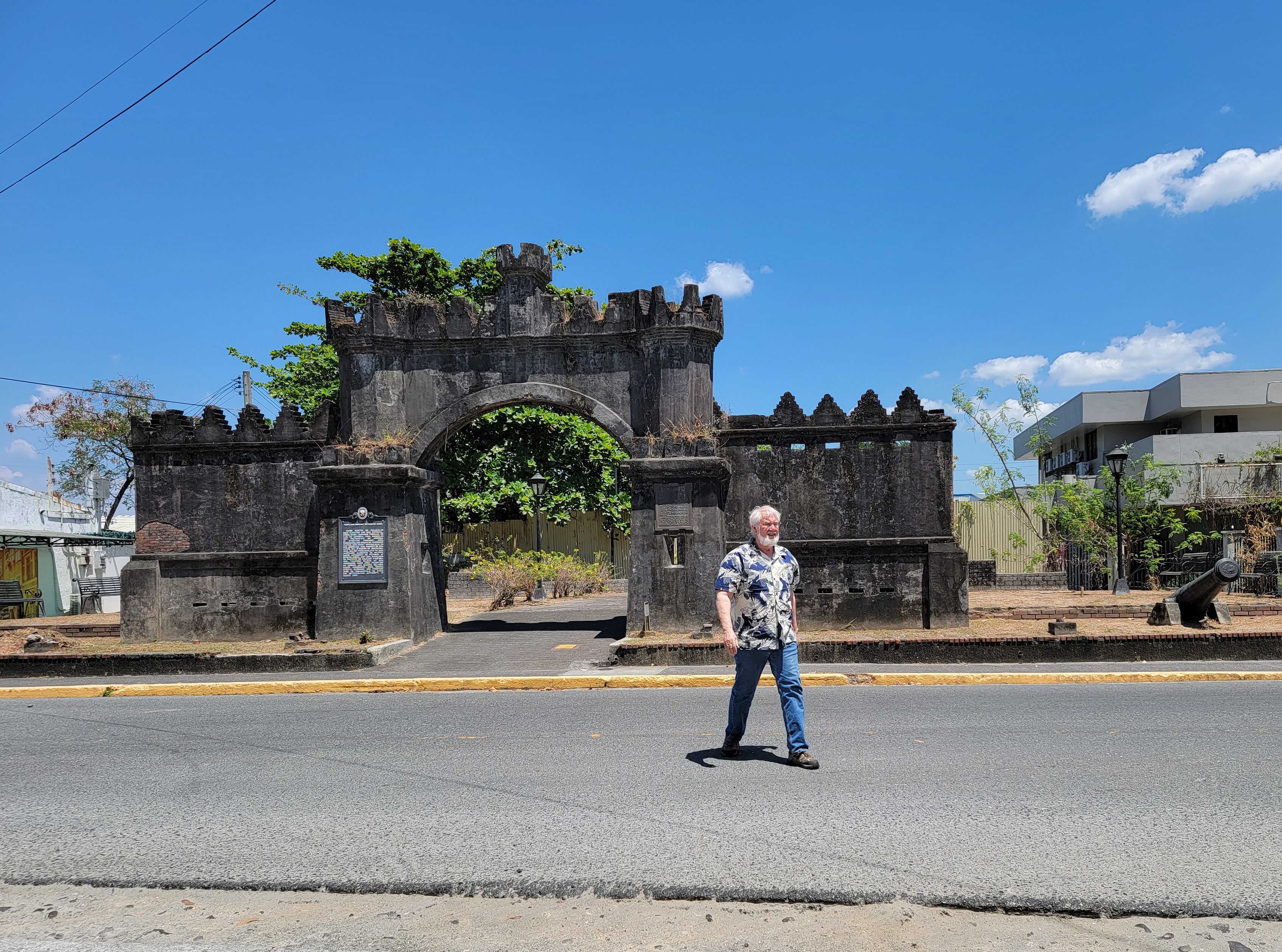
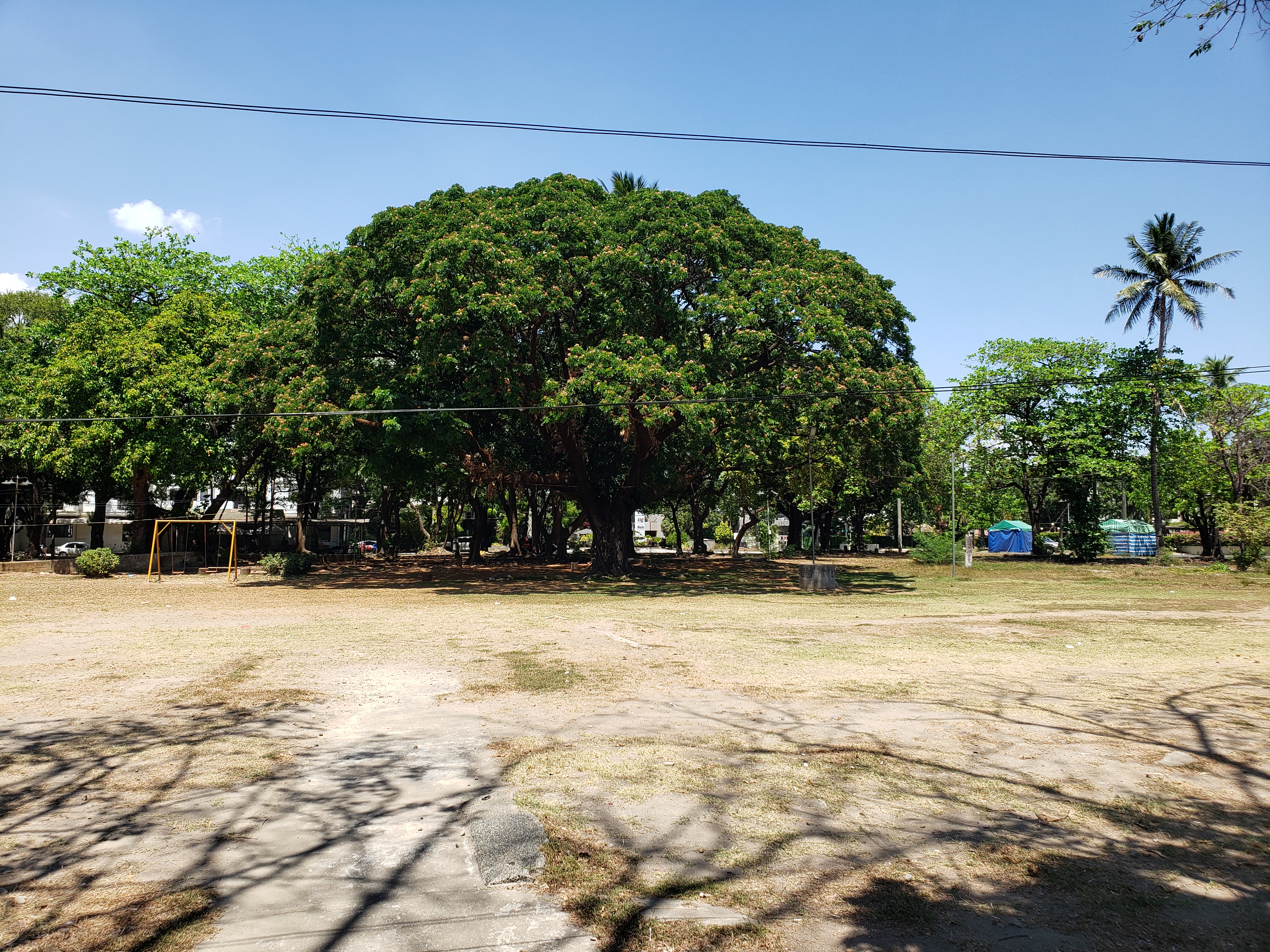
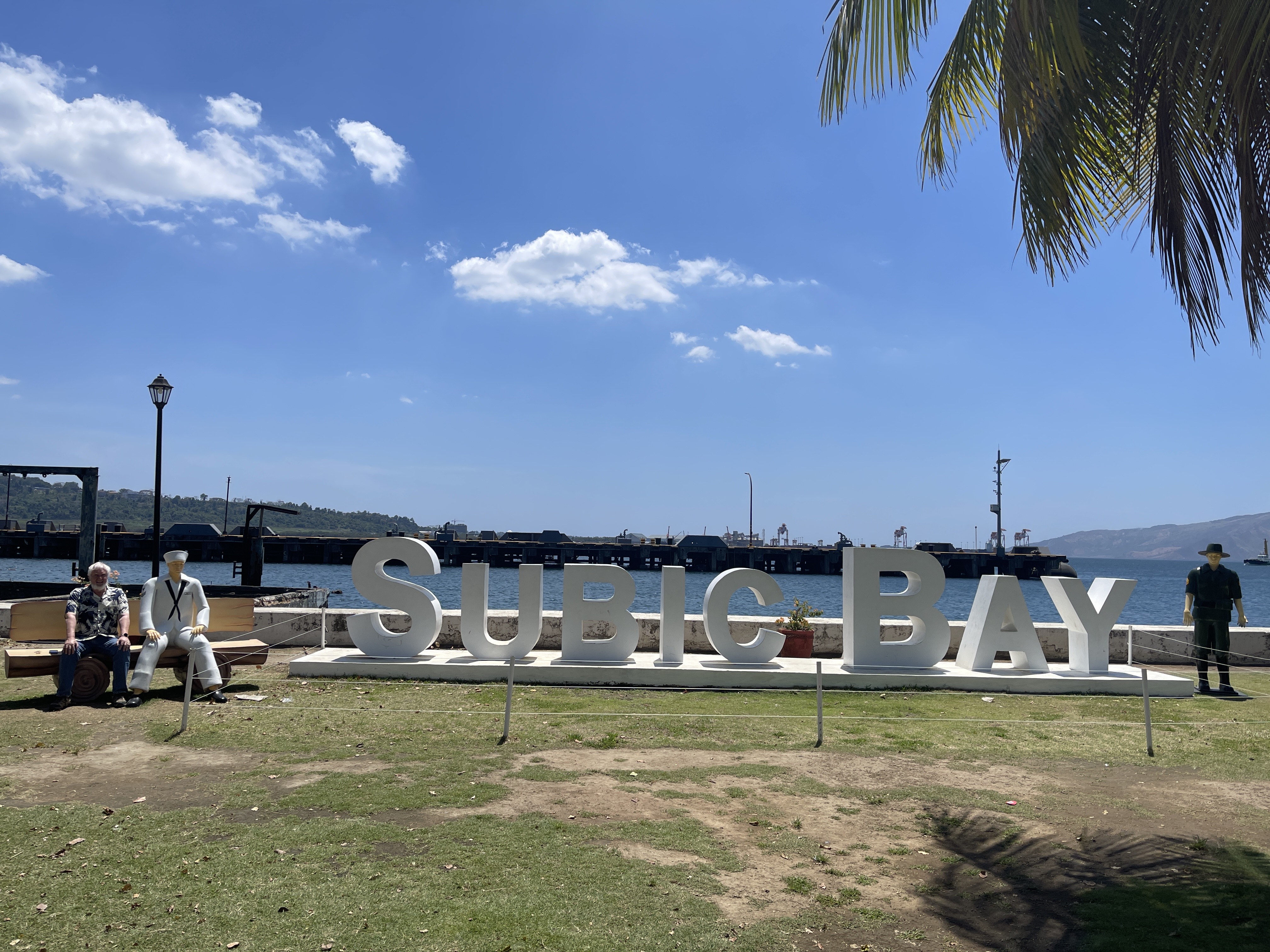 So it was a bit of a challenge, even with a local guide, to try to find any of the places where Alan could have been when he lived in Subic Bay.
The old Spanish gate was obviously there.
Of course, the bay itself was there. (See if you can find Alan in the picture.)
And we are pretty sure that we found the park where the picture of Alan with his ama was taken.
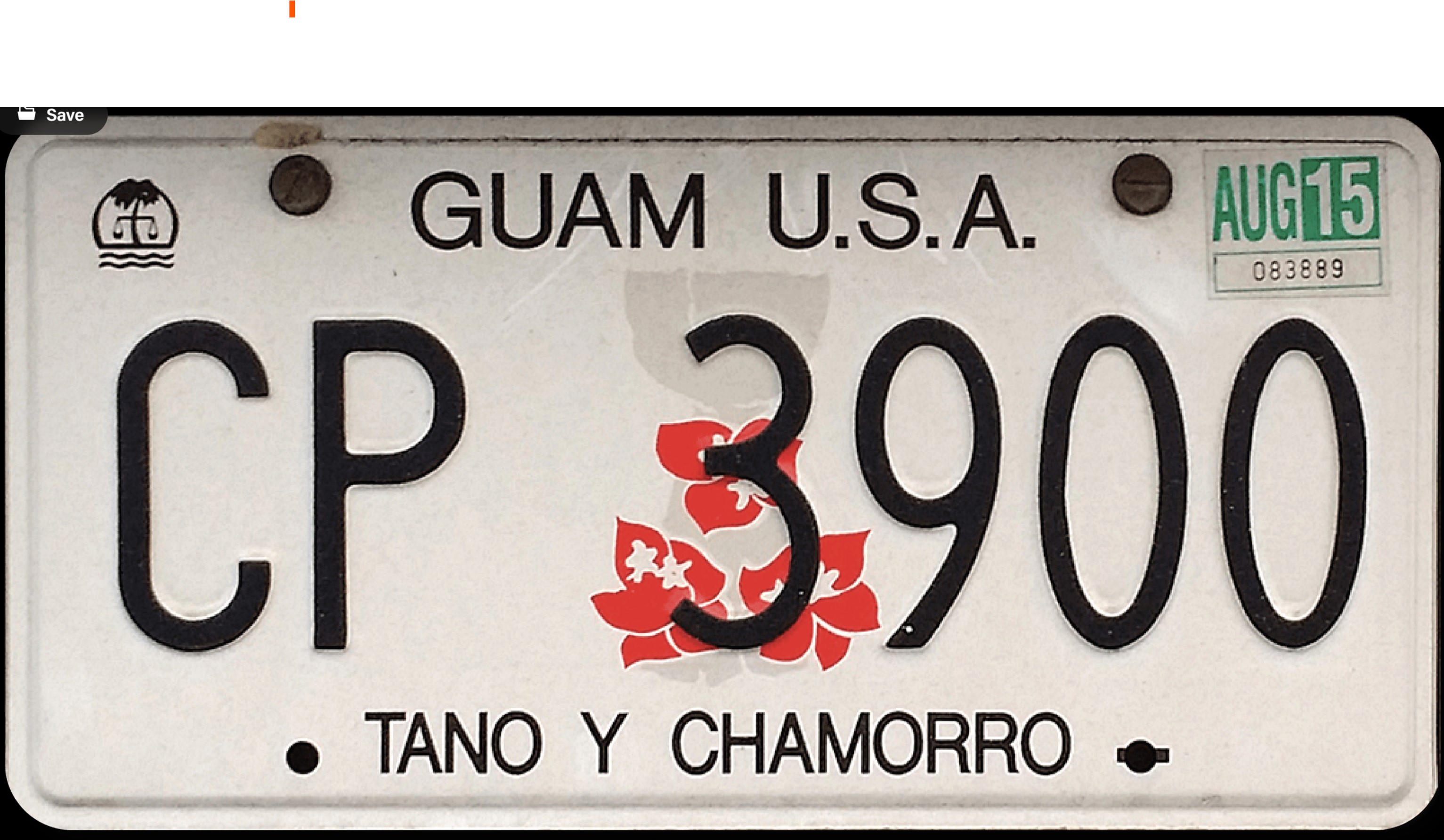
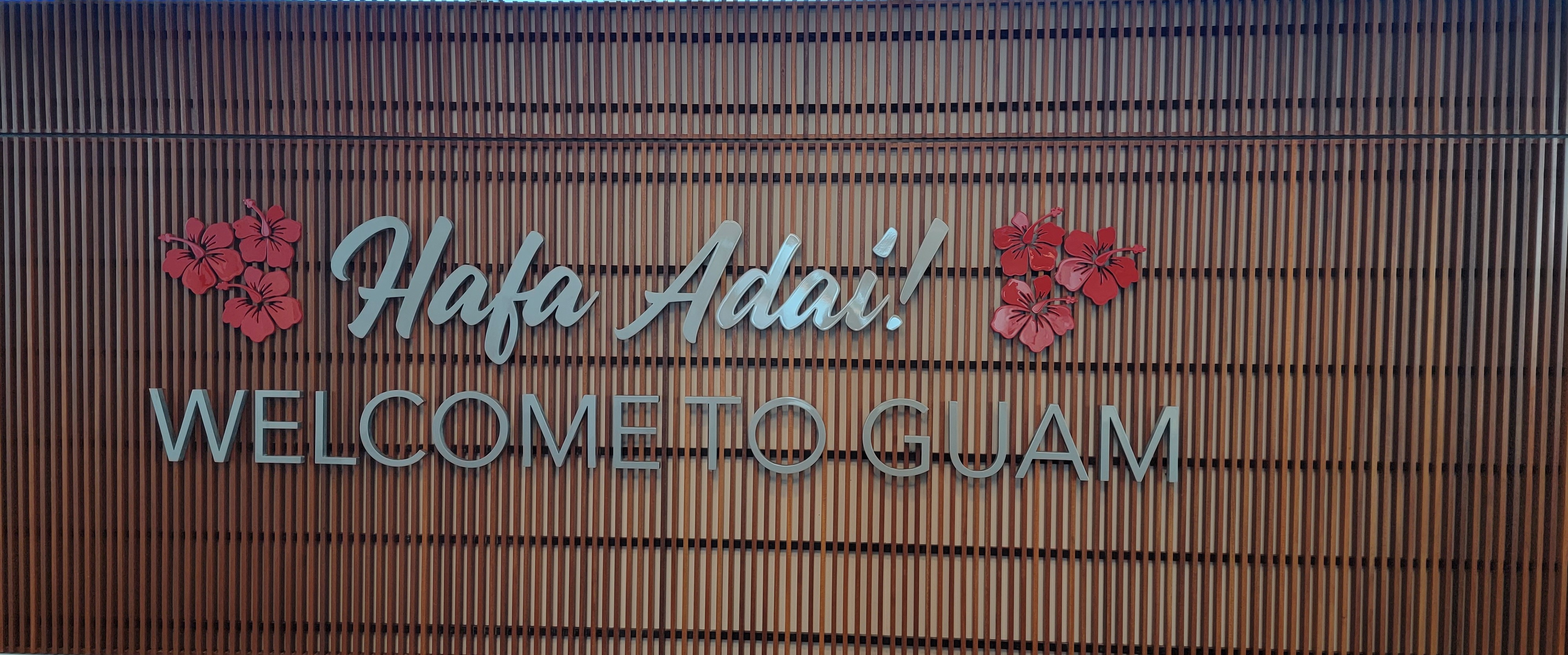 Welcome to Guam.
The indigenous people of Guam are the Chamorra.
Tano y Chamorro means, "The Land and the People".
Hafa Adai, in Chamorran, means something like, "hello" or "what's up"? It's everywhere.
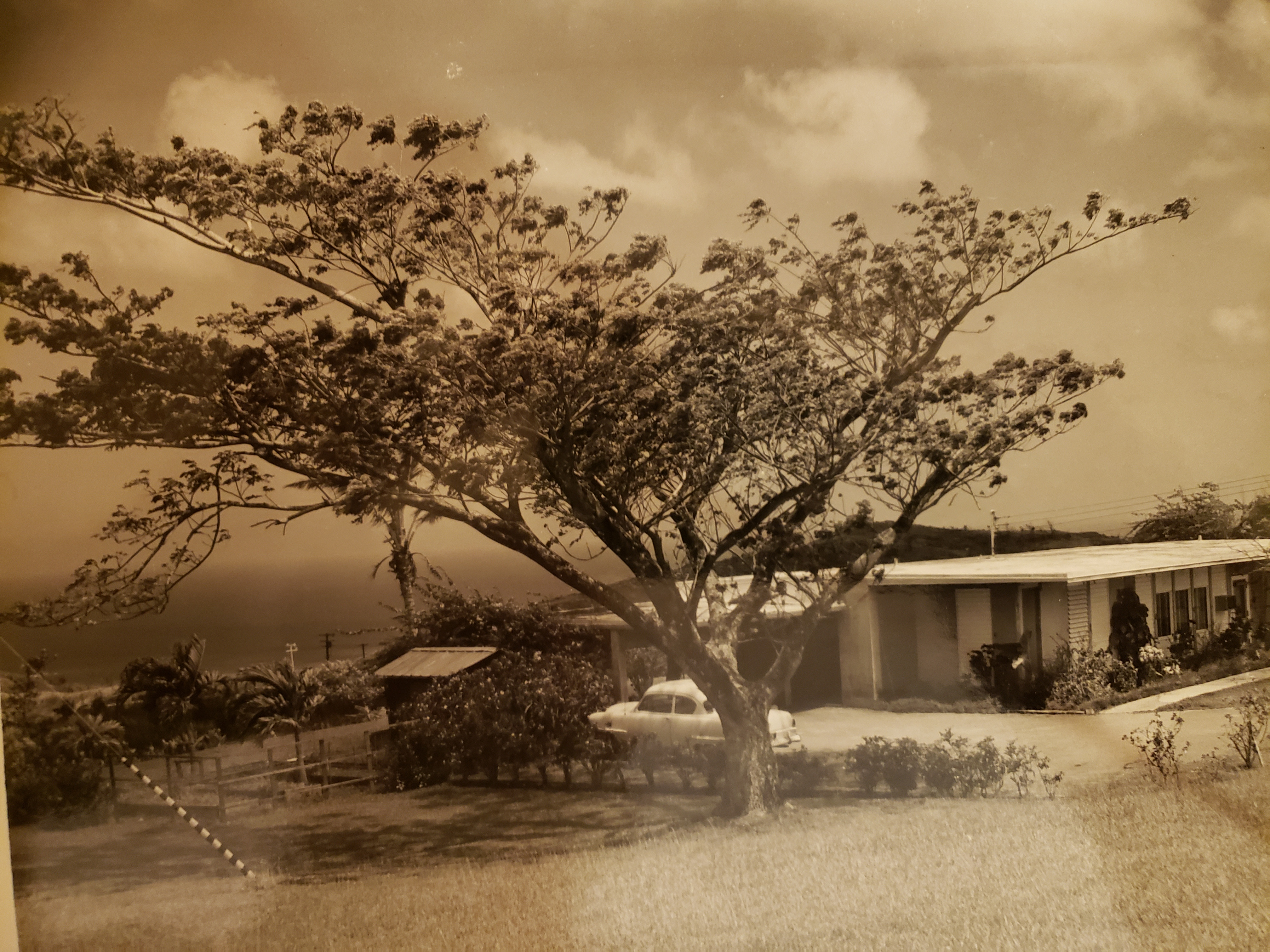
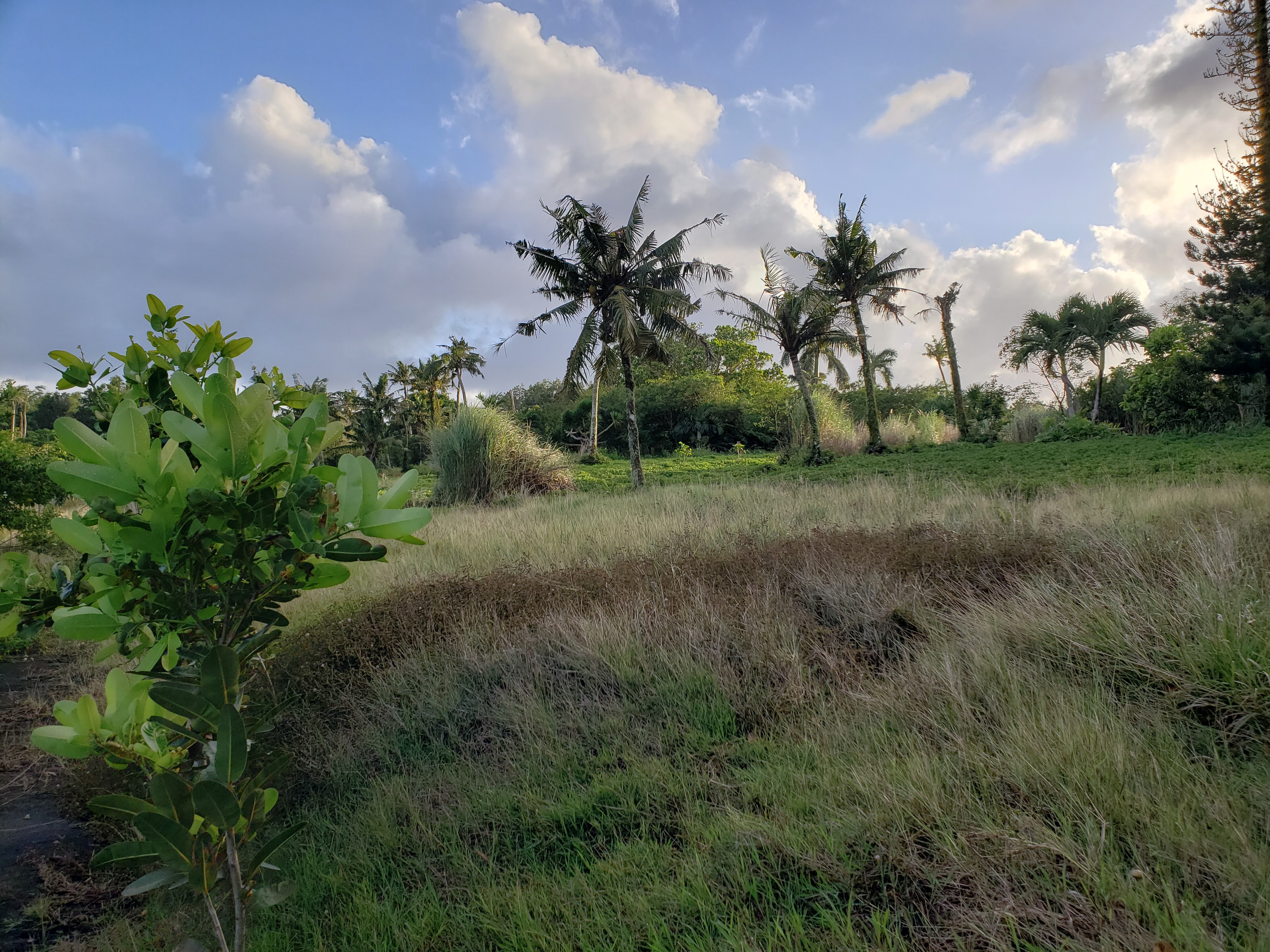 Alan's family lived on Guam from 1953 to 1955 (2nd and 3rd grades). His parents returned in 1963 and Alan visited them that summer (between junior and senior years of high school). So, unlike in the Philippines, he remembers quite a bit.
First stop, Nimitz Hill where his parents lived in the mid 60s. See picture of the Cline family house in 1964. And now. So what is Nimitz Hill today? Answer: nothing. Nothing, enclosed in a large fence. Then, you might wonder, how did Alan get in? Answer to that one: What are fences for except to climb? So, climb he did. I sat outside in our rental car. Then who should appear beside me but a member of the shore patrol. As I recall, with a weapon. He asked what I was doing there. I had to fess up that I was waiting for someone who had hopped the fence. Next thing to happen: Alan reappeared. He told his story. The friendly young shore patrol guy unlocked the fence for him. Smiles all around.
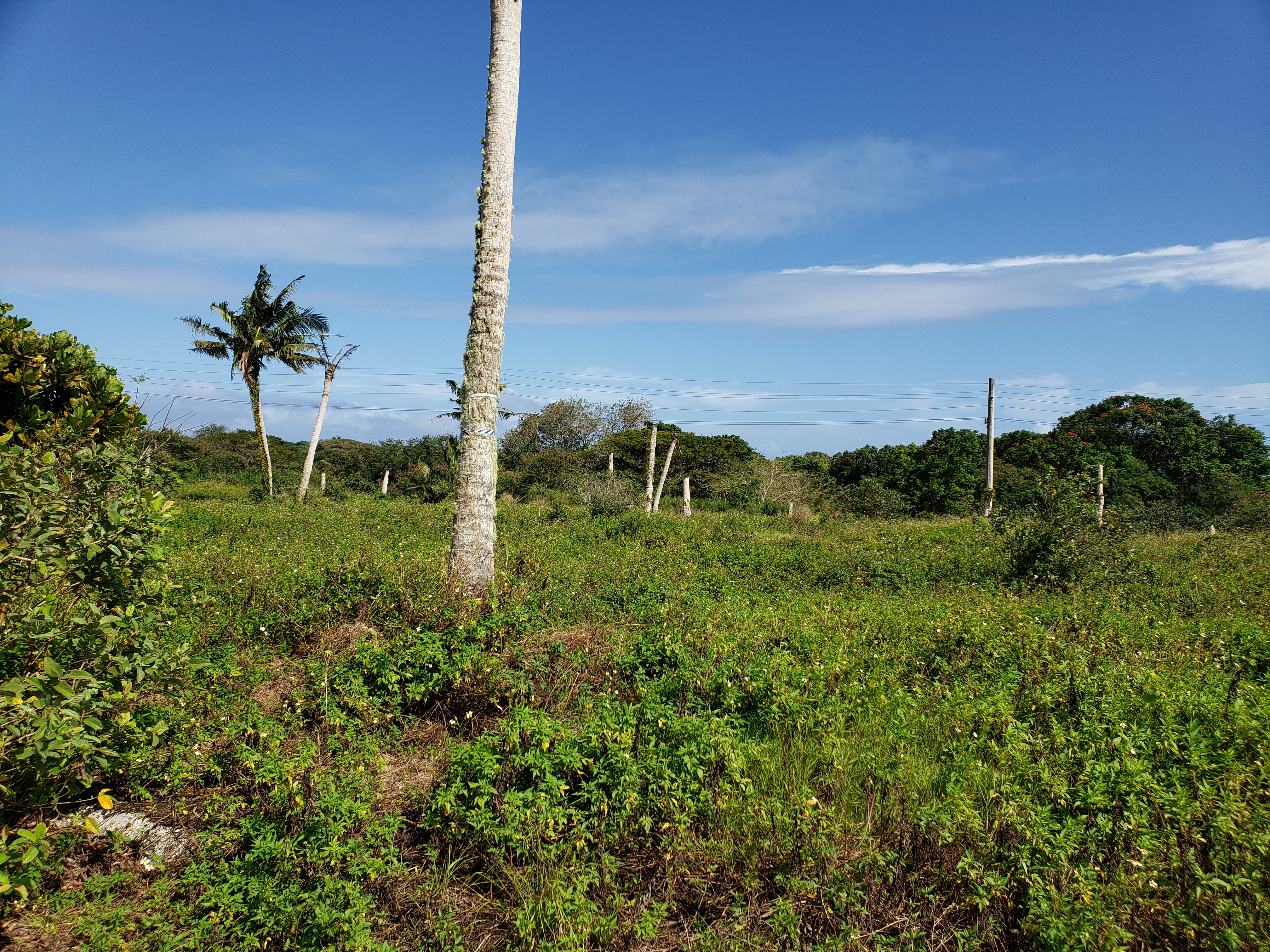
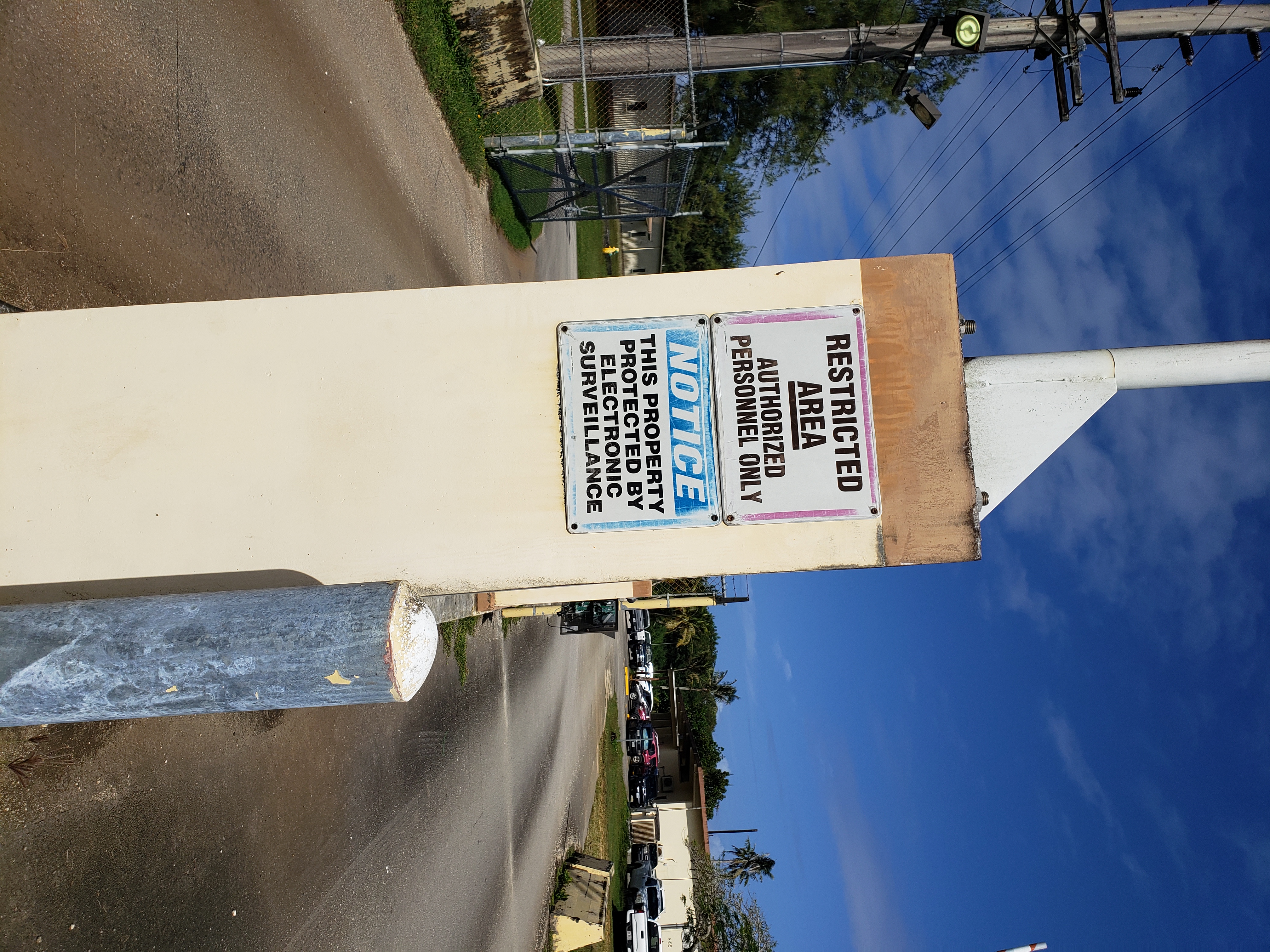 The US military presence on Guam has decreased a lot since Alan's family was there. But there are still active facilities and we were told that more Marines were likely to be arriving because of tensions, among other things, with China over Taiwan. Radio Barrigada, the place Alan had lived as a child, is on of those still active bases.
So Alan anticipated that there might be a more serious issue getting into it. Months before our trip, he began contacting people there. He was eventually told that everything was arranged; he just needed to stop by the main guard station to get a pass. Yeah, right. After several hours, he was told, "No way".
Alan is not one to take no for an answer. So we just drove there. He wasn't inclined to let a mere sign deter him after flying halfway around the world. So in he went. I sat under a tree. He got this picture of where their house no longer is.
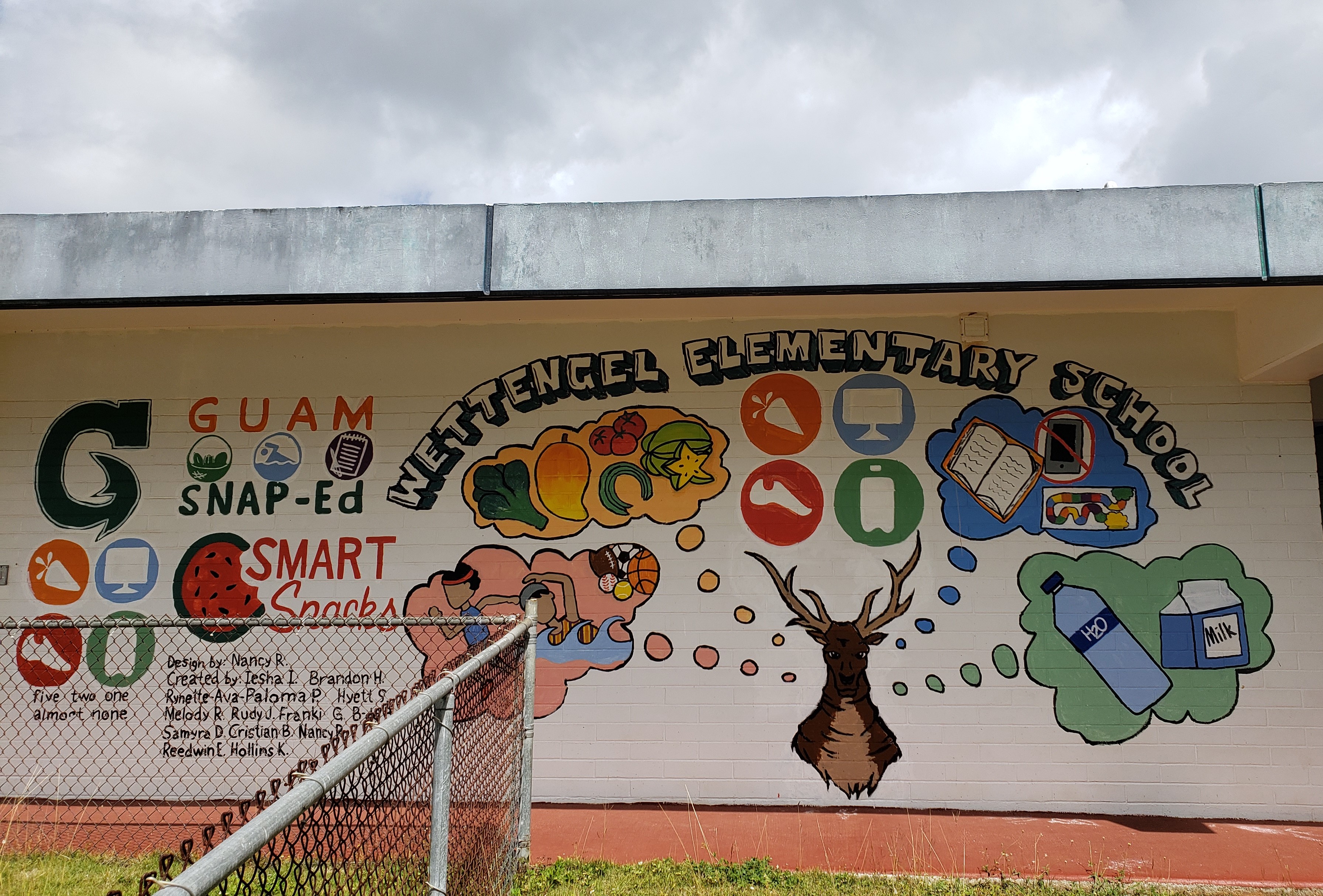
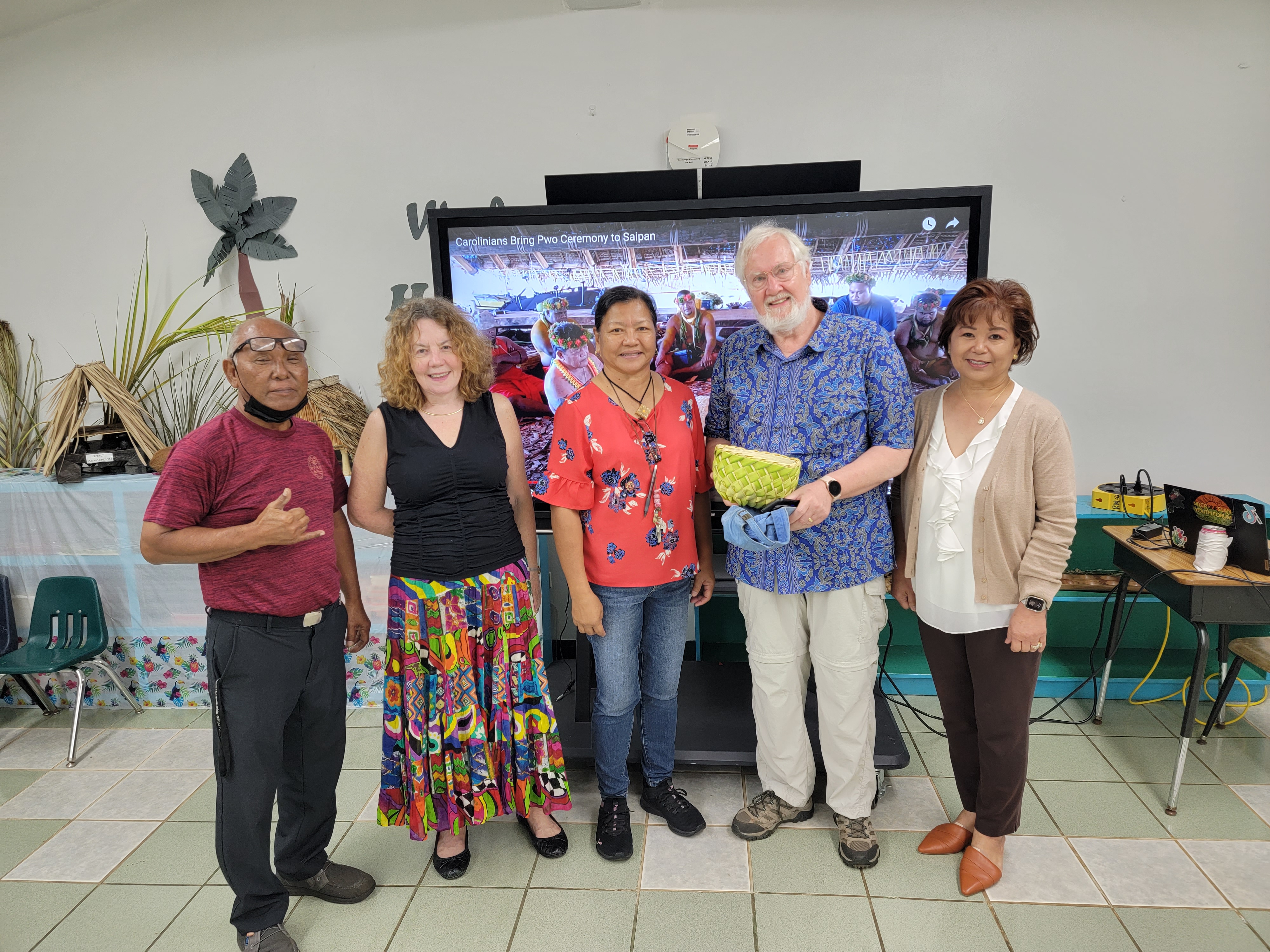
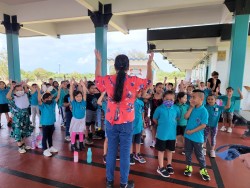 Last stop of the trip down Memory Lane: a visit to Wettingell, Alan's elementary school. Everyone we met on Guam (well, except for most of the military people) was super friendly. But the people at Wettingell were over the top. The principal (in the brown sweater in the photo) took us all around. The teacher in the burgundy shirt was happy to talk Alan's ear off. The teacher in the floral shirt gave Alan the basket she had just made.
The population of Guam is now about 37% Chamorro, 26% Filipino, 7% white, and the rest various other ethnicities. This is a huge change since Alan was there; he remembers no Chamorro kids. Maybe a couple of Filipinos. Everyone else was white. But without the large US Navy presence, there are very few white kids today.
As we were about to leave, the principal asked Ms. Floral Shirt to get her class together to sing for us. Click on the picture for a video. The children sang for us in Chamorro.
See more about Chamorran culture below.

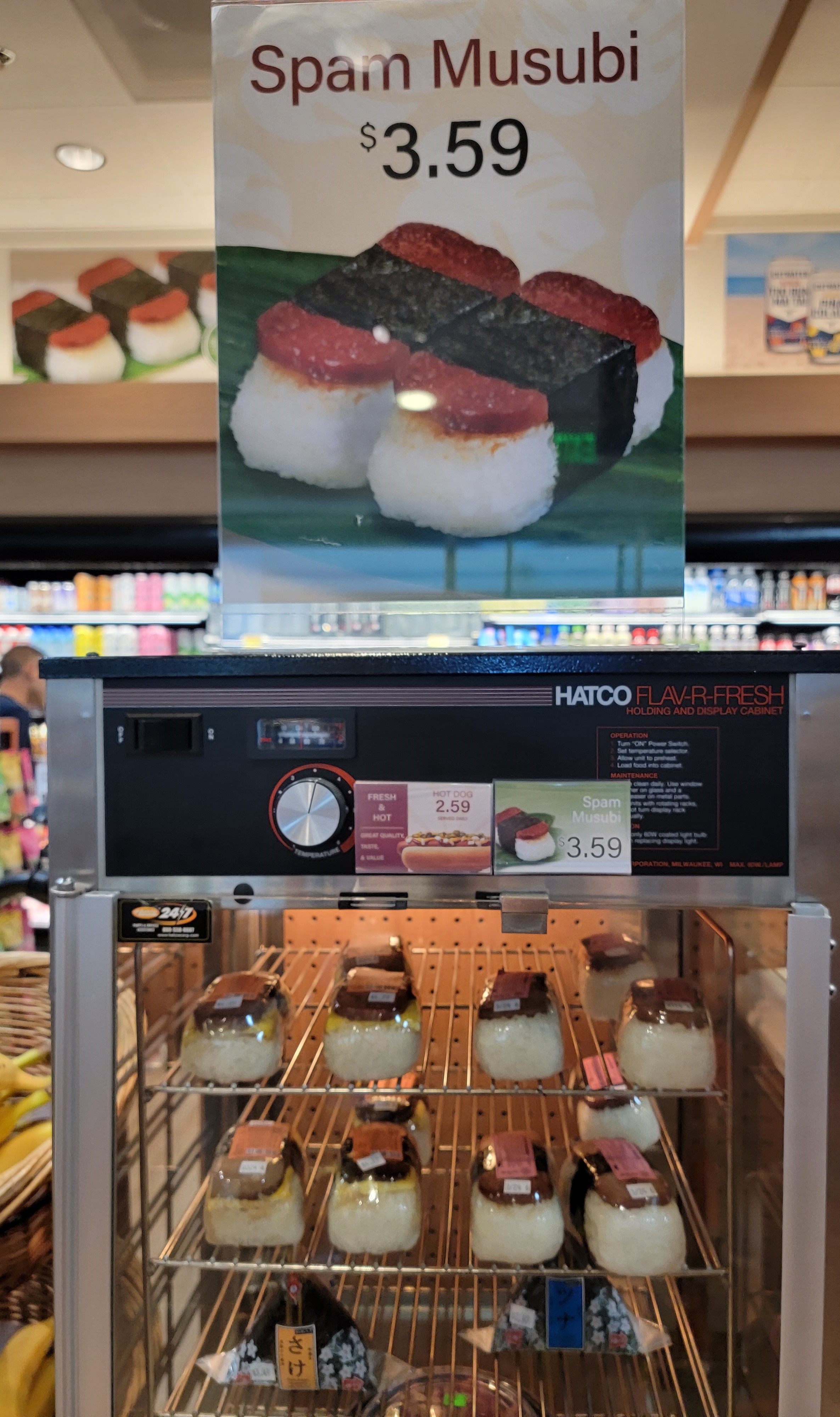
 Of course, we ate fish. Guam is an island. But there are a few other interesting things.
Fried rice is the national dish. You can get it at Wendy's instead of mashed potatoes.
KFC has a special Lent (meatless) menu. (Guam is a very Catholic place.)
And they have a possibly very unfortunate blend of American GI food and Pacific food. Who knew they could make spam sushi?
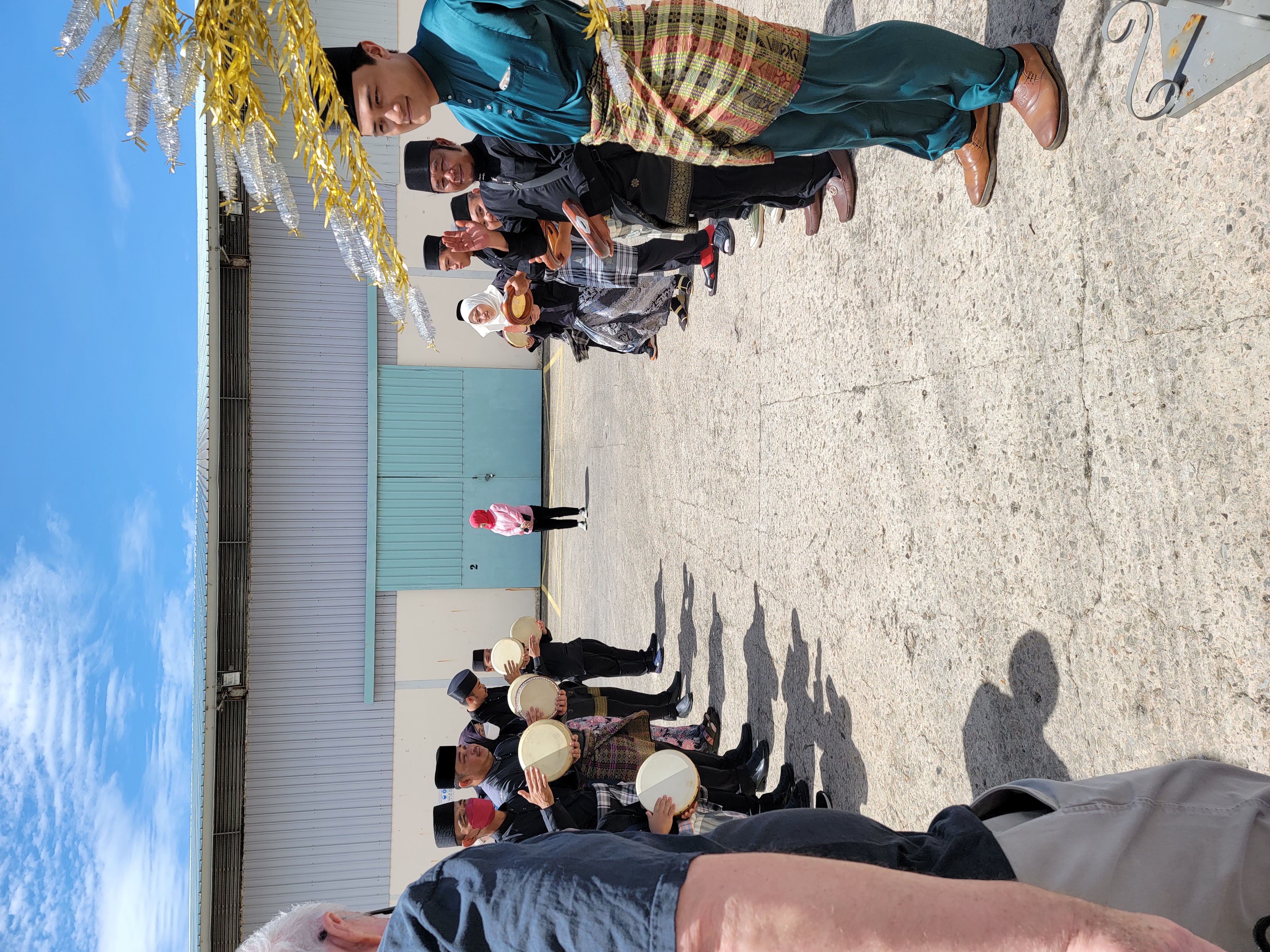
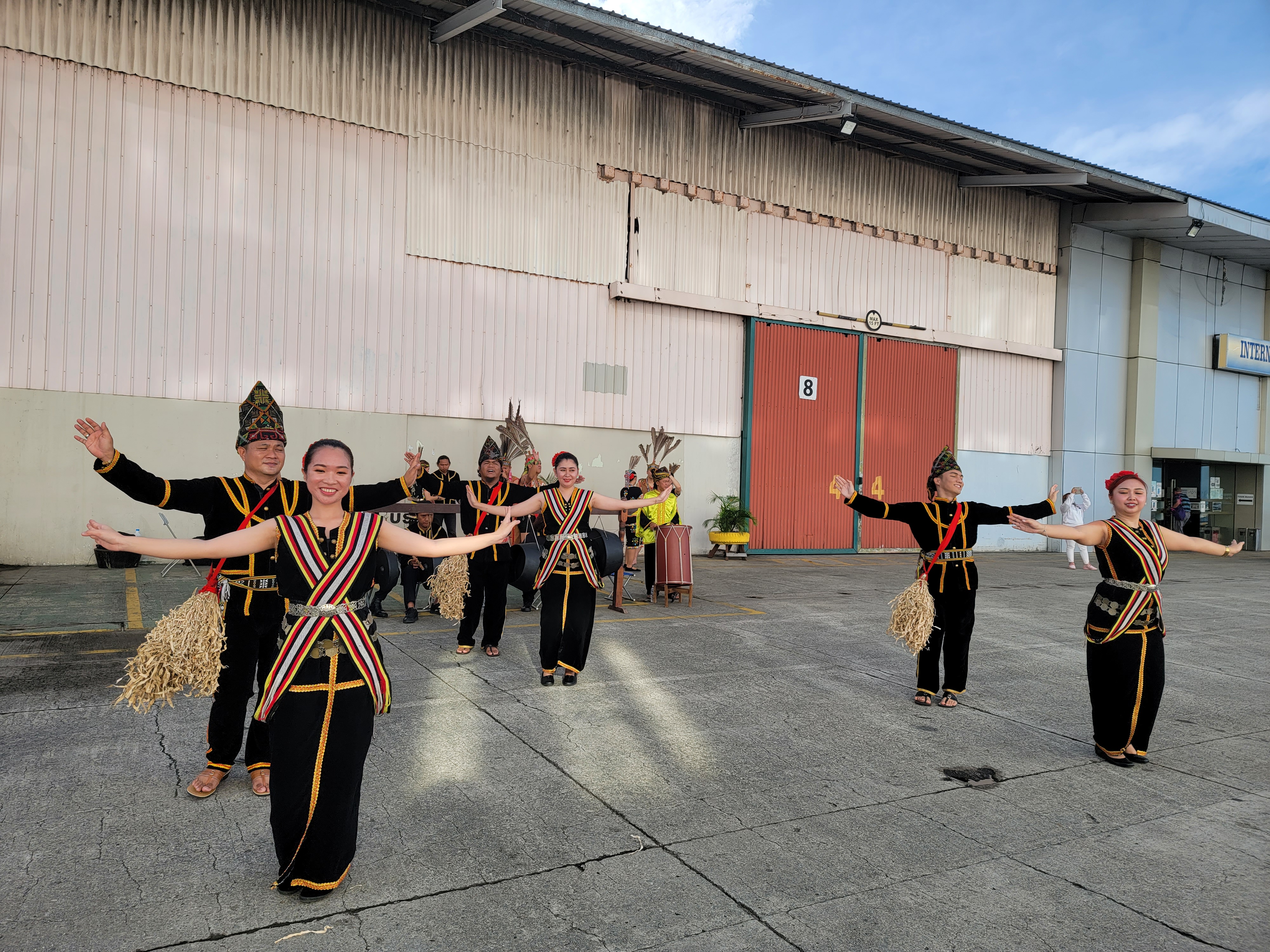
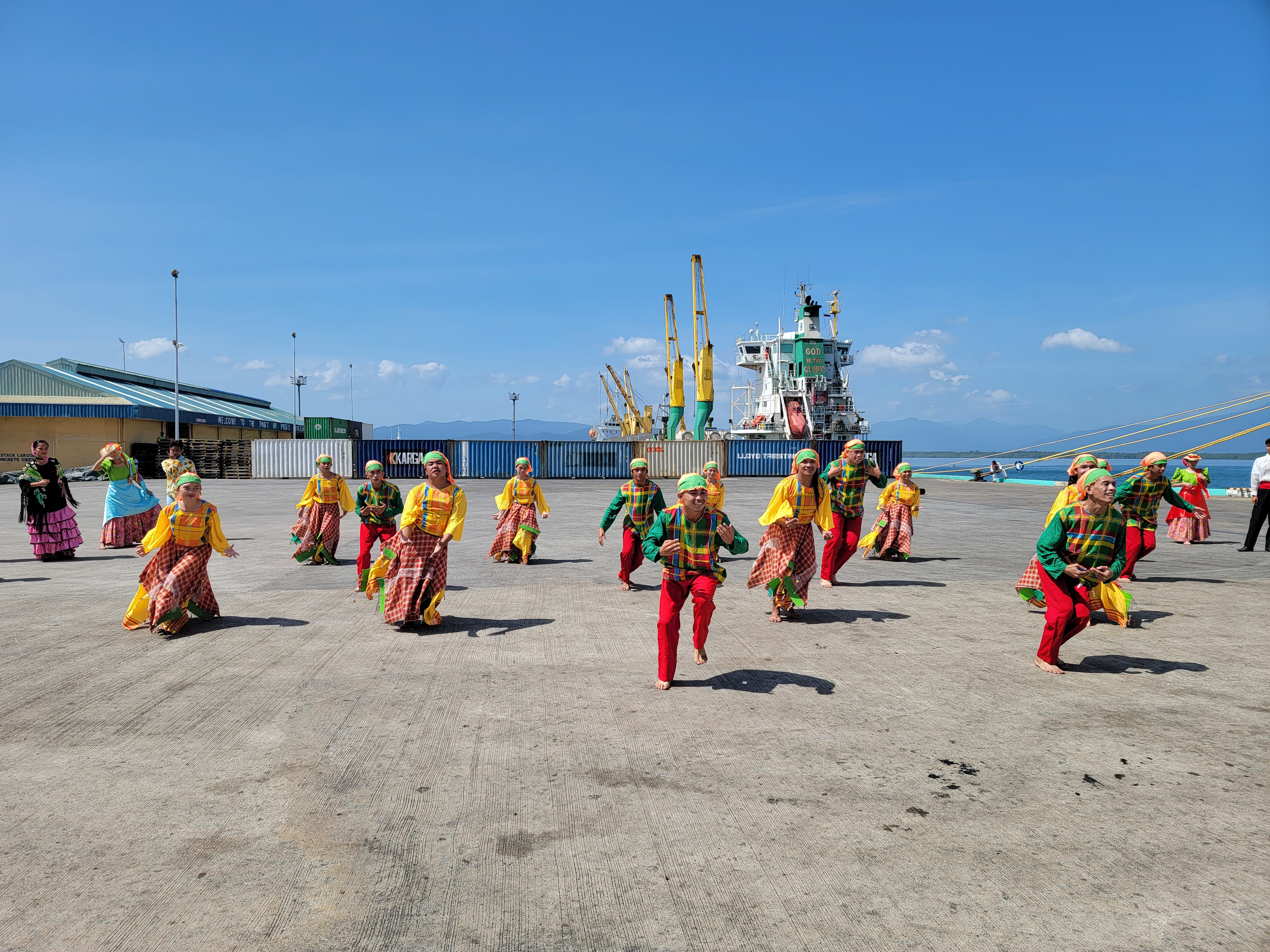 In several ports, we were one of the first (sometimes actually the first) cruise ship to arrive post covid. So we got some fun and musical greetings.
Here you see Brunei, Kota Kinabalu (on the north coast of Borneo, part of Malaysia), and Puerto Princesa (The Philippines)
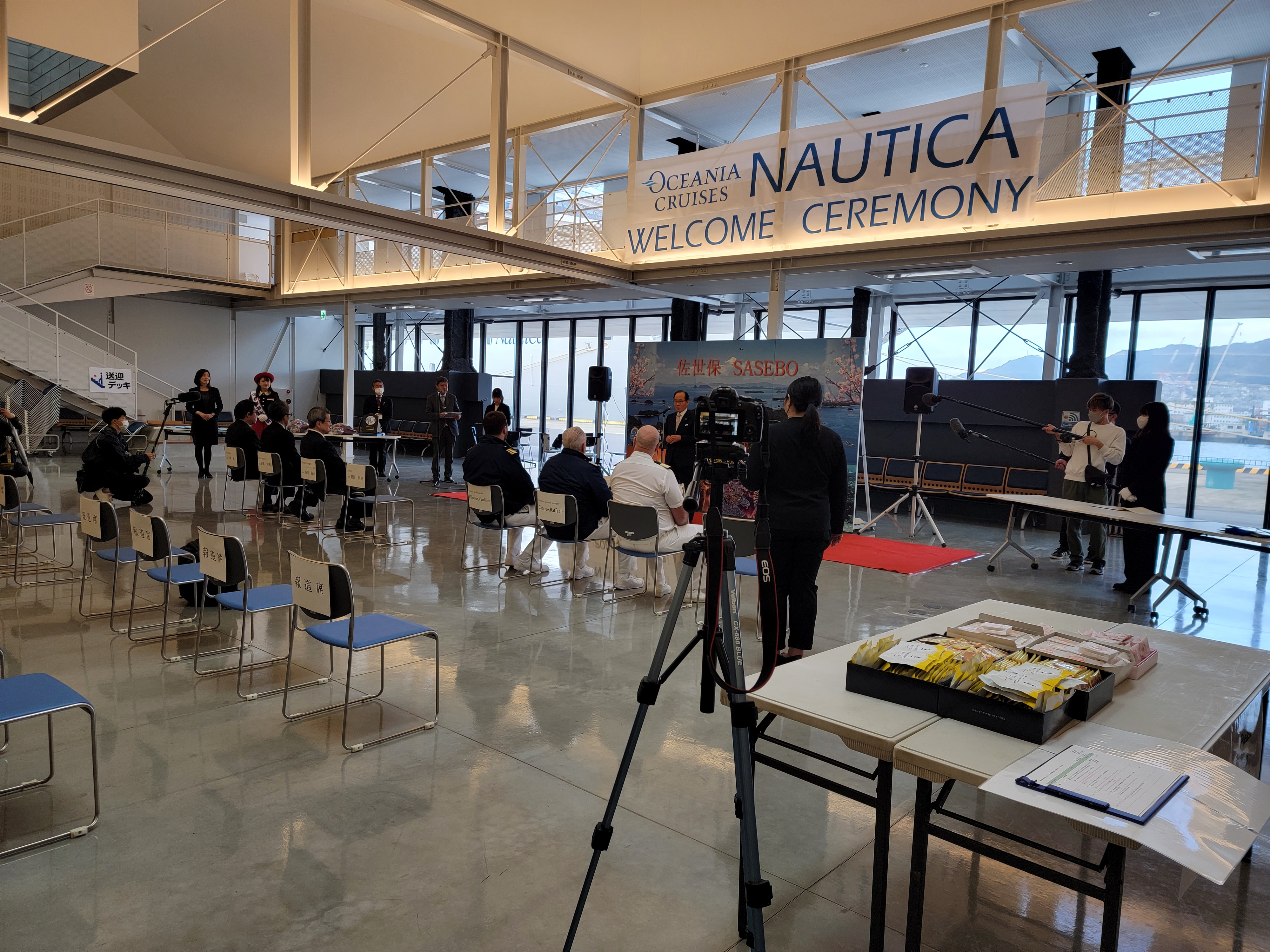
 In Sasebo, Japan, they dispensed with the musicians and had speeches. Our ship captain came out. I think they sent the mayor.
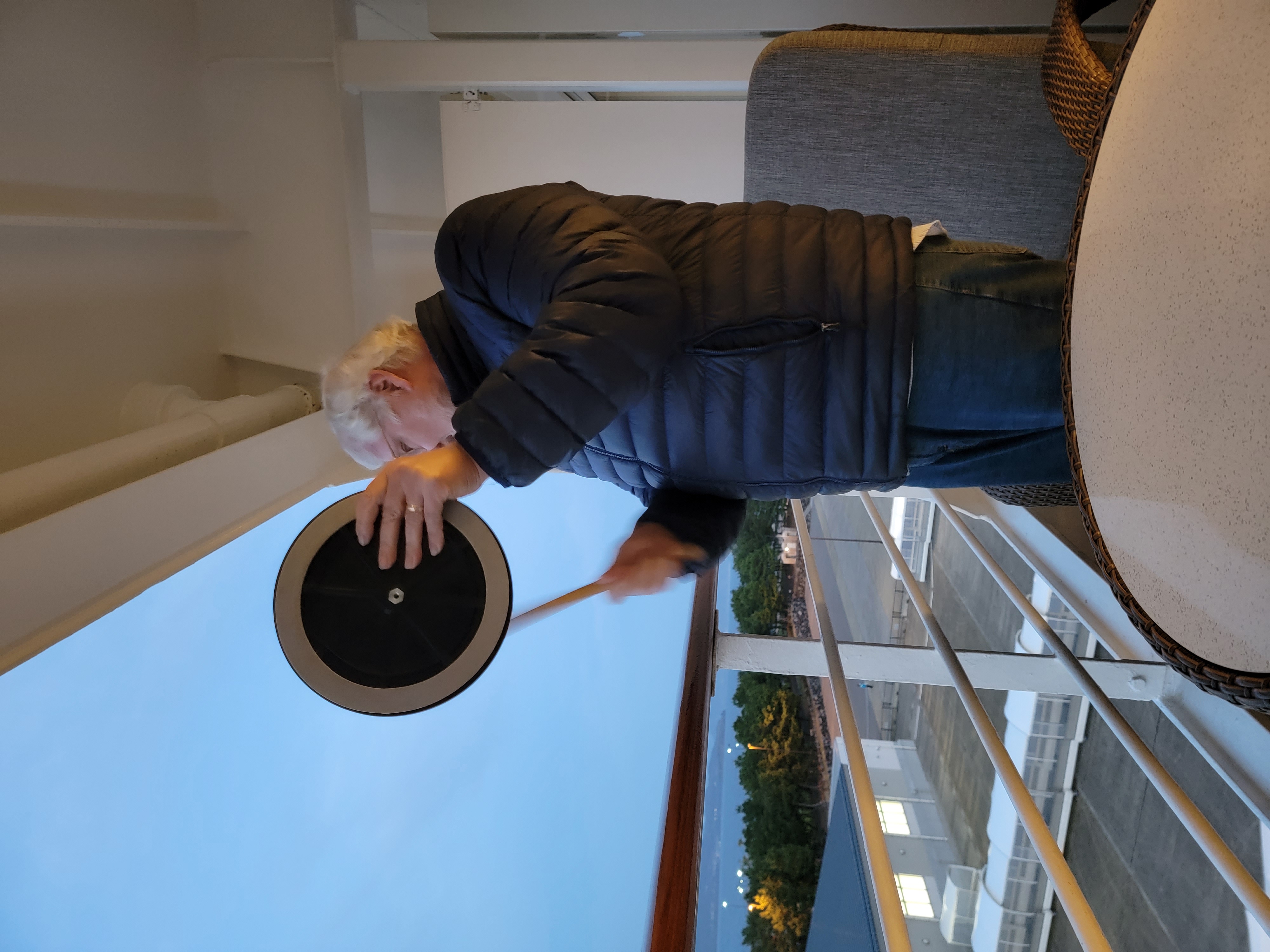
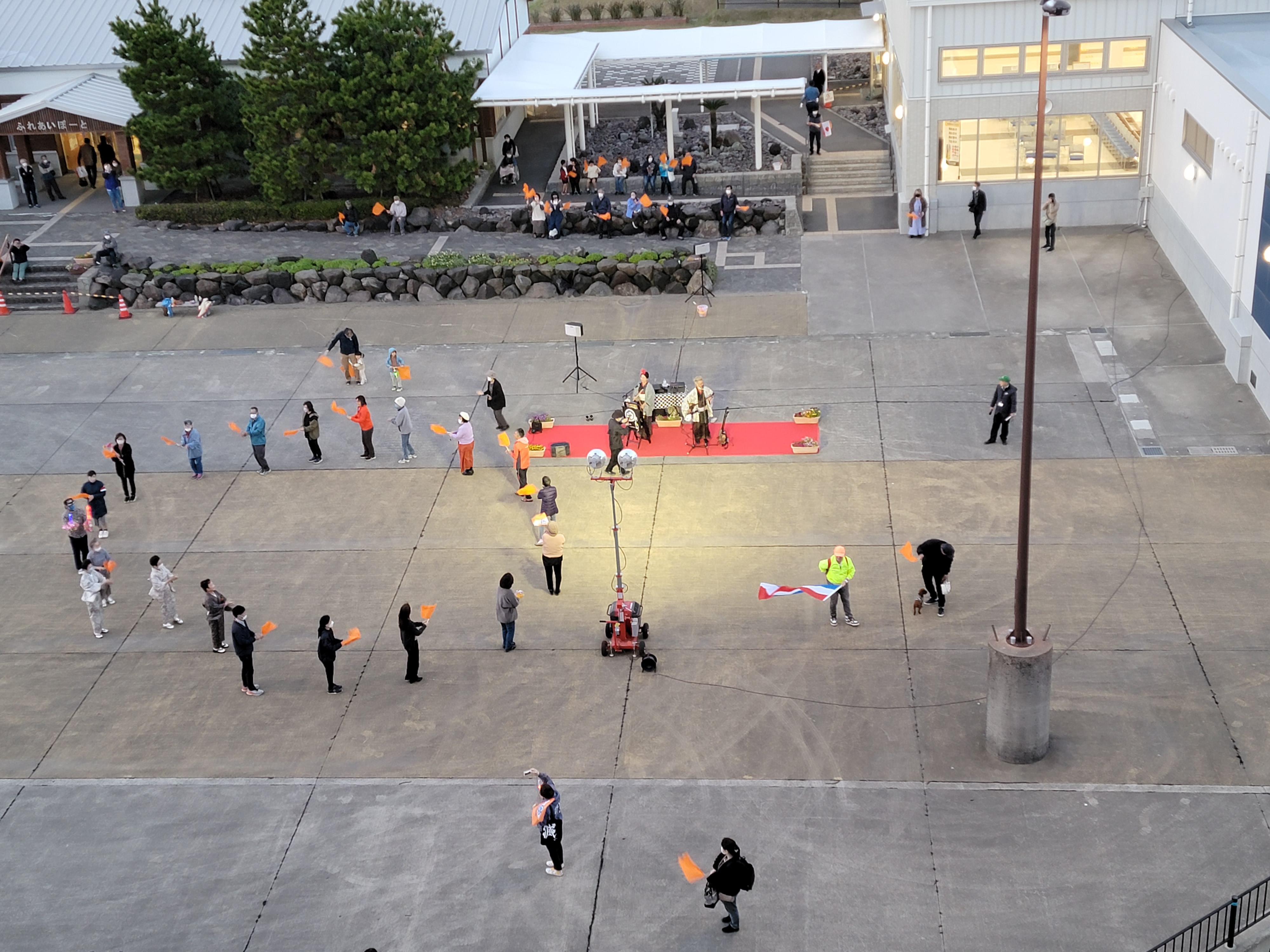
In Kagoshima, Japan, they wished us goodbye instead. Alan joined them from our balcony, playing his practice pad.
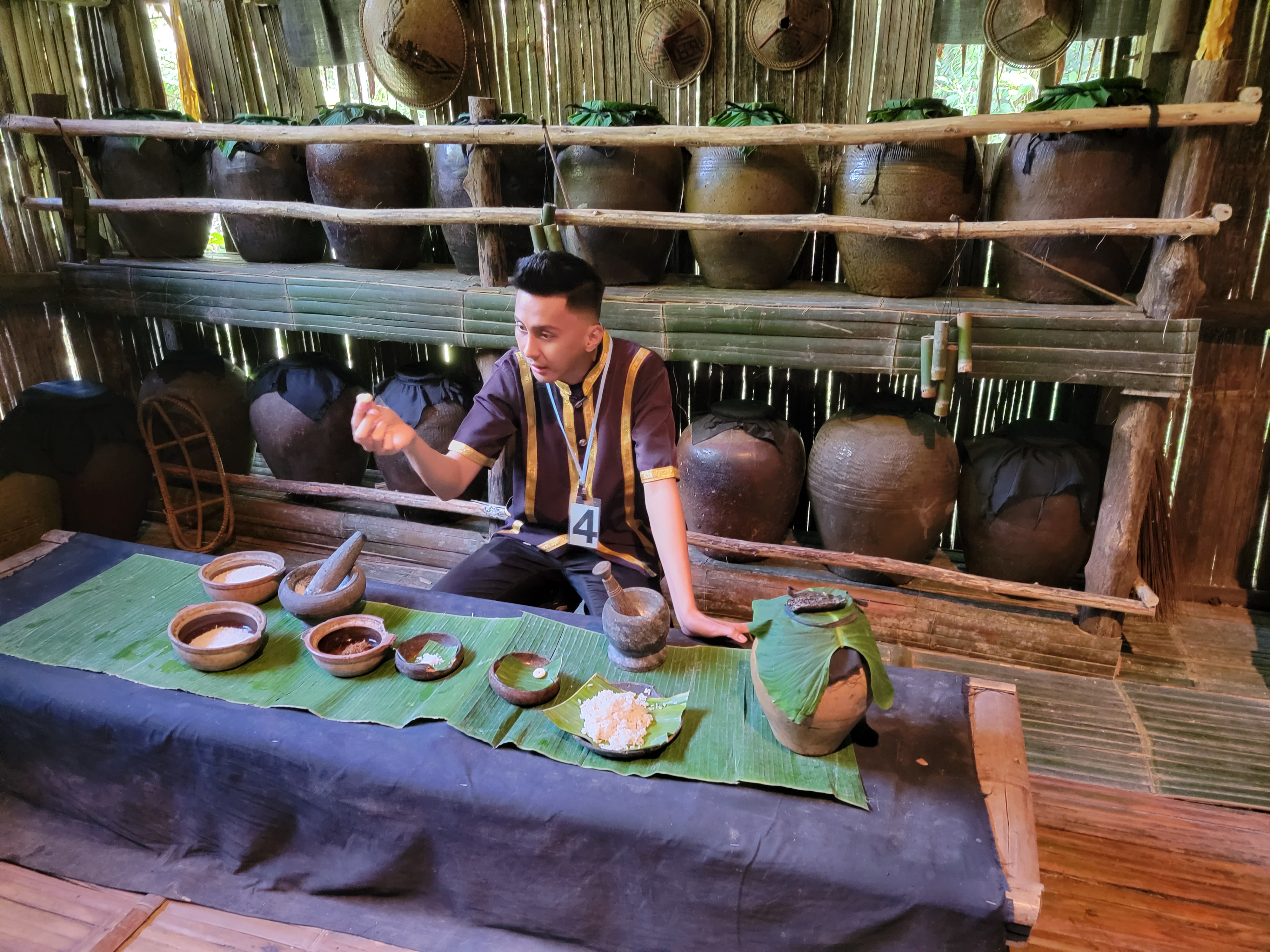
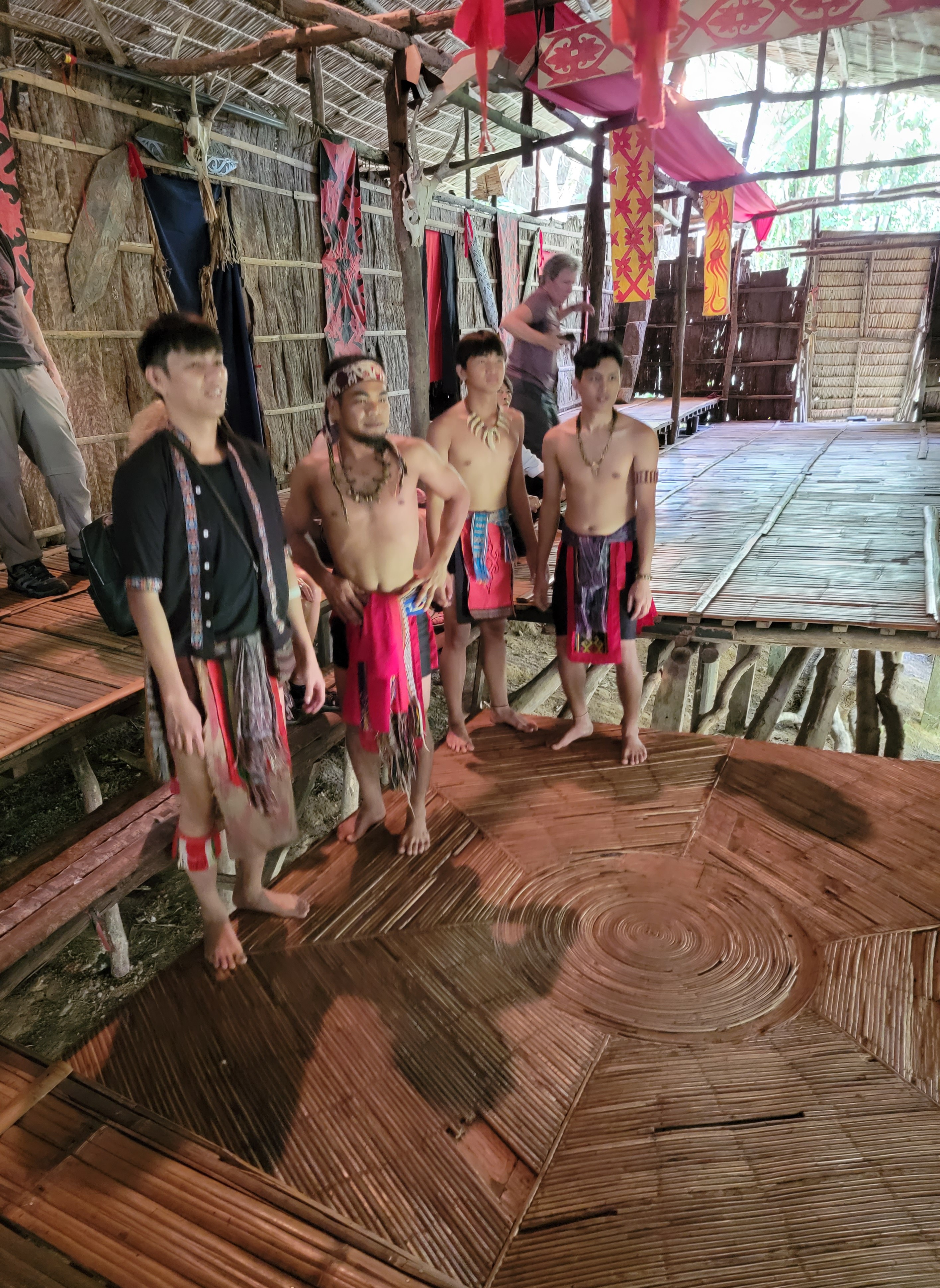
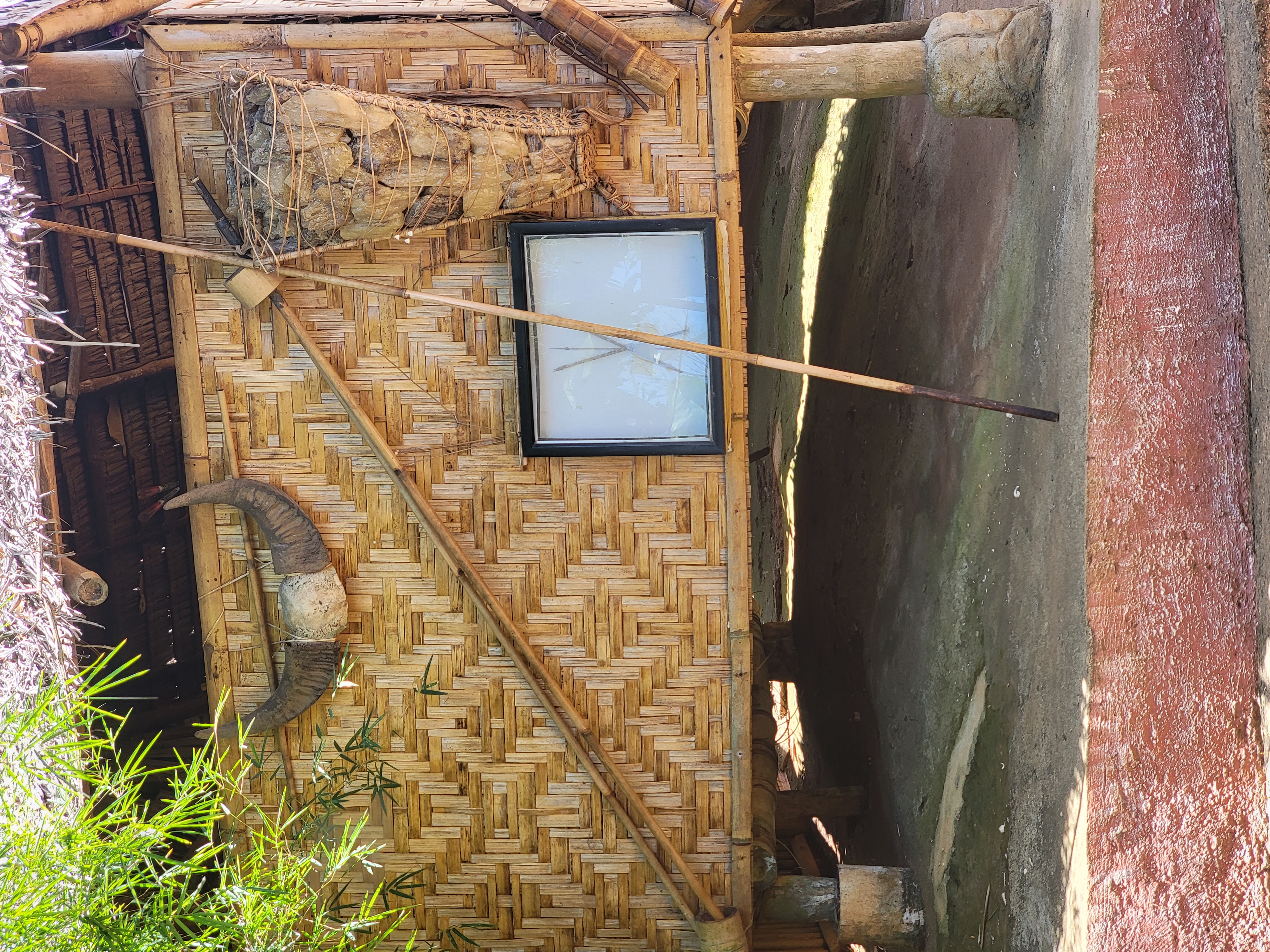
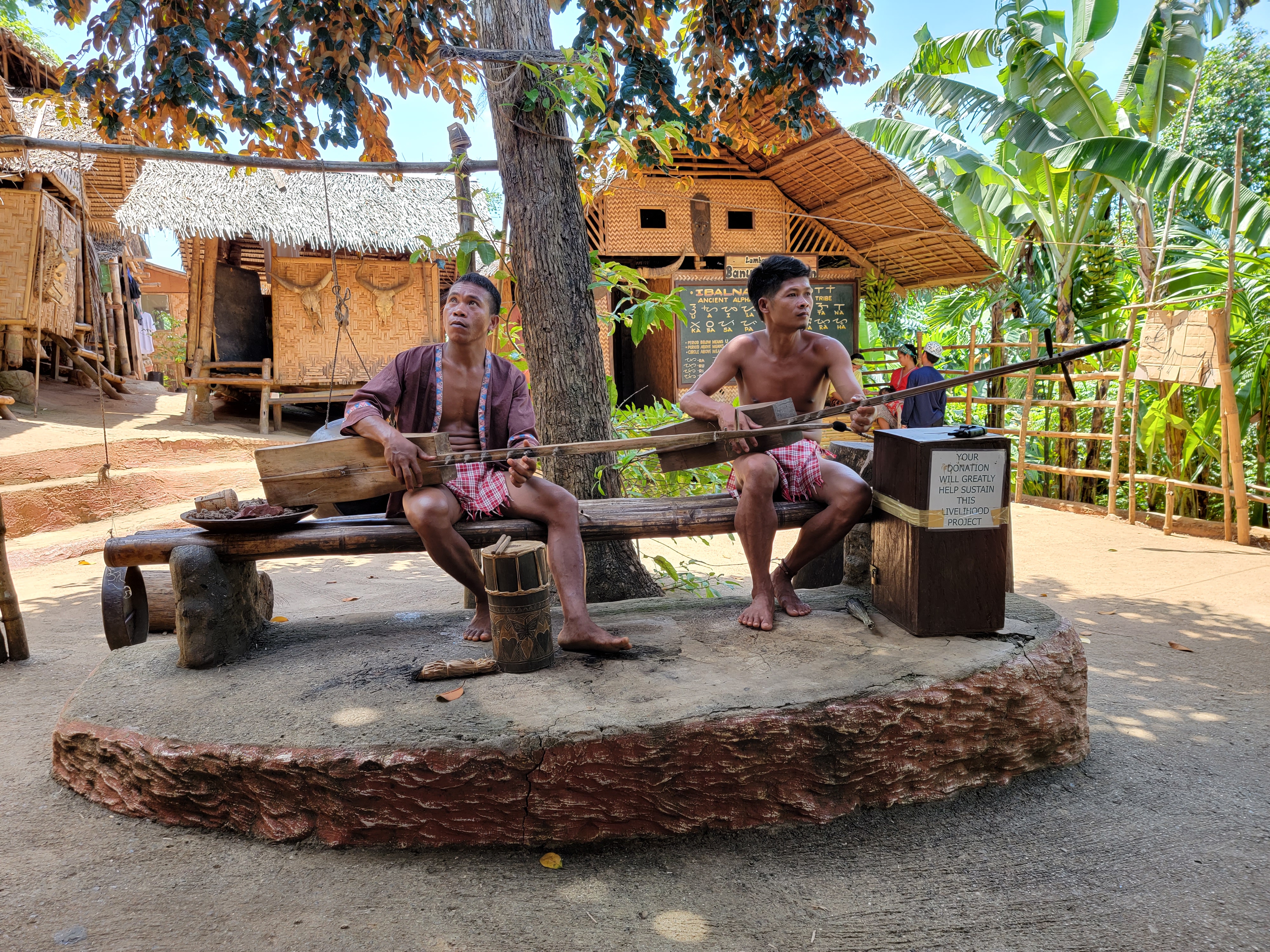 In many places, there seems to be an effort to keep traditional, indigenous cultures alive. Of course, we couldn't tell how authentic the shows we saw were; maybe they're mostly just for tourists. But we were fascinated by some of them.
Mari Mari Cultural Village in Kota Kinabalu showcases the indigenous tribes of Northeast Borneo. The wooden "platform" that the men are standing on is a trampoline.
Palawan Tribal Village does a similar thing in Puerto Princesa, The Philippines. Indigenous people take turns coming down from their homes to this showcase village. Music was a big part of their demonstration, but they also have long, poisonous arrows.
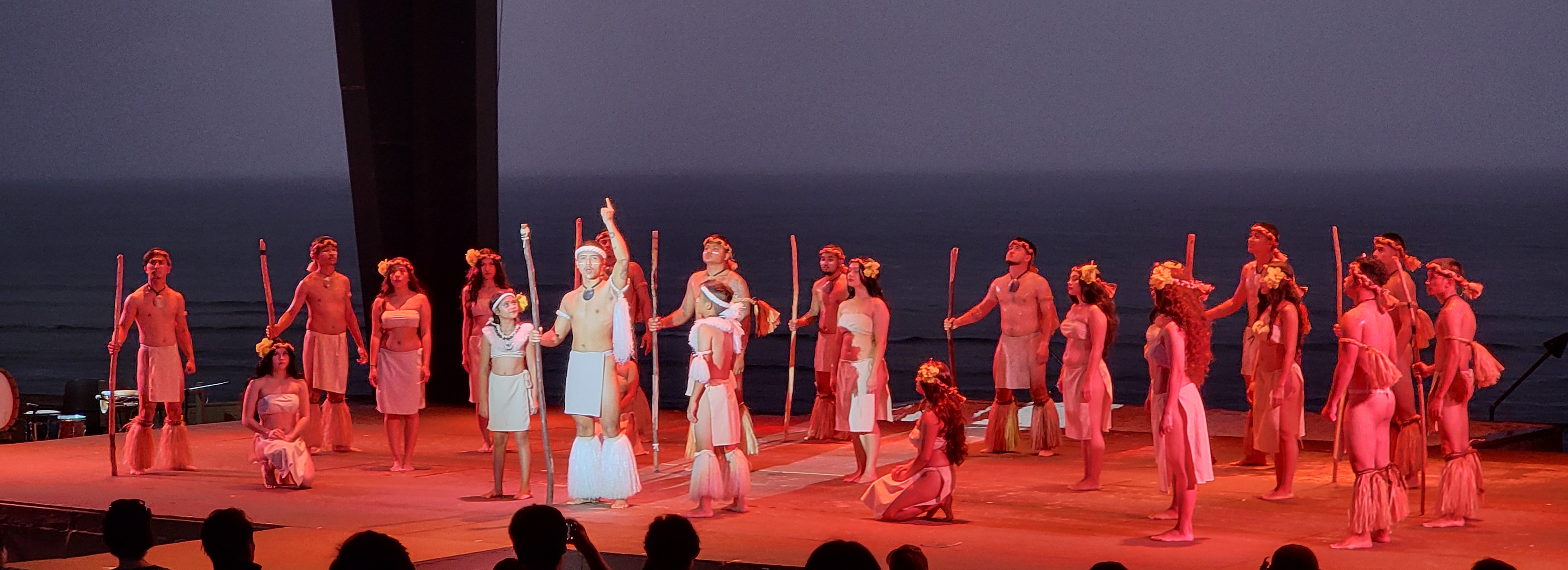
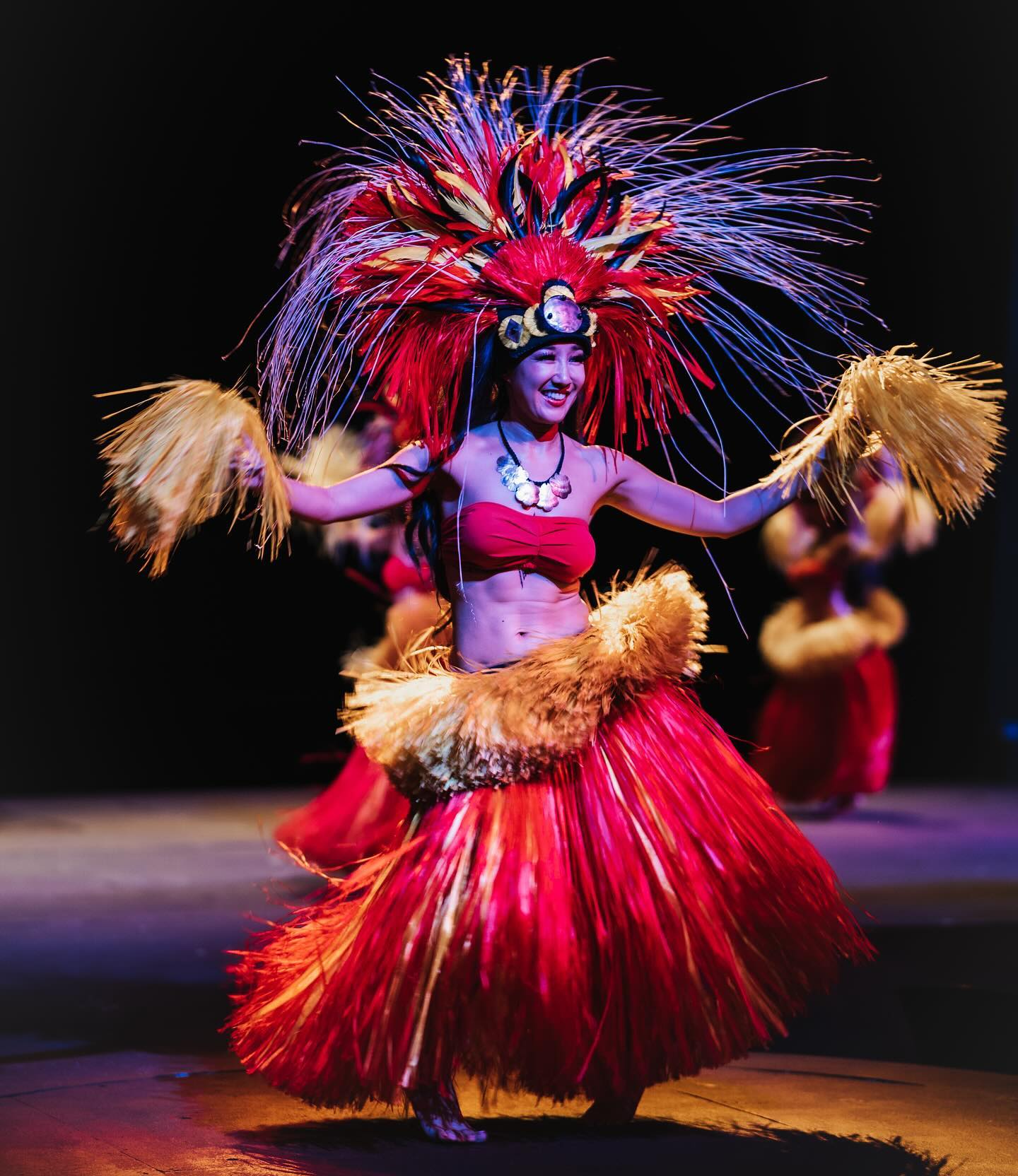
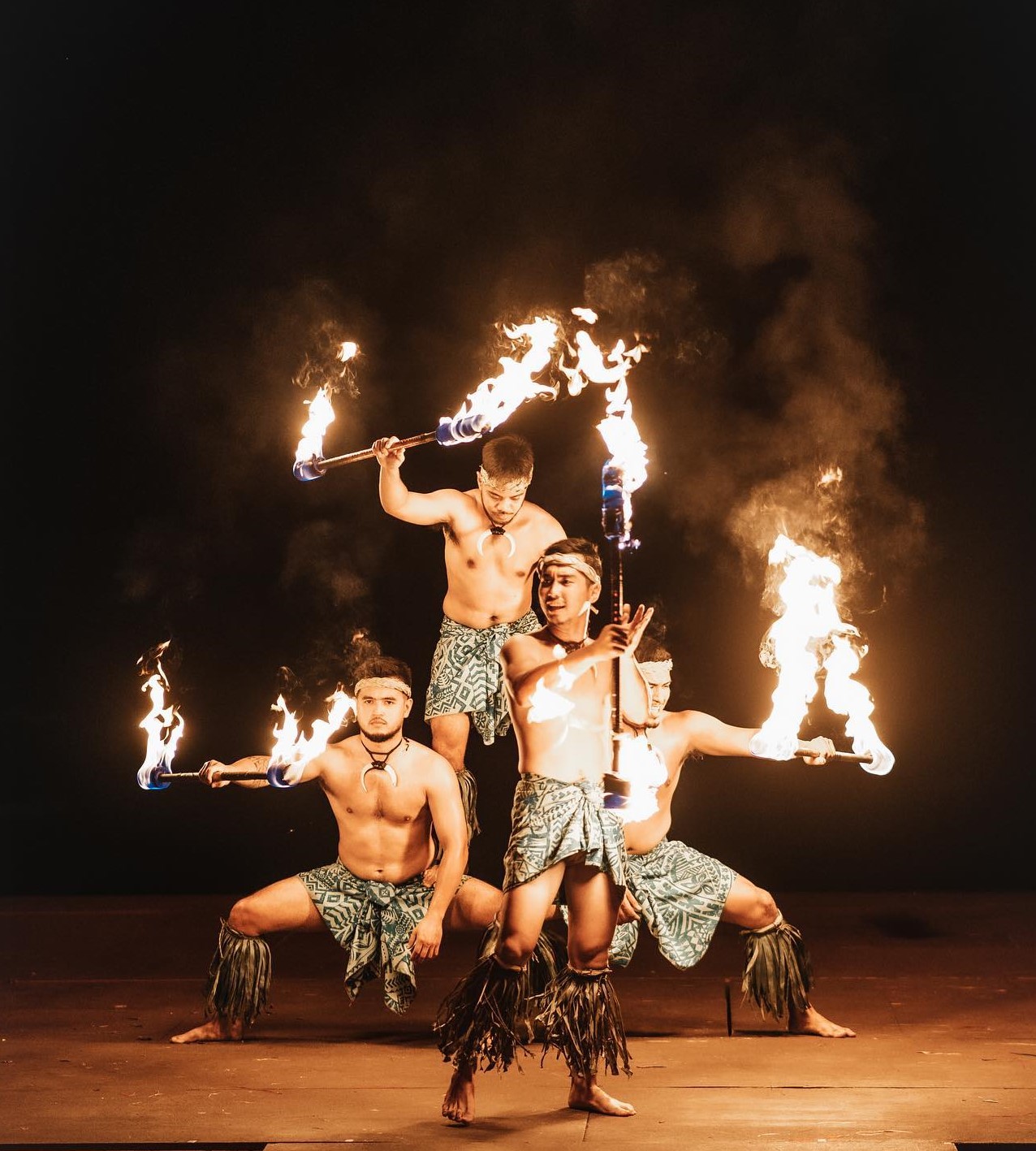 The TaoTao Tasi show on Guam was far and away the fanciest tribal show we saw. It says it is a blend of Chamorran, Tahitian and Samoan cultures. It struck me, as we were watching, that (at least almost) every culture has warriors, drums, and creation myths. Not surprisingly, every culture's creation myths center on themselves.
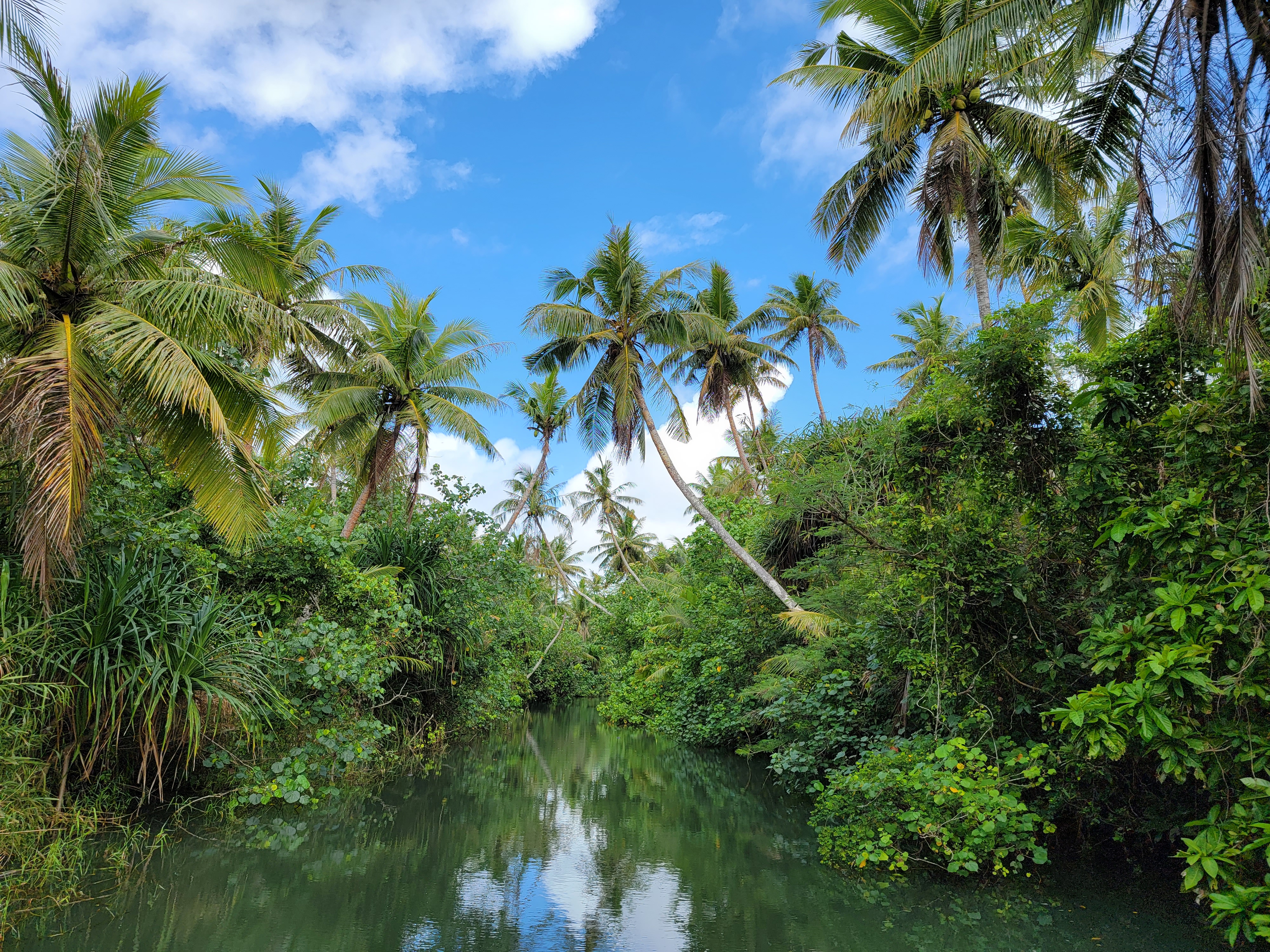
 The interior of Guam is mostly jungle. You can cruise through the jungle in small boats on the Talofofo and Ugum rivers.
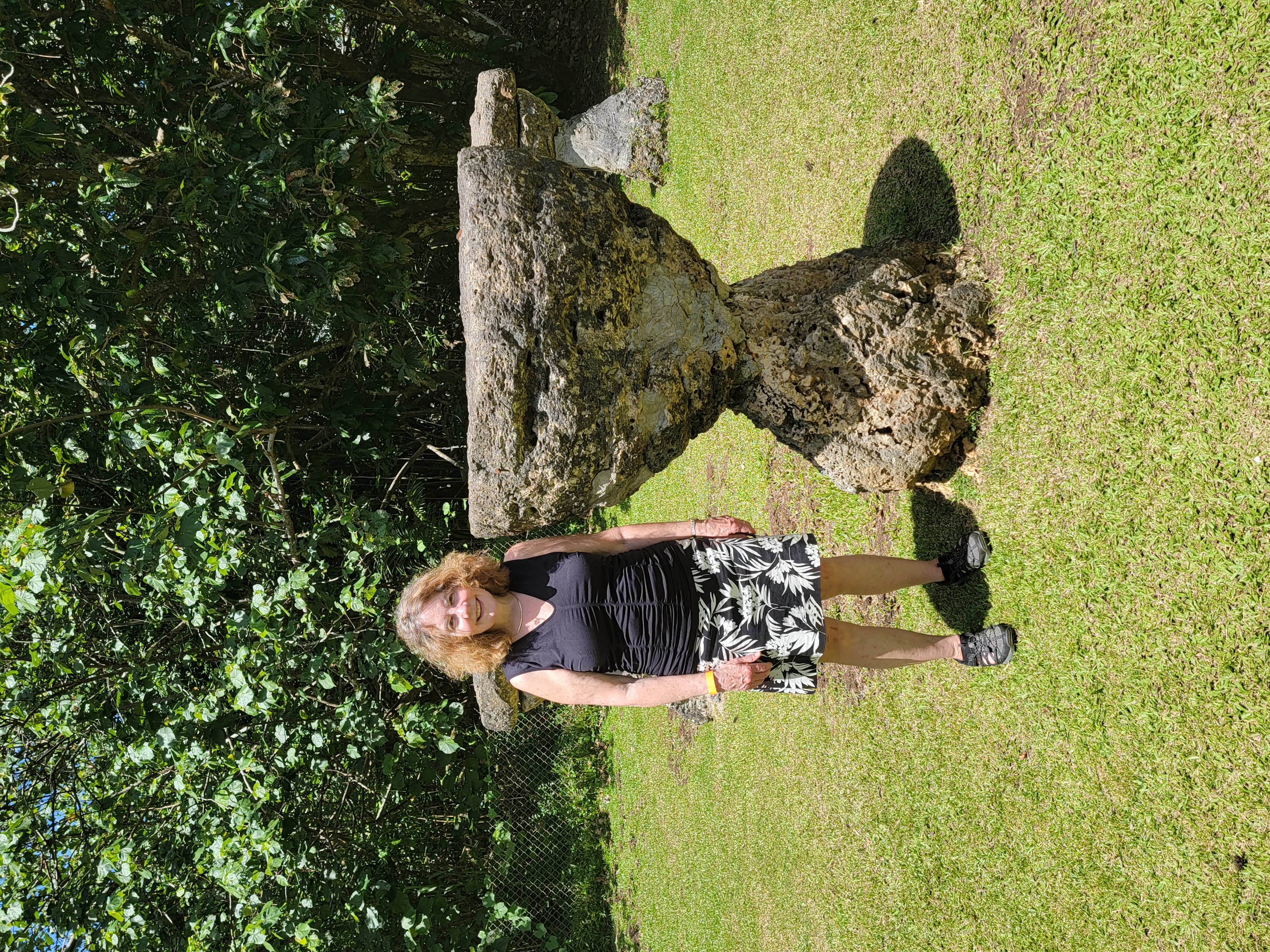
The area is called the Valley of the Latte. No, they don't have coffee drinks. They do have stone structures (latte) that were used, before the arrival of the Spanish, as house supports.
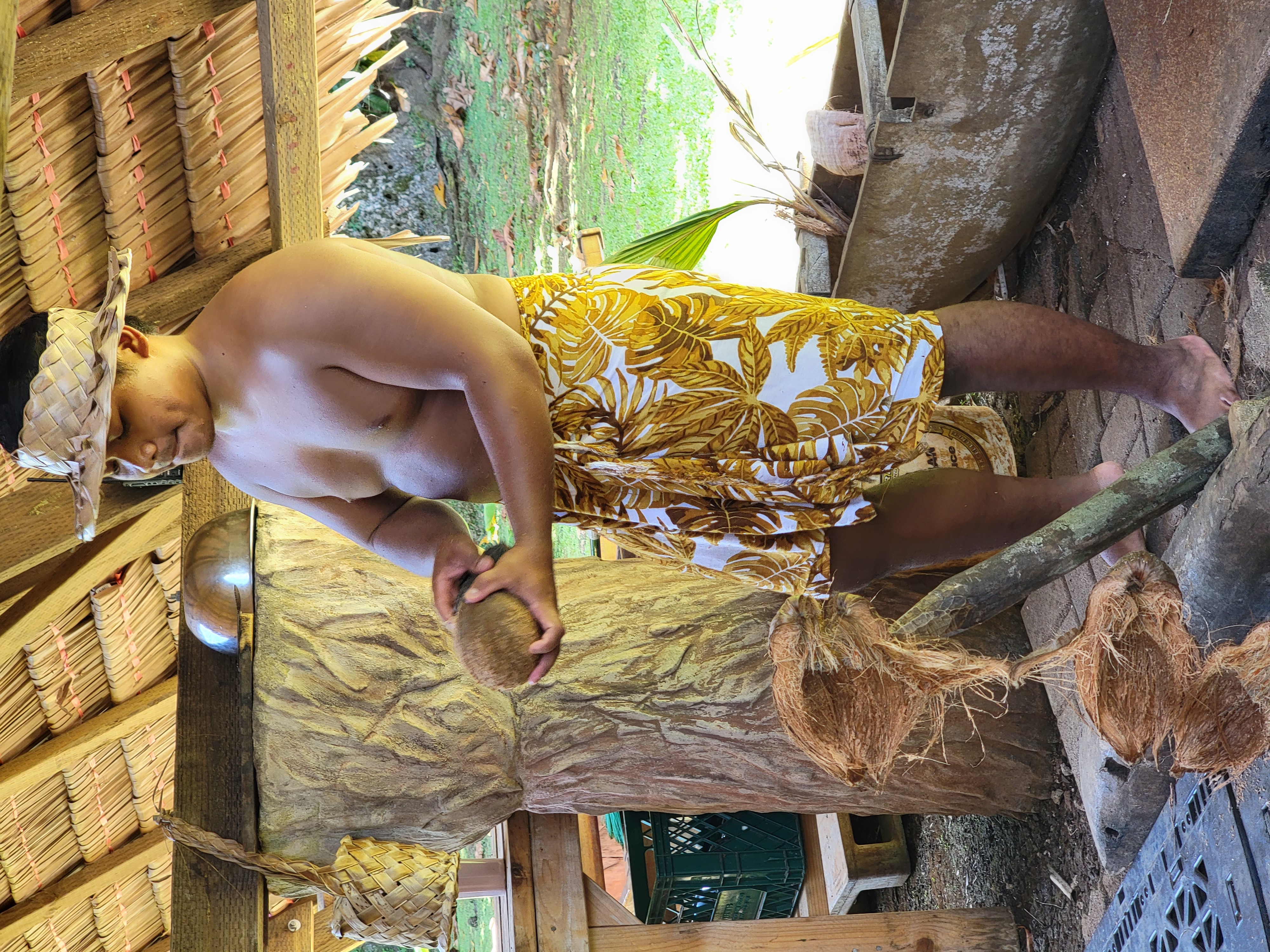
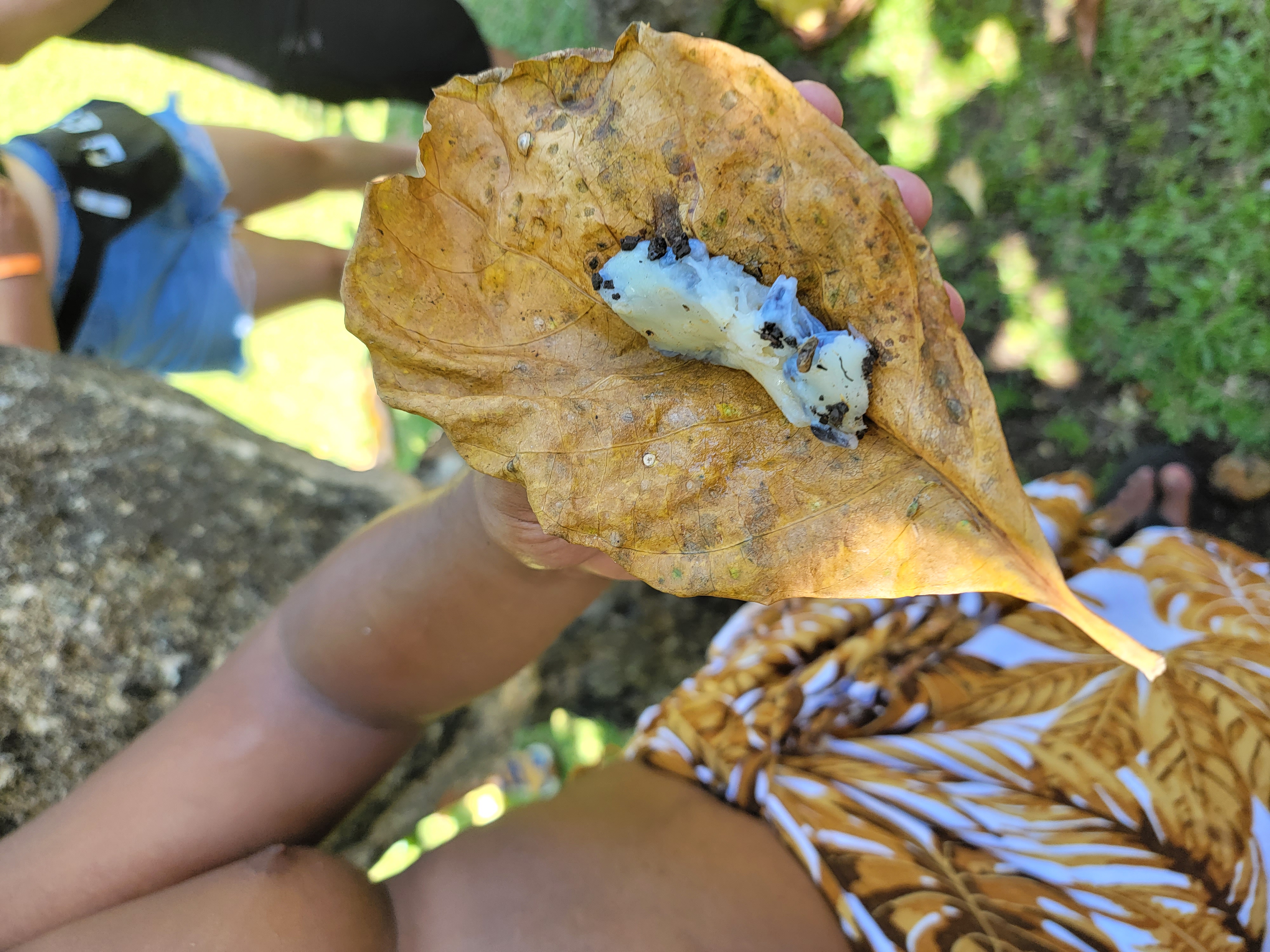
 In the middle of the jungle, there are demonstrations of indigenous Chamorran culture. Of course they have jungle fruit. Coconuts. Also the fruit of the noni tree. It tastes like rotten cheese but is supposed to be very good for you.
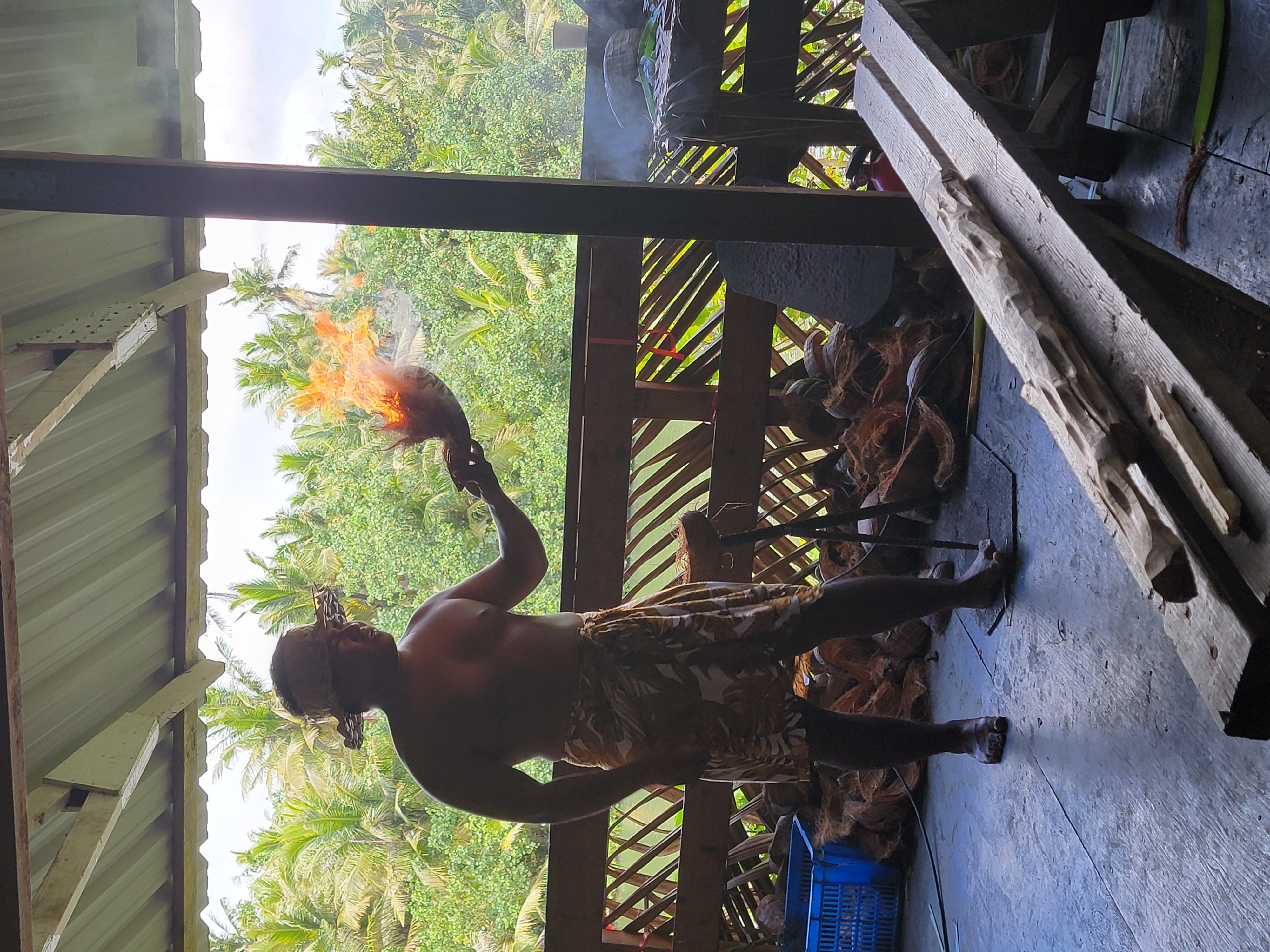
The final demonstration was fire. How to start it with no matches or lighter fluid.
 In this part of the world, it isn't possible to escape the legacy of (many) wars.
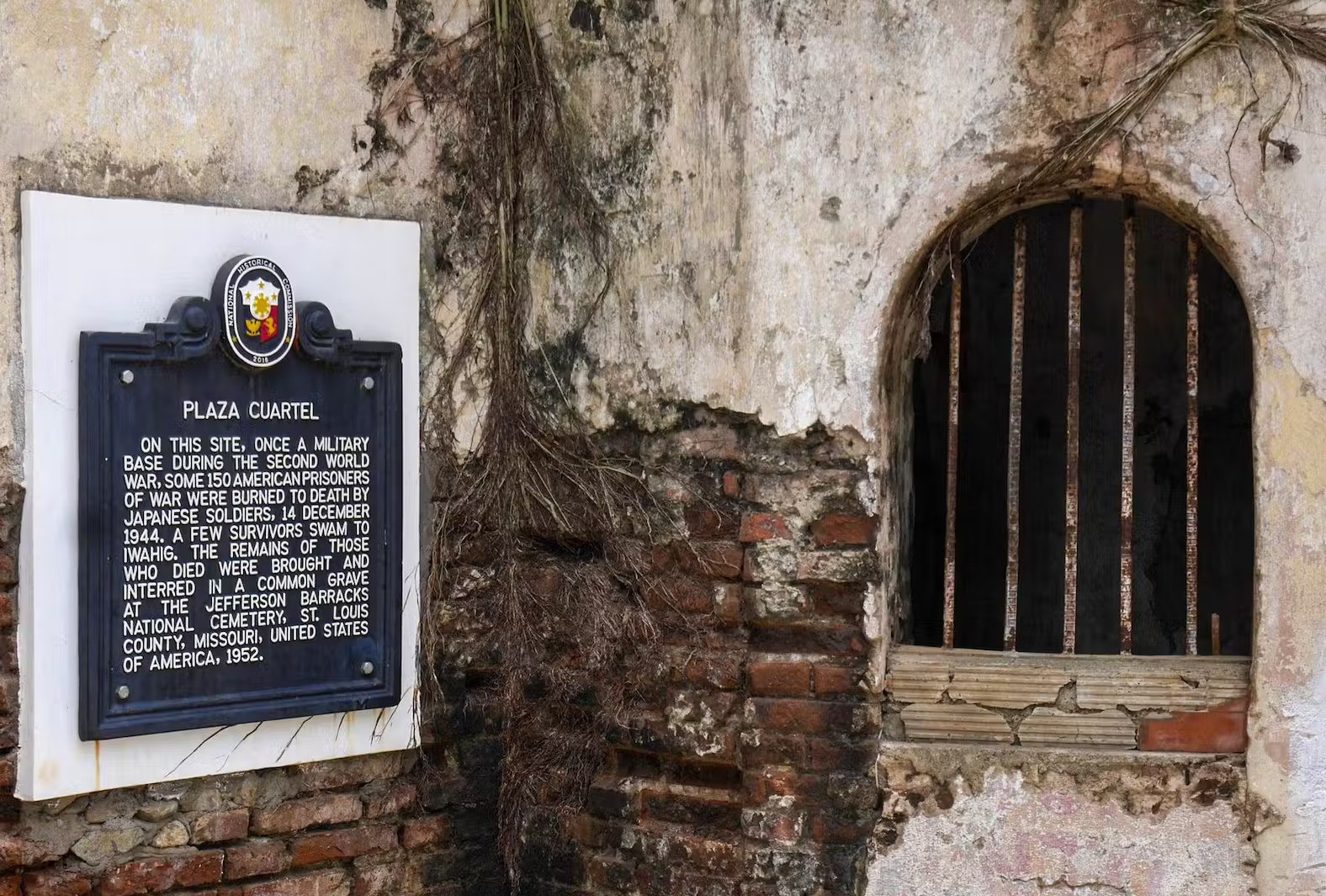
This is particularly true in The Philippines (a strategically important location), as we began learning at our first stop there. Plaza Cuartel was built by the Spanish in the 1880s as a defensive fort on the southwestern island of Palawan. During WWII, the Japanese used it as a prison camp. On December 14, 1944, the Japanese burned the prisoners alive.
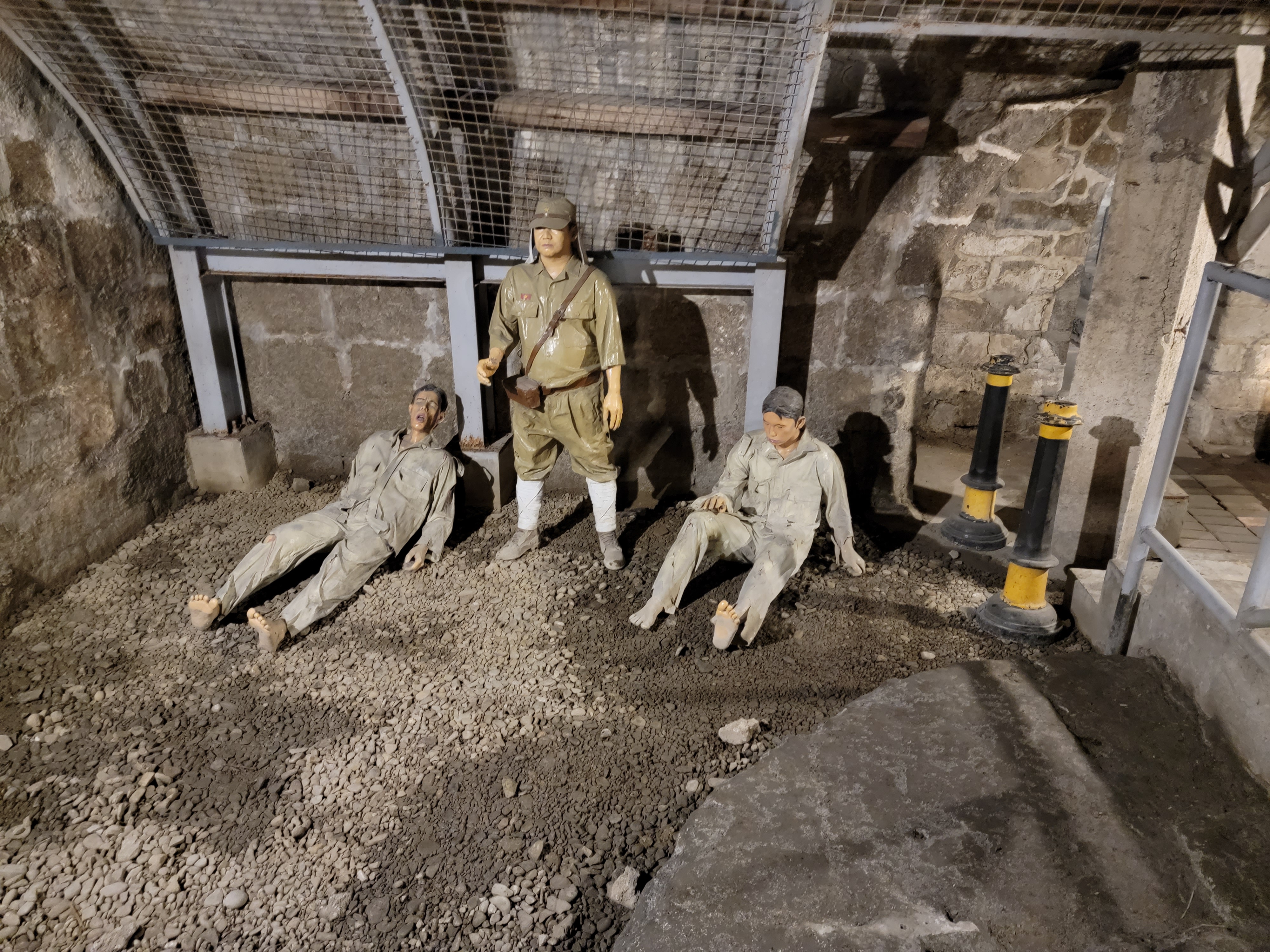
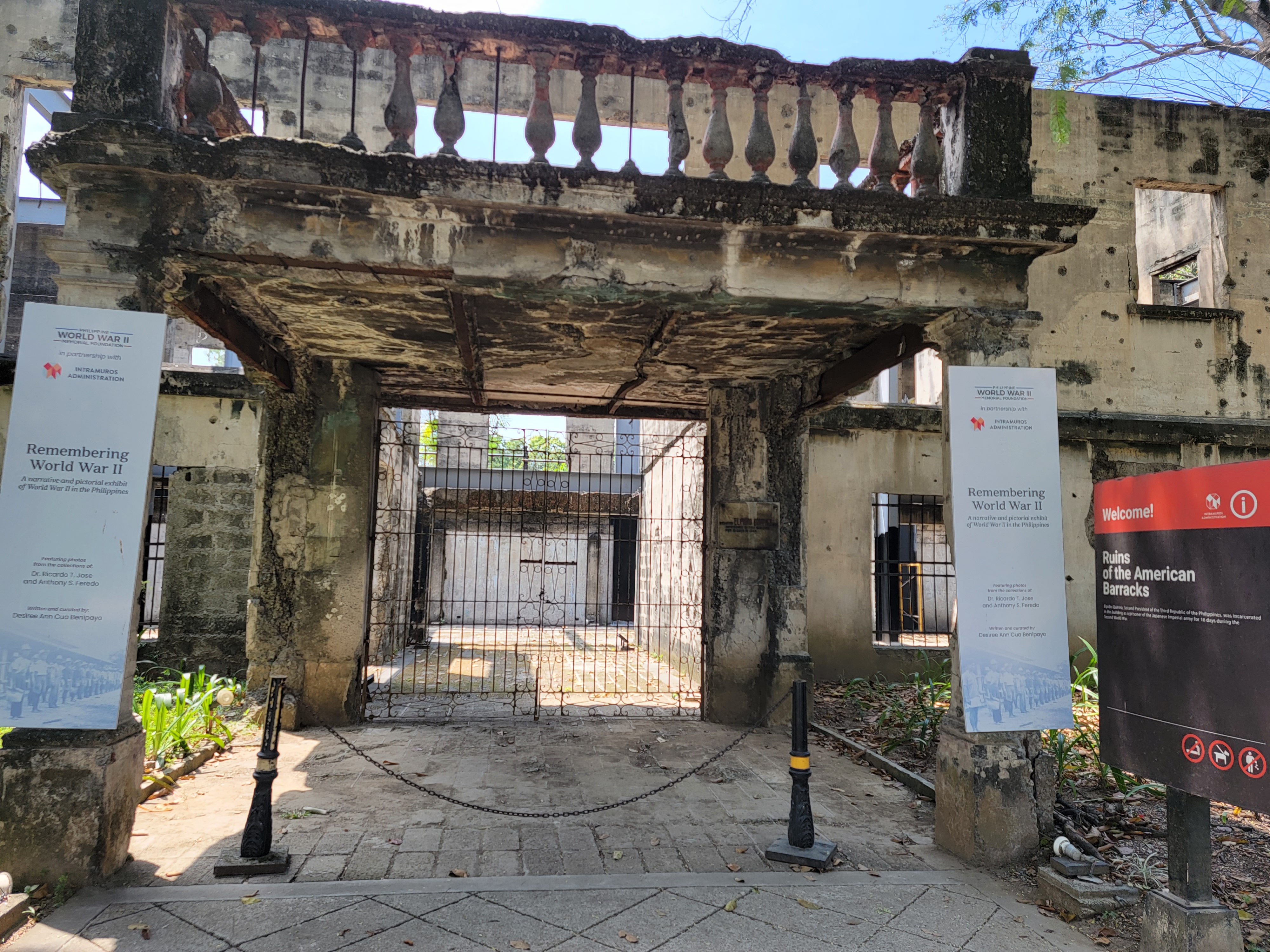
Fort Santiago was the main fortress of old Manila. It was established, in 1571, on the site of a former wooden fort. It was burned during a siege by a Chinese pirate in 1574. Then reconstructed. It was the citadel of the armies of four foreign powers: Spain (1571 - 1898) except for Great Britain (1762 - 1764). Then the US (1898 - 1946) except for Japan (1942 - 1945). 600 corpses were discovered inside its dungeon by the US army during the liberation of Manila in 1945. (Just dolls in the photo.)
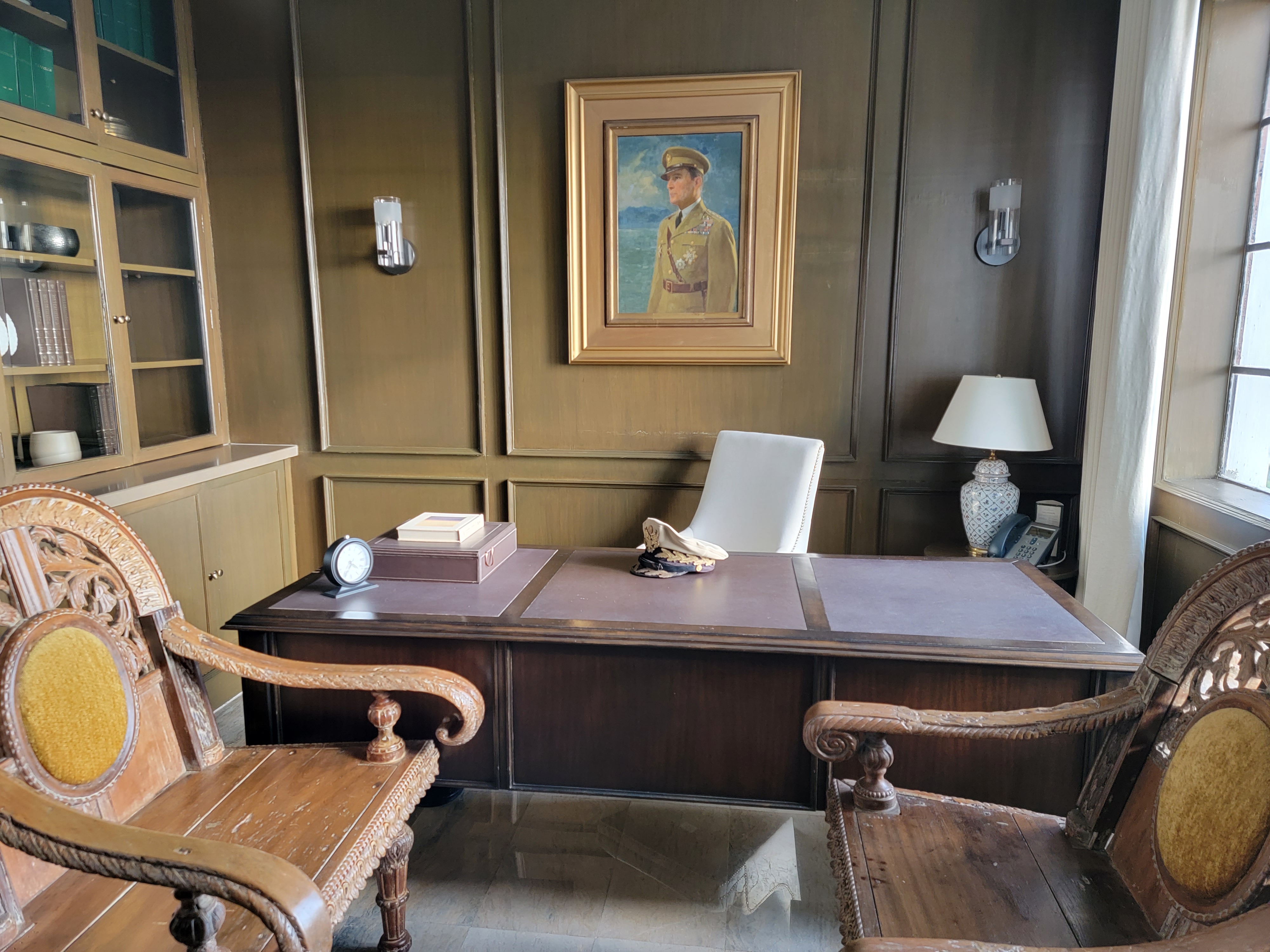
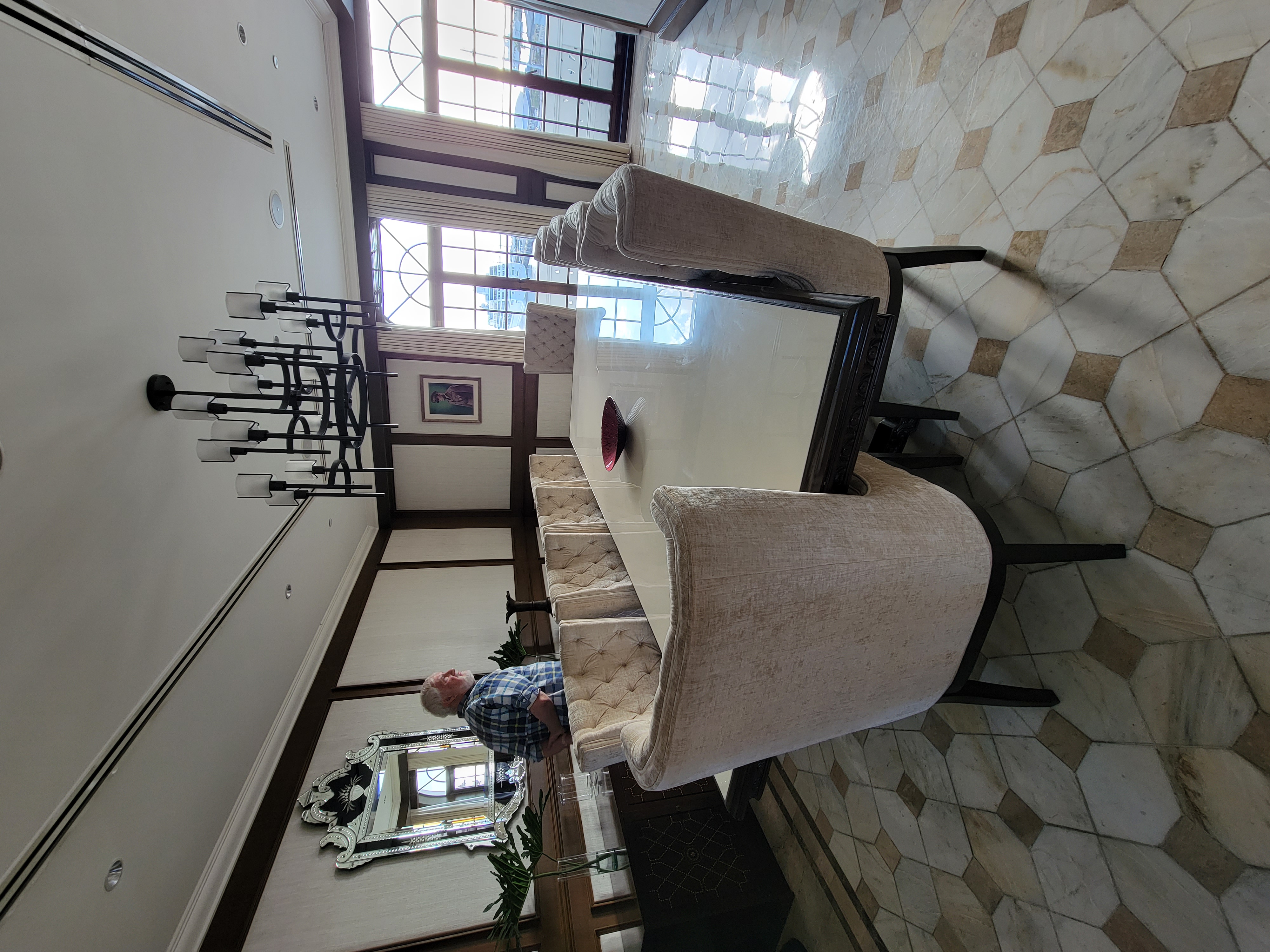 General Douglas MacArthur had his headquarters at the
Manila Hotel from to 1935 to 1941. He occupied the entire fifth floor of the hotel until he was forced by the Japanese invasion to leave, first for Corregidor and then, in 1942, for Australia. The Japanese destroyed the suite, possibly to get back at MacArthur. But it has been meticulously restored. You can now stay there. For only about $1750. Our guide had a friend who worked at the hotel and he let us in for nothing.
General Douglas MacArthur had his headquarters at the
Manila Hotel from to 1935 to 1941. He occupied the entire fifth floor of the hotel until he was forced by the Japanese invasion to leave, first for Corregidor and then, in 1942, for Australia. The Japanese destroyed the suite, possibly to get back at MacArthur. But it has been meticulously restored. You can now stay there. For only about $1750. Our guide had a friend who worked at the hotel and he let us in for nothing.
When he got to Australia, MacArthur vowed, "I came through and I shall return." He did, in October, 1944. He is generally regarded in the Philippines as a hero for liberating them from the brutal Japanese occupation.
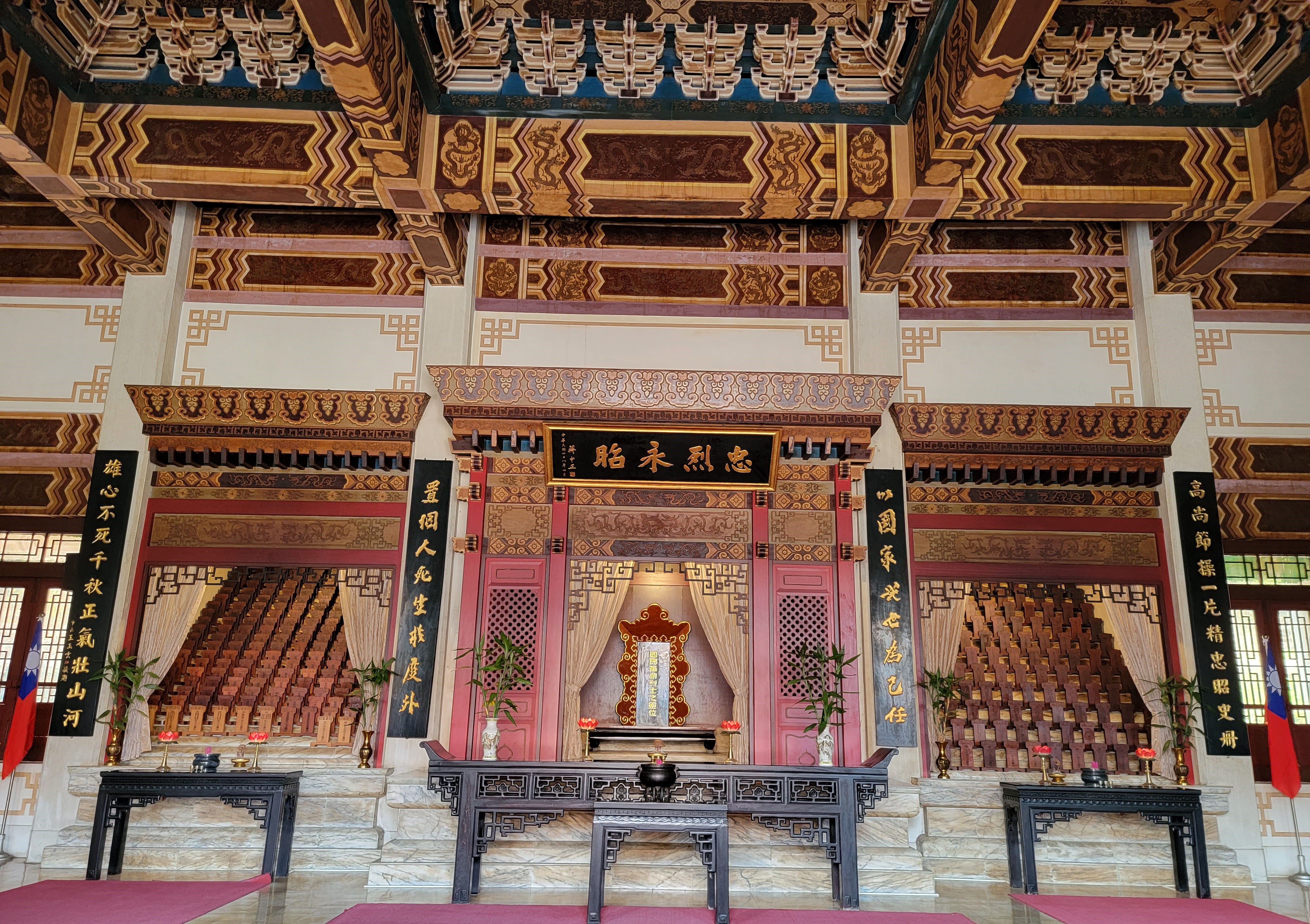
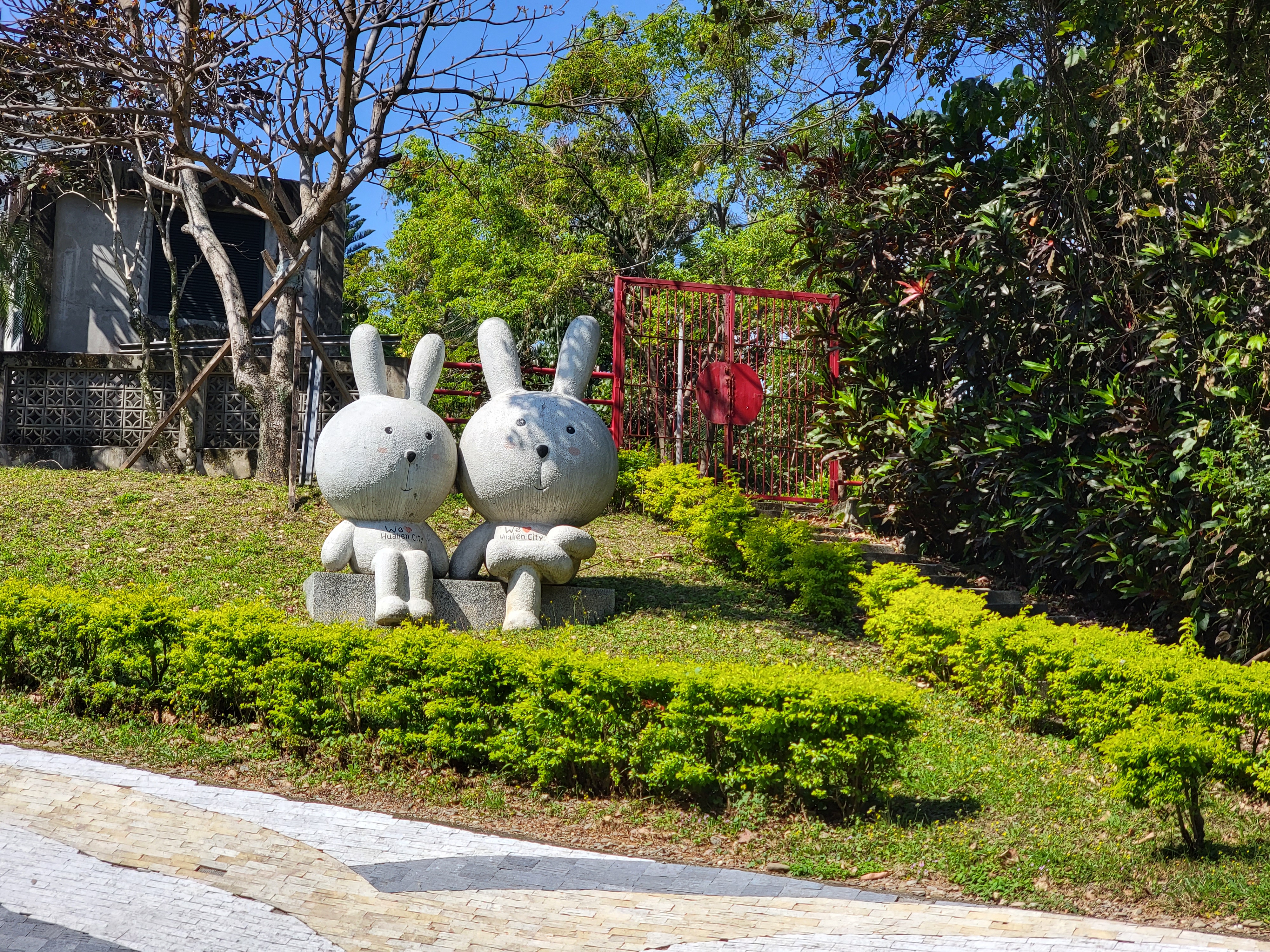
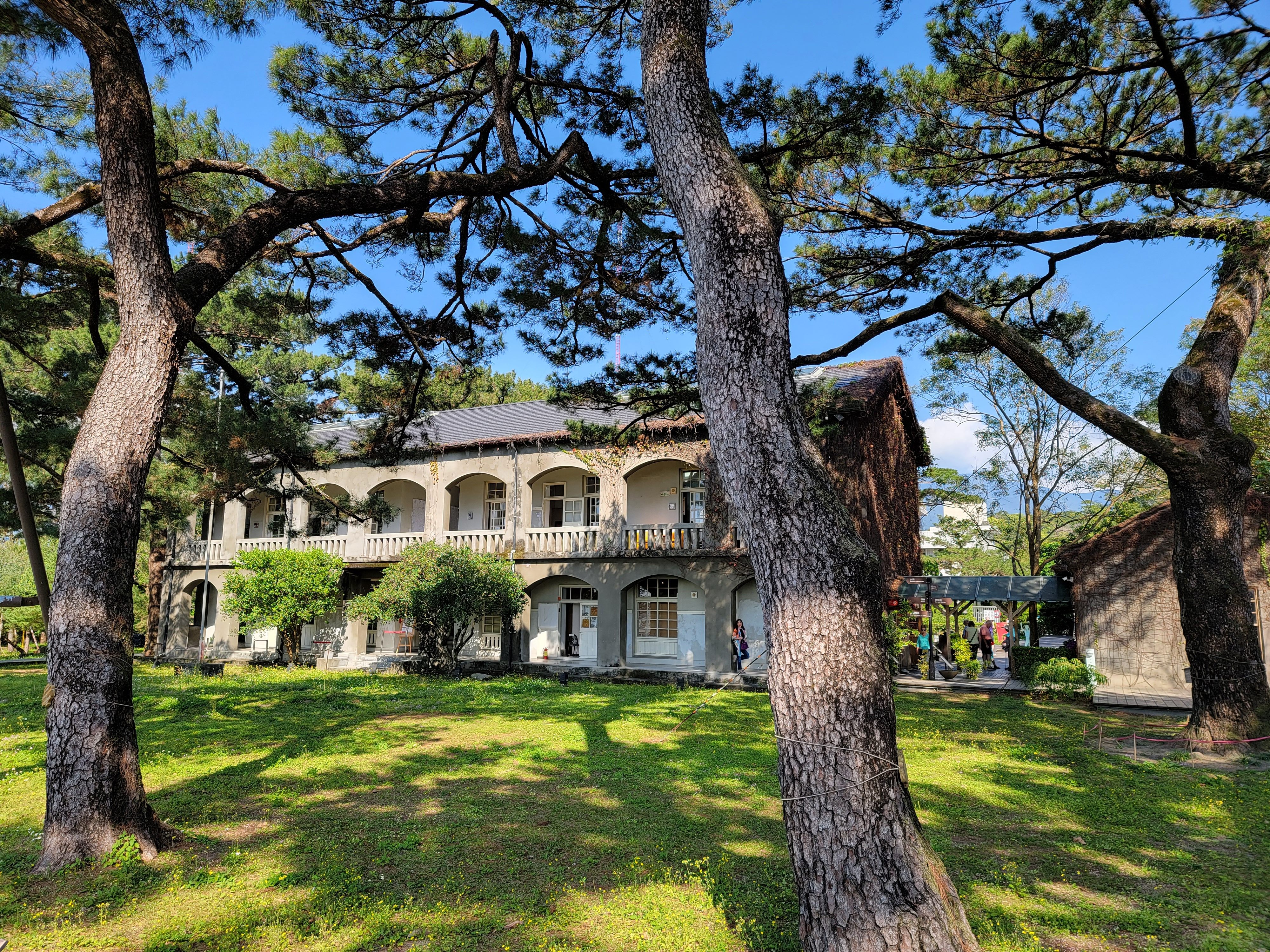 In Kaoshiung, Taiwan, the most impressive structure we saw was the Martyrs Shrine. Originally built by the Japanese in 1910, it was redone by the Taiwanese as a shrine to the martyrs of the National Revolutionary Army (1925 - 1947).
The Japanese occupied Taiwan from 1895 to 1945. The Pine Garden, in Hualien, was an important military structure since it overlooked the bay. We were told that, at the end of WWII, Japanese kamikaze pilots would come there for one night of luxury before heading out on their missions. Progress: Today it is an arts center.
On our last day in Taiwan, our guide told us, "In Taiwan, we fear three natural disasters: typhoons, earthquakes, and China."
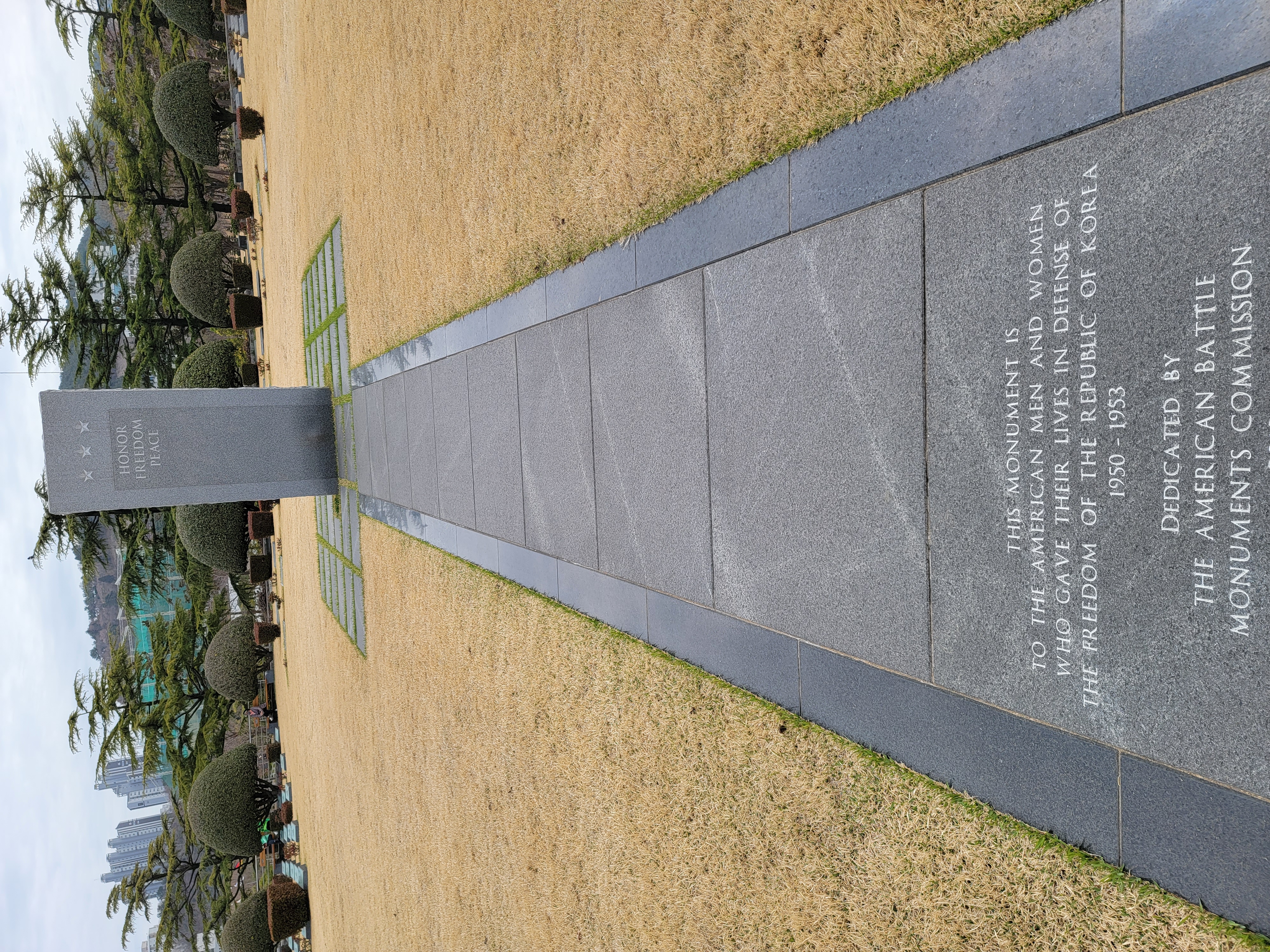
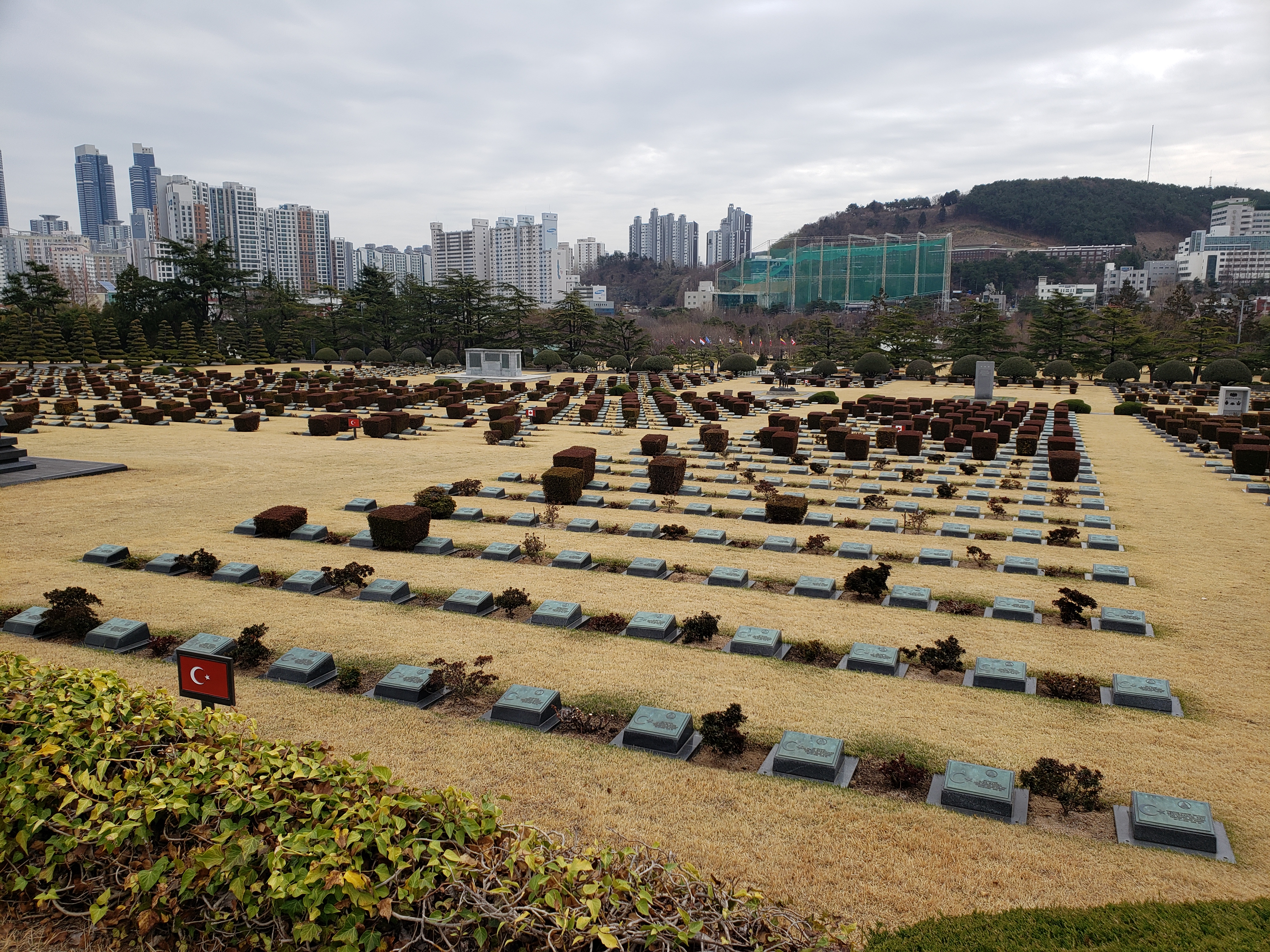 In Busan, South Korea there is a UN cemetery and memorial for the UN forces who fought in the Korean war.
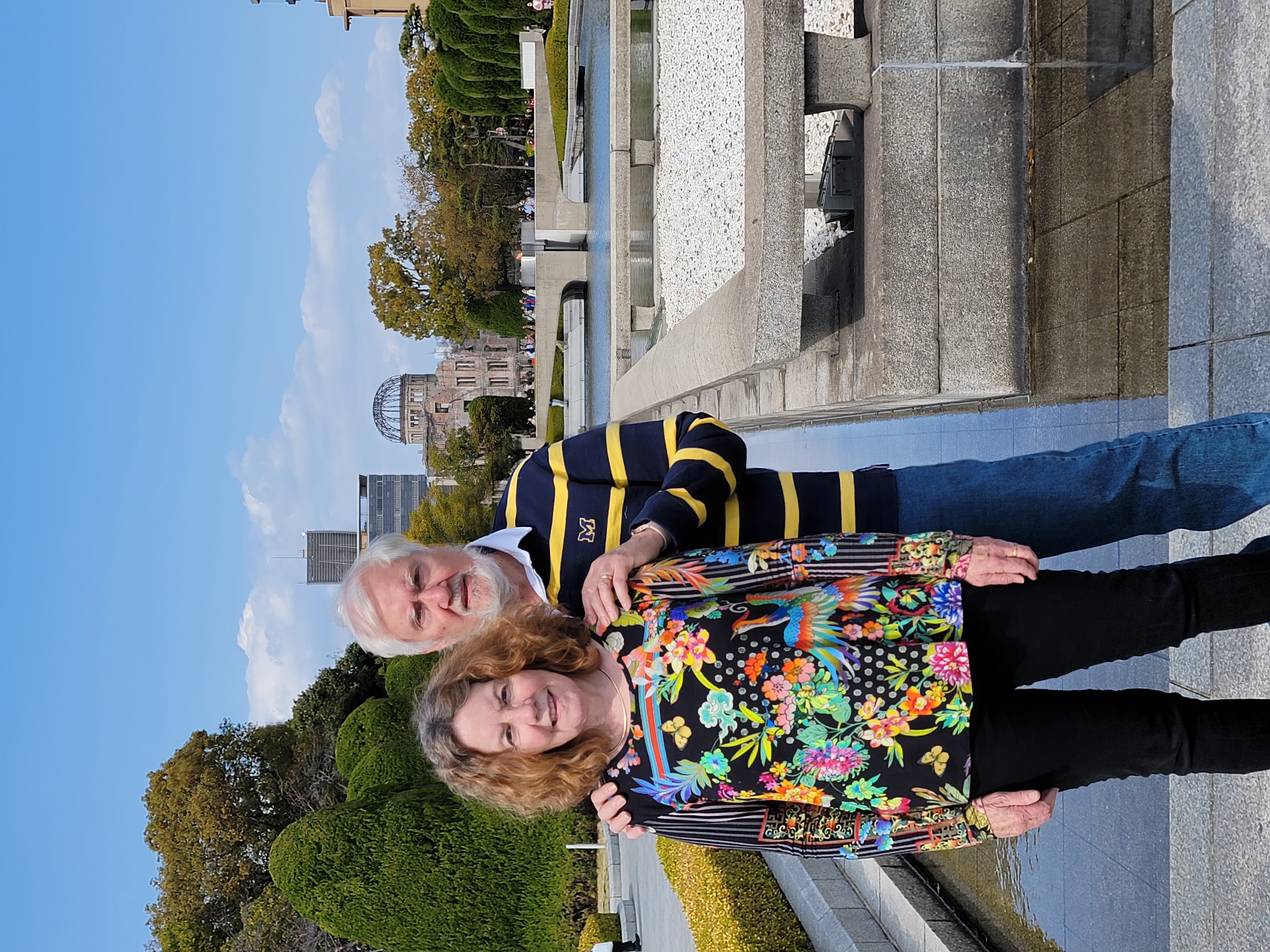
 And then we went to Japan.
It's hard to know what to say about Hiroshima. Maybe if everyone on the planet were able to visit The Peace Memorial and Museum, we would stop having wars.
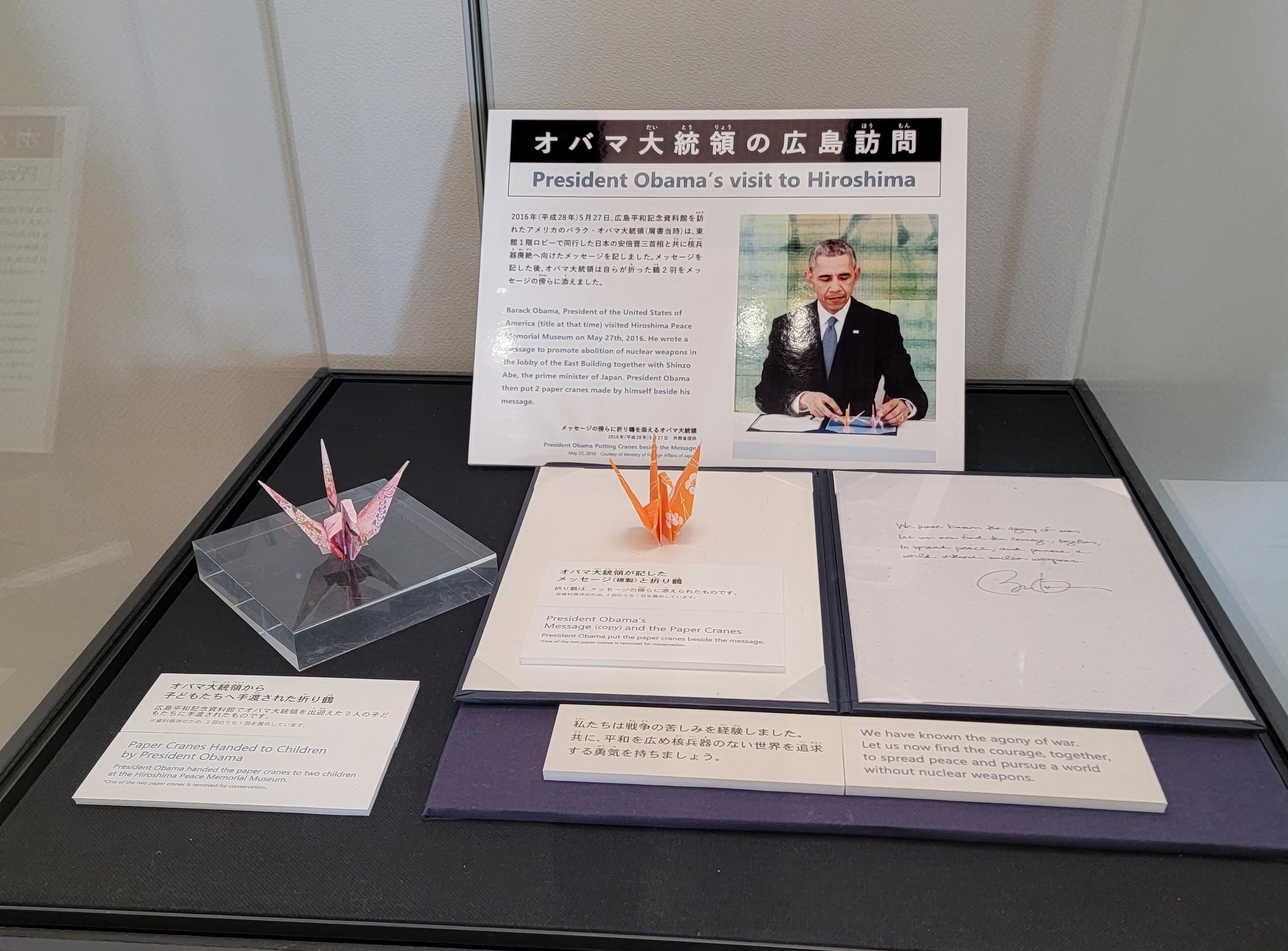
President Obama visited in 2016. You can read his speech here. We quote from it in our classes/lectures on ethics for computer scientists.
The wars of the modern age teach this truth. Hiroshima teaches this truth. Technological progress without an equivalent progress in human institutions can doom us. The scientific revolution that led to the splitting of an atom requires a moral revolution, as well.
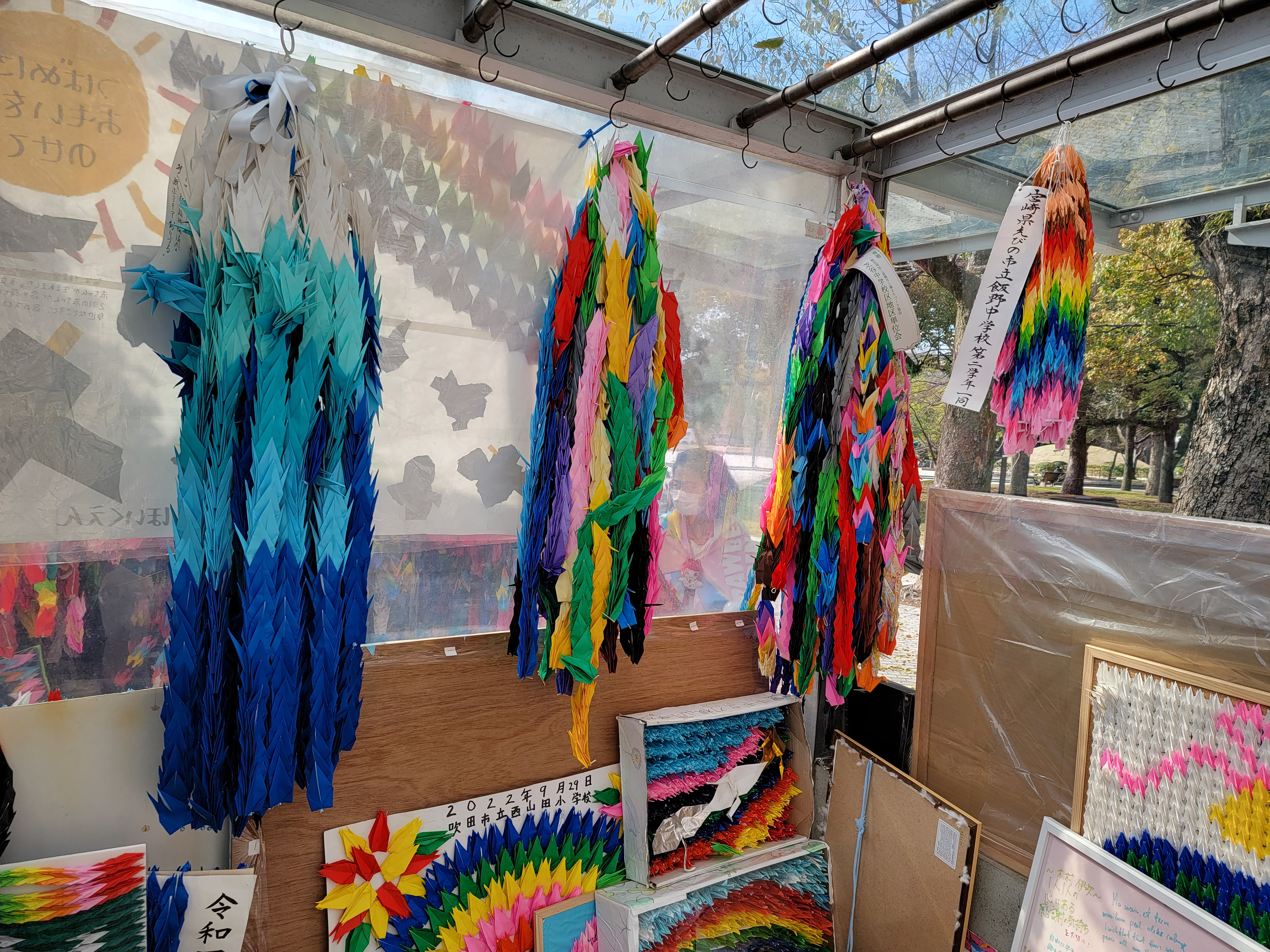
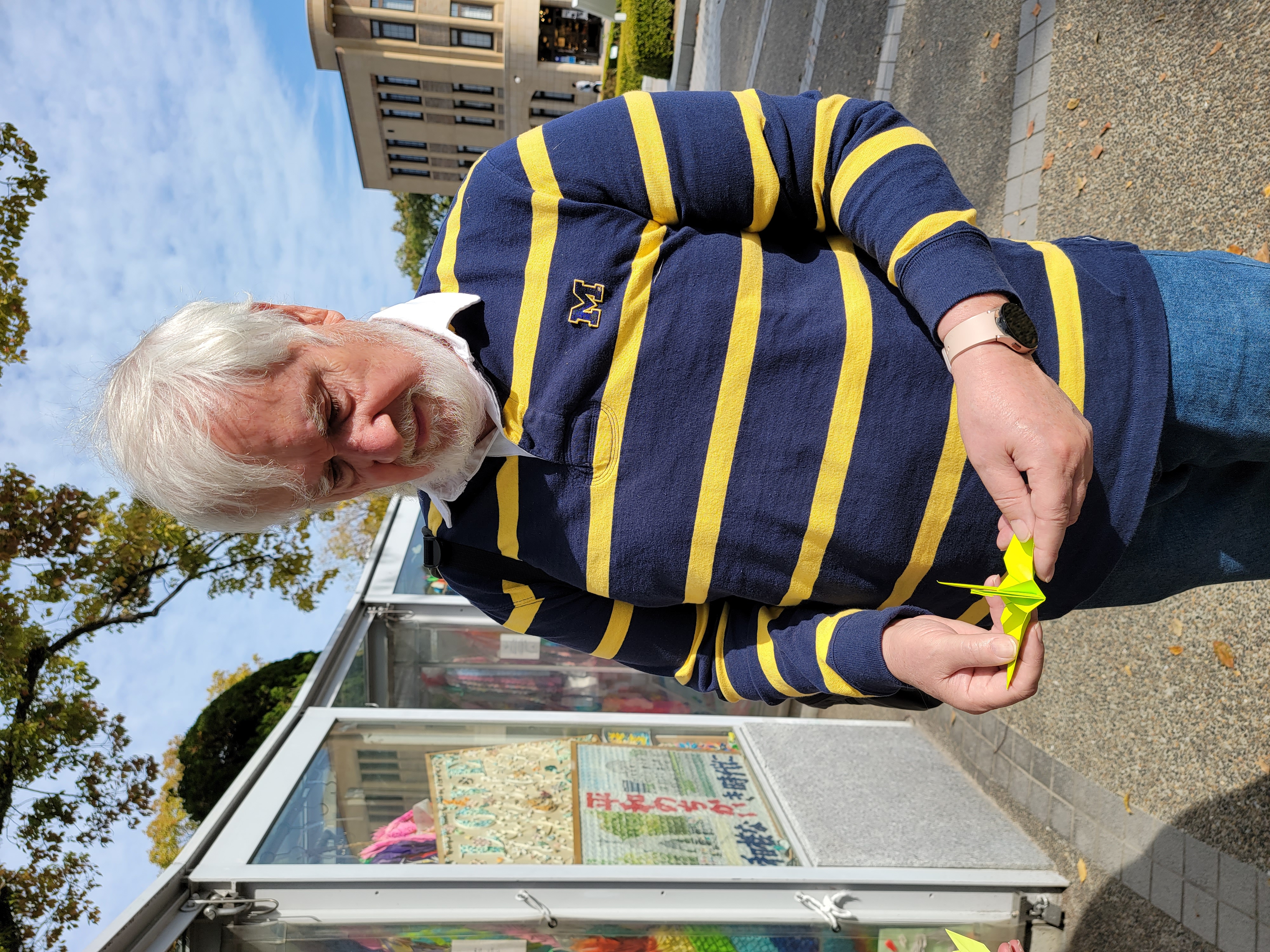
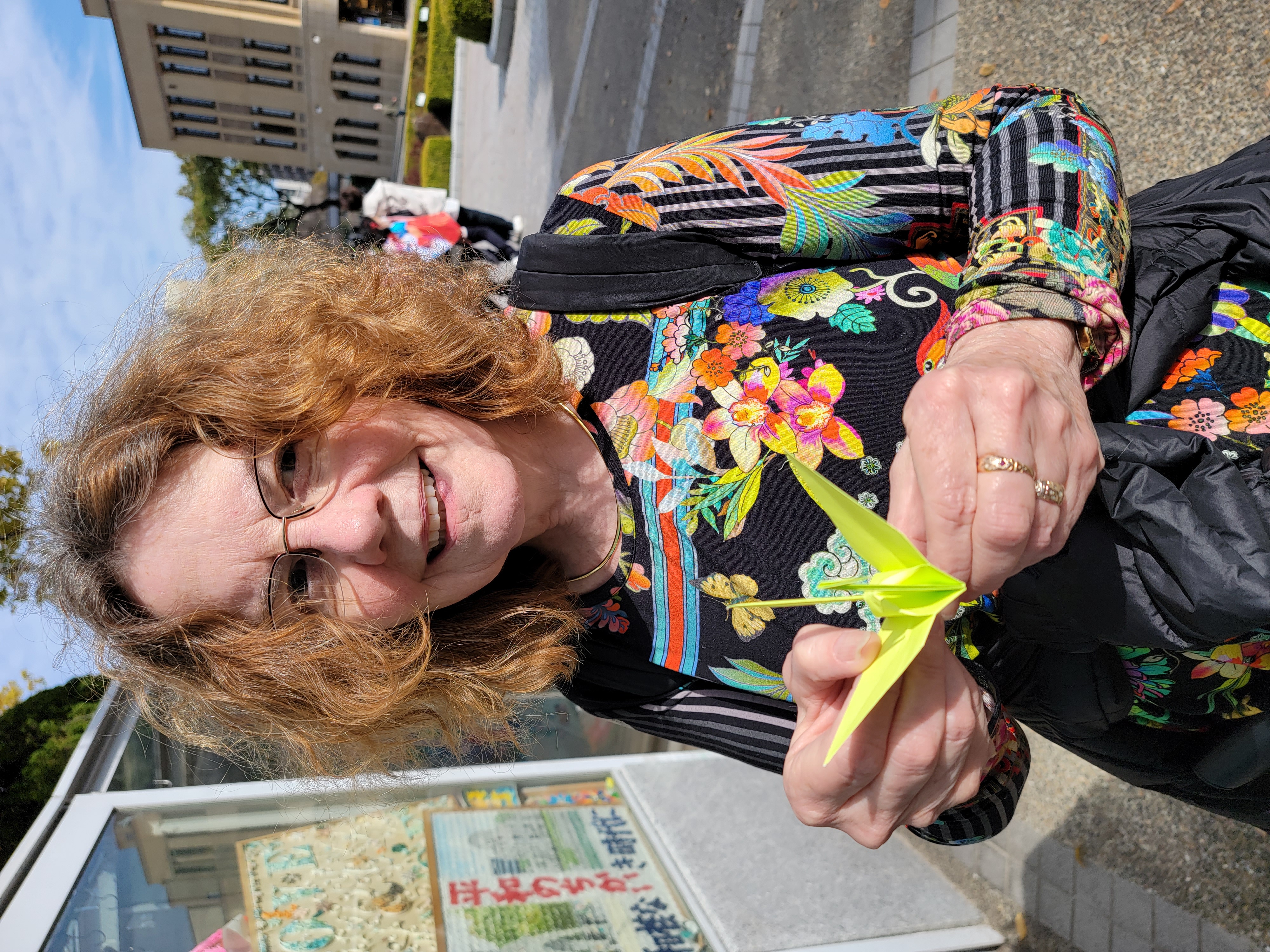 They fold
origami cranes. Thousands of them. For a little girl who died (leukemia). We just folded one each.
They fold
origami cranes. Thousands of them. For a little girl who died (leukemia). We just folded one each.
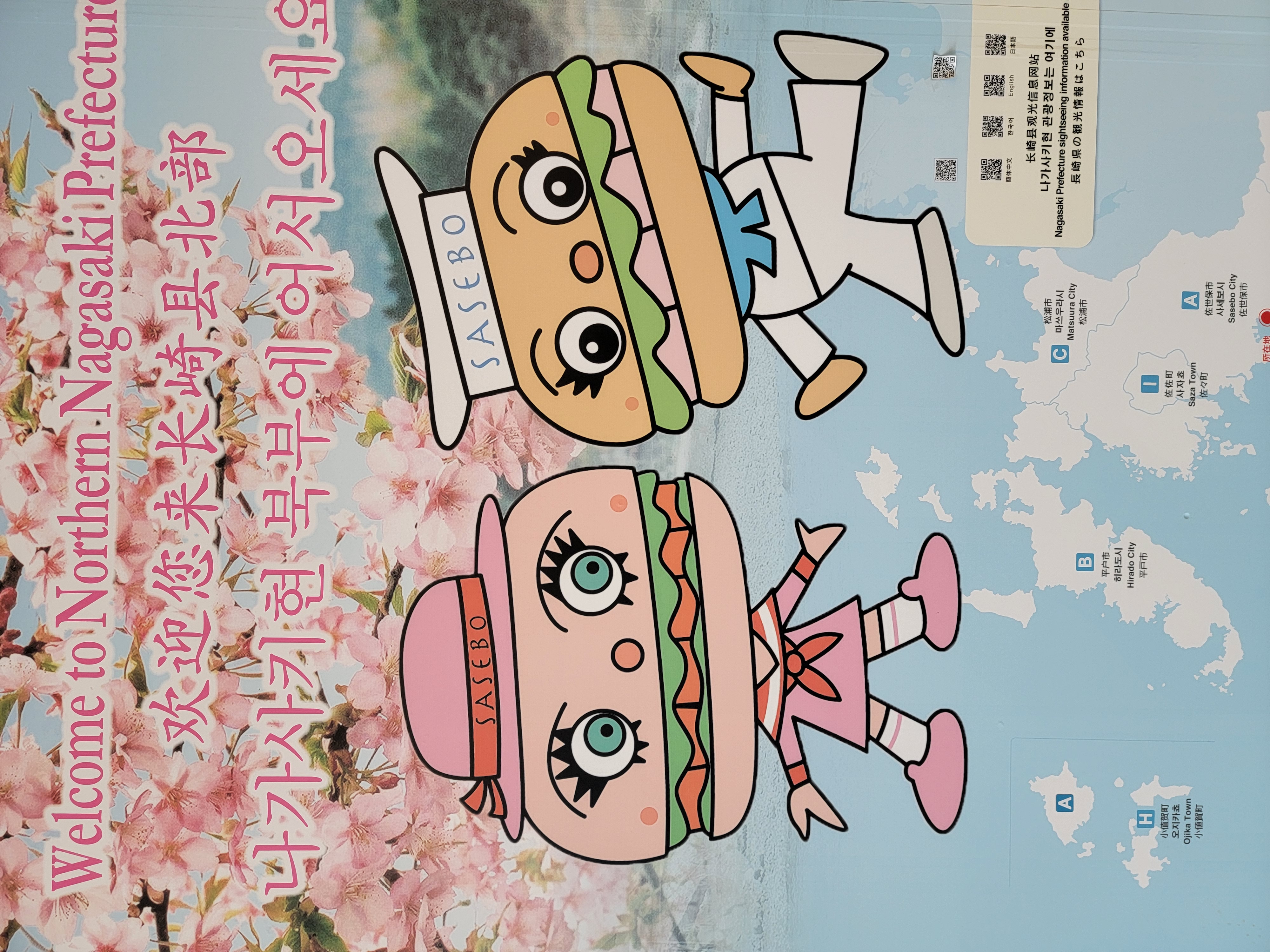
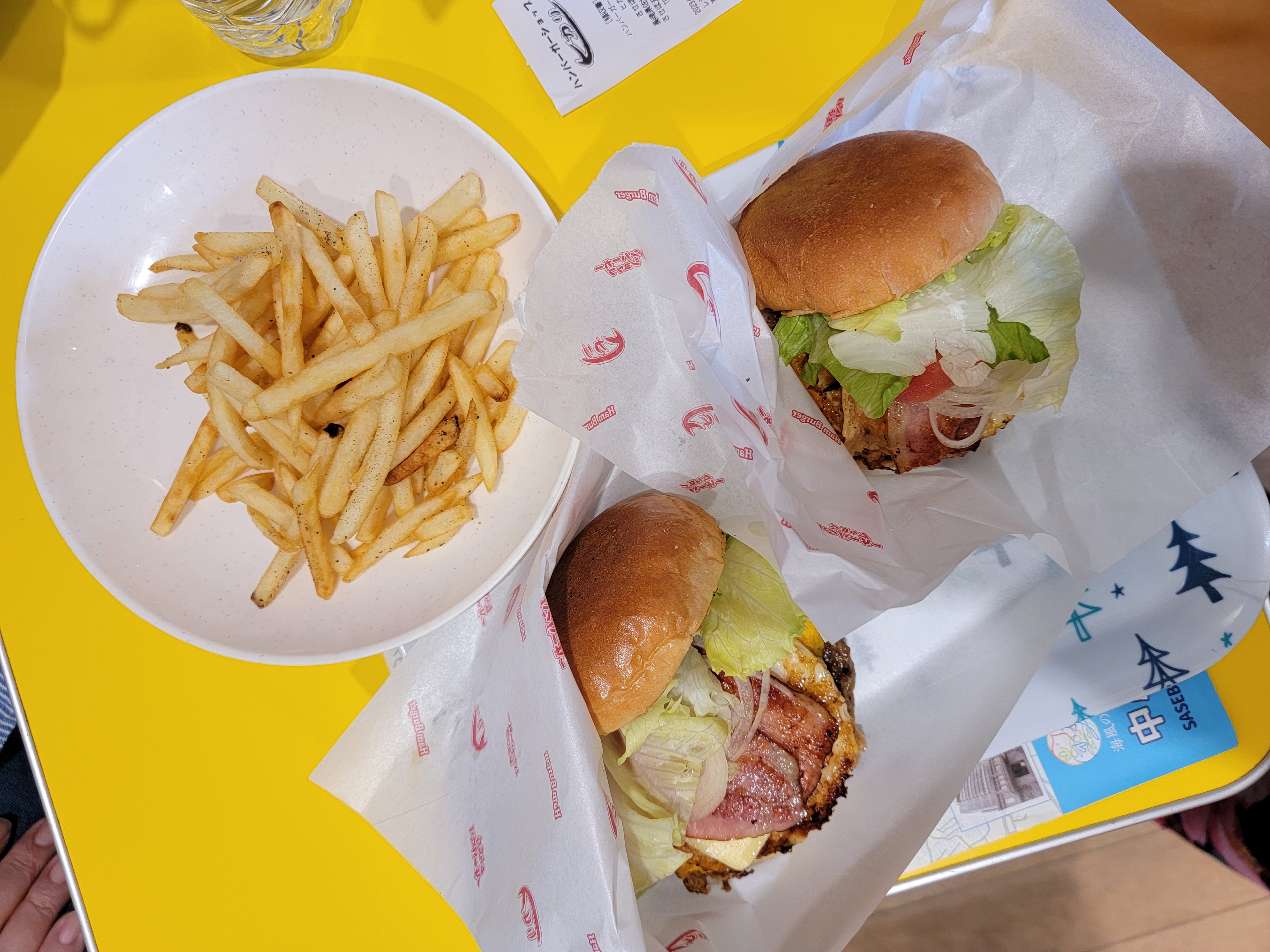 But we saw one tiny upbeat reminder of WWII. Sasebo, Japan sits on an excellent natural harbor. The Japanese navy had a base there until the end of the war. Then the US navy was there. That meant that US sailors had to get fed. They left a lasting legacy: the Sasebo burger. The burgers even welcomed us to town. Oh, and they serve the burgers with fries.
But there is also beauty.
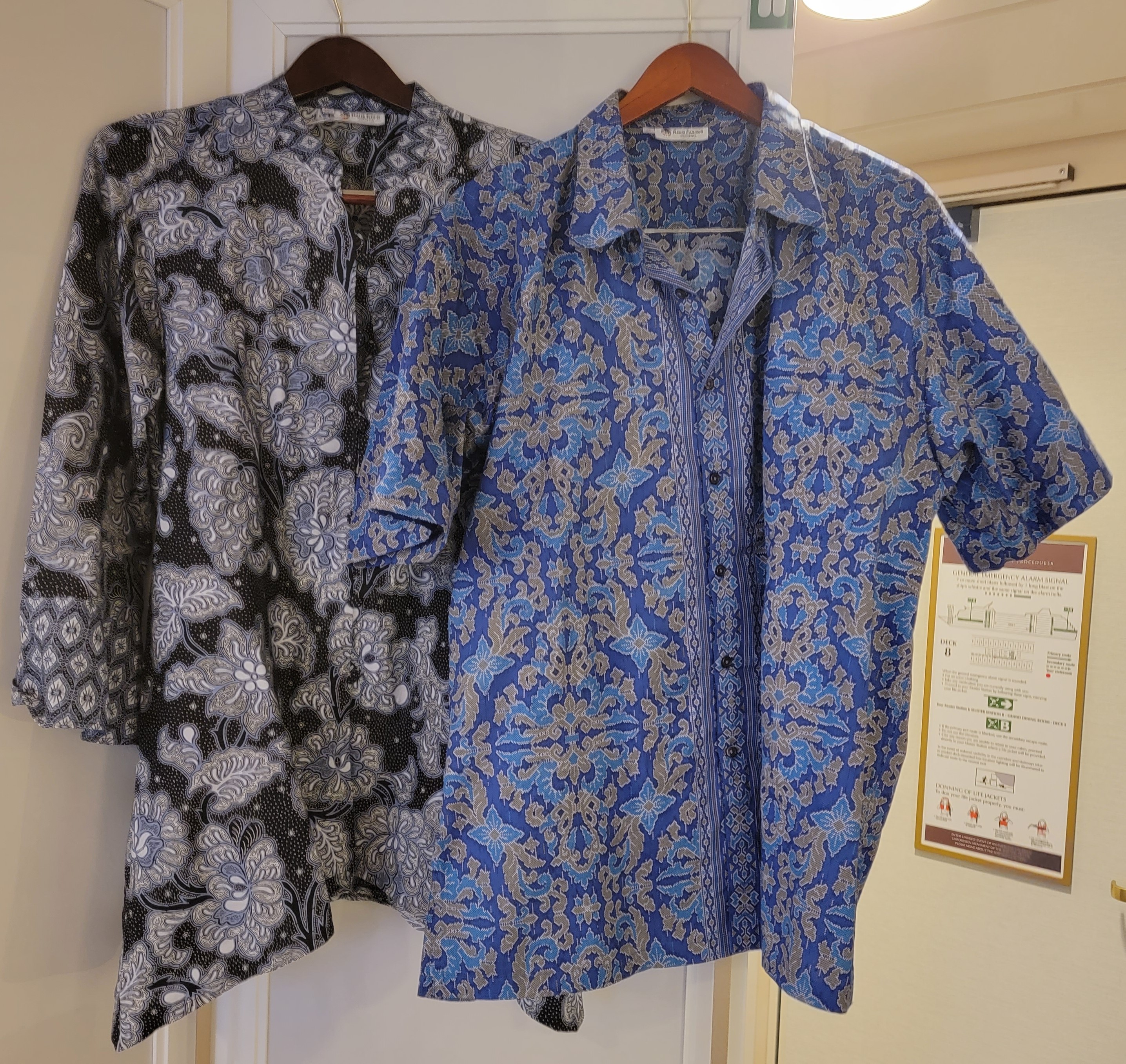
In Indonesia, they make batiks. We had to buy some.
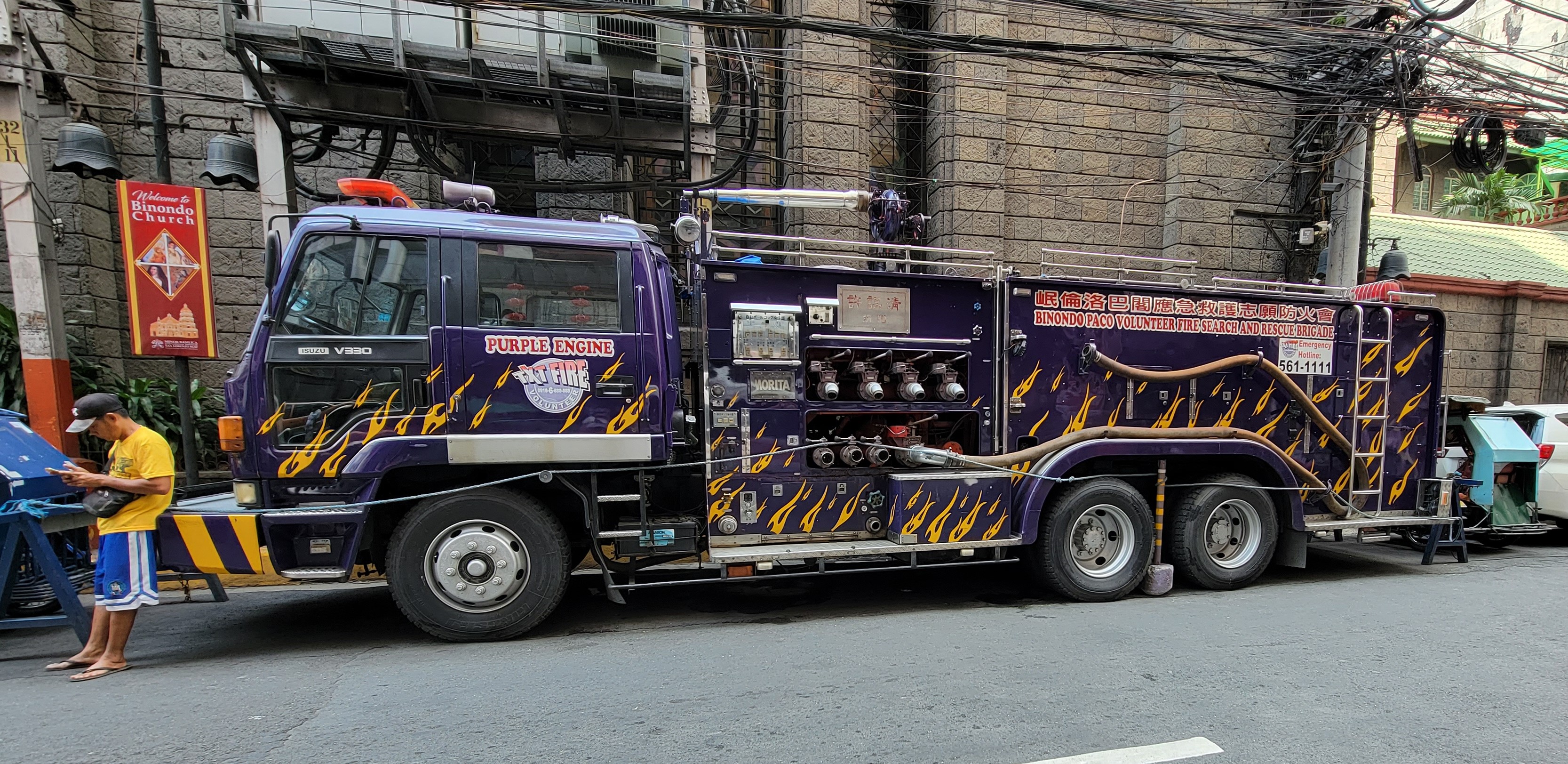
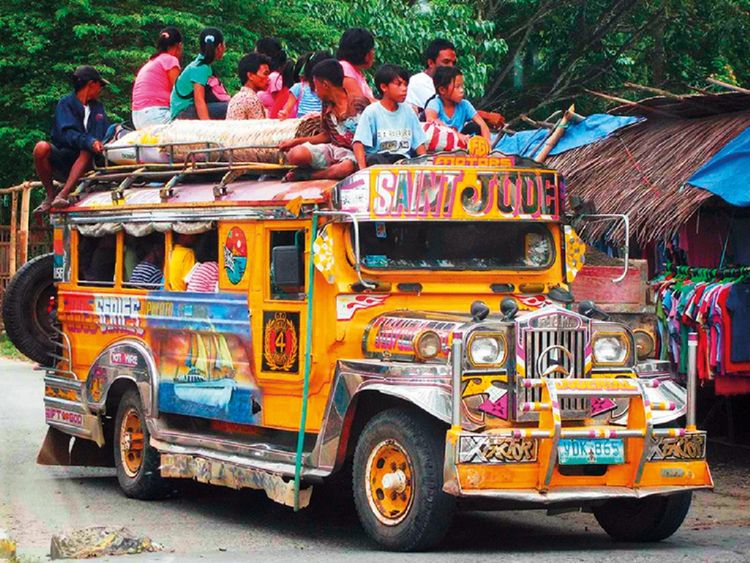
In Manila, they paint things. It is a fun, large, crowded, transportation nightmare. One of the most popular forms of public transportation is the jeepney. Those get painted. In Manila's Chinatown, a baked goods magnate has donated trucks to the volunteer fire department. Those get painted too.
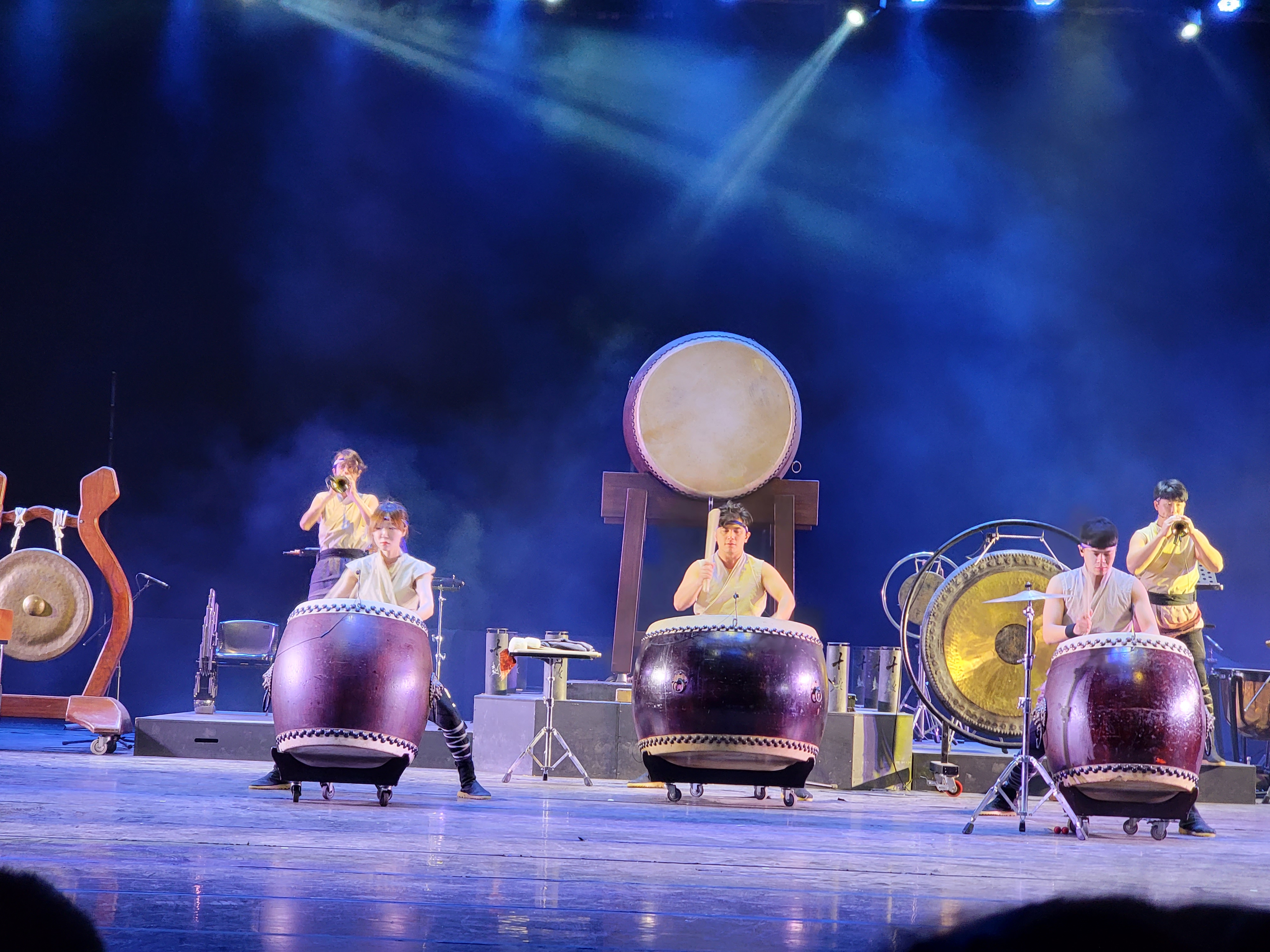
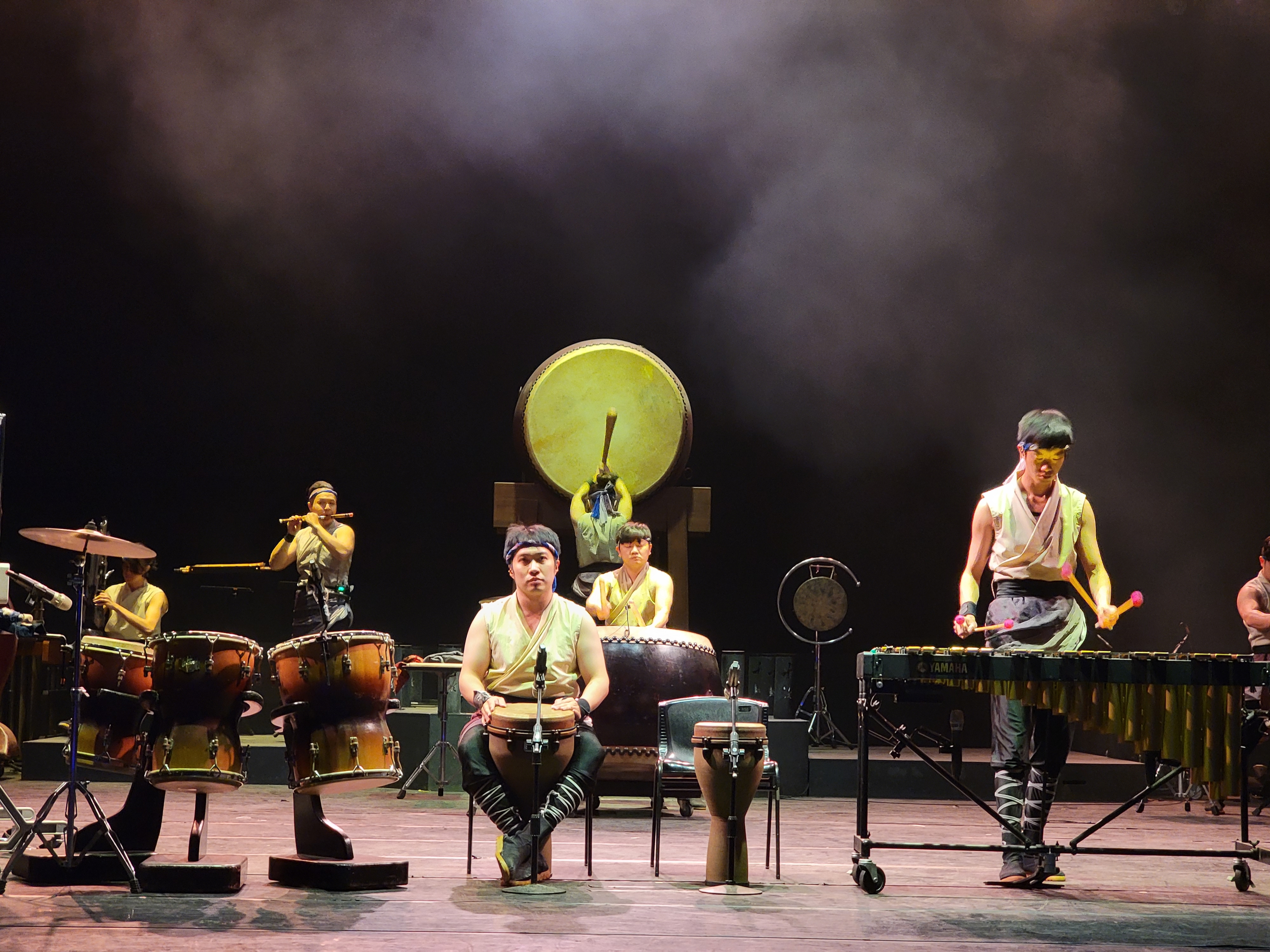
 In Taiwan, they drum.
Ten Drum Culture Village has taken over an abandoned candy factory in Tainan, about 30 miles north of Kaoshiung. The drumming reminded me of Kodo Drummers.
In Taiwan, they drum.
Ten Drum Culture Village has taken over an abandoned candy factory in Tainan, about 30 miles north of Kaoshiung. The drumming reminded me of Kodo Drummers.
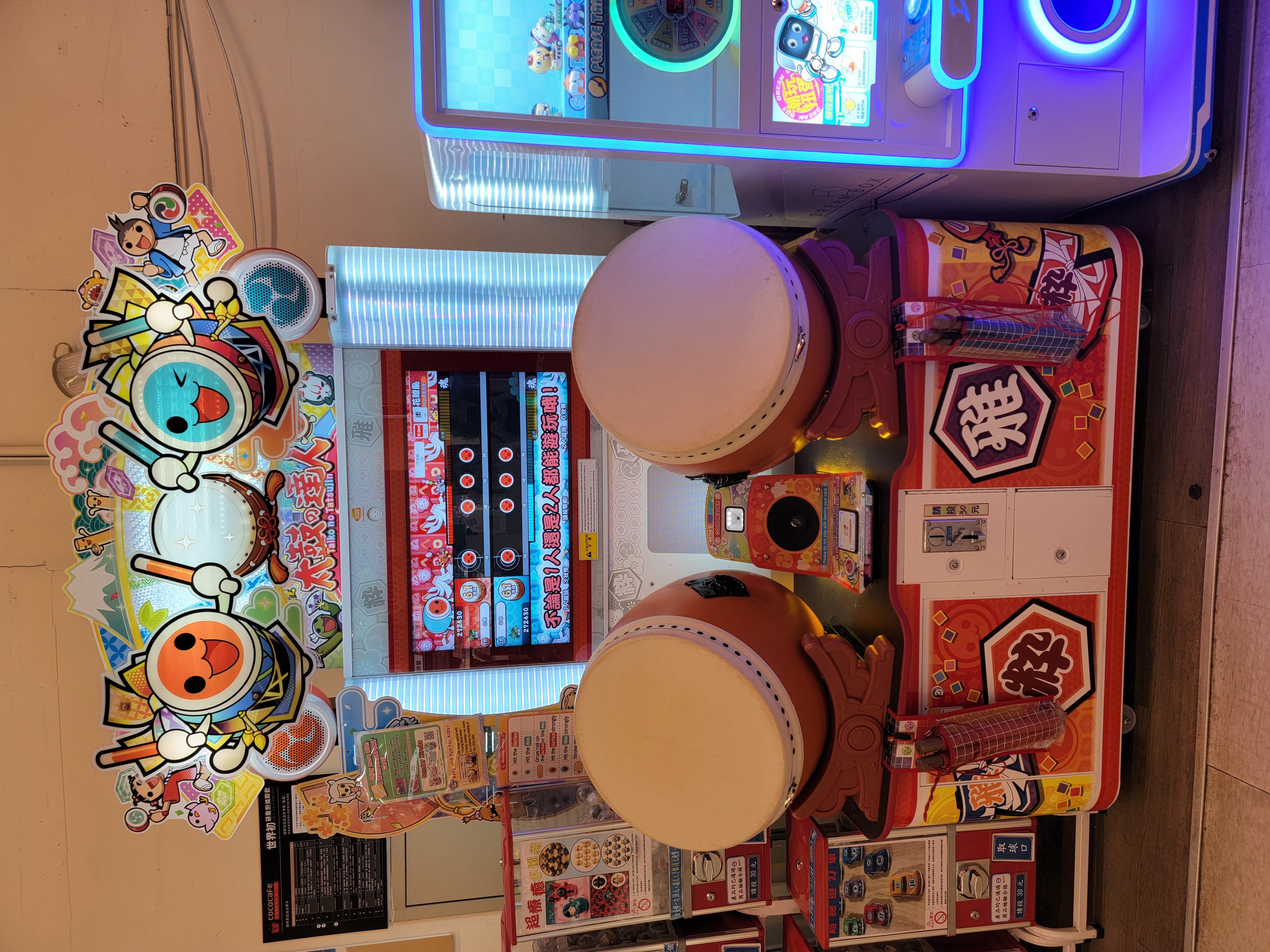
In our next city, Hualien, we spotted a Ten Drum arcade game.
 When Chiang Kai-Shek and the Kuomintang fled mainland China to Taiwan in 1949, they smuggled crates and crates of art and antiquities out with them. The
National Palace Museum in Taipei displays many of these treasures.
When Chiang Kai-Shek and the Kuomintang fled mainland China to Taiwan in 1949, they smuggled crates and crates of art and antiquities out with them. The
National Palace Museum in Taipei displays many of these treasures.
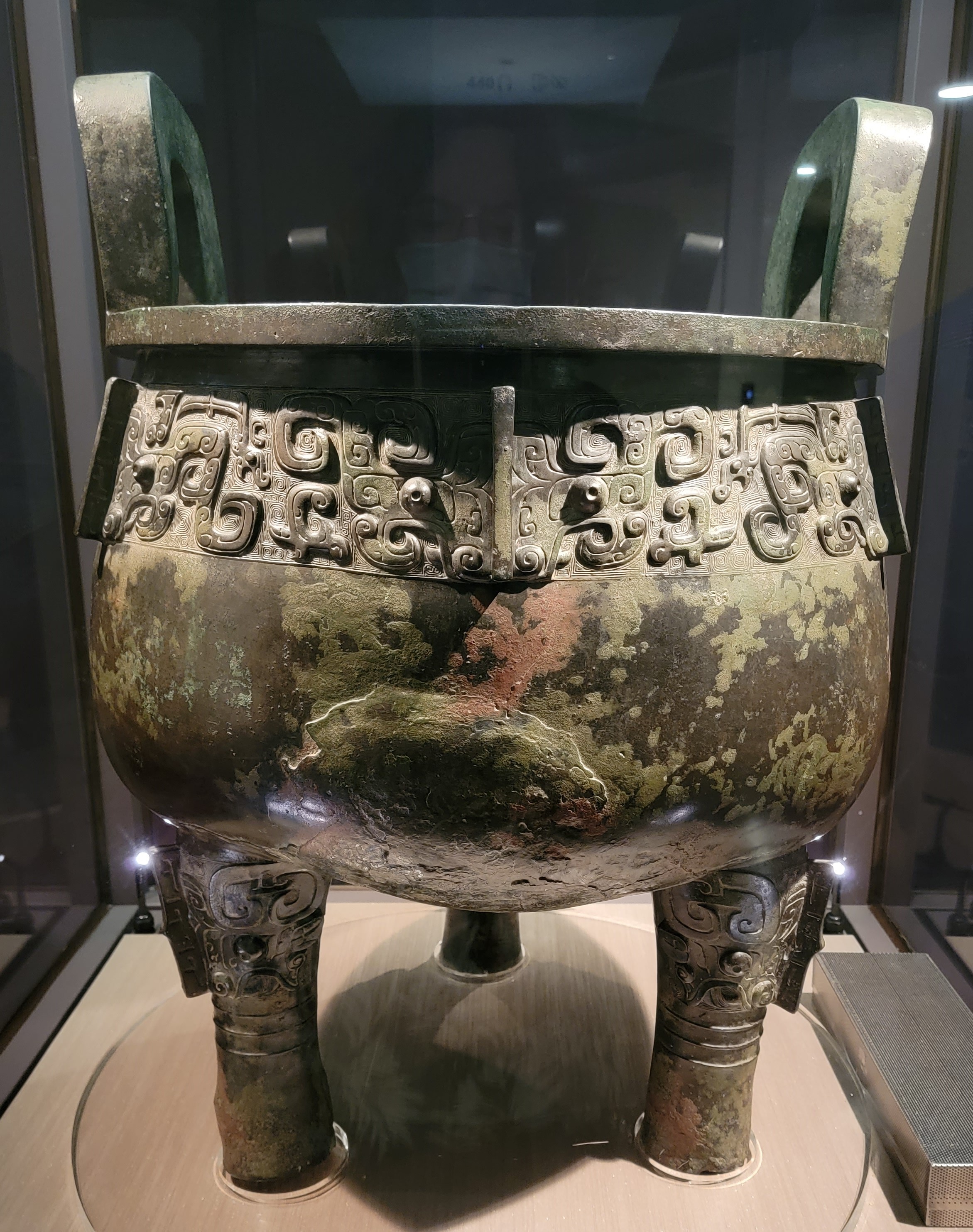
Here's a late Shang Dynasty (13 - 11 c BCE) cauldron that could be used only the Emperor.
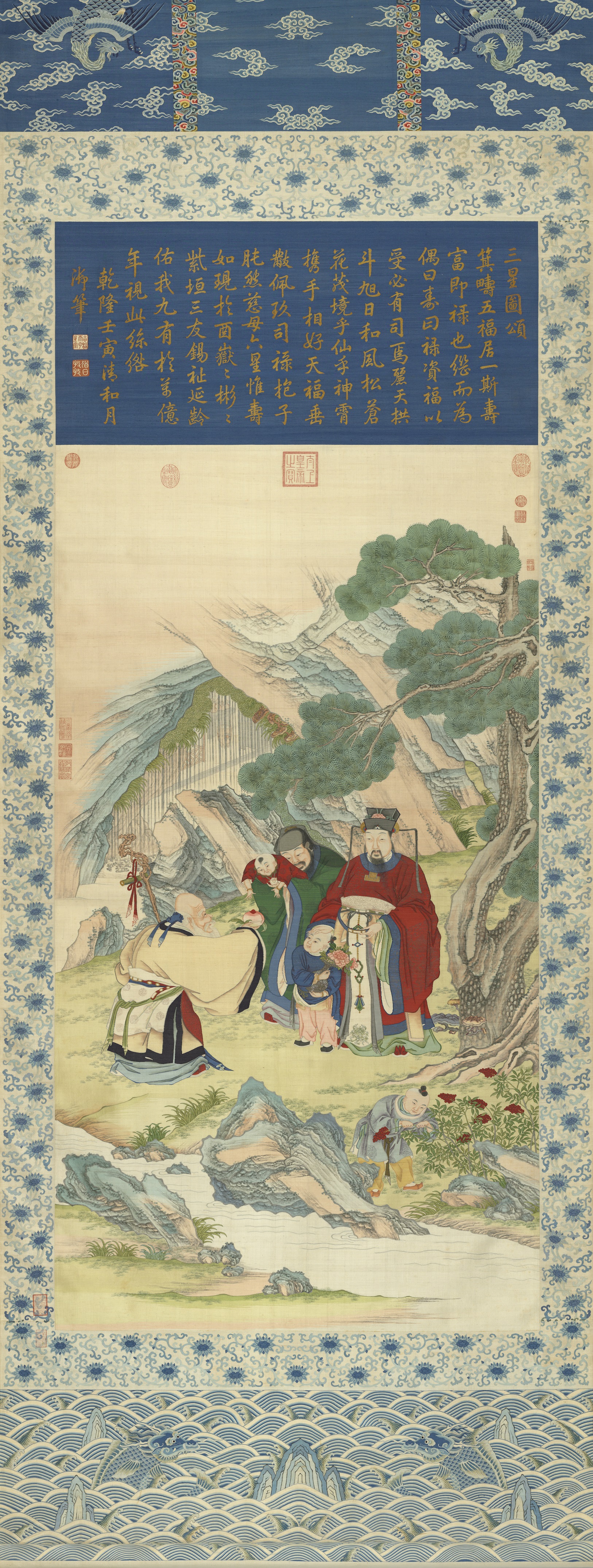
And a Qing Dynasty scroll entitled, "Good Fortune, Wealth, and Long Life - Three Deities".
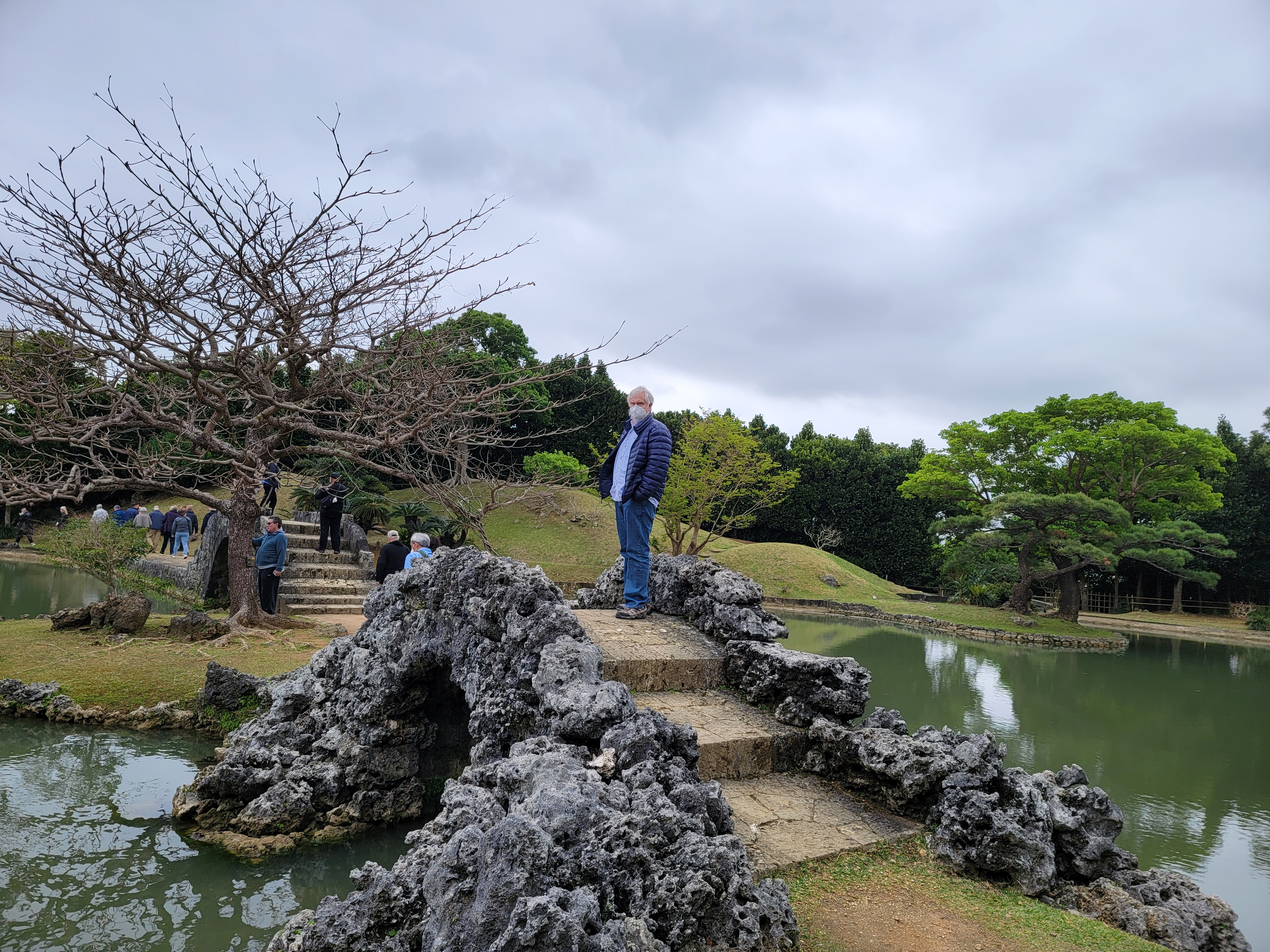
 In Japan they build gardens (This one in Naha, Okinawa). And the most beautiful water faucet I have ever seen.
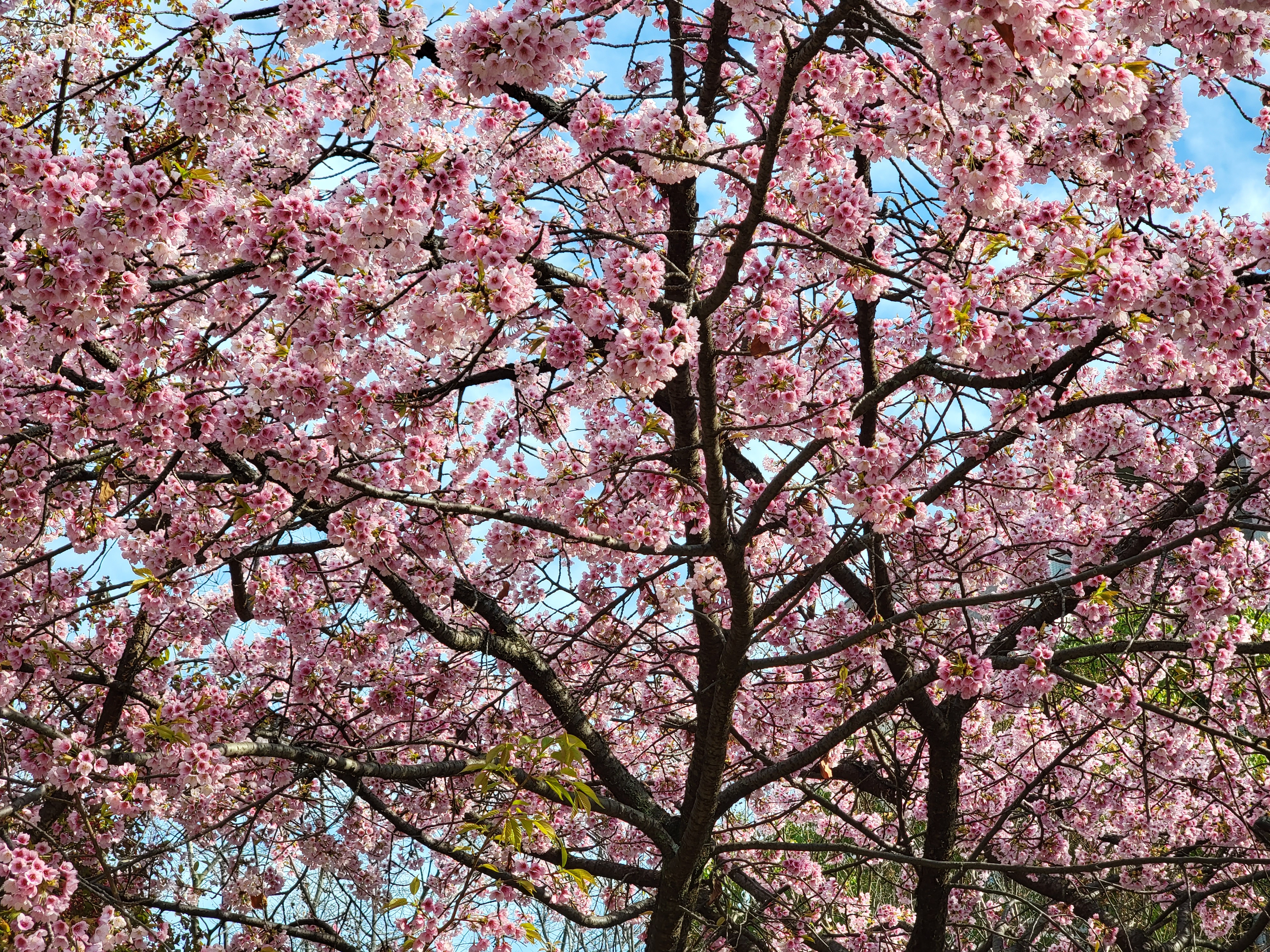
They also have cherry blossoms. Mostly they were waiting to have them until just after we left. But these, in Hiroshima, knew that we needed to see them.
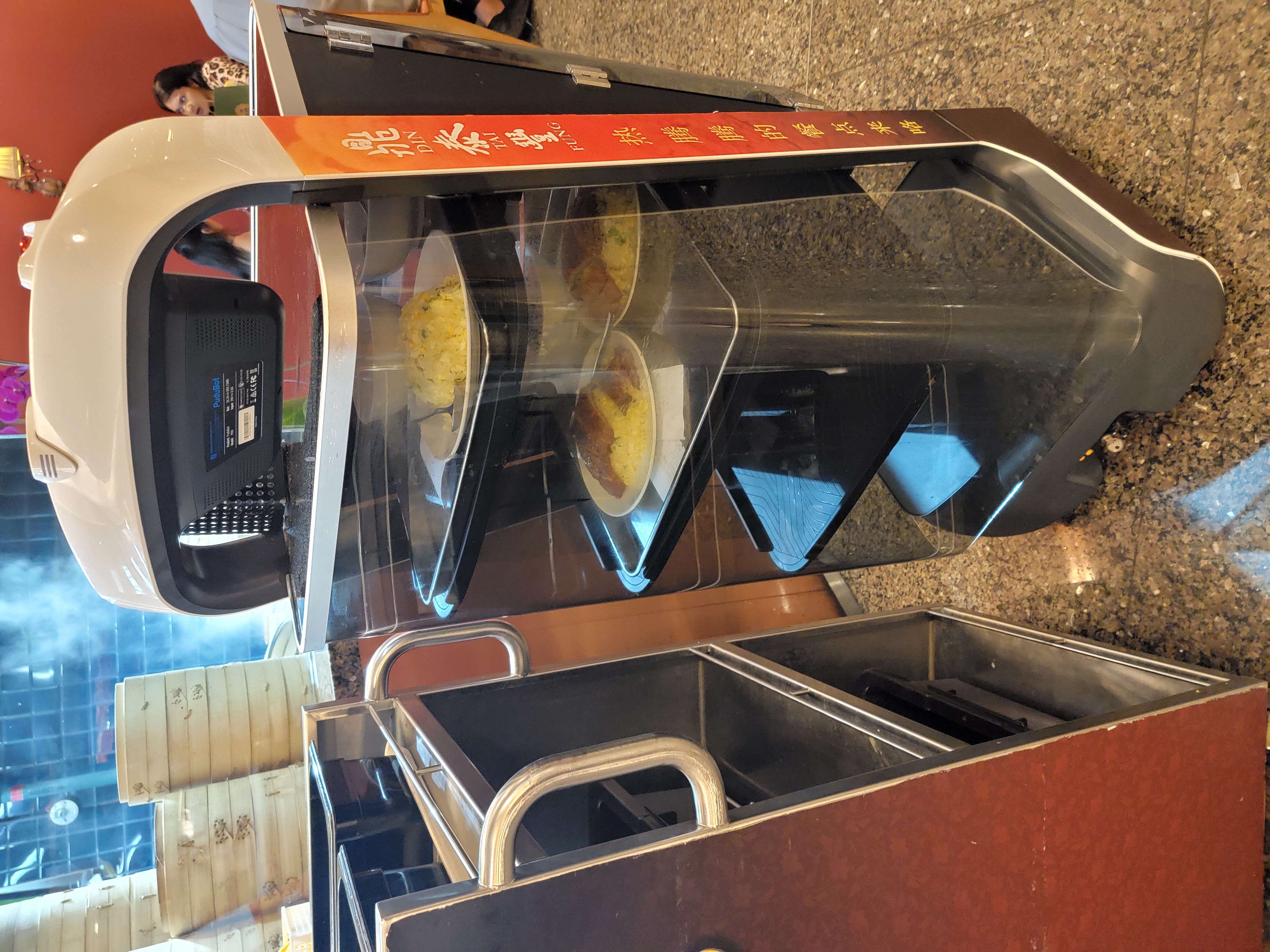
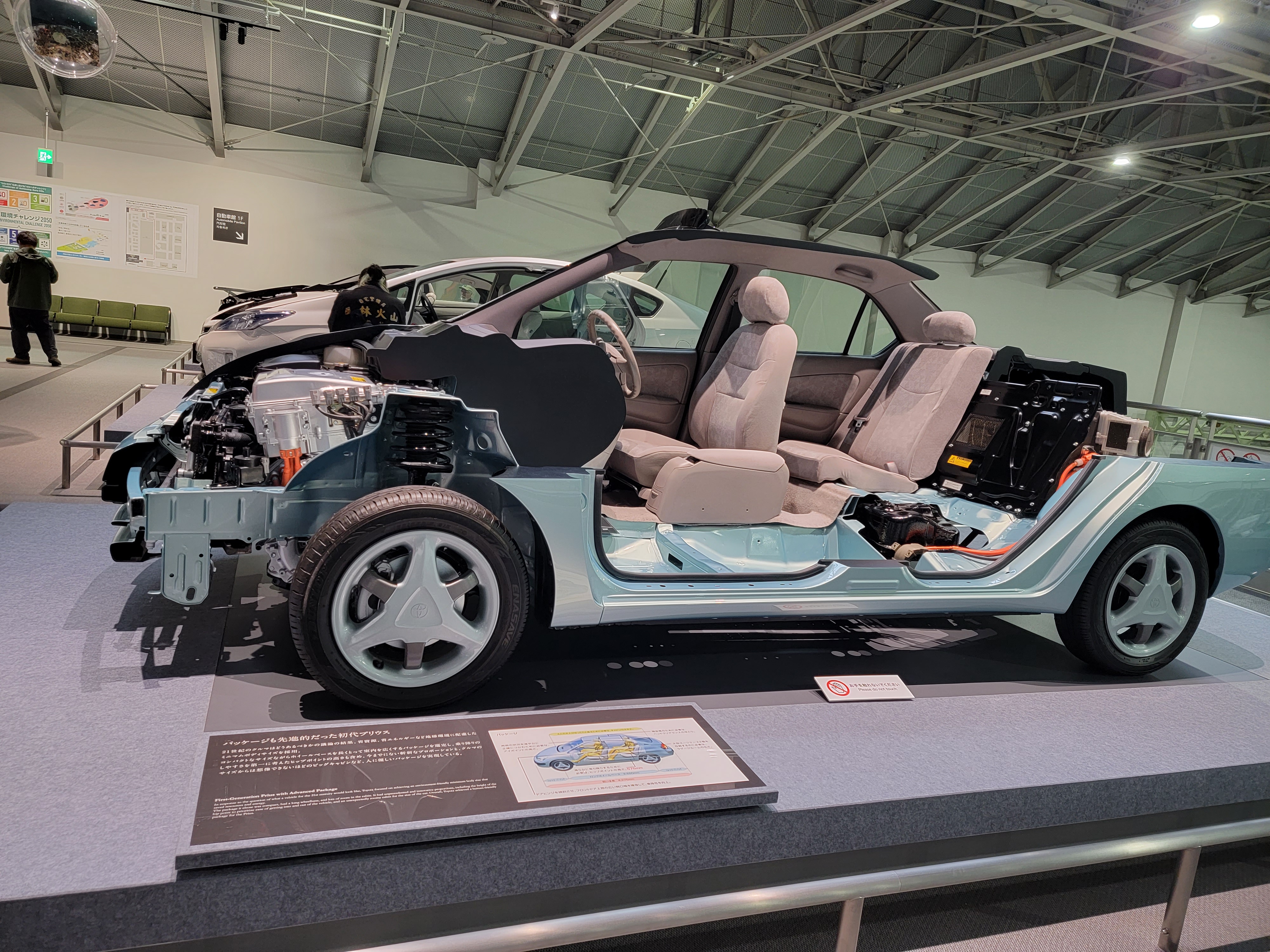
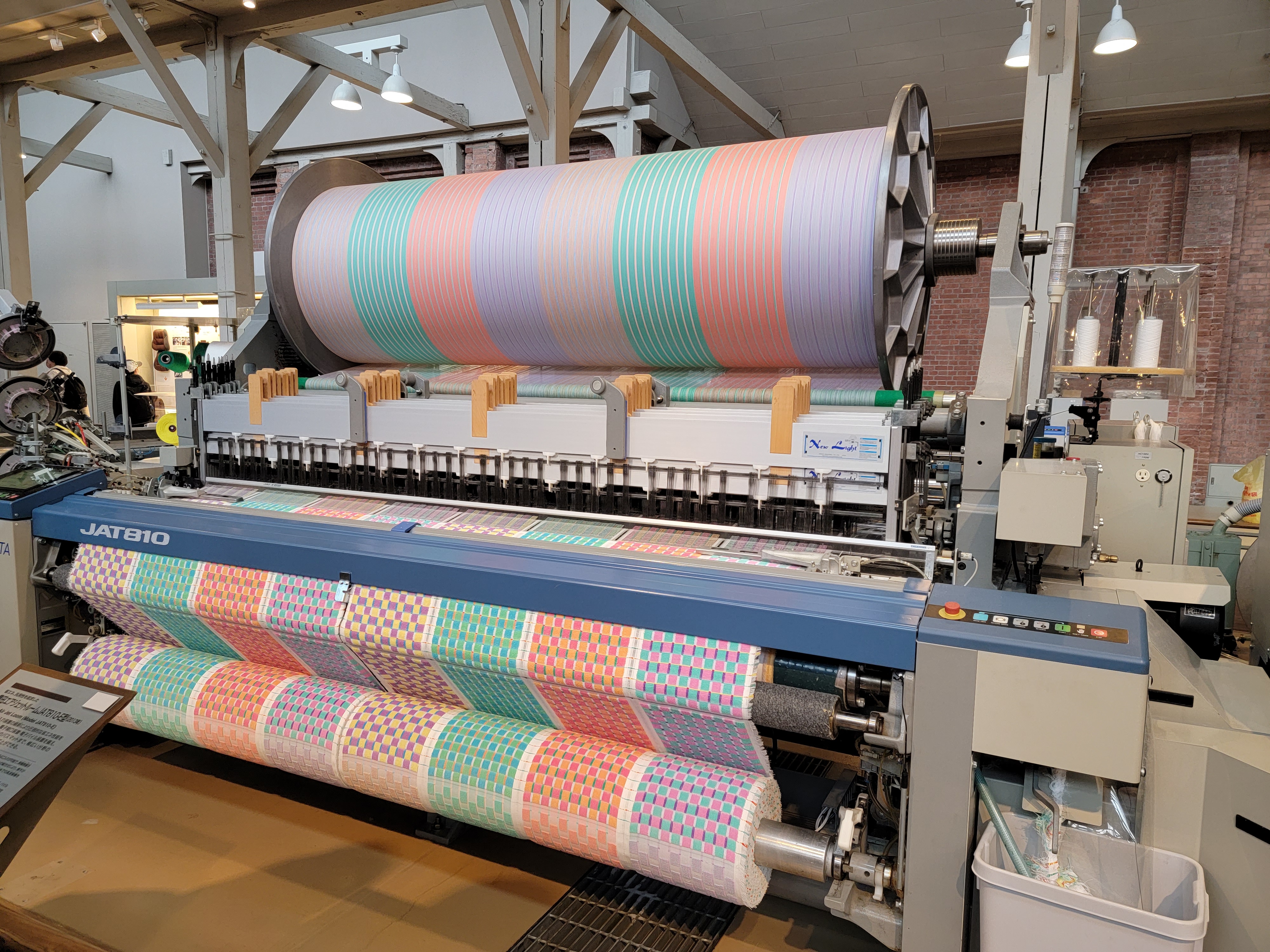 We saw some cool technology.
The first was in Singapore. We ate dinner at an outpost of Din Tai Fung, which we later learned is a very famous Taiwanese place, known for dumplings. Robots move around serving plates of food.
But, no surprise, the best tech was in Japan at the Toyota Commemorative Museum of Industry and Technology. Toyota started out as a power loom company. Who knew? And they still do that.
Of course, they also make cars. Here's a cross section of the original Prius.
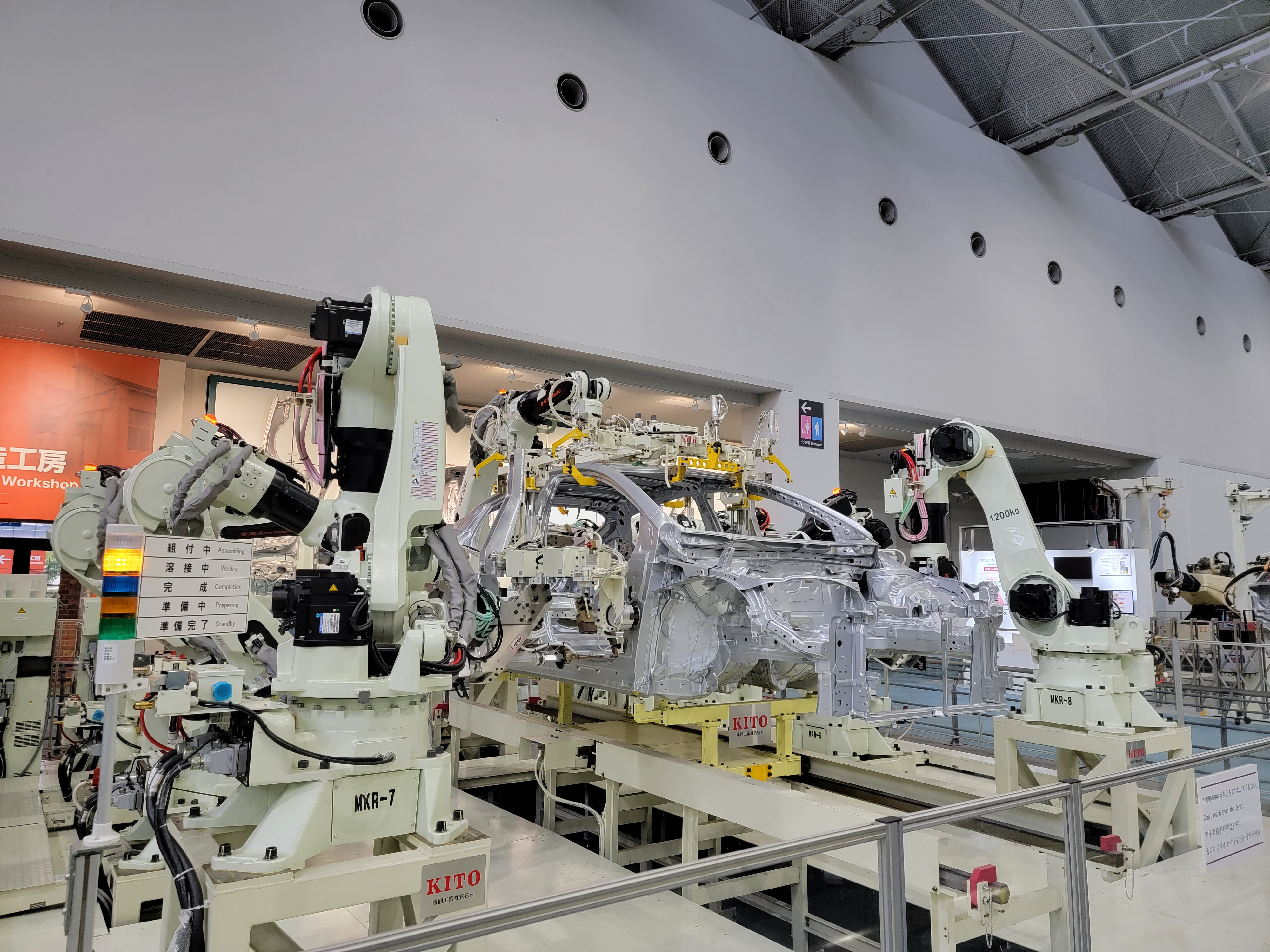
 They have
cool robots to help them make cars. Click to watch.
They have
cool robots to help them make cars. Click to watch.
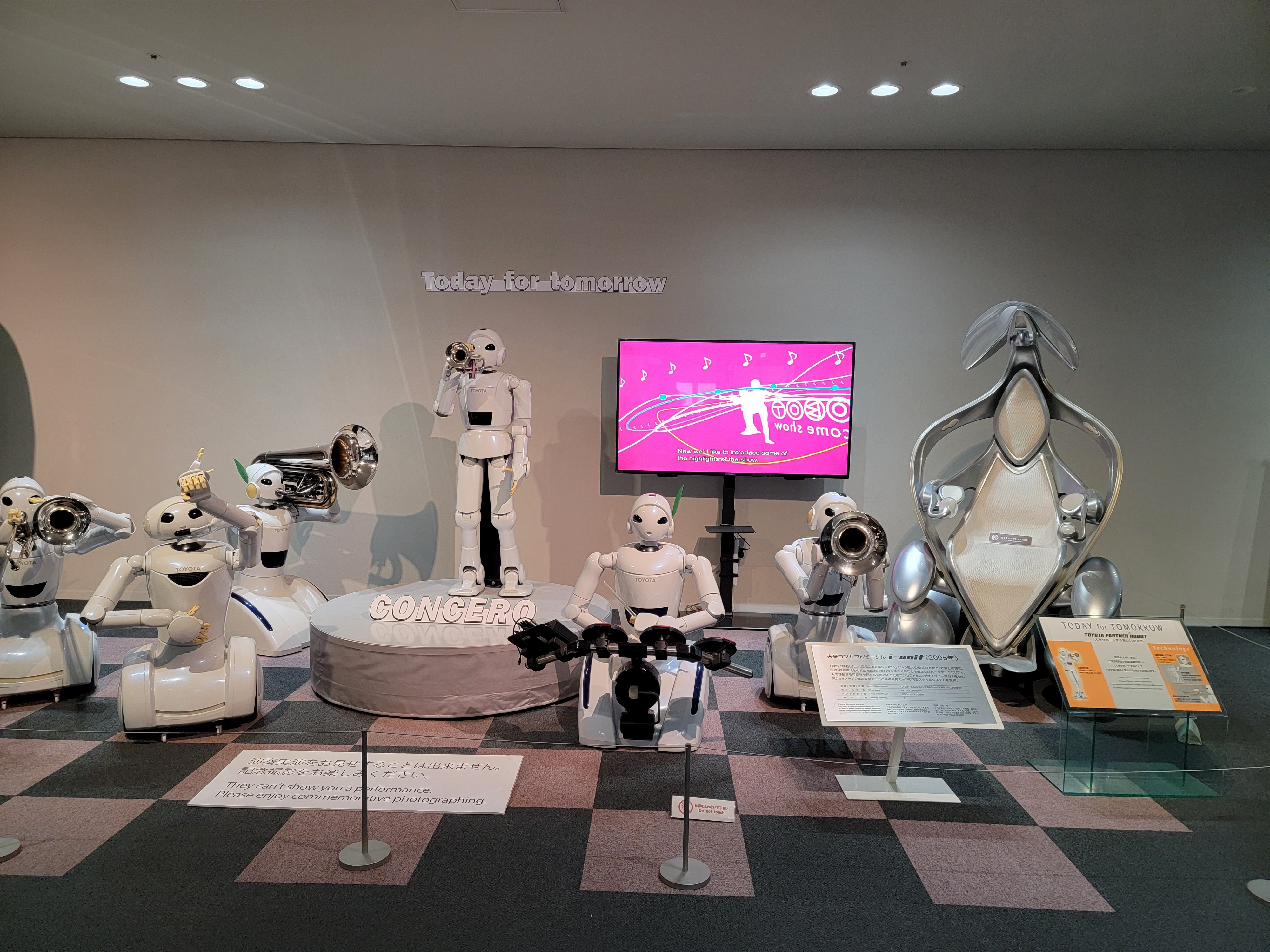
But we liked the robot musicians best. The violin player isn't new; it debuted in 2010. Still fun to watch. Click on the image to listen.
There's also a band.
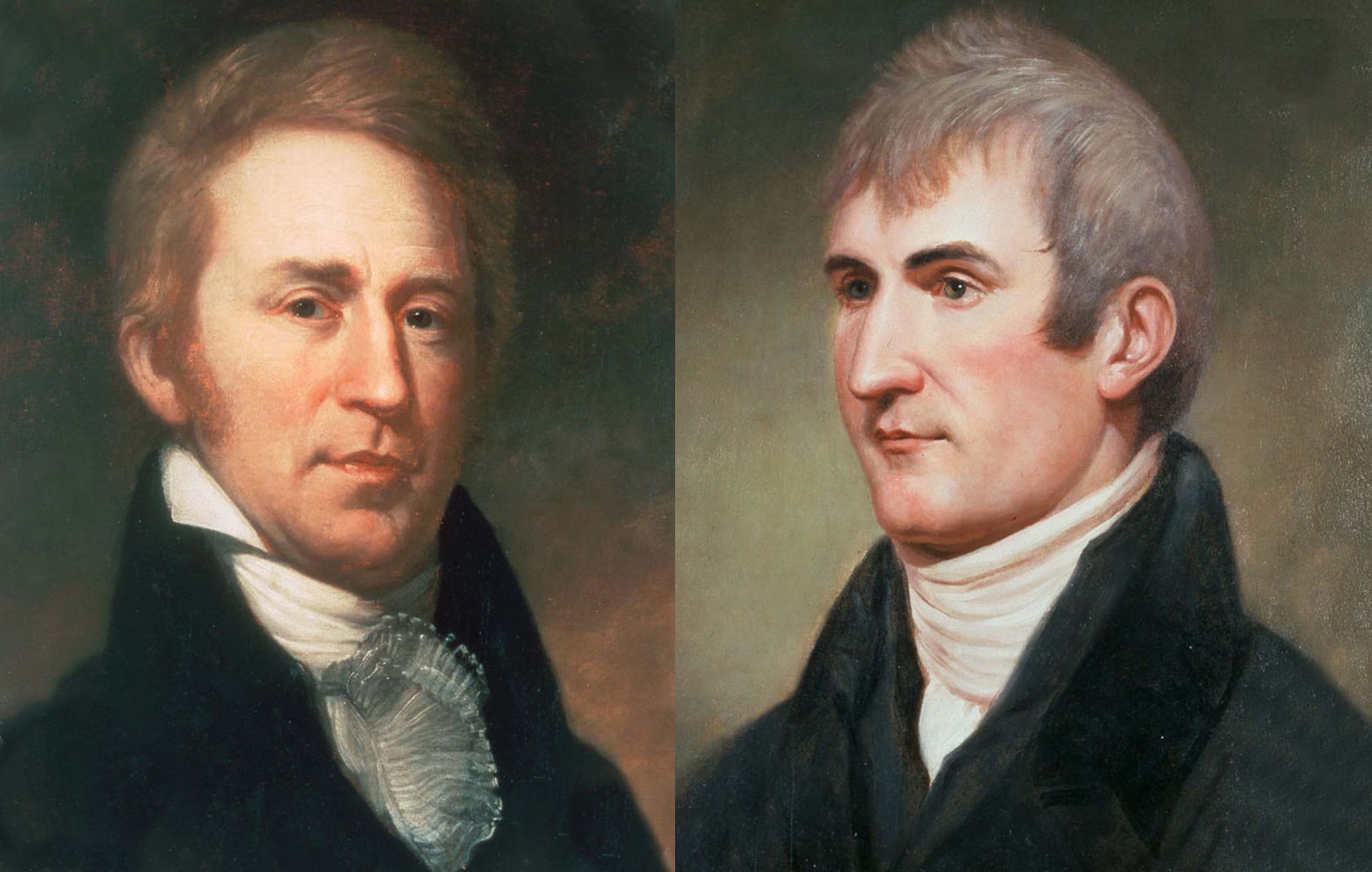
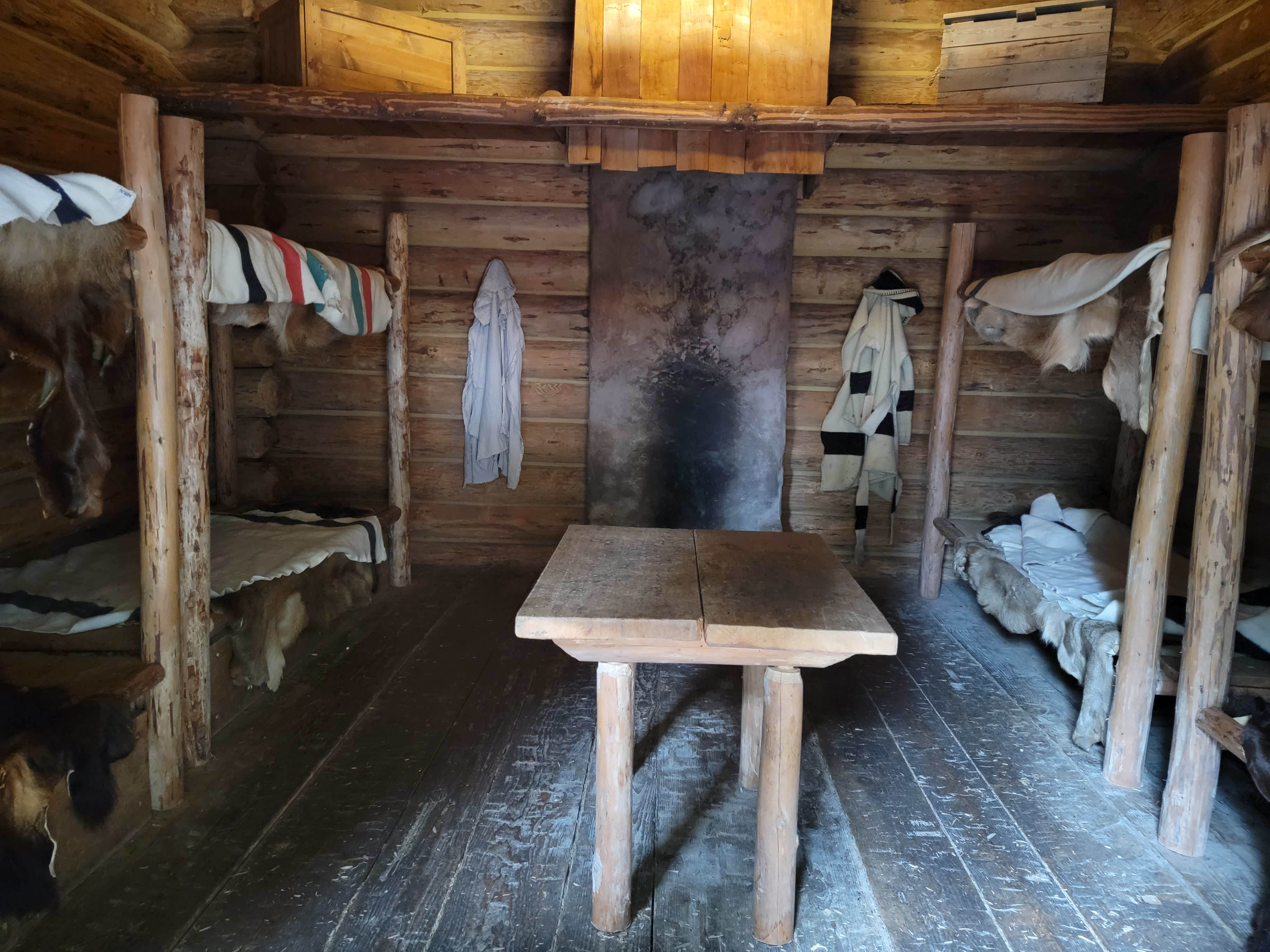
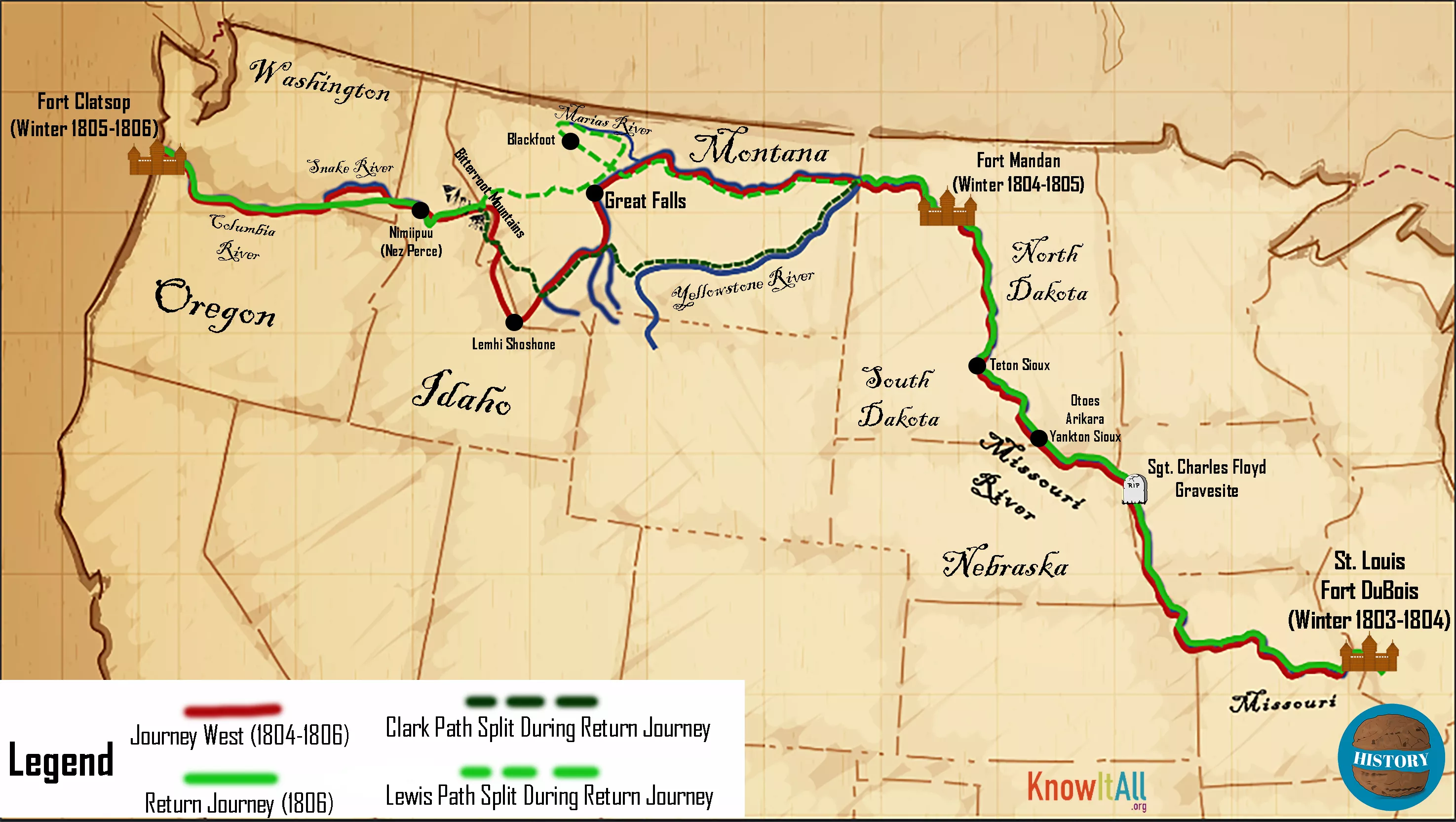 Watch the Ken Burns Lewis and Clark show. Imagine walking all day in moccasins that wore out after a day or two. Imagine eating nothing but elk for breakfast, lunch and dinner. Or spending a winter at Fort Clatsop (eating the aforesaid elk) at the end of an 18 month trek.
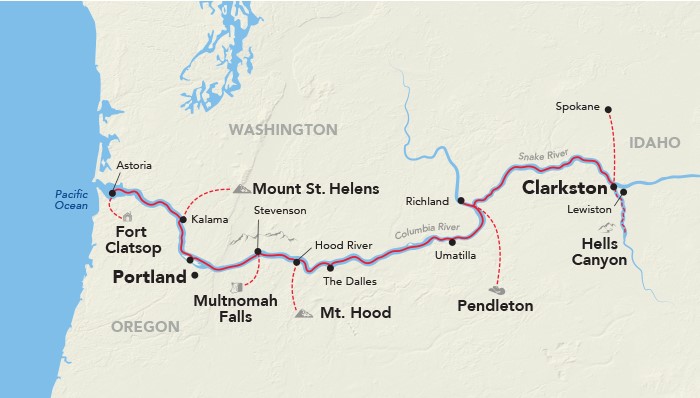
Okay, we didn't do those things. We did take a small cruise ship on the Snake and Columbia rivers, following (albeit more luxuriously) in the mocassin-clad feet of Lewis and Clark. You can compare a map of their voyage to ours.
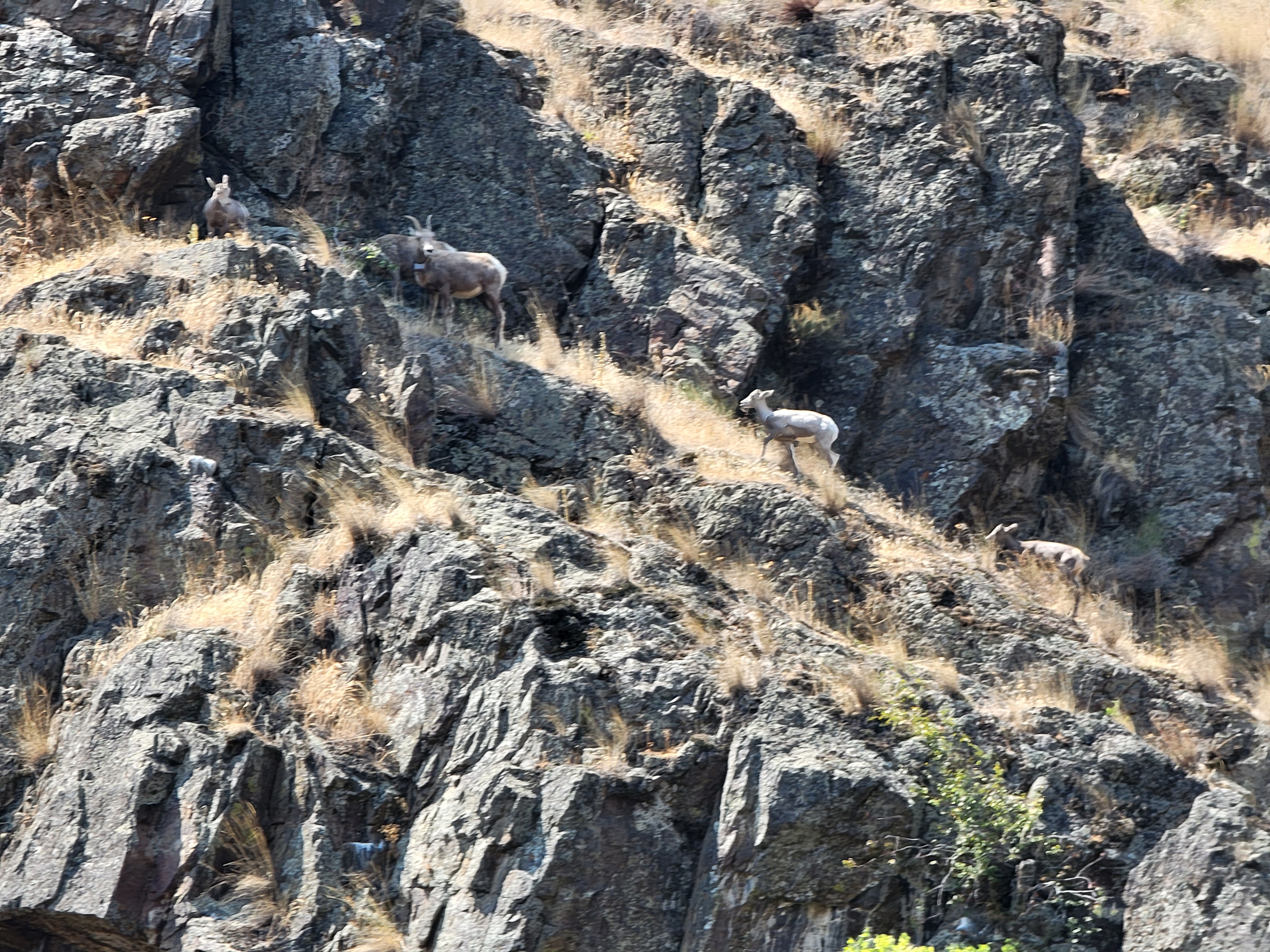
 Before boarding our main ship, we went backwards a bit, on a small boat, up the Snake River through the aptly named Hells Canyon. I thought that the Pacific Northwest was cool, rainy and green. Not on this side of the mountains. Hot. Dusty. Not a reprieve from Texas in July. But they do have elk. Look closely.
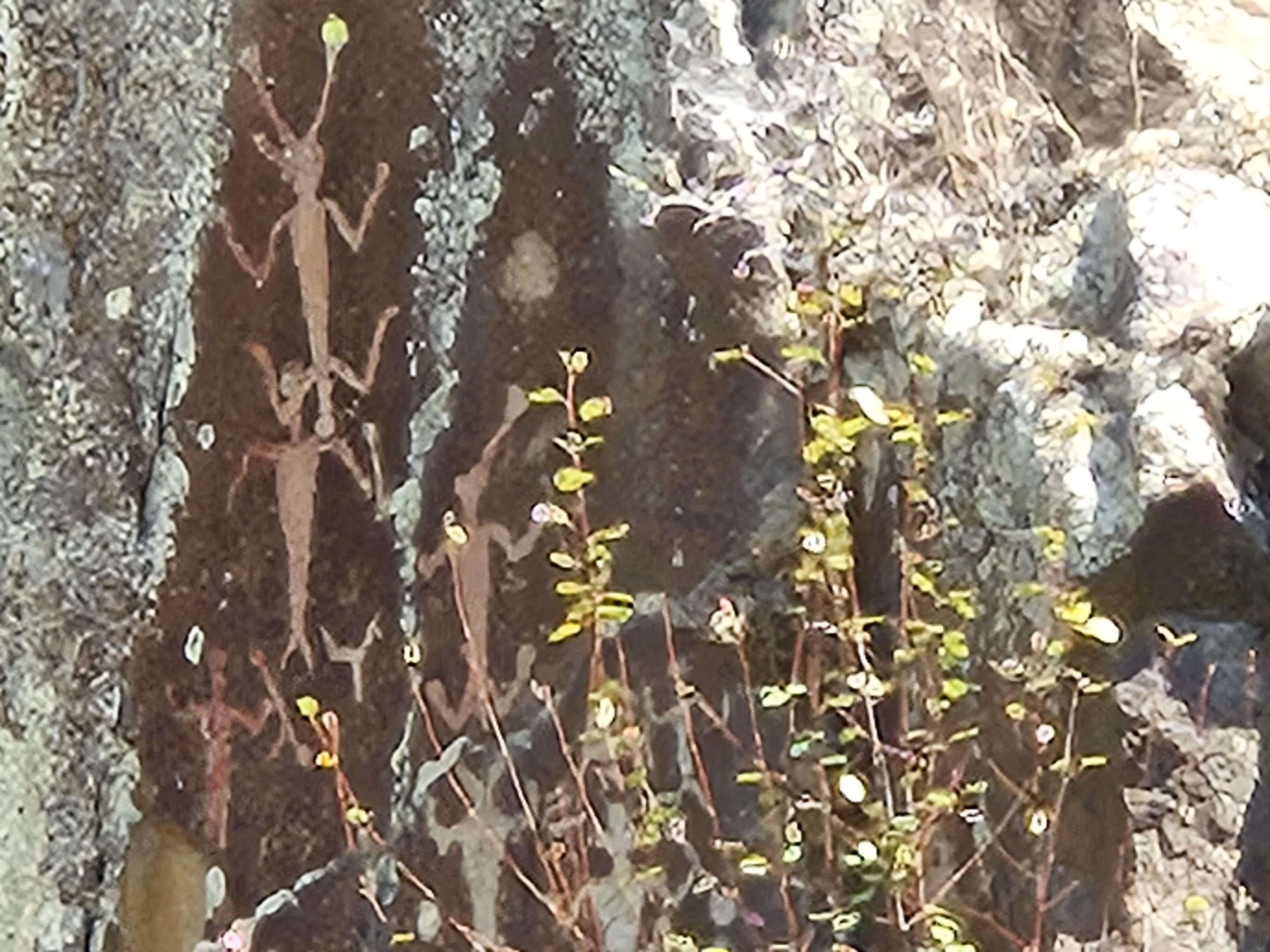
Indigenous people have lived there for a long time. So there's rock art.
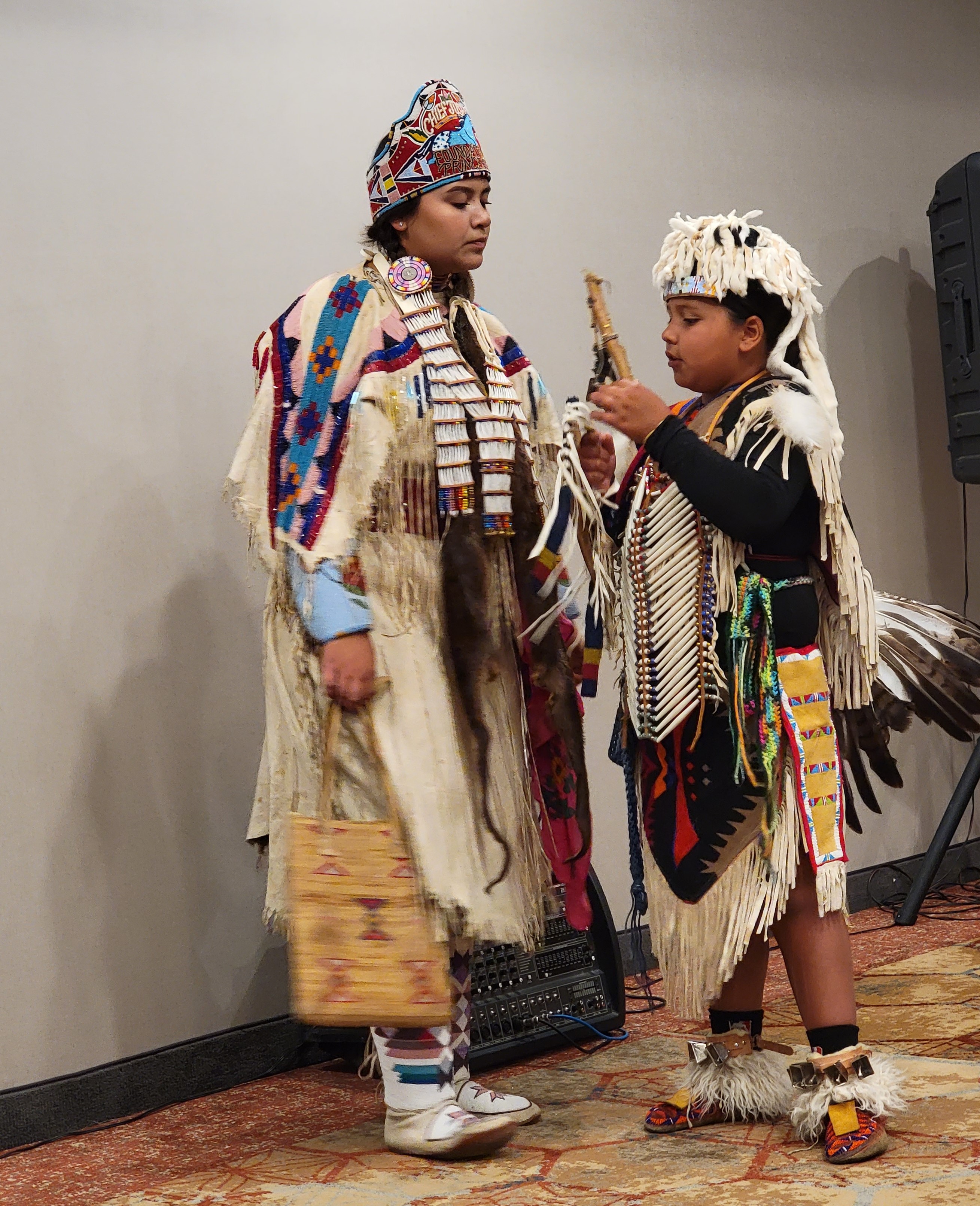
The Nez Perce tribe remains an active community of over 3500 members. The young woman in the picture is wearing a dress that is over 100 years old. She and her brother are preparing to do a traditional dance.
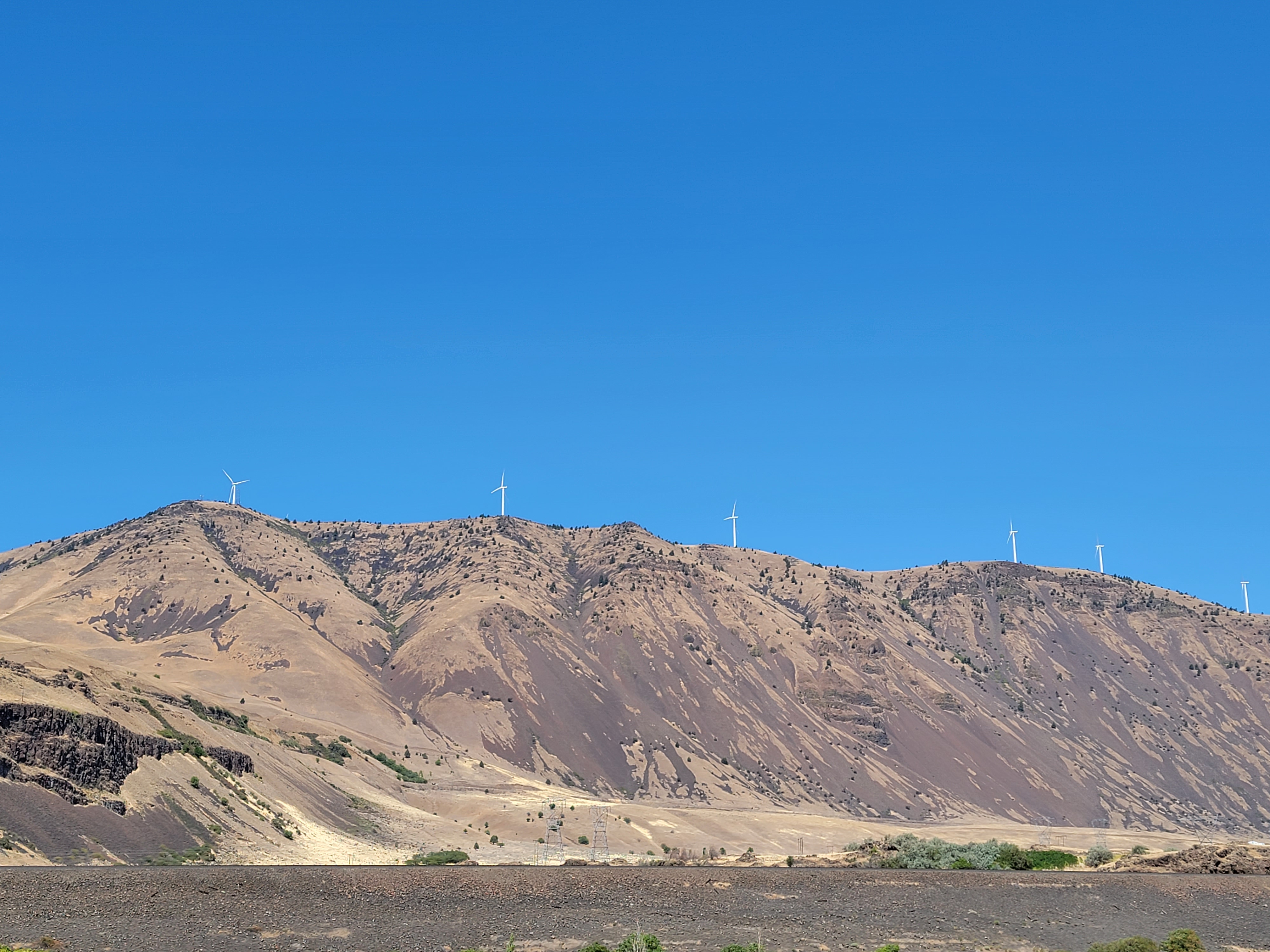
 Yes, well, the windfarm does postdate Lewis and Clark.
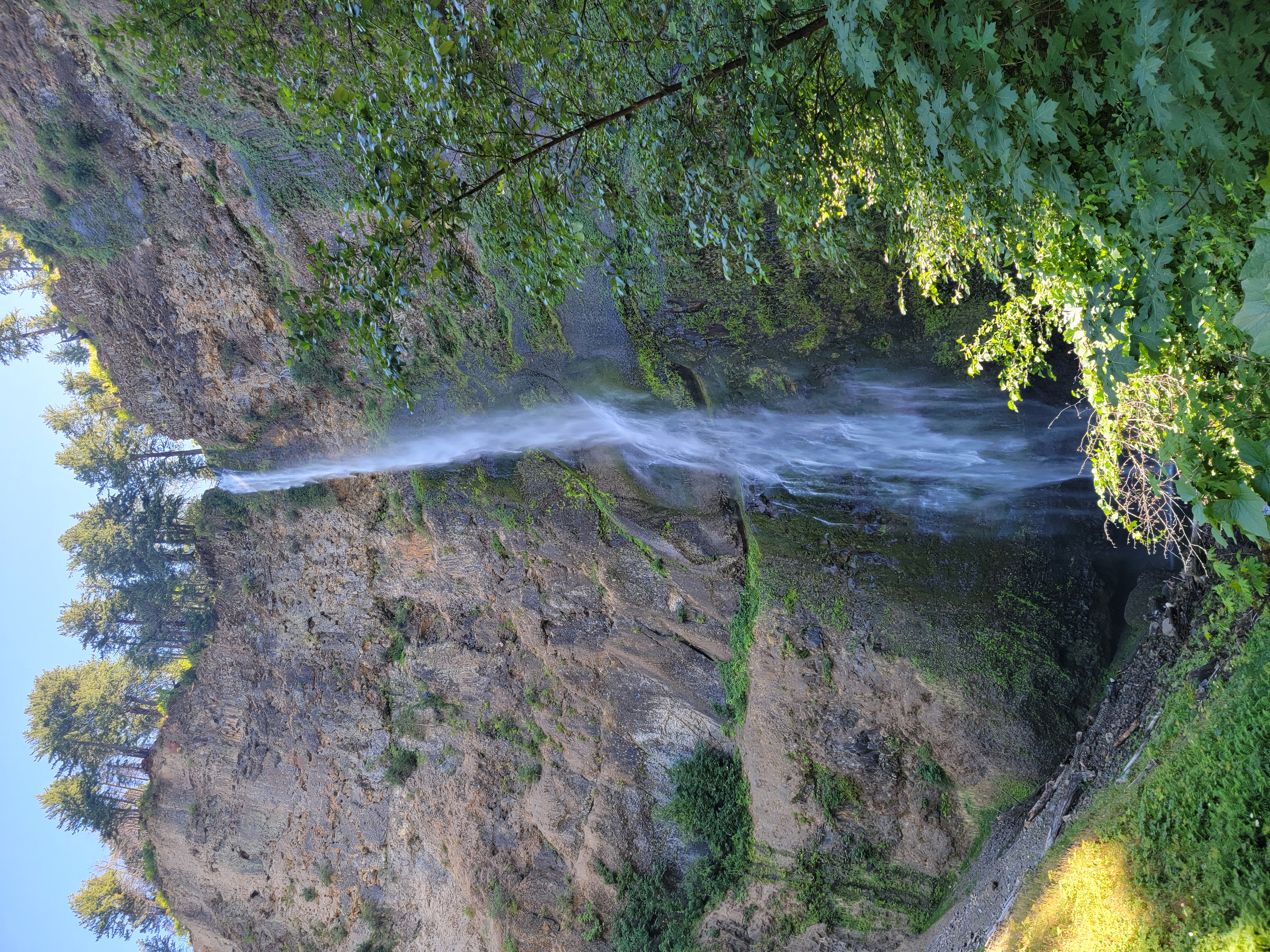
As we headed west, things got greener. Multmonah Falls is the tallest waterfall in Oregon.
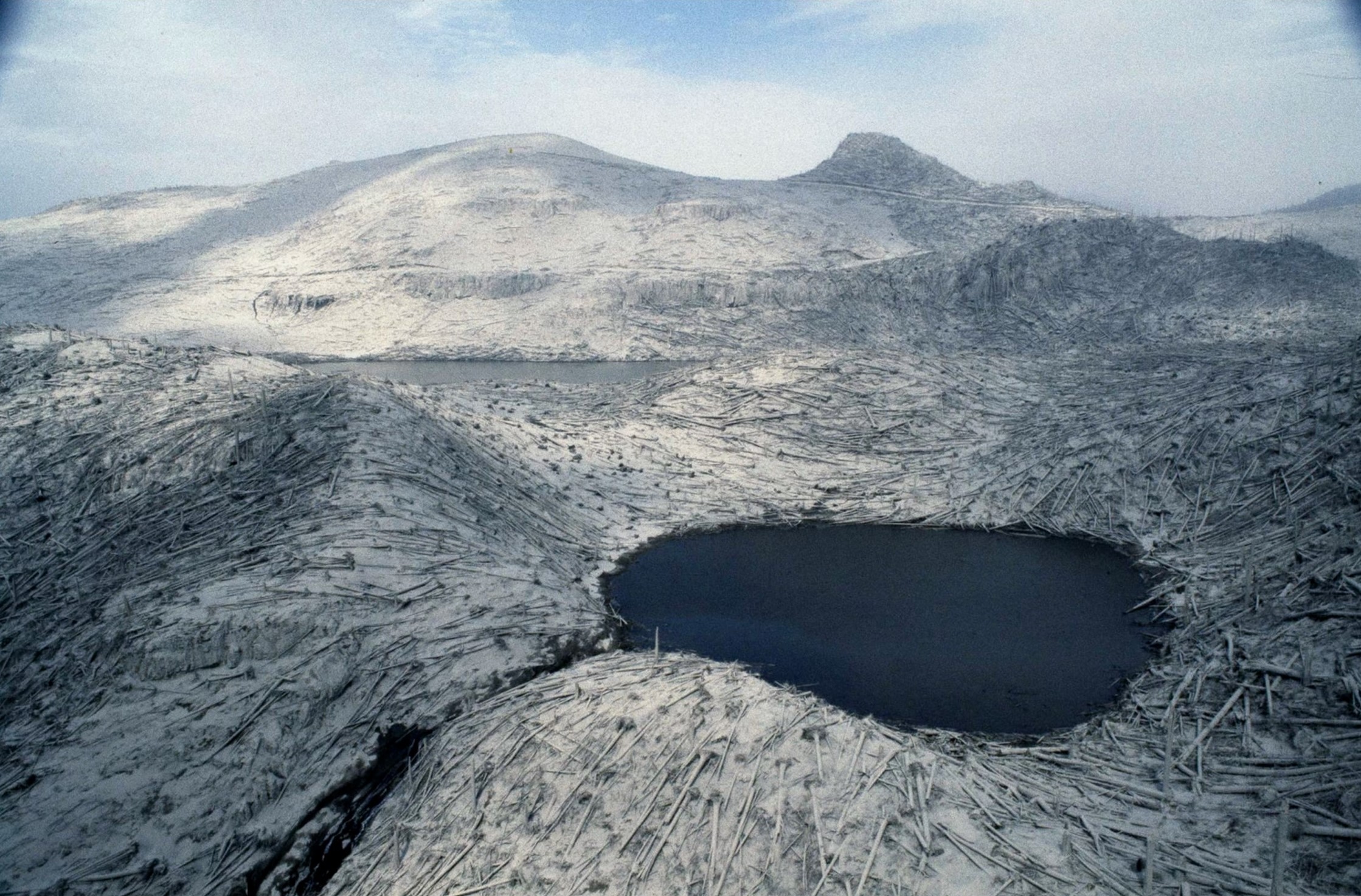
 Mt. St. Helens erupted in 1980. It was the deadliest volcano eruption in U.S. history. It left a path of total destruction.
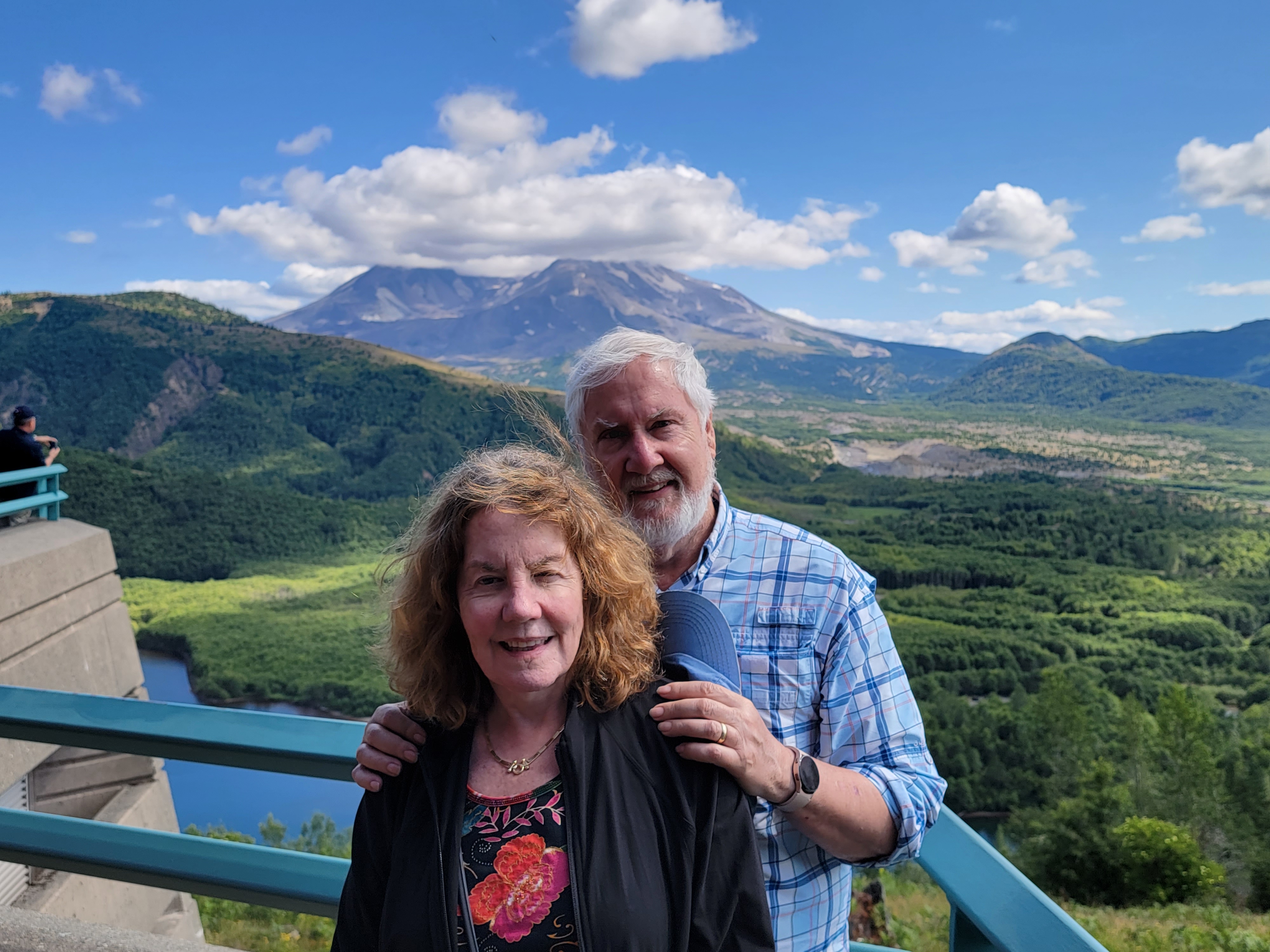
We visited 23 years later. It seemed almost magic the way so many things had come back.
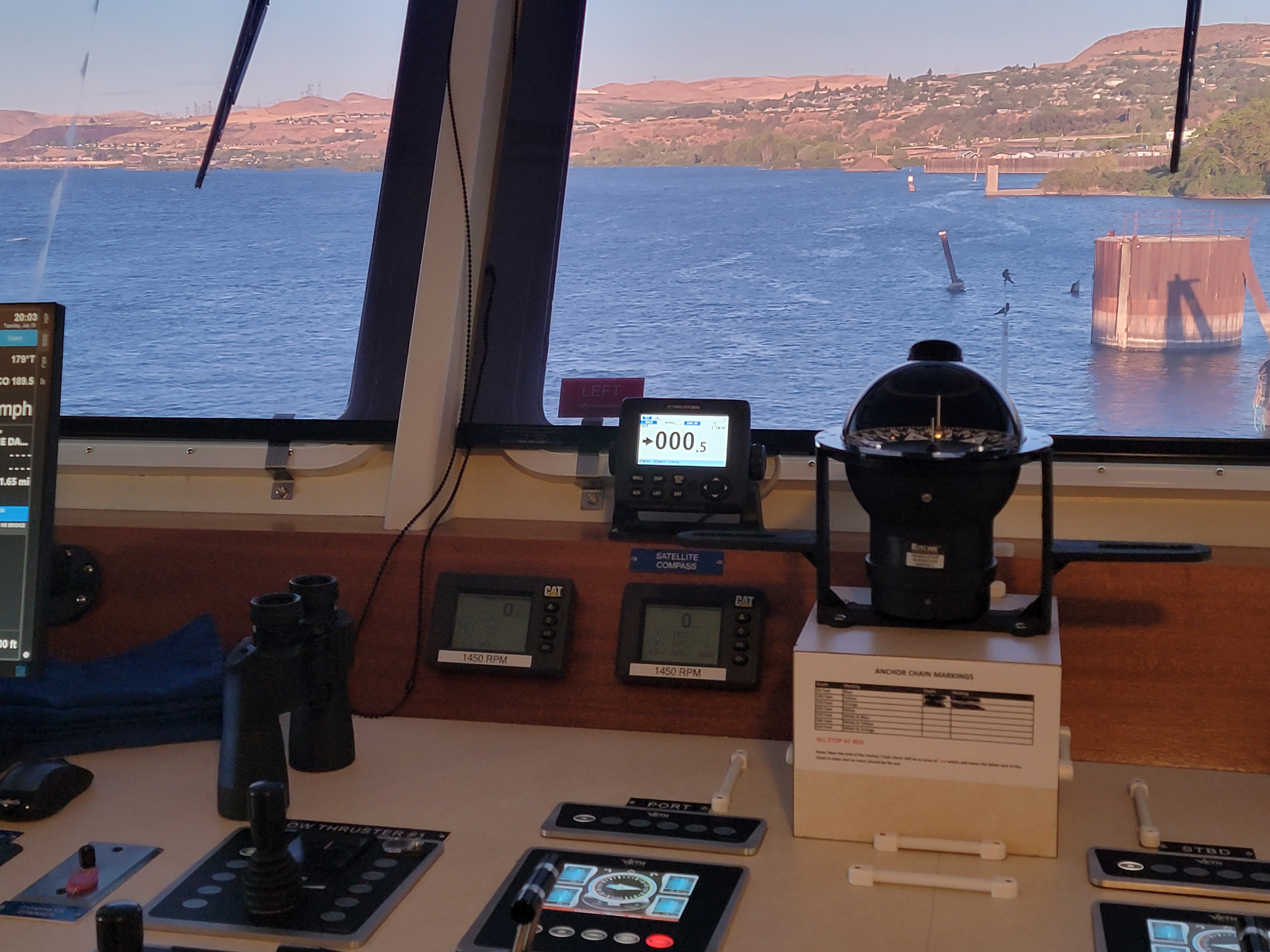
 This was our first cruise on American Cruise Lines. It's a very laid back experience. They let us visit the wheelhouse. They brought on local performers every evening.
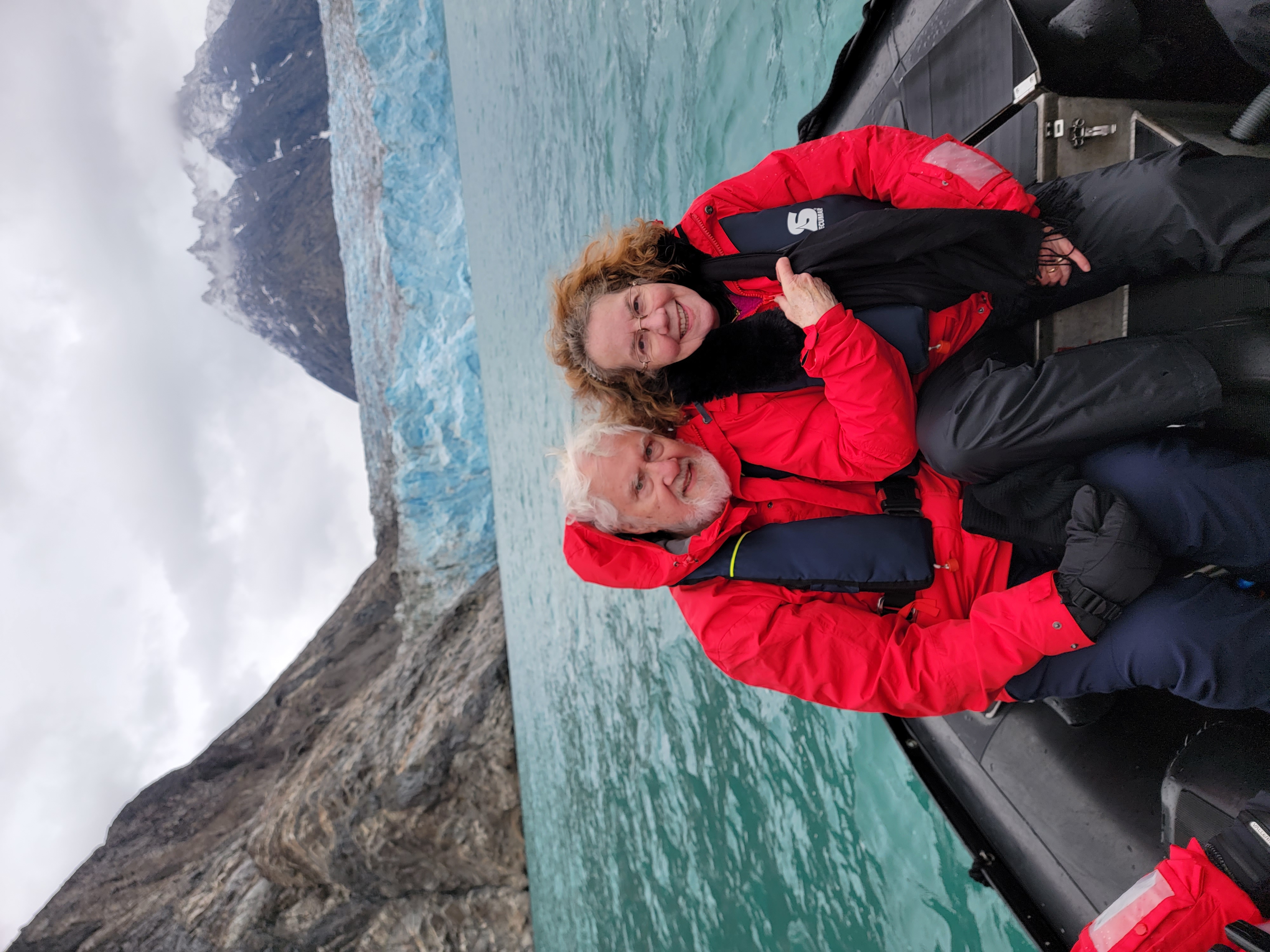
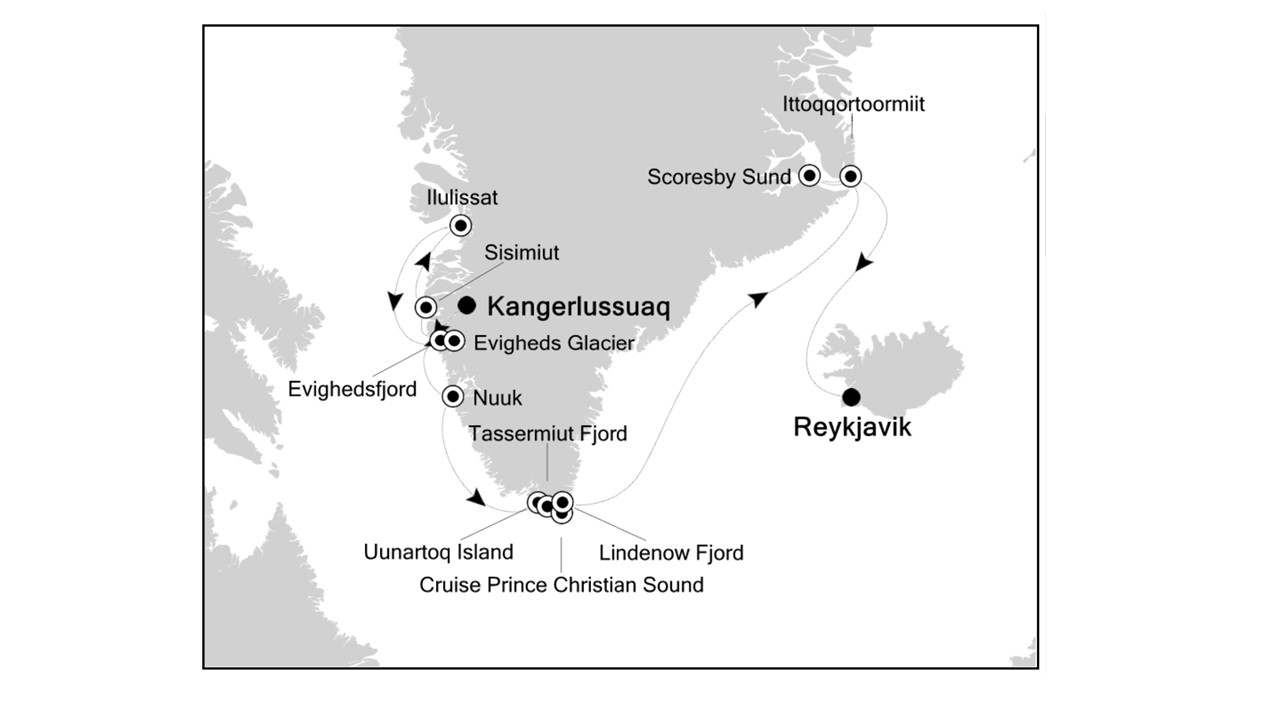
 A cruise to Greenland - If you want to wear an expedition parka in August in the northern hemisphere, this is the place to go. The map shows the plan. We didn't end up doing exactly that.
With parkas comes weather. Click on the storm to see a video.
So we never made it to Nuuk (the capital). Friends who'd gone last year also had to skip Nuuk. We are not sure that it actually exists.
The cruise started in Kangerlussuaq (population 460). No, we never learned how to pronounce it. Nor have the US commercial airlines discovered it. We had to take a charter flight to get there. So they sent us to New York and forced us to stay in a hotel in Times Square for a night. Life is rough.
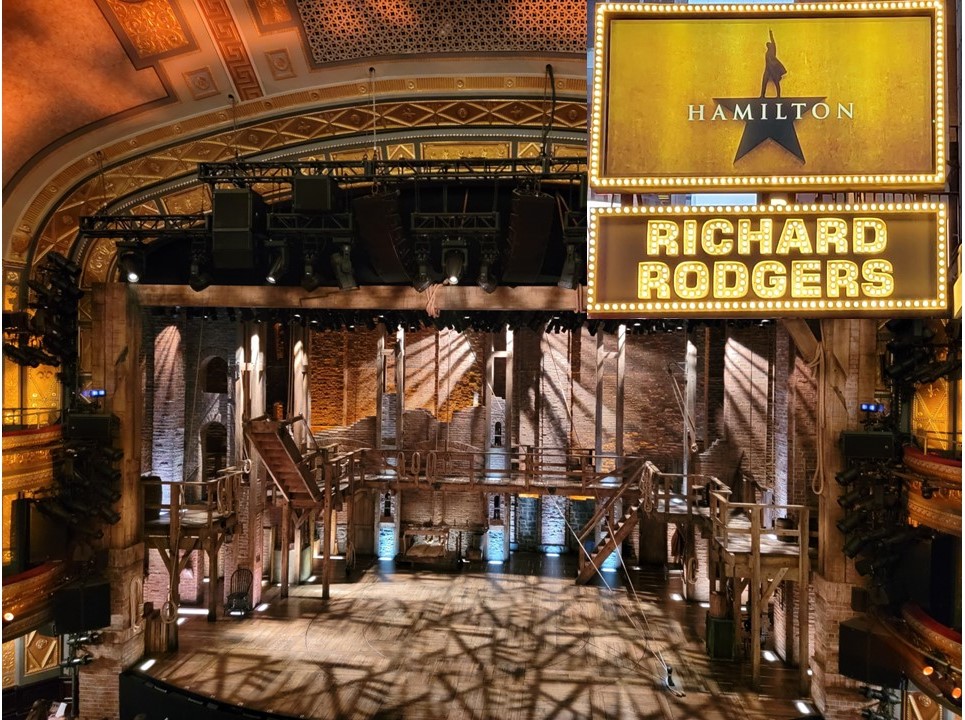 We decided we should go to a Broadway show. First time for me. Second time for Alan. I know: where have we been? Anyway, we went to Hamilton. Even with its nonoriginal cast, it was great. We were really glad that we read the libretto in advance, though. That helped a lot, even though we already knew how it ended.
The show reminded me of my dad in the mid 60's. His alma mater, Hamilton College, at the time all men, decided that there should be a sister college. Dad suggested that it should have been called Aaron Burr College. The trustees thought differently.
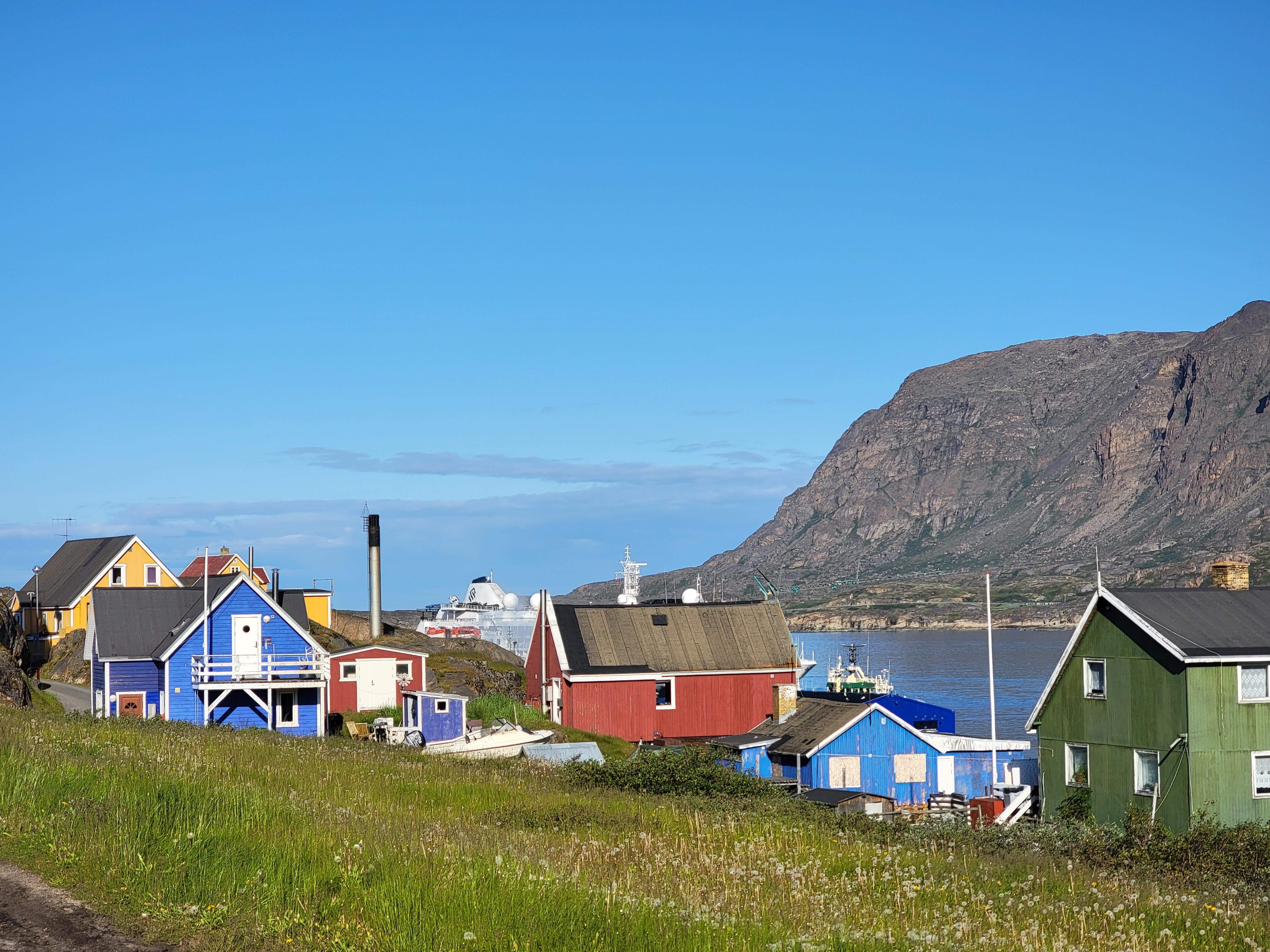
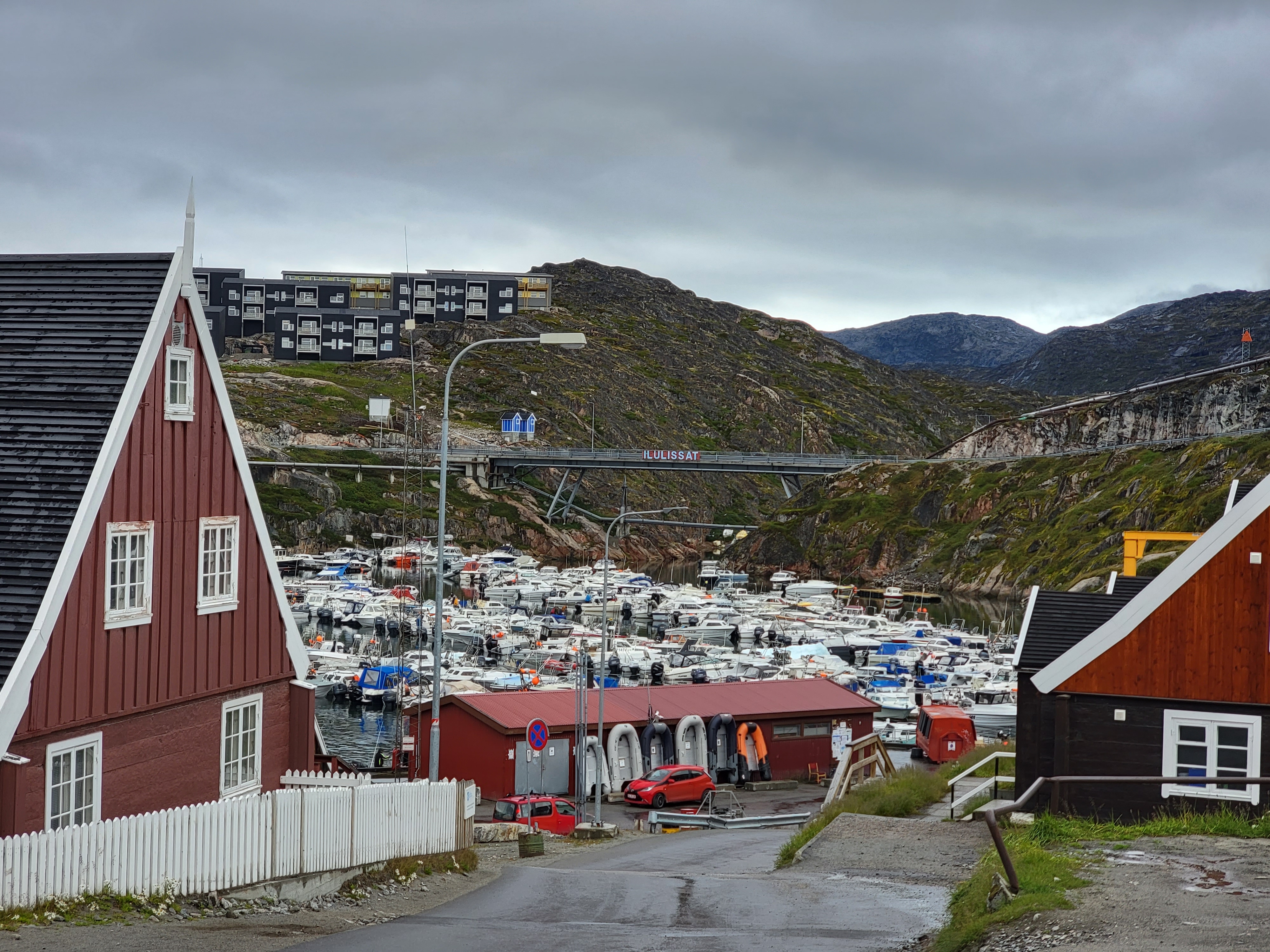
 We may have missed Nuuk, but we made it to Greenland's next two biggest "cities": Sisimiut, population 5620 (the picture with our ship in the background), and Ilulissat, population 4737.
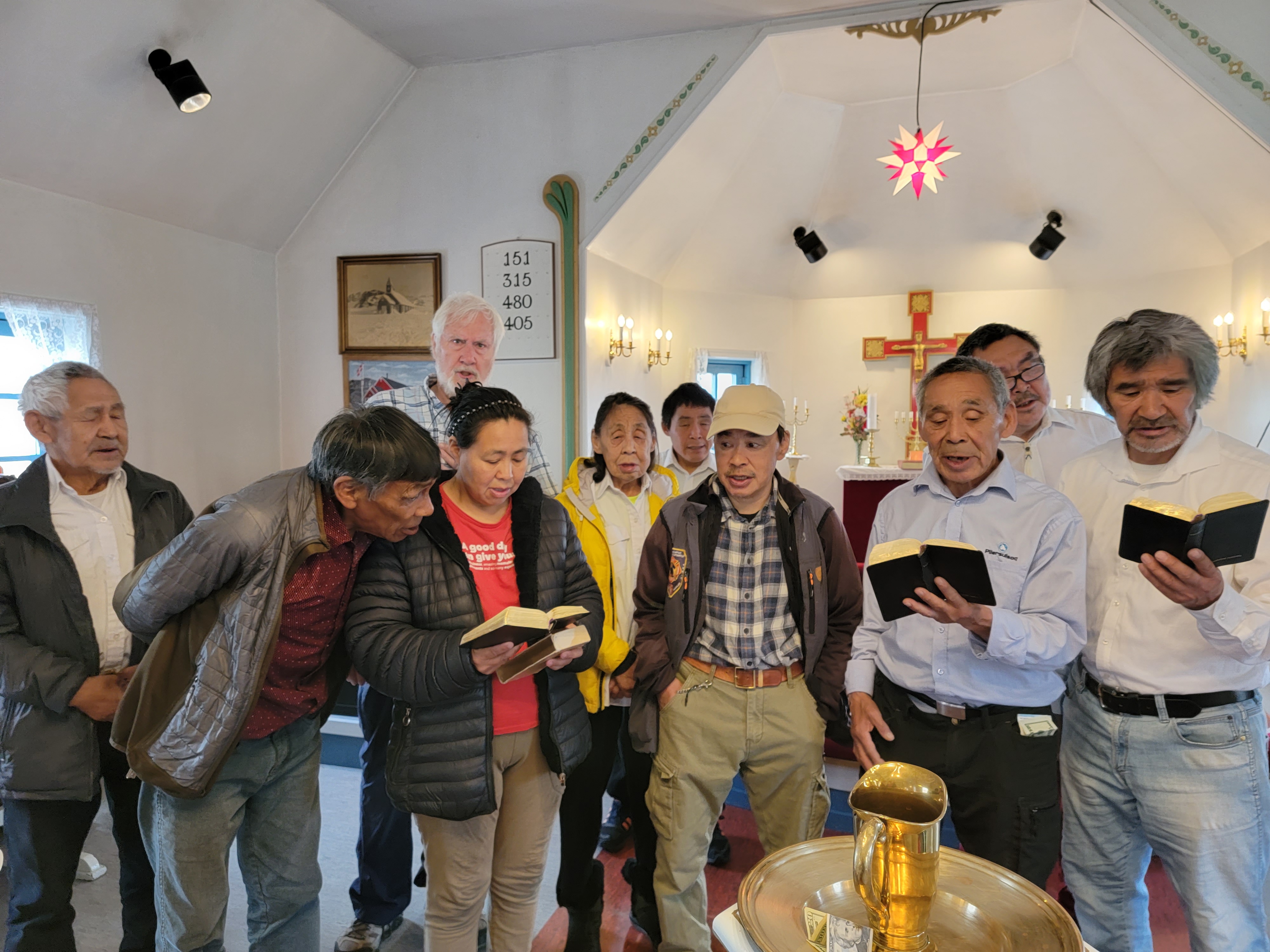
Everyone is super friendly. Not once but twice, in Nanortalik (population 1139) and Aappilattoq (population 153), the church choirs gathered to sing for us. The latter was so small they invited Alan to join them.
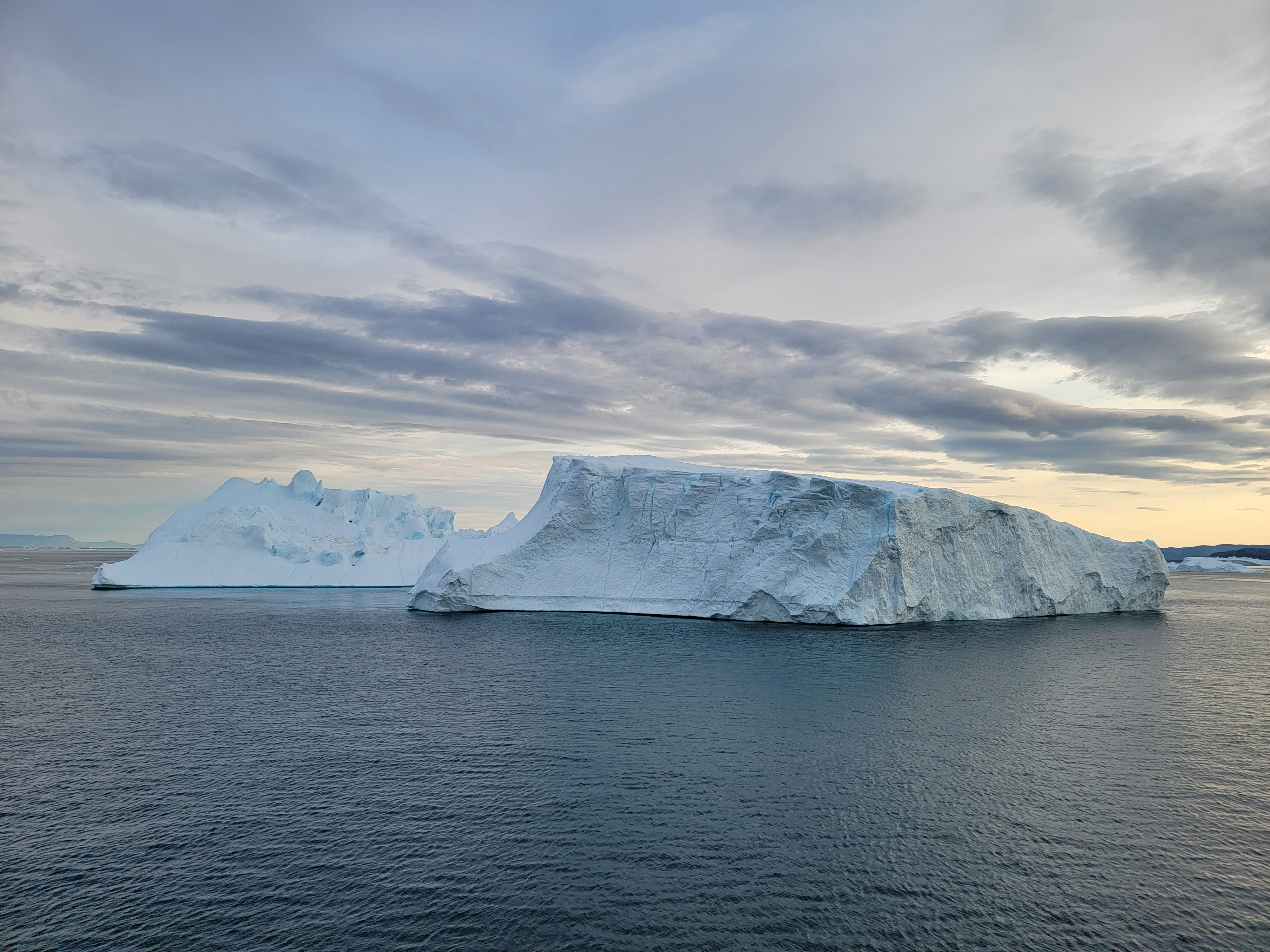
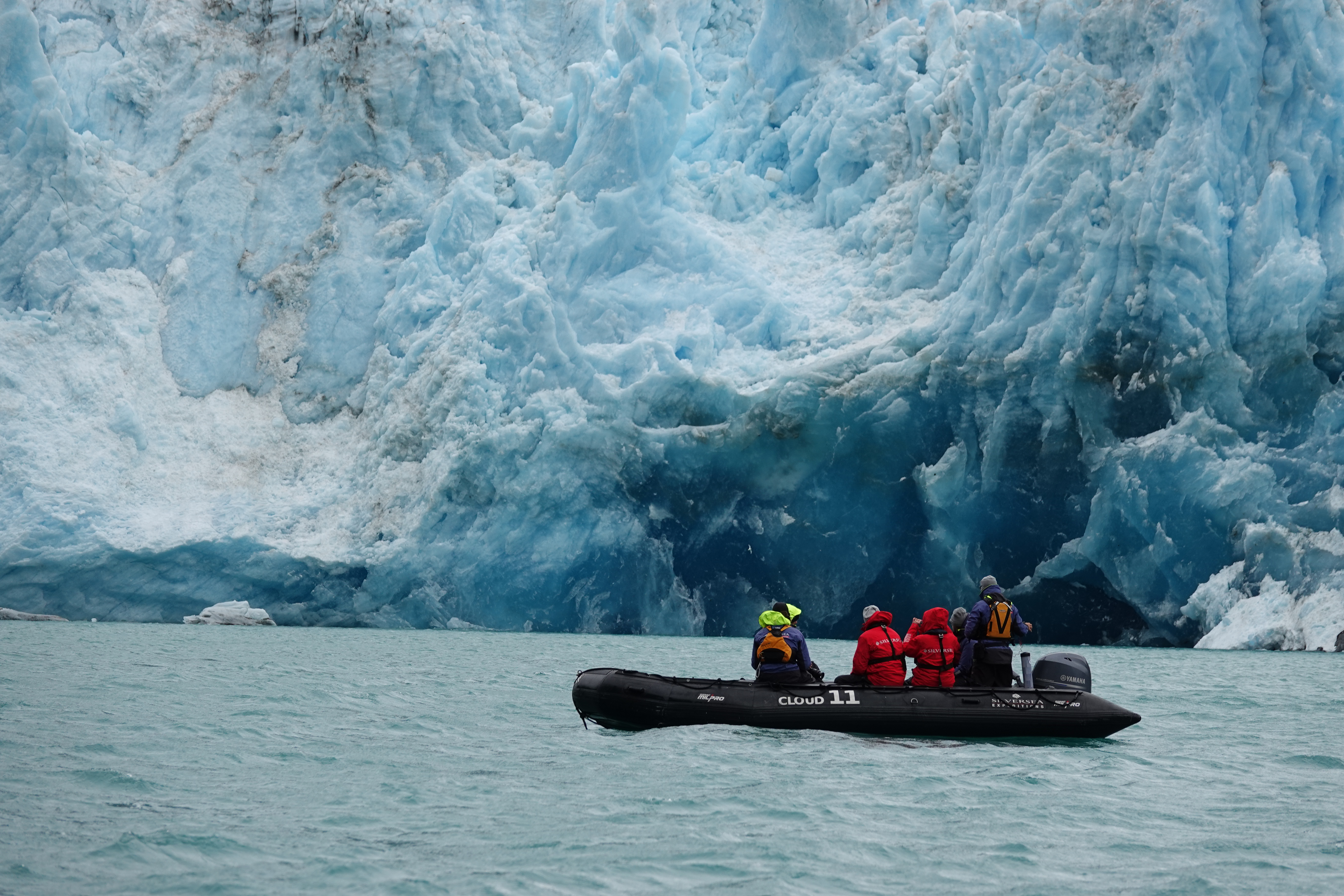
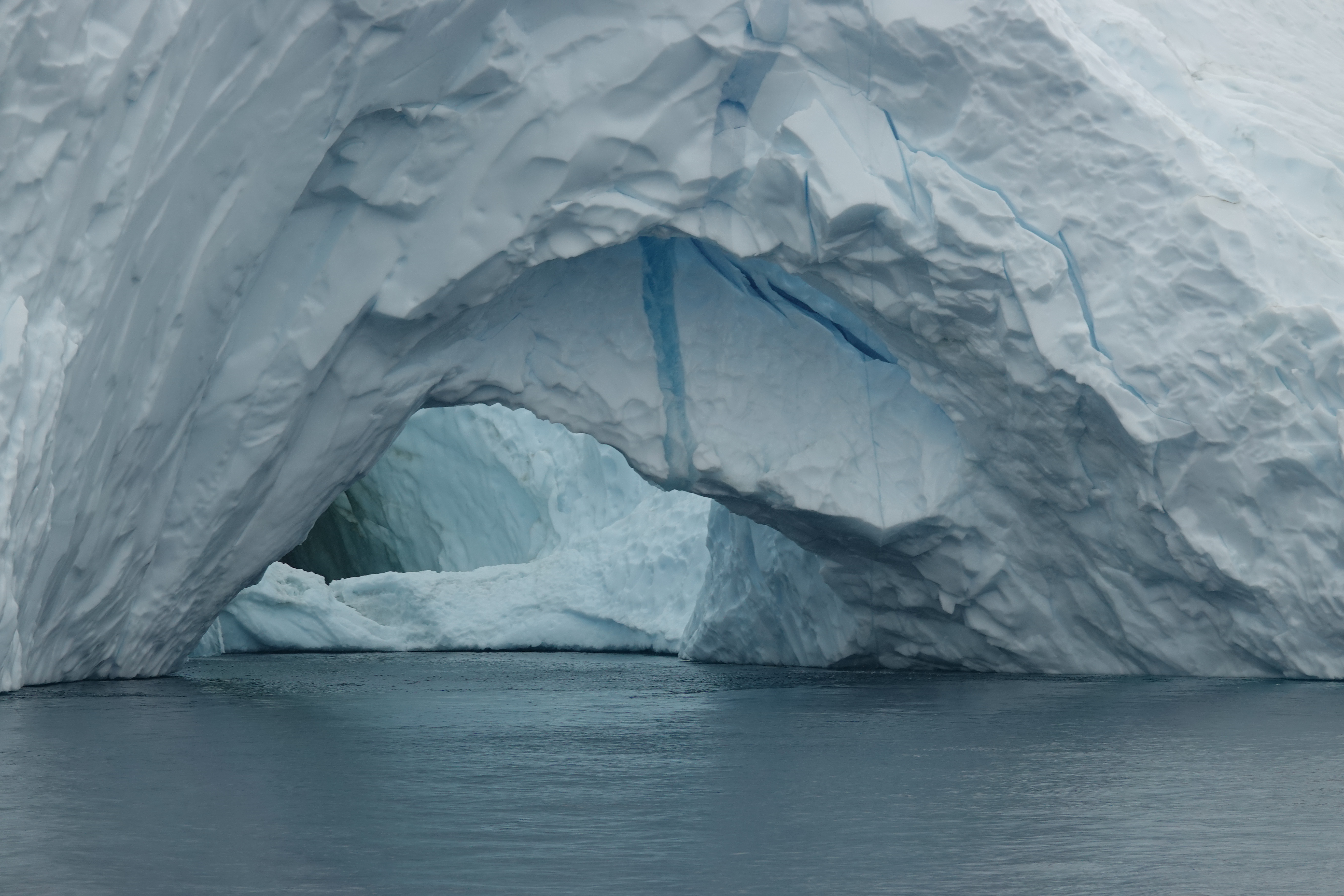 But, city girl though I may be, the fact is that you don't go to Greenland for its cities. The glaciers and icebergs: They are majestic. Sadly
they are melting.
But, city girl though I may be, the fact is that you don't go to Greenland for its cities. The glaciers and icebergs: They are majestic. Sadly
they are melting.
We got to see them though.
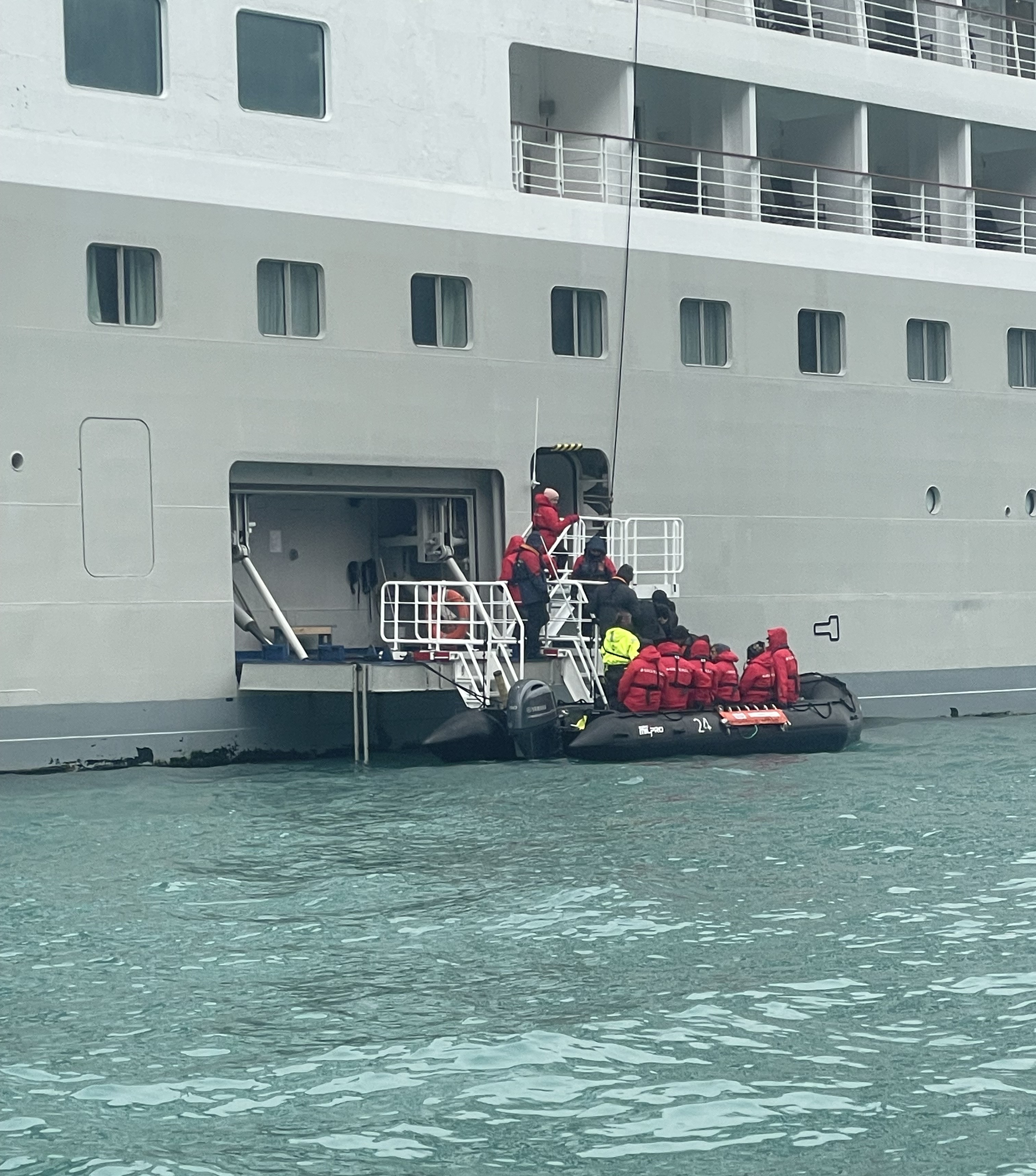
 The ship's zodiacs became our friends. For just being out and about with the icebergs. And even for most of our landings. We'd made it to our advanced ages never before needing waterproof pants and boots. We have them now.
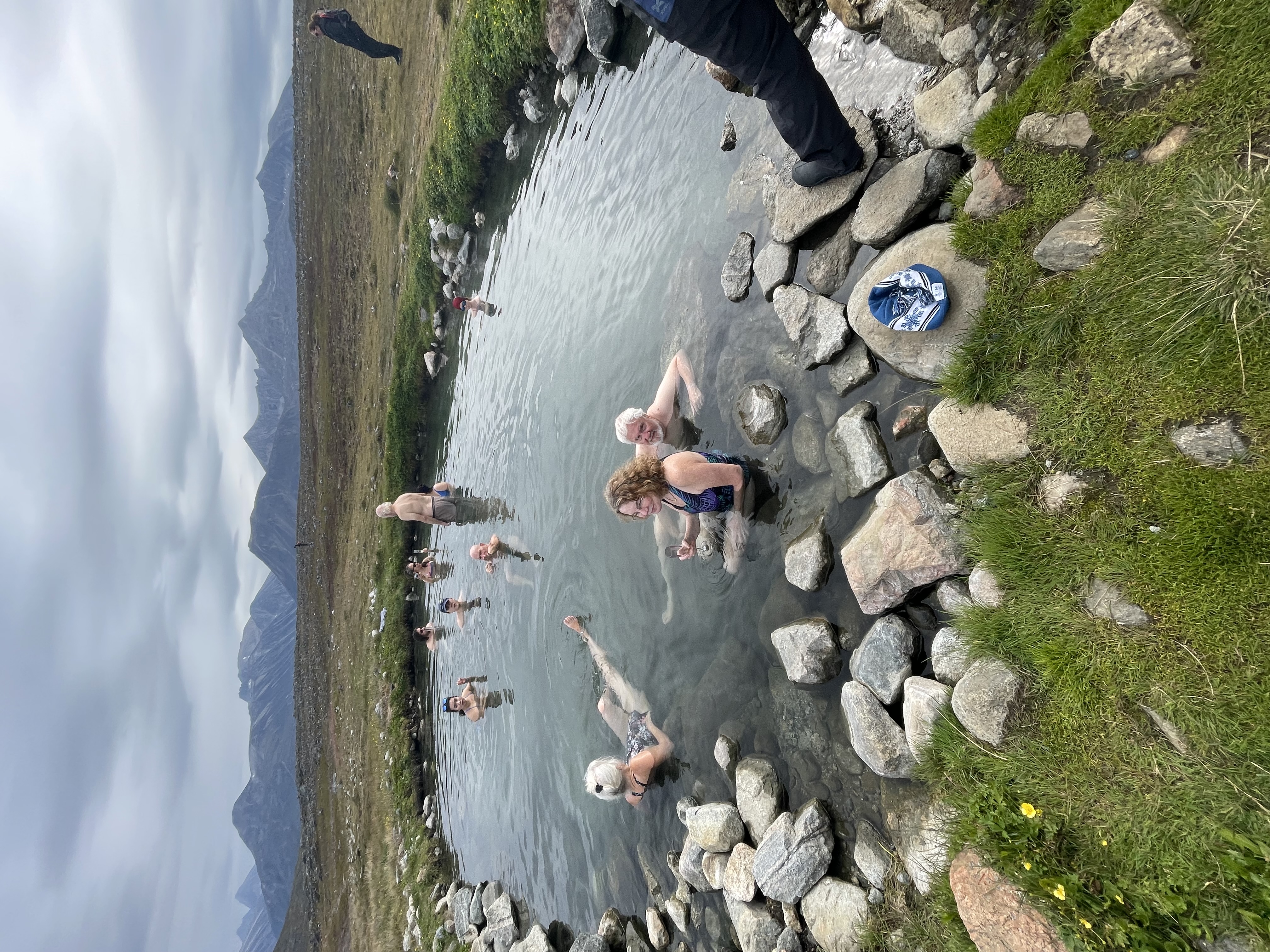
Who knew? Uunartoq Island as a spa destination.
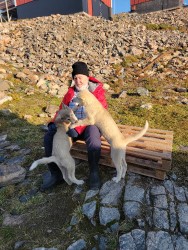
The Greenlanders are big on dogs. The dogs are big on meat. Click on Alan and the puppies to see feeding time.
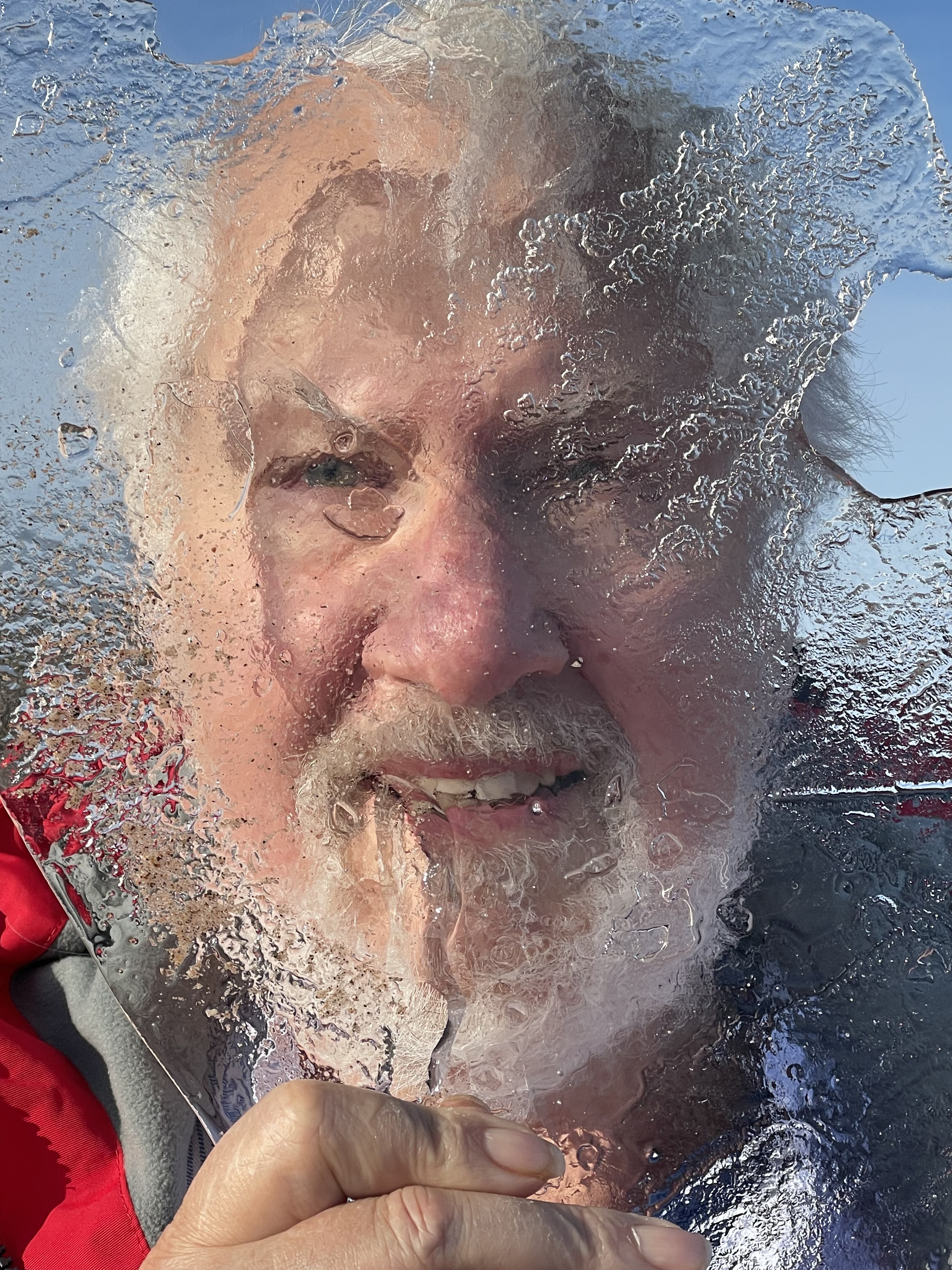
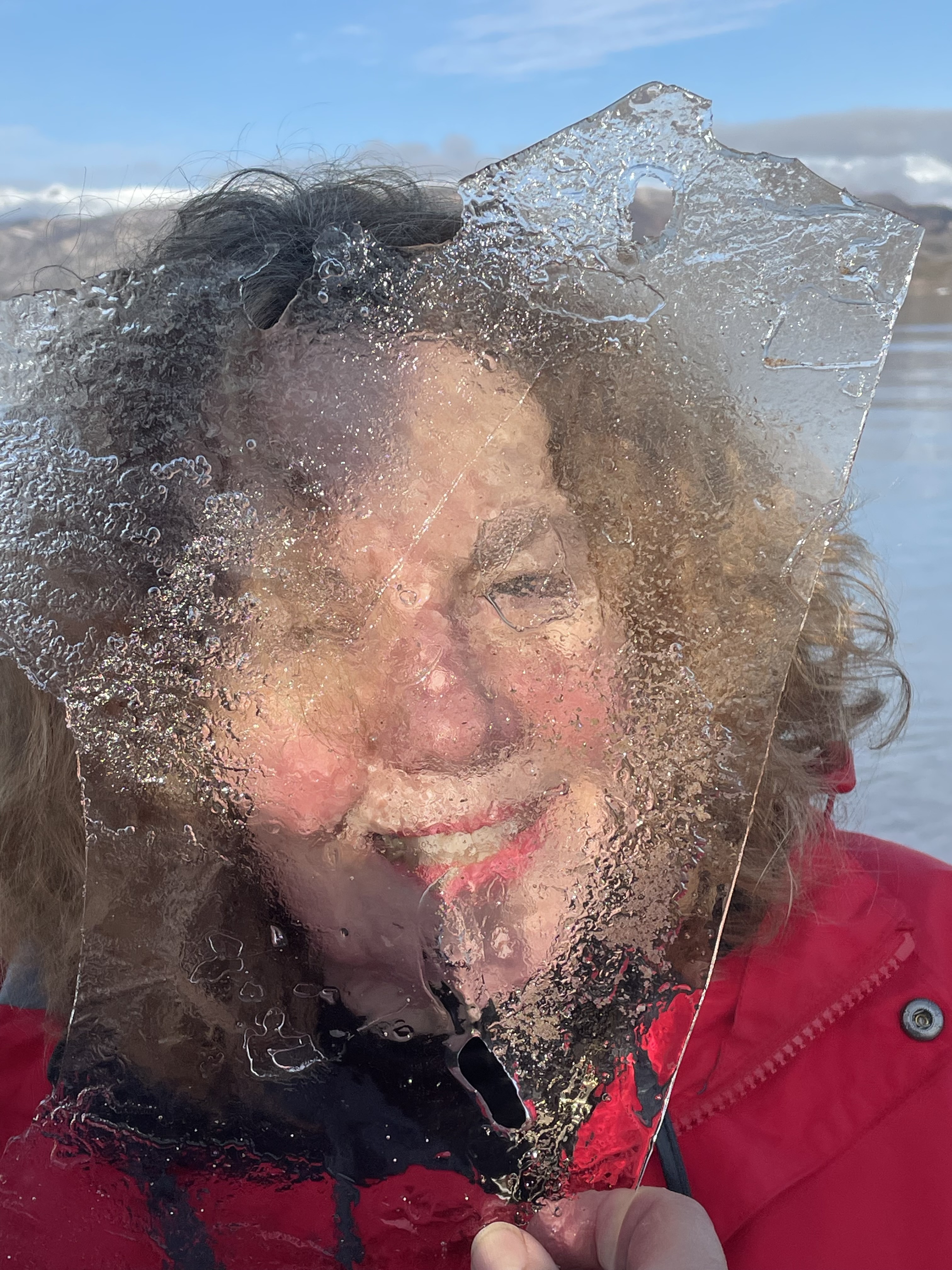 There was ice on the ground one morning.
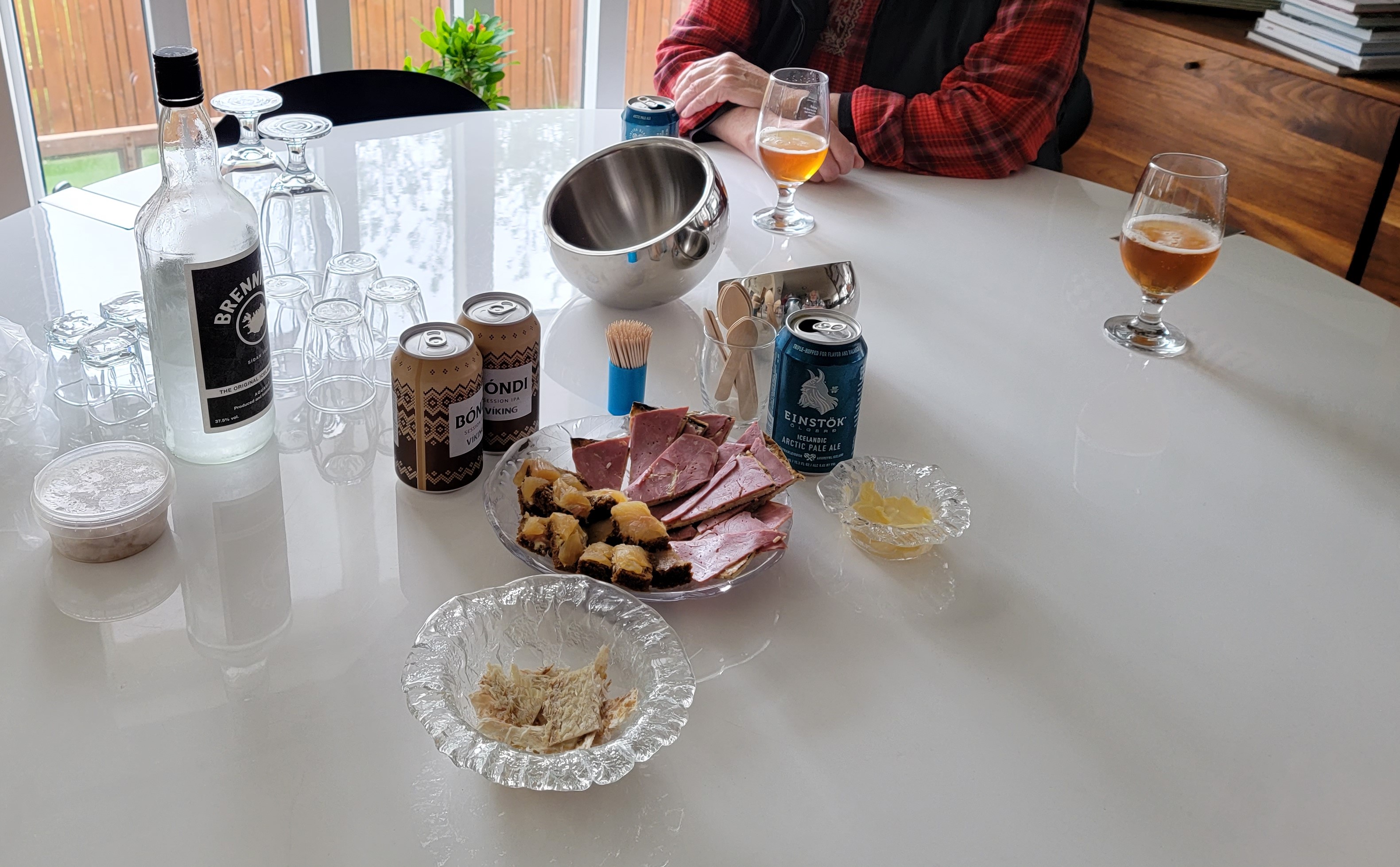 We had one day in Reykjavik, before heading home. It was our third time there in just a few years. So we asked Pétur, our guide to take us to some off the beaten track places. He did; he took us home.
He had prepared Icelandic snacks. The brown bread is awesome. The fermented shark, not so much.
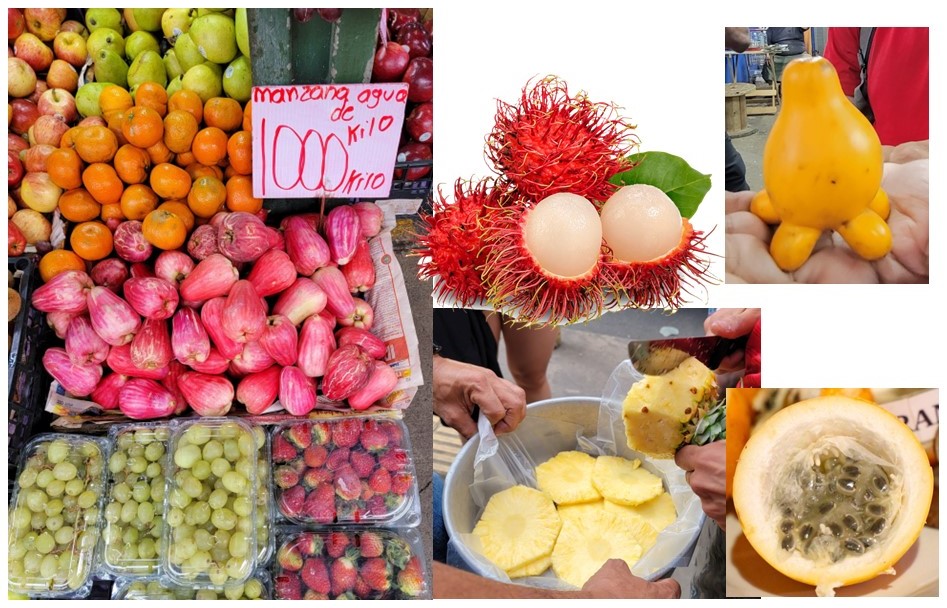
 And now for something completely different. We were looking for a place to go in December that doesn't require an exhausting flight. Costa Rica fit the bill.
San Jose is the capital. About 40% of the population live in metropolitan San Jose. It's a modern city. It's not what people go to Costa Rica to see. But we spent a couple of days there and got a sense of how a lot of real Ticos actually live, well outside the major tourist areas.
As we're now super fond of doing, we spent a chunk of the first day on a walking food tour. Surprise -- the market is full of a lot of tropical fruits (which are simply better there than they are here, mostly because they don't have to be picked green and then shipped). Who knew there was a fruit with cute little "legs"? Or that the one with slimy white flesh and black seeds would actually be good?
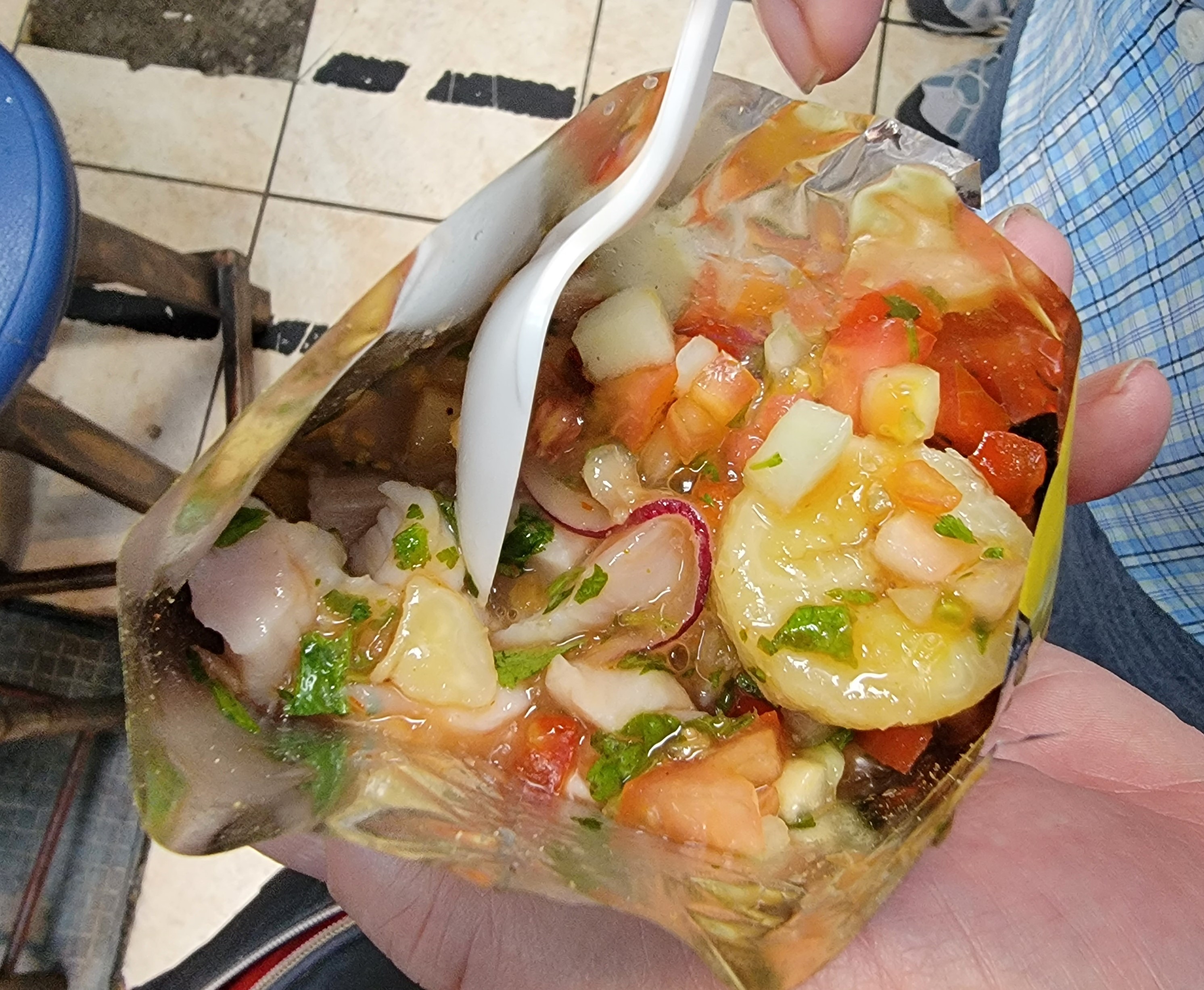
They put chips and bananas in ceviche. And serve it in cute chip bags.
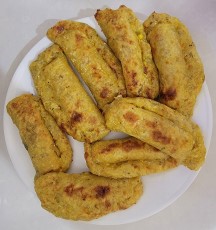
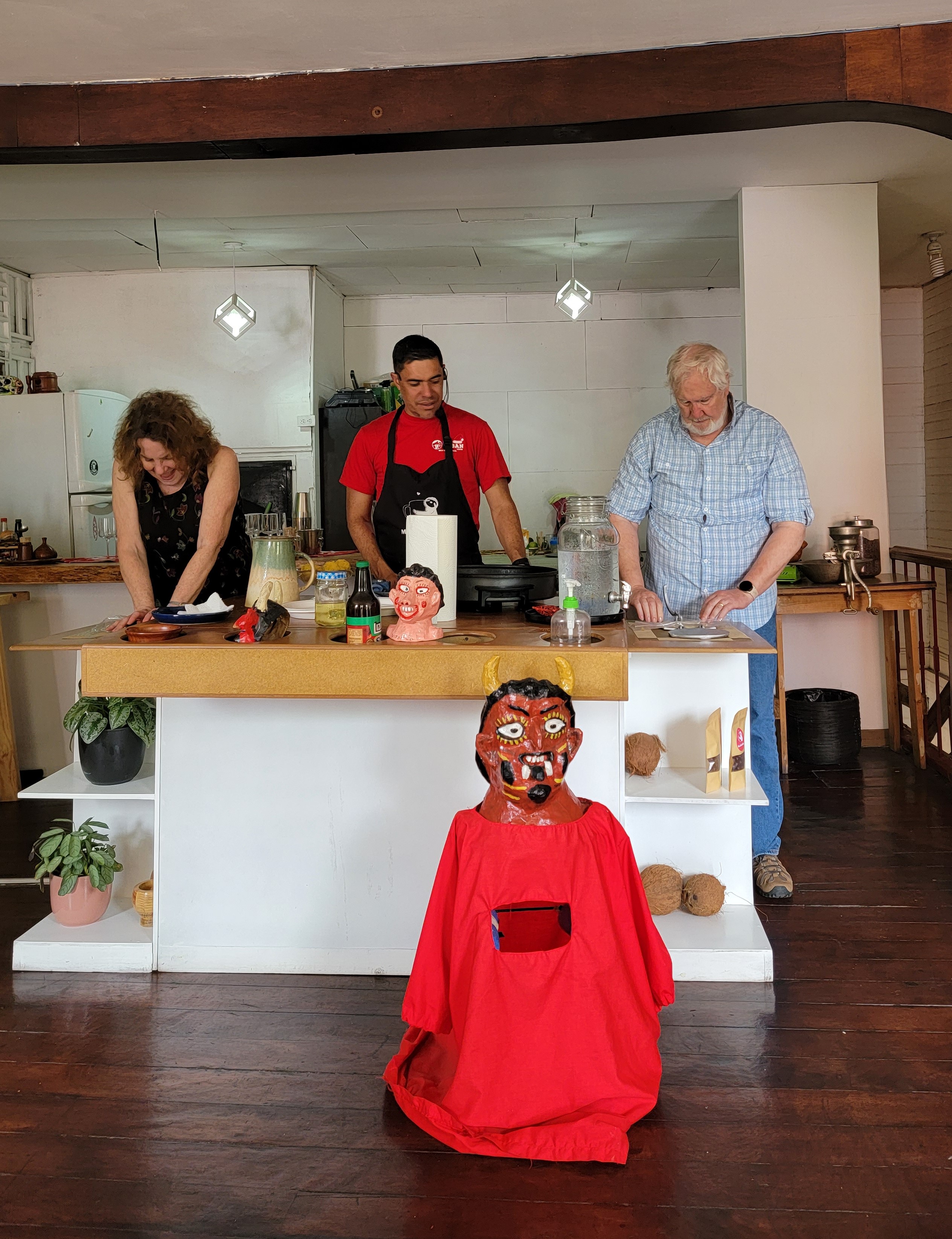
The best thing about the food tour was the last stop. We made empanadas. Plaintain dough, mozzarella filling. When we got home, we figured out how to make them. Click on the plate of empanadas for the recipe.
We noticed something on the tour that we've noticed in other small countries (like Iceland): They are way more inclined to use the word "we" when talking about themselves and their compatriots. For example, "We like to eat such and such." Or, "We do such and such." There seems to be a solid sense, in the country, of "we". I wish we had more of that.
Pura Vida.
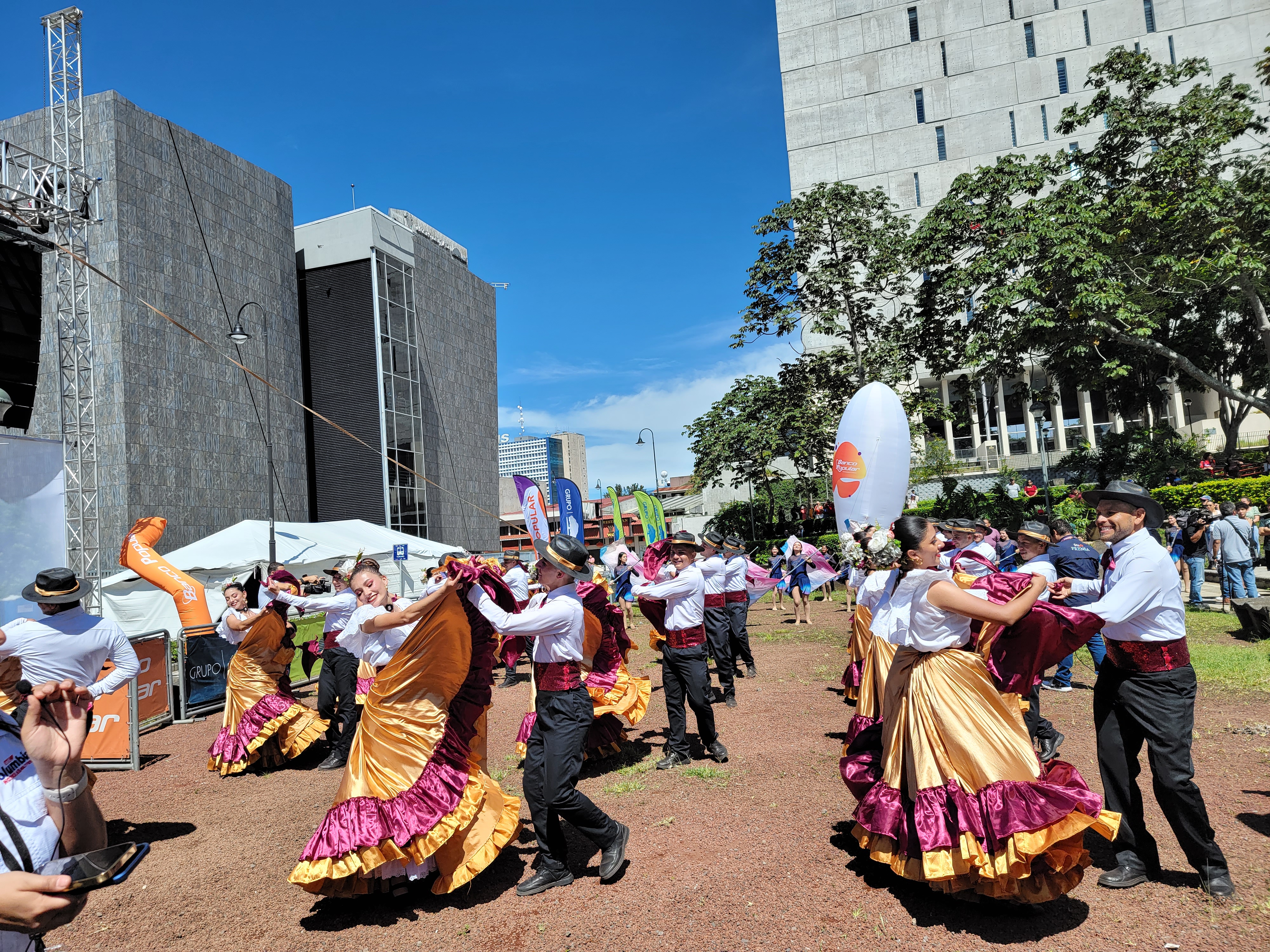
 By sheer chance, we were in San Jose on
Abolition Day. That's the day they celebrate abolishing their army (which they did on December 1, 1948). Seriously. They decided that they would rather spend the money on health care and education. Duh.
By sheer chance, we were in San Jose on
Abolition Day. That's the day they celebrate abolishing their army (which they did on December 1, 1948). Seriously. They decided that they would rather spend the money on health care and education. Duh.
There was a large dancing troupe, a small-town band (about to go off on their second trip to the Rose Bowl) and a lot of speeches that we couldn't understand. Click on the band to hear the Costa Rican national anthem.
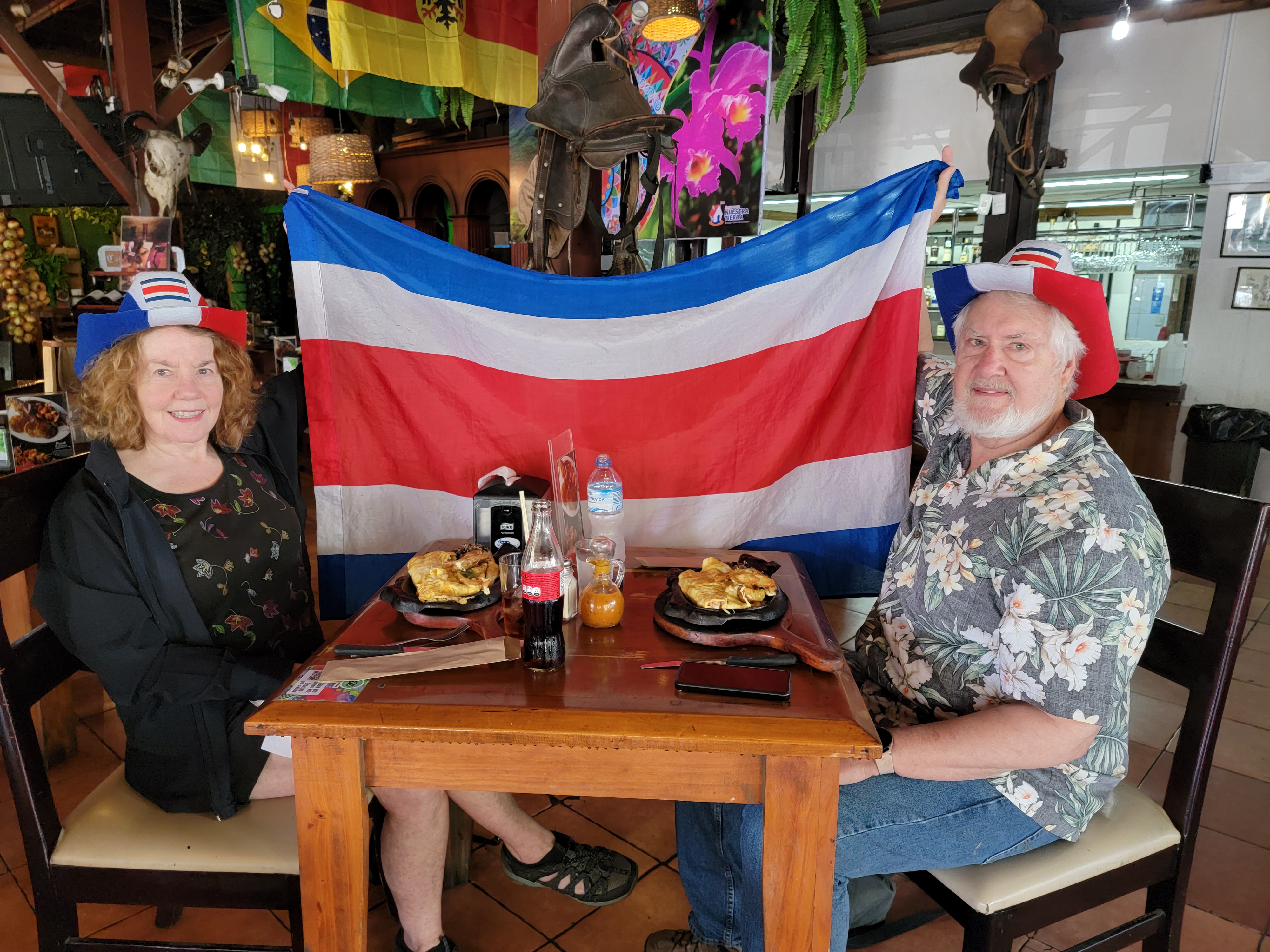
We ate breakfast just across the street from the festivities. They decided that we, too, should be festive.
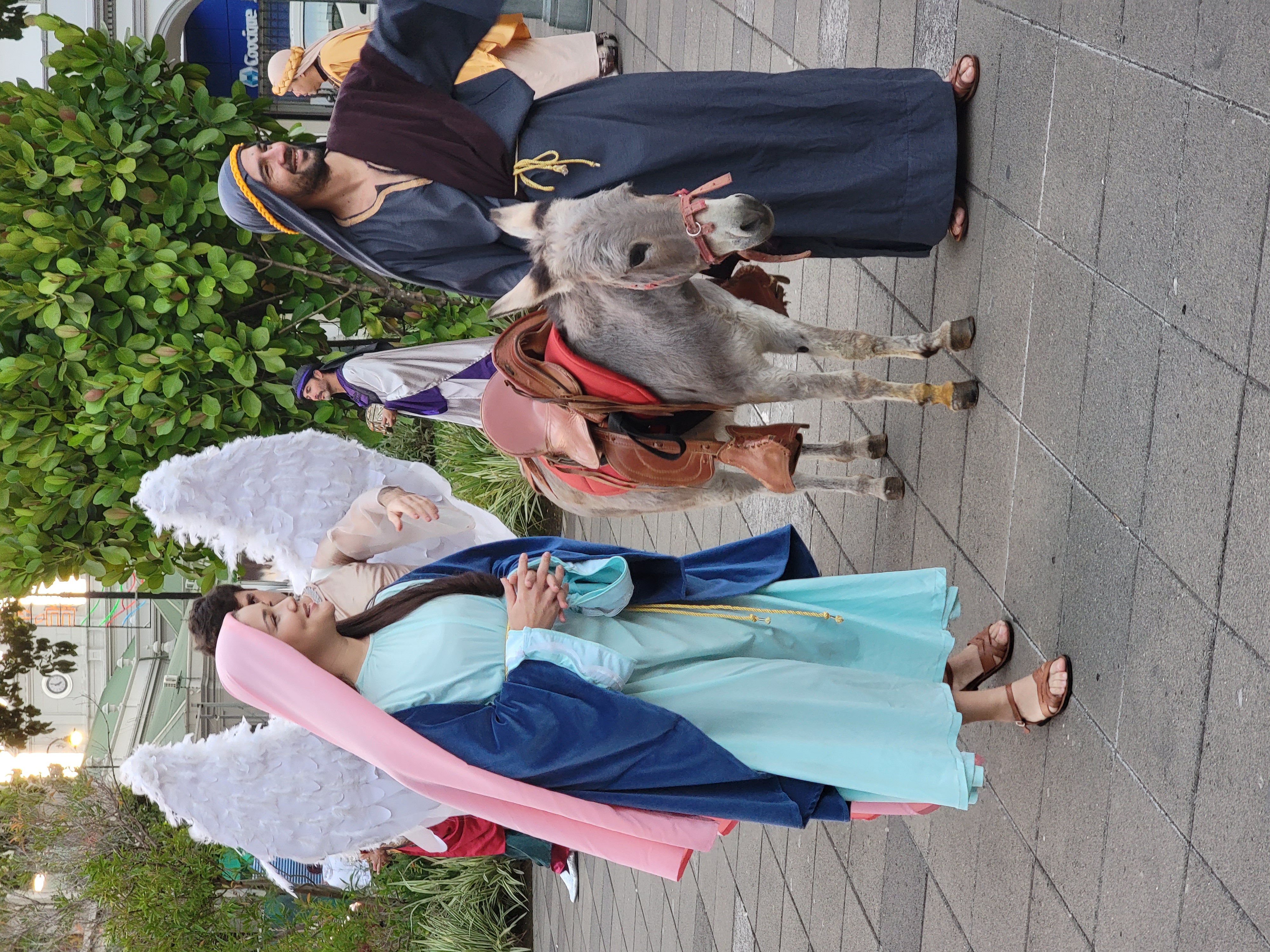
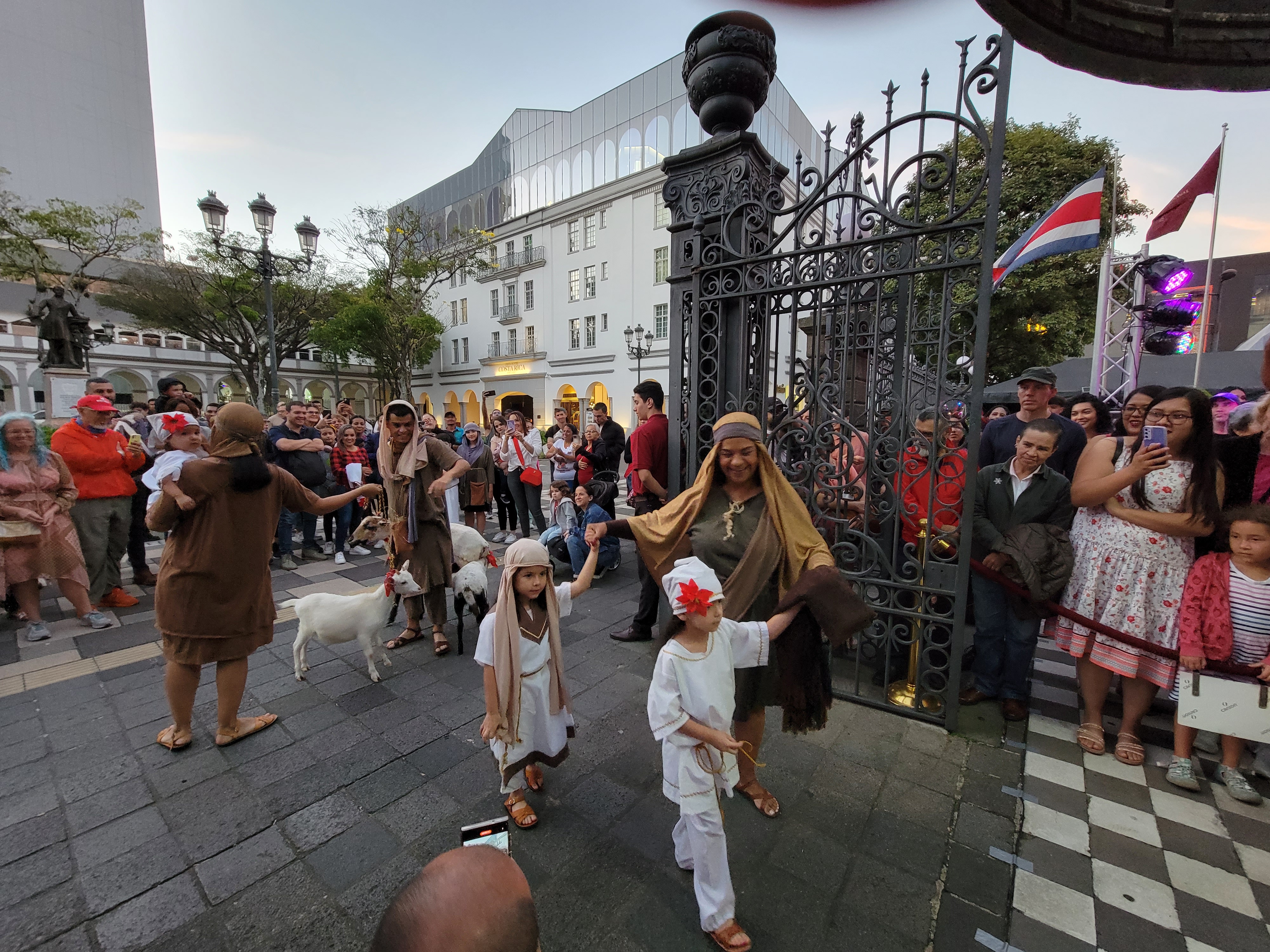
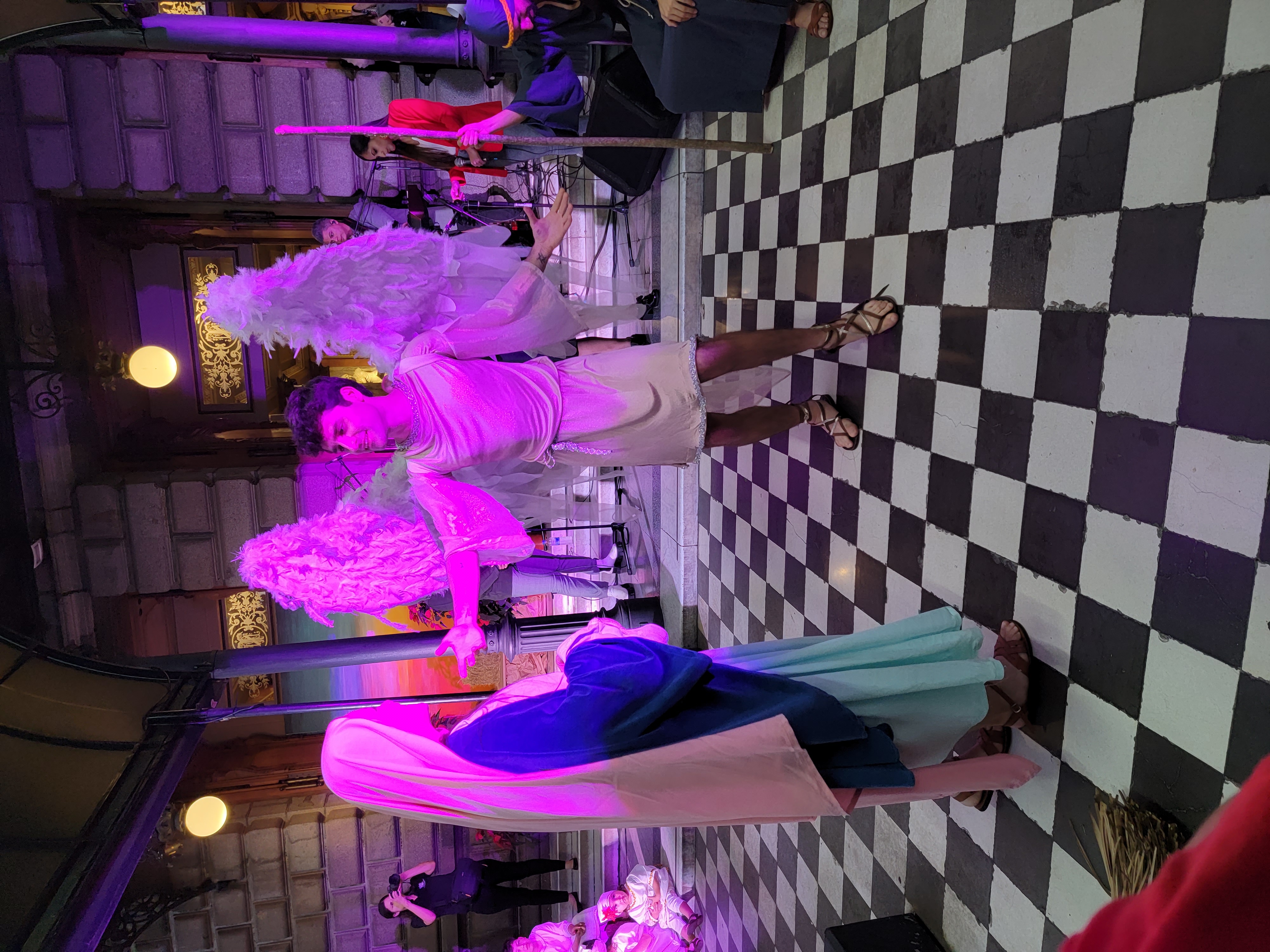 Also on December 1, the National Theater puts on their Nativity play. All in Spanish, but we know the plot. The goats and the donkey don't care. The angel Gabriel seemed really to be enjoying his job.
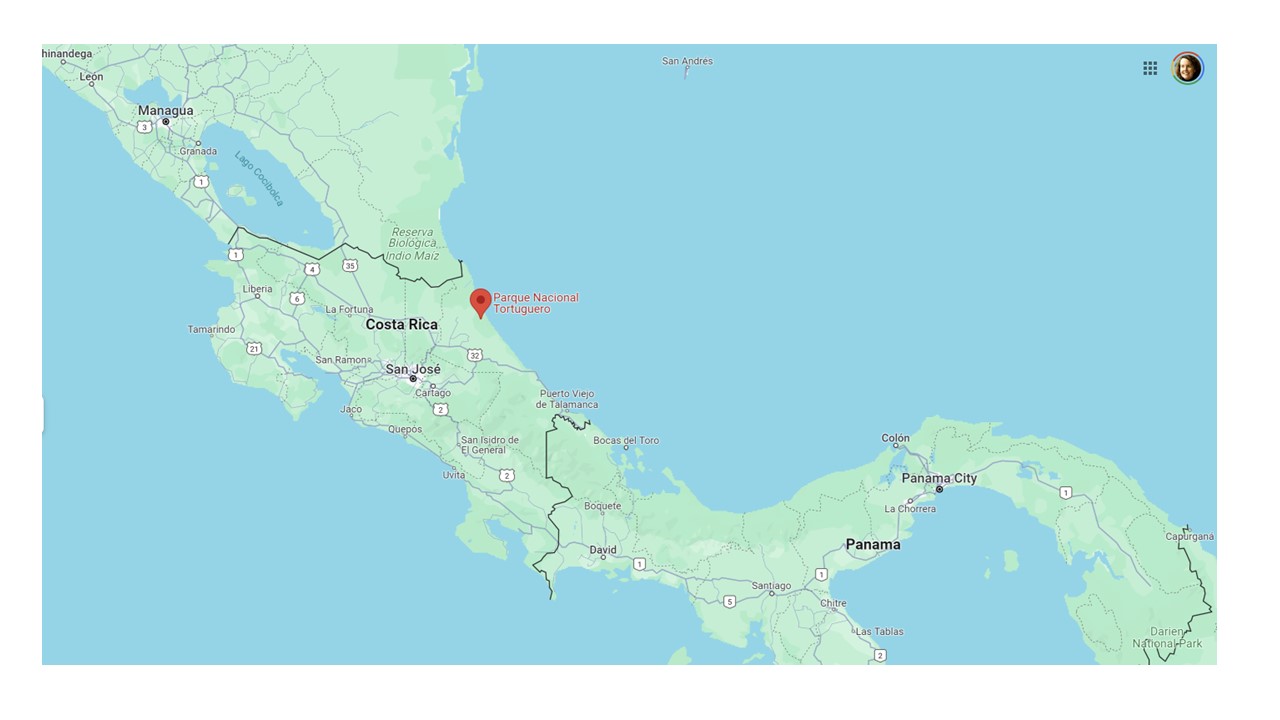
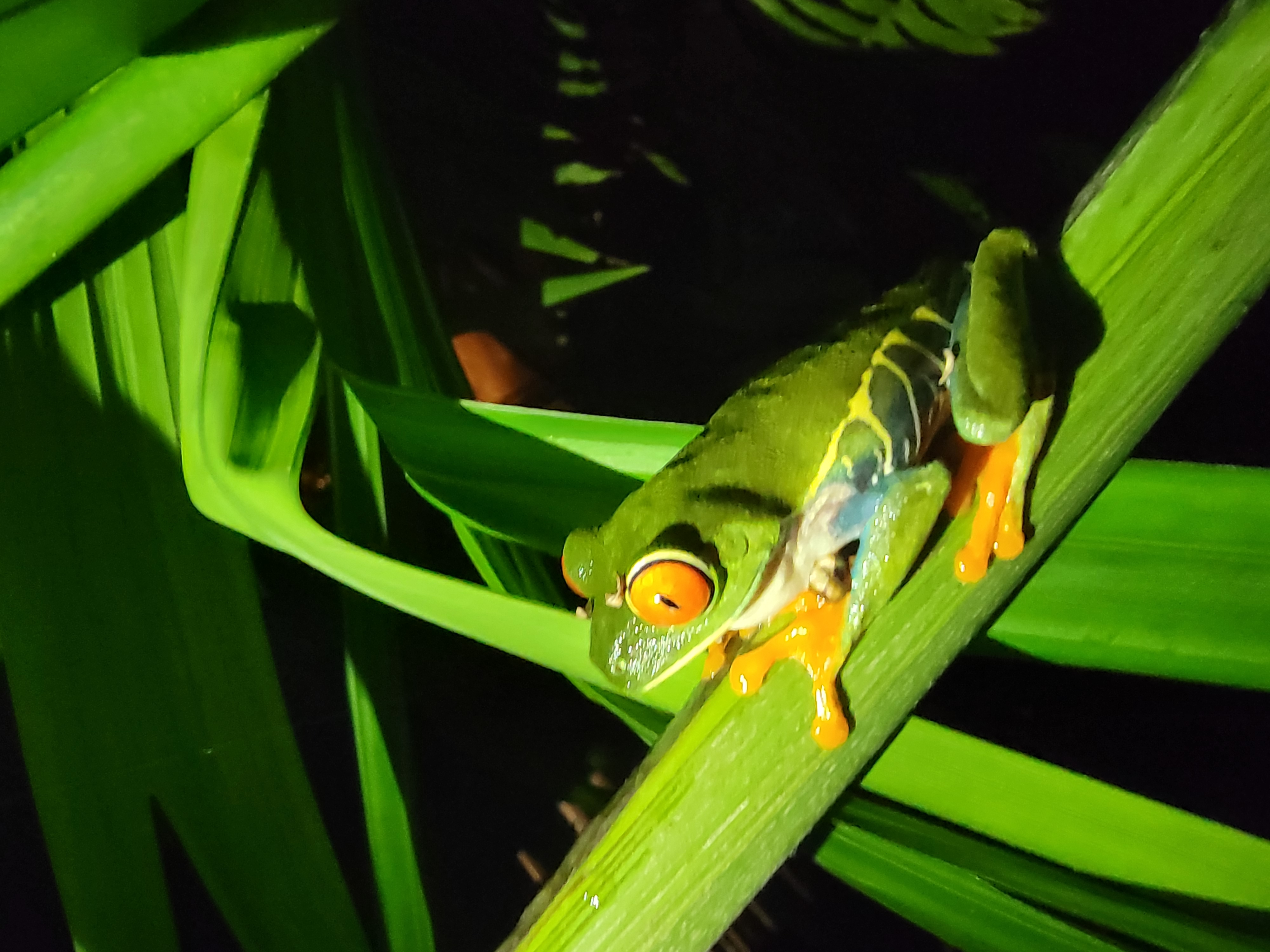
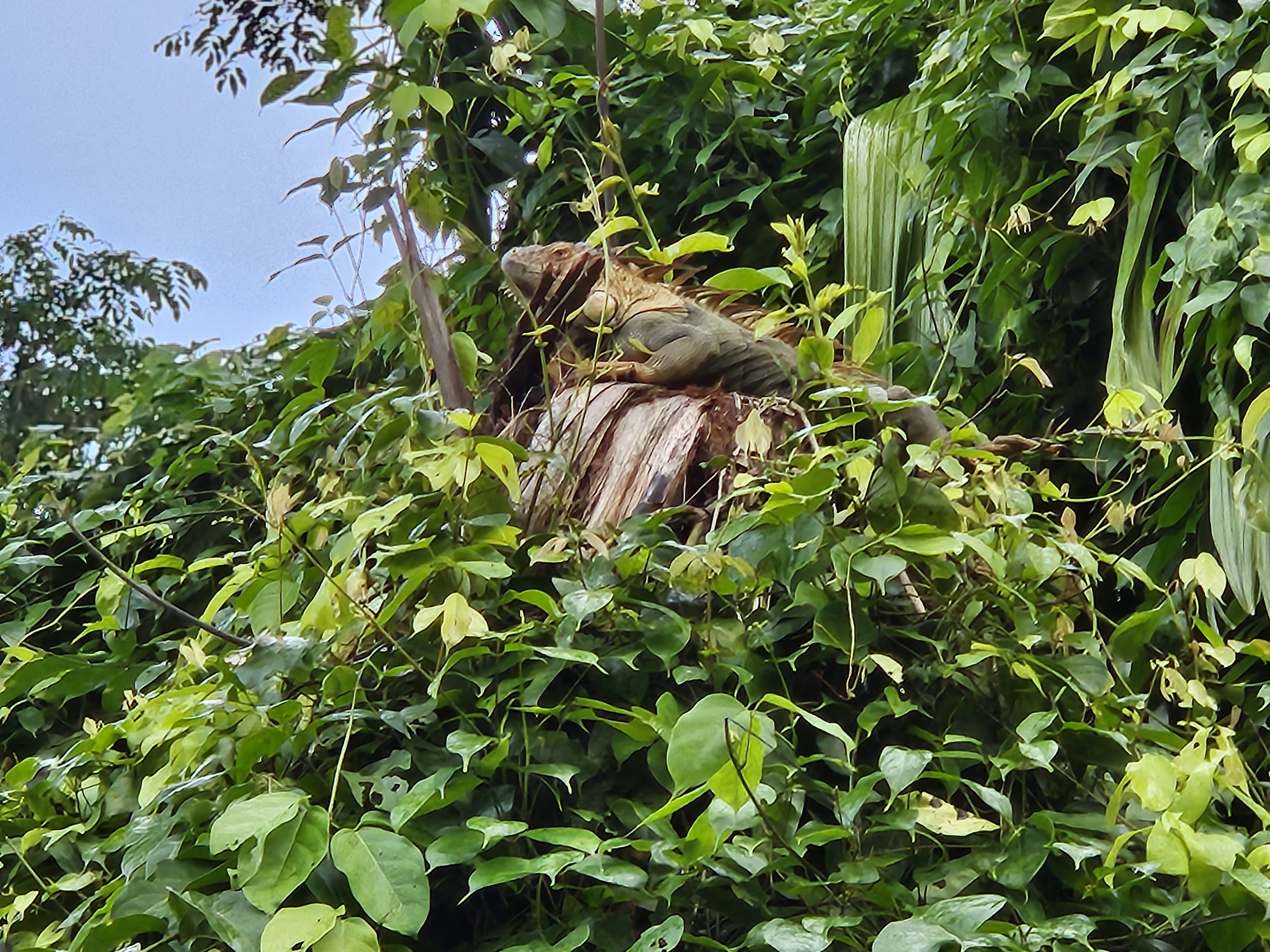
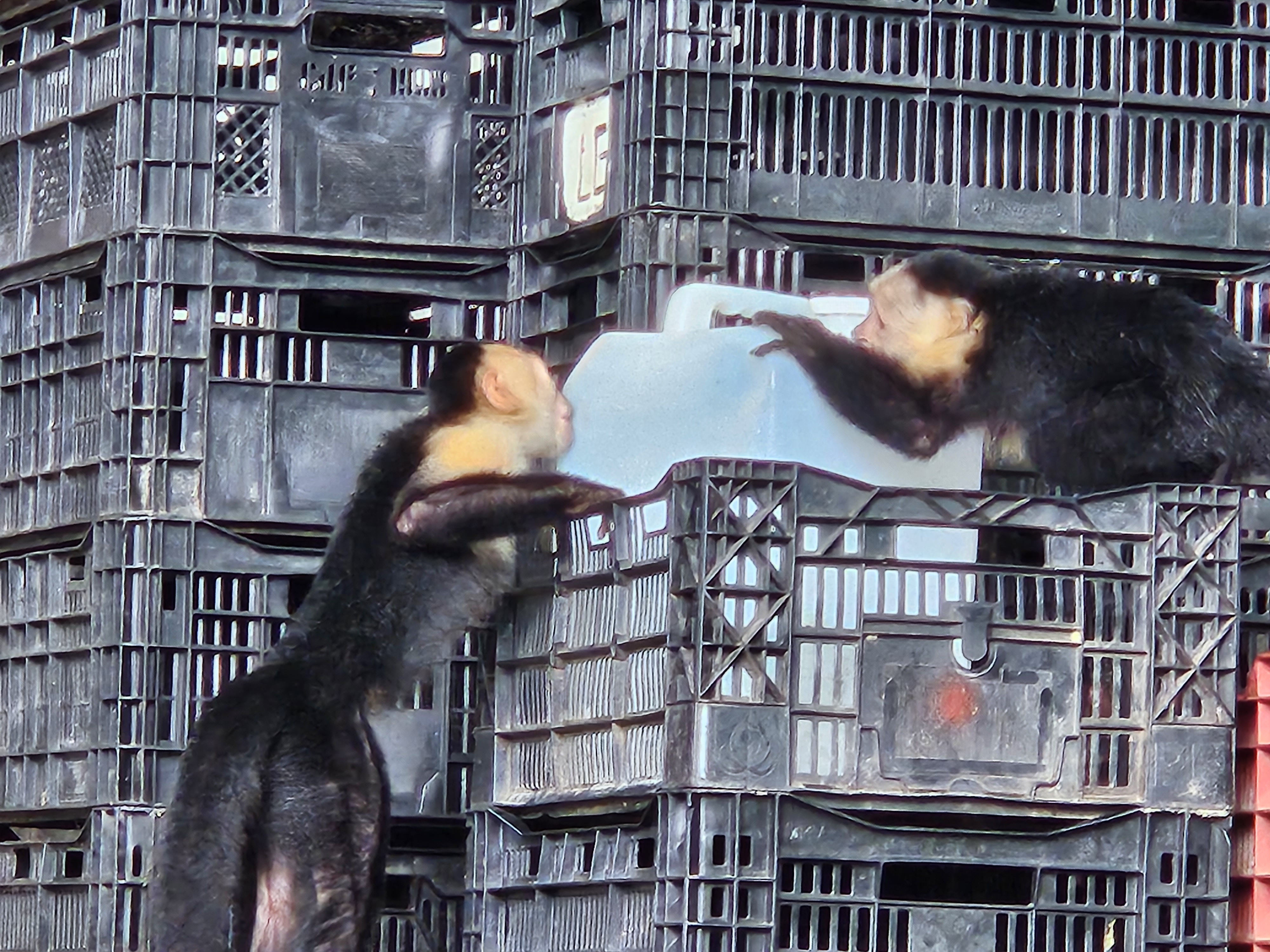 Next, we headed northwest to Tortuguero National Park. It's about a four hour bus ride, followed by an hour long boat ride, away from San Jose. Lots of jungle. Lots of cool critters: frog, monkeys, crocodile, iguana. Look closely to spot the latter two in the pictures. We cheered for the capuchin monkeys causing trouble. I guess we know the origin of the expression, "monkey business".
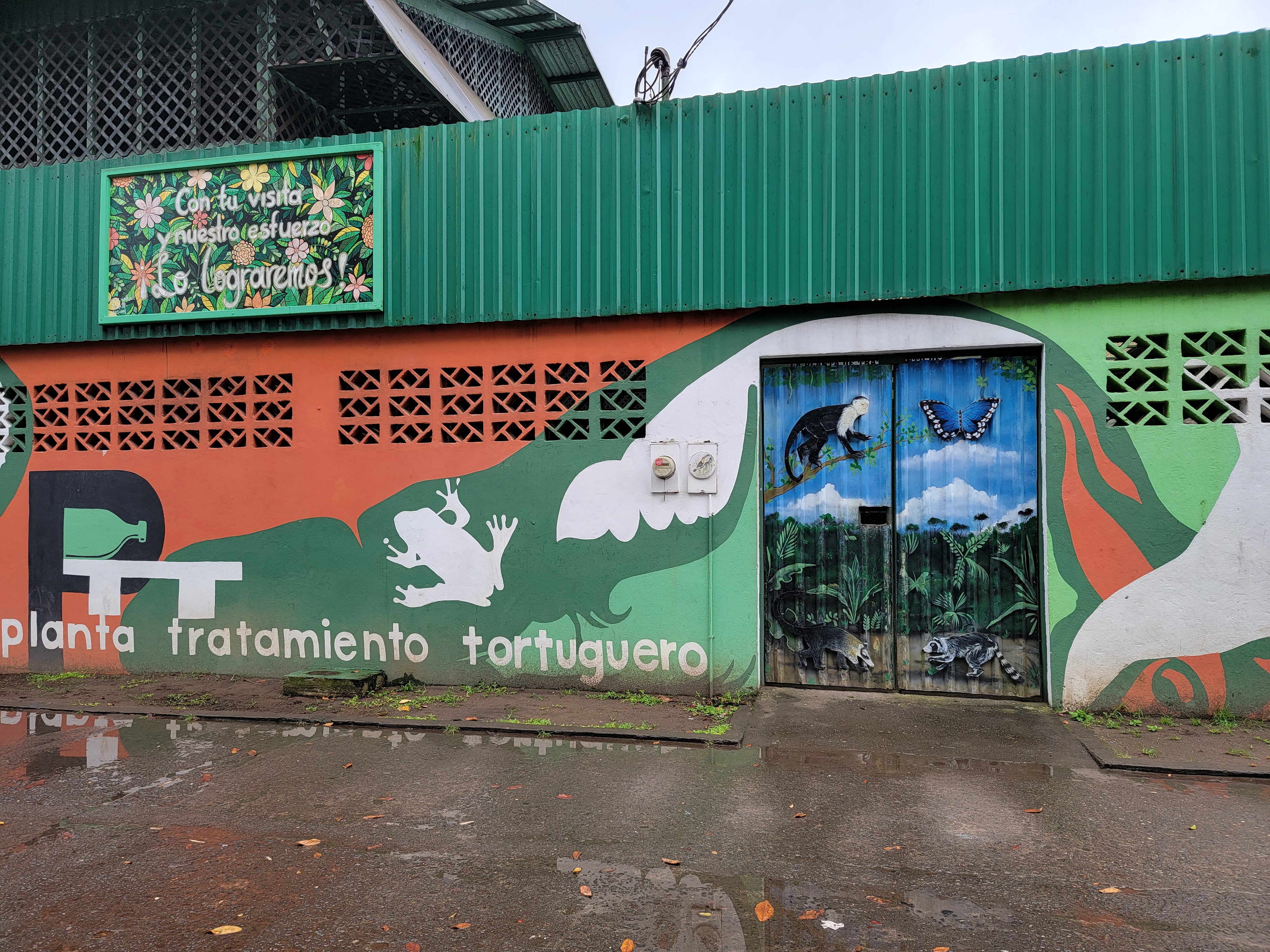
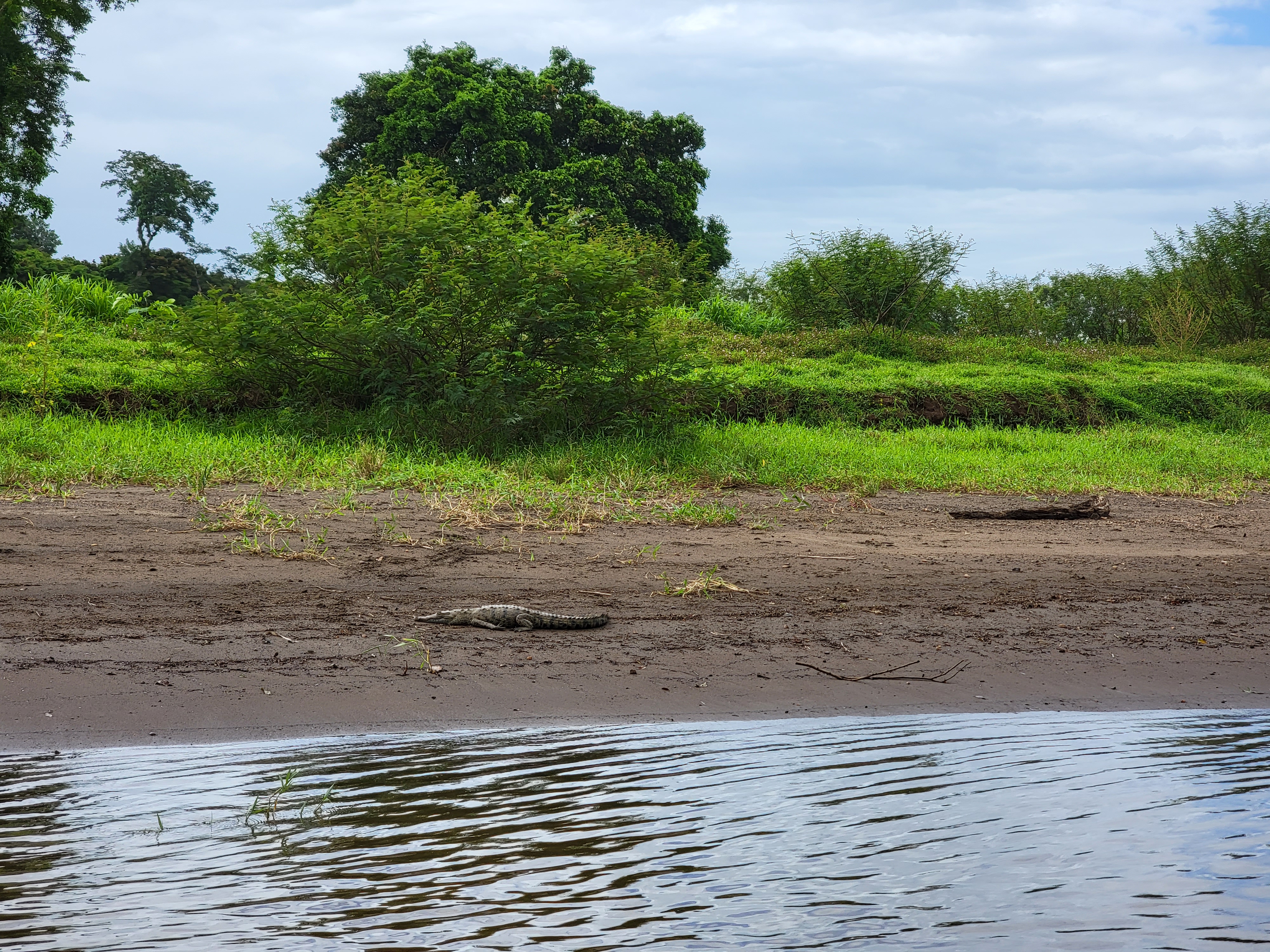 But one thing we didn't expect. In the tiny town of Tortuguero (population about 600) they have a recycling plant that, we were told, recycles almost everything. These folks are seriously committed to sustainability.
And another thing we didn't expect. Alan got covid. So we headed back to San Jose and came home. We missed the main part of the trip (heading to the northwest part of the country). Maybe another time. The big deal is that Alan didn't get super sick and he was all better in several days.
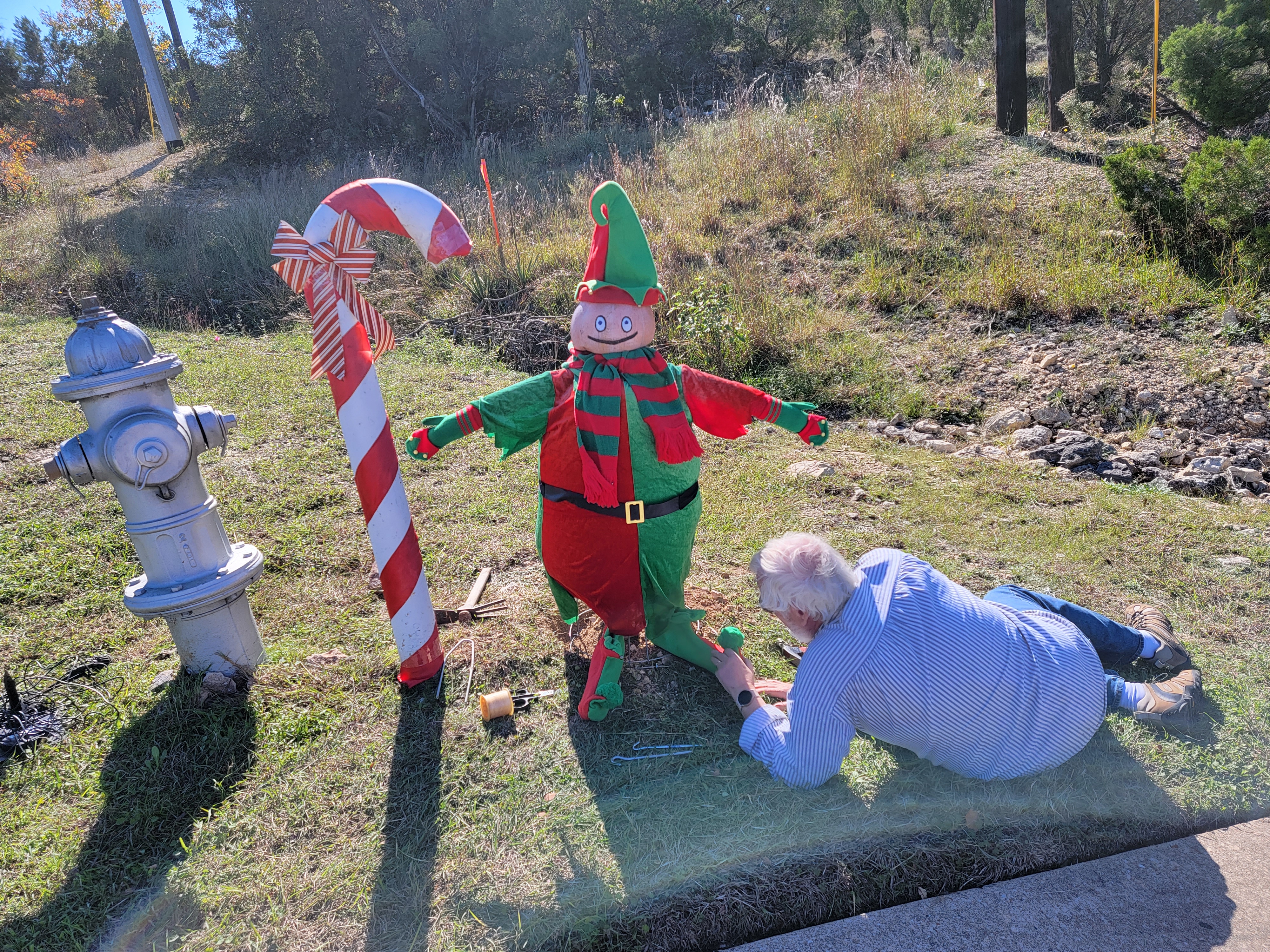
2022 was the last year for Elfred 1.x. After 7 years, he finally ran afoul of the fire department. They wanted their hydrant back. So Elfred 2.0 debuted the day after Thanksgiving. He will be a good neighbor to the fire hydrant. He's enjoying his new skeleton, a pair of tomato cages. And his wardrobe enhancements: scarf and gloves. Candy never really changes.
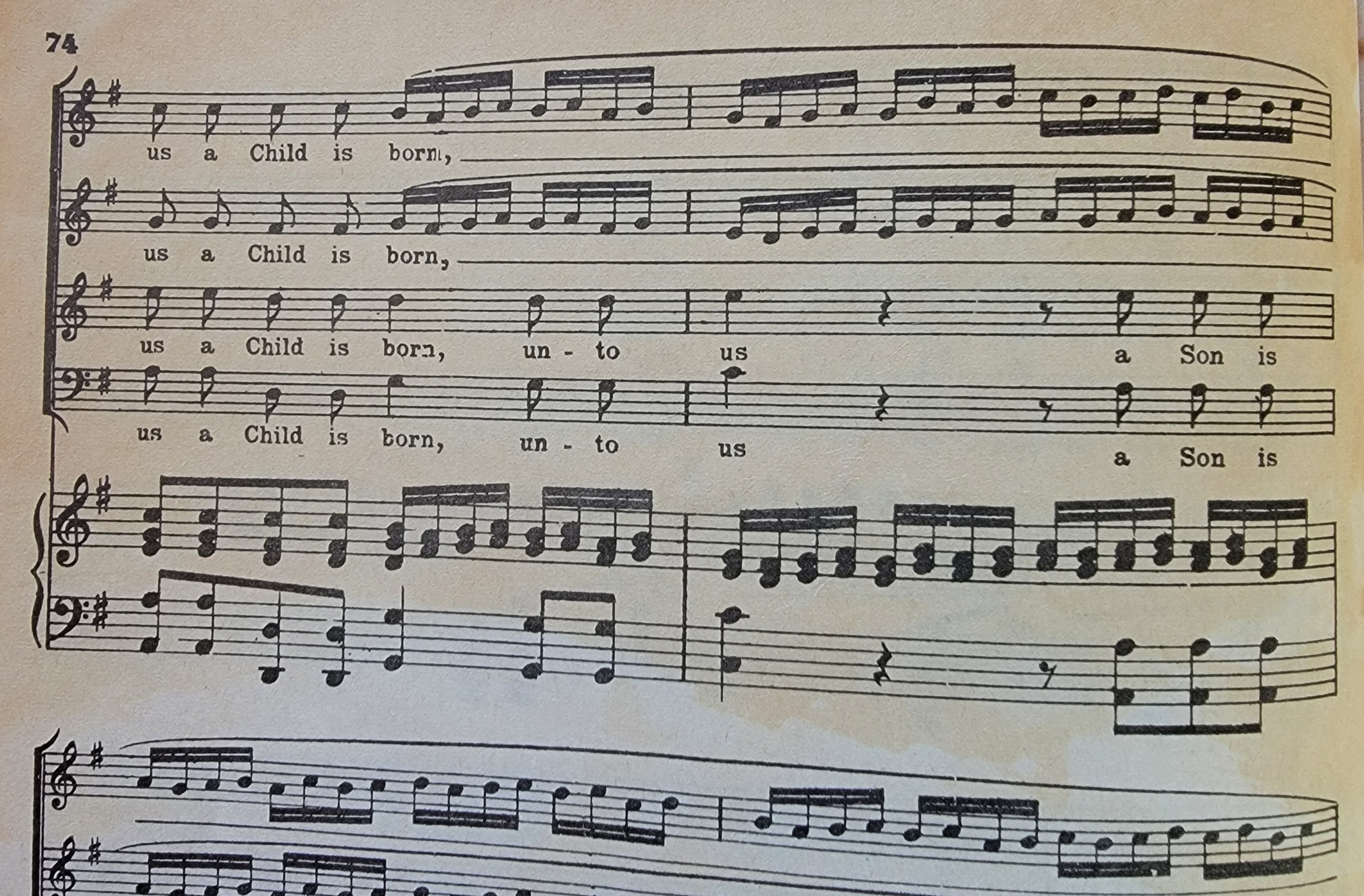
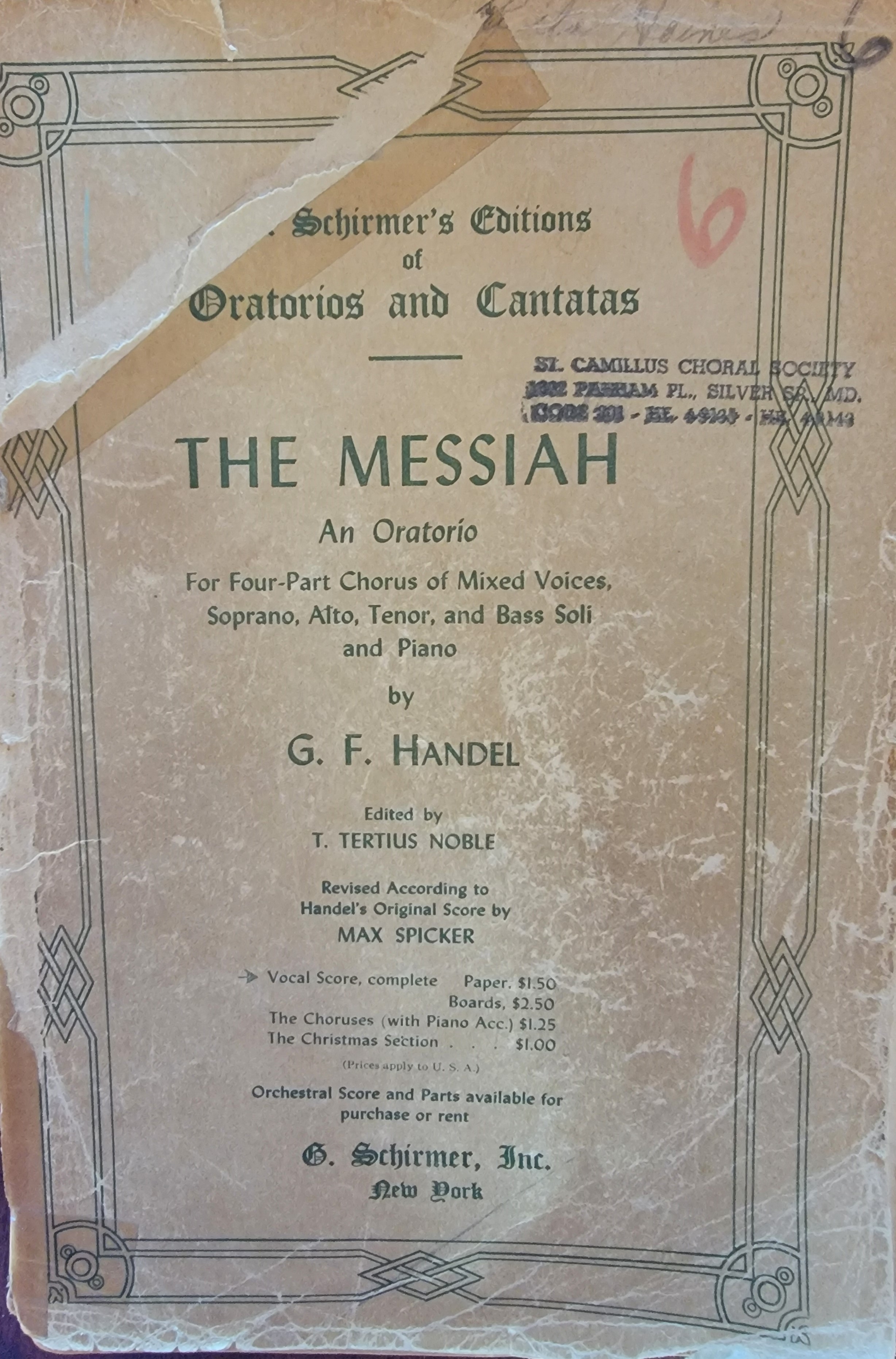 A small silver lining to coming back early from Costa Rica: For the first time in many years, we were in Austin for the Sing Along Messiah. Fun, although, unlike in San Jose, no donkey, not even any sheep. I tried to sing. I've been trying that for decades. (I know this, among other reasons, because apparently I stole the score I used from the church our family went to when I was a kid.) But there are sections where I was reminded of a line from the movie Amadeus. The emperor, criticizing Mozart, says, "Too many notes". It is said that Handel composed Messiah in 24 days. I gave up trying to compute how many notes per minute he had to have written.