From first-year biology student who nearly fainted to IBM executive shaping the future of AI, Ritika Gunnar’s career defies a straight line.

Today, Ritika Gunnar (B.S. ’99) helps shape how IBM integrates AI into the future of enterprise systems, a role she would not have imagined when she arrived at UT in 1994 as a biology major on a pre-med track. That plan changed after a single surgery observation. “I almost passed out,” she admits with a laugh. “That was not for me.”
That early pivot set the tone for a career defined by change. Gunnar soon shifted into computer science in the College of Natural Sciences, where a spark from her parents’ engineering backgrounds took hold as she worked through programming languages like Basic and Pascal.
“The ability to create something from just your mind and a programming language was so fascinating,” she recalls. “It really ignited my passion for software.”
Gunnar graduated from UT in 1999 and joined IBM in Austin, where the company had recently acquired Tivoli Systems, working in systems management. She moved into leadership roles, went back to UT for a part-time MBA, then kept expanding across engineering, support, product strategy, and technical sales. Each move pulled her deeper into how software gets built, sold, and scaled, until she was leading the very systems she was once building.
Leading in the Age of AI
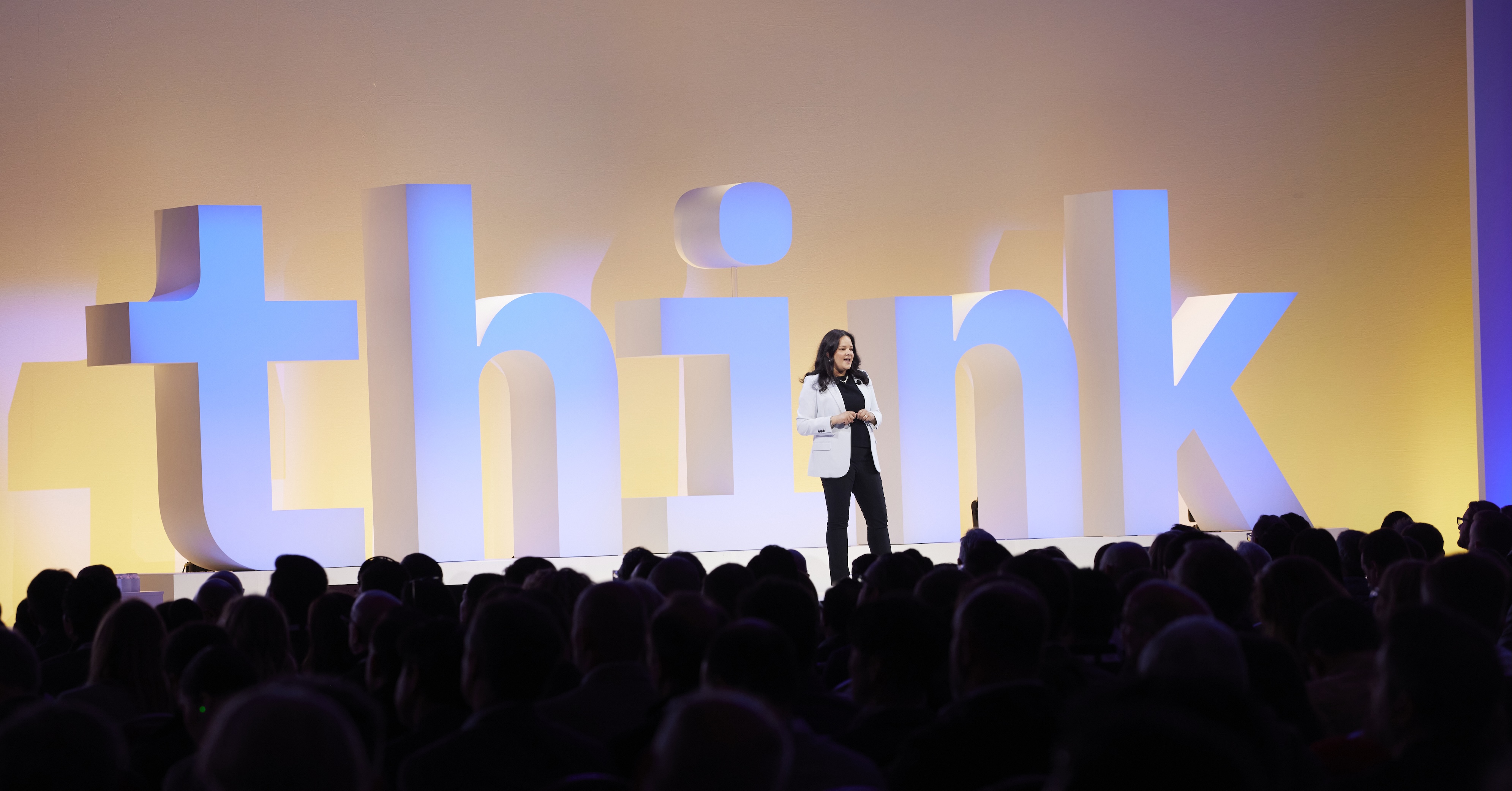
Today at IBM, Gunnar is a senior executive working on some of the most important challenges facing enterprise AI. She sees three priorities shaping the future:
- Treating proprietary data as a critical form of intellectual property that differentiates AI applications.
- Harnessing GPU-accelerated workloads in AI-native data centers.
- Building agentic control systems that optimize AI agents and applications for cost and performance.
These are the foundational questions that will determine how effectively organizations deploy and scale AI in the years ahead.
Lessons from a Computer Science Pioneer
Gunnar traces her enthusiasm for emerging computer science horizons to time she spent as an undergraduate with Edsger Dijkstra, the Dutch computer science pioneer who spent the final decades of his career at UT Austin. Gunnar was among the last students to learn directly from him.
“He believed that you should be able to do very complex things in your mind before you even get to the programming part of it,” she says. “This really impacted me in my career, in that strategic thinking is the most important thing. It is not the languages you know, because programming languages are going to change. What matters most is that you develop a critical framework for systemic, long-term thinking.”
Beyond Technical Skills
Even as an undergraduate, Gunnar was also a campus leader, holding an executive position in the Association for Computing Machinery where she organized events that brought key companies and emerging technologies to her fellow students.
She now sees it as pivotal for students to have interests and activities outside of study and programming practice. Technical depth alone, she says, only gets you so far. What carries a career forward is emotional intelligence (EQ).
“Everything you do in your career is going to involve working with people,” she says. “Having the EQ to get people aligned around a common vision, to get everyone’s voice heard, to rally people around a vision and lead them forward, that is far more critical in today’s world than even your IQ.”
Gunnar identifies EQ as a learnable skill, not a character trait. It might start with something as simple as taking presentation classes or requesting peer feedback on a project and thoughtfully responding to comments.
The Three C's
When she mentors early-career professionals, Gunnar returns to what she calls the three C’s:
- Curiosity: Commit to a lifetime of learning, because technology will change throughout your career.
- Community: Build relationships and collaborate with others, because ideas sharpened in dialogue are stronger than ideas developed alone.
- Confidence: Be willing to move into spaces where you aren’t yet the expert and build from there.
These three tips offer a simple framework for navigating a field that continues to evolve, where technical skill alone is never the full story.
Why AI Makes Computer Science More Valuable, Not Less
To students who worry that AI is eroding the value of a CS degree, Gunnar argues the opposite: every major leap in computing has expanded the field, not shrunk it, creating more technology roles rather than fewer. She expects AI to eventually do the same while shifting what those roles demand. The best possible preparation for such roles, she says, is the sort of zigzag, multifaceted training and career path that has brought her to where she is today.
“Instead of building the code, what becomes more important is that you understand systemic architecture to be able to create these systems,” she says. “We're going to see AI take on more roles, but that will create whole new categories of what it means to manage it and to scale it.”
Inspired by Ritika’s journey? Click here to explore more alumni stories and see how UT Computer Science graduates are shaping industries, launching companies, advancing research, and leading innovation around the world.