UT Austin Computer Scientist Elected to National Academy of Sciences

04/29/2026 - Scott Aaronson, a renowned quantum computing expert, joins the country’s most prestigious scientific organization.
04/29/2026 - Scott Aaronson, a renowned quantum computing expert, joins the country’s most prestigious scientific organization.
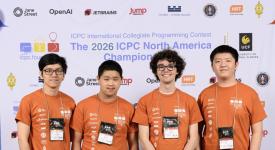
04/24/2026 - UT Austin’s Computer Science students continued to demonstrate their national competitiveness at the ICPC North America Championship (NAC), placing among the top teams in the United States and Canada following their standout regional performance.

04/22/2026 - Danielle Nyame, a freshman computer science major at UT, said she's still optimistic and hopes to land a job at the intersection of business or social justice, using AI to power technology that will help society.

04/20/2026 - While most college freshmen are settling into campus life—choosing majors, meeting new friends and finding their footing—one UTCS student has his sights on a broader goal: a seat on the Austin City Council.

04/17/2026 - If AI could save you five hours a week, the government wants to know: "what would [you] do with that time?" Would you spend "More time with family? Finally launch that Etsy shop? Fix the garage once and for all?"

04/06/2026 - The UT Austin Computer Science graduate program has again been recognized as top 10 in the country, according to the 2026–2027 U.S. News & World Report “Best Graduate Schools” rankings, released today. The program is known for its leadership in Artificial Intelligence, Computer Systems, Theory, and strong ties to the Austin tech ecosystem, attracting interest from top industry recruiters.

04/01/2026 - KXAN covers new technology created at UT that overcomes one of the biggest hurdles in robotics: sensitive touch.

04/01/2026 - A recent study found that a third of teenagers are choosing AI companions over humans for serious conversations, and a quarter have shared personal information with these platforms.
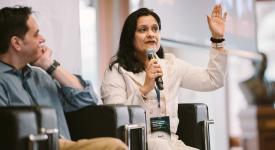
03/30/2026 - What should be next for AI? That was the question on everyone’s mind at the recent Texas Symposium on Machine Learning, Responsible AI & Robotics, held here on the Forty Acres.
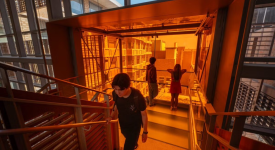
02/19/2026 - New school will unite key strengths to establish a center of excellence, strengthening interdisciplinary research and preparing talent for a rapidly changing economy.