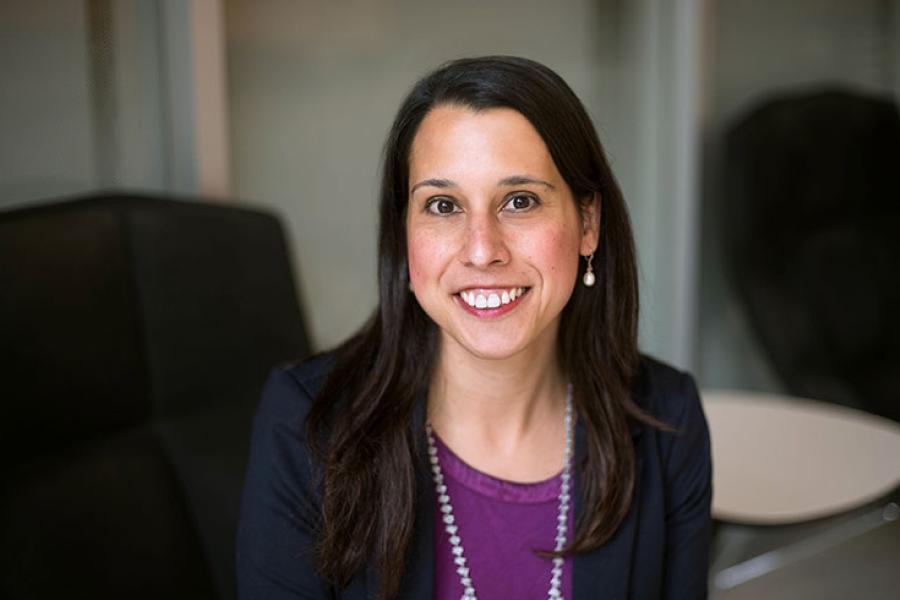
Professor Işıl Dillig has officially assumed the role of Chair of the Department of Computer Science at UT Austin. Following her tenure as Vice Chair alongside outgoing Chair Peter Stone — who now leads the newly established School of Computing — Dillig steps into the department’s top leadership position with a focus on strengthening its collaborative culture, supporting faculty and students, and guiding UT Computer Science through its next phase of growth.
“I feel incredibly fortunate to have the opportunity to lead a department with such outstanding faculty, students and staff,” says Dillig. “UTCS has such a strong culture of collegiality and community. It’s a truly extraordinary place and I’m excited to help shape our next chapter.”
Dillig assumes leadership of a department consistently ranked in the top ten nationally for Best Computer Science Schools by U.S. News & World Report. The department recently recruited eight new tenure-track faculty members while continuing to expand its research and educational impact. Having worked closely with Stone on departmental strategy and operations, Dillig brings continuity to the role as well as a clear commitment to preserving UT Computer Science’s hallmark culture: a blend of high-impact research, academic rigor and exceptional community.
A Leader in Programming Languages Research
Dillig brings distinguished scholarly credentials to the chair’s office. A triple alumna of Stanford University, she leads UT Austin’s UToPiA research group. Her primary work in Programming Languages and Formal Methods focuses on making software systems more secure, reliable and efficient through program synthesis, automated verification and automated logical reasoning. Dillig’s research has applications spanning AI, machine learning, security and databases. She is also a co-founder of the Web3 and blockchain security company Veridise.
Her contributions to the field have earned prestigious honors, including the 2025 ACM SIGPLAN Robin Milner Young Researcher Award, a Sloan Research Fellowship and an NSF CAREER Award. Beyond her research, Dillig is also an award-winning educator, having received the College of Natural Sciences Teaching Excellence Award and selected as a Texas 10 award winner by the Alcade.
Etienne Vouga Joins as Vice Chair
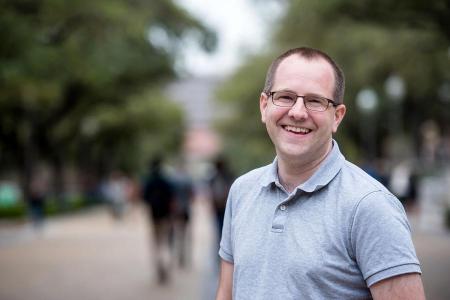
To support the department’s leadership, Associate Professor Etienne Vouga has been appointed Vice Chair. Both Dillig and Vouga joined UT Computer Science in 2013. Together, they will share leadership duties to balance long-term strategy with the department’s day-to-day operations.
Priorities: Listening, Learning and Looking Ahead
In their first months, Dillig and Vouga are prioritizing community engagement through an open "listen and learn" campaign, inviting faculty, staff and students to share ideas and feedback. That input will inform the department’s priorities across four core areas:
- Talent Advancement: Recruiting and retaining world-class faculty.
- Community Infrastructure: Strengthening support for students and administrative staff.
- Cultural Continuity: Preserving UT Computer Science’s collaborative community as the department continues to grow and through School of Computing transitions.
- Institutional Alignment: Strengthening UT Computer Science within the new School of Computing and across the university.
Supported by the department’s associate chairs and administrative staff, Dillig and Vouga will work to build on UT Computer Science’s strengthsin computer science research, education and innovation while positioning the department for continued success.
“I’m excited to work alongside Etienne Vouga as Vice Chair, and with School of Computing leadership Peter Stone,” says Dillig. “The future of computer science is profoundly interdisciplinary and the most valuable CS education will be one that combines deep technical rigor with opportunities to work across disciplines. In a world where AI is becoming infrastructure, the advantage will go to graduates who can not only build technology, but understand how it interacts with the complexity of the real world.”
Learn more about Isil Dillig’s research and contributions to computer science.