UTCS Researchers Win Best Paper Award at 2017 OOPSLA Conference
11/03/2017 -
10/06/2017 - UTCS professor Peter Stone was interviewed as part of a documentary called Digital Transformation: Visions of Nations, Companies, and People, a film exploring the future of technology through interviews with entrepreneurs, futurists, scientists and more.

08/10/2017 - The computer simulations of artificial intelligence researcher Katie Genter could help robot birds lead real flocks away from dangerous situations.
07/31/2017 -
07/12/2017 - Quantum computers might sound like science fiction. A fully functioning quantum computer could complete calculations in a matter of seconds that would take a conventional computer millions of years to process. Listen to the interview with Professor Scott Aaronson!
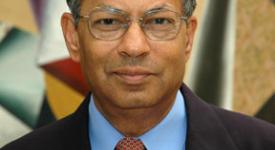
06/27/2017 - UT Computer Science's Professor Emeritus Jayadev Misra and Caltech's Mani Chandi have won the 2017 Harry H.
06/14/2017 - From Bloomberg Markets | by Jon Asmundsson Teams at startups, universities, government labs, and companies like IBM are racing to build computers that could potentially solve some problems that are now intractable.

05/02/2017 - From SIGNAL Magazine: A breakthrough formula for generating random numbers may be the key to cybersecurity. They do not necessarily match the hero stereotype, but computer scientists improving methods of generating random numbers just may save the day when it comes to cybersecurity.
04/28/2017 - UT Computer Science postdoctoral researcher Valentin Wustholz, Ph.D.
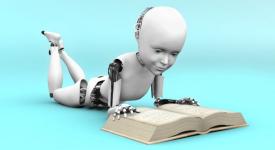
04/06/2017 - In 1960, the physicist Eugene Wigner wrote a famous essay titled “The Unreasonable Effectiveness of Mathematics in the Natural Sciences” in which he explored the question of why mathematics is so remarkably useful in the natural sciences.