Research

Securing the Cloud

01/18/2011 - The future of the Internet could look like this: The bulk of the world’s computing is outsourced to “the cloud”―to massive data centers that house tens or even hundreds of thousands of computers. Rather than doing most of the heavy lifting themselves, our PCs, laptops, tablets and smart phones act like terminals, remotely accessing data centers through the Internet while conserving their processing juice for tasks like rendering HD video and generating concert-quality sound.

Better Animation Through Body Part Recycling

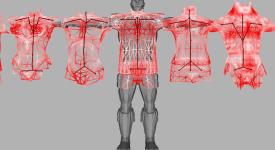
The user is presented with a ribbon of choices for the torso, which are colored according to their distance from the target mesh.

12/21/2010 - For all the power that computers have brought to the process of animation, it remains the human eye that’s the best judge of whether animated things moving in space look real. “People intuitively know exactly what to draw to evoke realism,” says Don Fussell, professor of computer science. “Computers don’t have that luxury.”

Computer Vision - Seeing Anew

Computer Vision

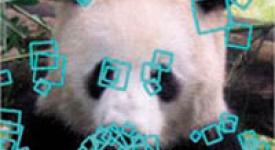
08/04/2010 - Every day—every minute, every second—the world’s computers are amassing visual information at an extraordinary rate. Aspiring Tarantinos are sending their two-minute videos to Youtube in the hopes of going viral. Mom and Dad are uploading their Napa Valley vacation photos to Flickr. Doctors are sending patient MRIs to medical databases, and satellites are scanning the earth for evidence of sinister activity.

Computational Biologist, Tandy Warnow, wins Guggenheim Fellowship

05/03/2010 - UTCS professor Tandy Warnow has been awarded a Guggenheim fellowship for developing algorithms that enable an accounting of 3.5 billion years of evolutionary relationships. The John Simon Guggenheim Memorial Foundation describes these awards as “intended for men and women who have already demonstrated exceptional capacity for productive scholarship or exceptional creative ability in the arts.”

UTCS Professor, Keshav Pingali, Wins Honors

01/04/2010 - Professor Keshav Pingali has been named fellow of the American Association for the Advancement of Science (AAAS) for his distinguished contributions to the "development and application of computer science technologies to enhance the effectiveness of formulating, compiling and executing parallel and distributed programs.

Protecting Privacy

Innovation Series: Protecting Privacy

10/16/2009 - With so much information being shared online these days, it’s critical that much of it remains private and anonymous. We trust, for example, that social networking sites such as Facebook remove personally identifiable information when they share our preferences and desires with advertisers. Vitaly Shmatikov, a young, fast-talking associate professor of computer science studies privacy in ubiquitous data sharing systems, from Facebook to hospitals to Netflix.

New Digital Security Program Doesn't Protect as Promised

09/29/2009 - University of Texas at Austin scientists have shown that they can break "Vanish," a program that promised to self-destruct computer data, such as emails and photographs, and thereby protect a person's privacy.

Robots Play Winning Soccer

Robots Play Winning Soccer

07/03/2009 - Texas Computer Science students are programming robots to play soccer... and winning. Current robots are only 2-feet high, but the goal is to develop robotic players large and skillful enough to beat a real-live World Cup team by 2050. Students from Texas Tech (TT) and The University of Texas at Austin (UT) use C++ to program robots to play without human interaction during the games. The robots play as a team and make individual decisions.